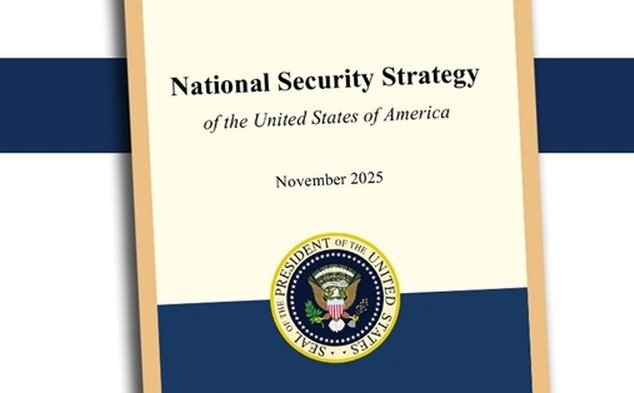
The Implications of the United States’ New National Security Strategy on Global Order

Strategic Council Online - Opinion: The United States' 2025 National Security Strategy (NSS 2025) is not merely a revision of Washington's foreign policy, but an official declaration redefining its interests, sphere of influence, and the framework of international relations. This change could shake the foundations of the post-Cold War order and place Europe and NATO in a difficult position.

Sina Raymand – International Affairs Analyst
Background of the Revision of the U.S. National Security Strategy
The 2025 National Security Strategy (NSS 2025) signifies a clear return to the ideas of “American primacy” and “national sovereignty” as cornerstones of foreign policy. Domestically, the document emphasizes border protection, immigration control, economic security, and the preservation of the American way of life. Globally, it stresses the need to reduce sustained military commitments and pressure allies to shoulder their own security burdens.
This realignment stems from several factors: First, the experience of recent decades, including protracted wars, multiple interventions, and immense costs, has compelled the U.S. to reassess its priorities. Second, maintaining supremacy in technology, energy, and key supply chains is a priority for Washington, and strategic relationships with old allies lose their appeal if they impose heavy financial and security burdens on the U.S. Third, the emphasis on national sovereignty, economic independence, and reduced reliance on multilateral institutions or rules reflects a current trend in Washington. In effect, the U.S. seeks to shift the primary burden and cost of providing security for allies onto themselves, while simultaneously pursuing its foreign policy from a position of strength through continued strategic dominance.

The Impact of the 2025 Strategy on Europe and NATO
For European countries and NATO, the new strategy serves as a serious wake-up call. If the American presence in Europe was once considered a security pillar, today it is no longer seen as a guarantee. Many European countries lack an independent defense infrastructure, and even with increased financial commitments, the structural gap in defense industries and arms supply chains prevents complete reliance on domestic capacity.
The new National Security Strategy downplays or even omits the Russian threat in Europe; this approach is interpreted as a reduced priority for Washington in protecting Europe’s collective security. Neglecting America’s direct commitment and emphasizing indigenous defense fosters the rise of nationalist, right-wing tendencies in Europe; tendencies that seek to reduce defense spending, withdraw from international commitments, and weaken Europe’s collective security.
Under these circumstances, Europe faces two difficult options: either heavy, long-term investment in defense capabilities despite all economic and political consequences, or accepting the new reality, the diminished role of the U.S., and the risk of weakened collective security and increased vulnerability.

The Strategy’s Contradiction with the International Order and Its Implications for Global Rivals
The 2025 National Security Strategy conflicts with the norms and structures of the post-Cold War international order in several aspects:

  1. Reduced U.S. Role in Collective Security and NATO: According to this strategy, the U.S. no longer guarantees a permanent military presence in Europe and distances itself from extensive military commitments outside its primary strategic domain. This represents a fundamental change in the nature of the NATO collective security pact and the U.S. role within it.
  2. Return to Prioritizing National Interests and State Sovereignty: Unlike the era of “globalization,” Washington now emphasizes borders, autonomy of action, and national sovereignty. This approach is incompatible with the concepts of multilateral cooperation and international rules.
  3. Economic and Technological Competition Instead of Cooperation: The focus on U.S. energy, industrial, and technological supremacy intensifies competition with China and Russia. It could pressure the structure of global cooperation and contribute to increased multipolarization of the international system.
    For America’s global rivals, especially powers seeking to increase their independence and to promote multipolarity, this strategy provides an opportunity to redefine relations and enhance their position. However, it simultaneously fuels increased instability and competition.

Comparison with Previous National Security Strategies
Over the past decade, U.S. National Security Strategies presented a combination of “hard security,” international cooperation, and America’s leadership role in the global order. Shared threats, from climate change to terrorism and military challenges, were deemed to require cooperation. However, the 2025 strategy clearly distances itself from this approach, focusing on “border security,” “national sovereignty,” and reducing foreign commitments.
Compared to previous versions, this document places less emphasis on collective cooperation and more on competition with powerful rivals and on securing national interests based on domestic capacity and bureaucracy. This change reflects a historical weariness with the role of “American global leadership.”

Challenges and Risks of the New Strategy for Global Security and the International Order
While adopting the 2025 strategy may appear beneficial for the U.S. in reducing geopolitical and military costs, it poses numerous challenges for the international order and America’s allies:
Increased Instability and Distrust: America’s failure to play an active role will drive other countries towards independent actions or regional alliances, overshadowing the structure of the global order.
Heightened Competition for Resources and Influence: The shift in America’s focus to energy, technology, and vital resources increases competition with China and Russia and could lead to the intensification of regional and global crises.
Damage to European Cohesion and Collective Security: If Europe fails to strengthen its independent defense capacity, divisions within NATO will widen, and collective security will be harmed.
The United States’ 2025 National Security Strategy presents a clear redefinition of the country’s interests, priorities, and operational framework on the international stage. By emphasizing national sovereignty, focusing on domestic interests, and reducing foreign security commitments, this document alters the course of Washington’s foreign policy. For Europe and NATO, this change signals doubt about collective military capability, the need to strengthen independent defense infrastructure, and a serious reassessment of security models. For America’s rivals, it creates an opportunity to redefine power equations, although the risk of heightened instability also increases.
Within the framework of the realist approach in international relations, this strategy makes defending American interests more efficient, but in return, it weakens international cooperation, mutual trust, and collective security. The world’s future will be shaped under conditions in which countries, even America’s past allies, will turn to hard, competitive options to guarantee their security and interests; a situation that will lead to a redefinition of the global power structure.


0 Comments

LATEST CONTENT

Iran’s Potential Levers of Power

SCFRonline– Opinion: Iran’s geopolitical power is not limited solely to oil and the Strait of Hormuz; the unintended emergence of disruptions in the future global food and energy security chains can also demonstrate Iran’s strategic importance.

The Inseparability of the Lebanese Front from the Axis of Resistance

SCFR Online–Opinion: By providing an extensive network of social, healthcare, educational, and post-war reconstruction services, Hezbollah has established a strong social base for itself among Lebanon’s Shiites and Sunnis, and even beyond that, among other segments of Lebanese society, including Christians. Hezbollah has never been an external actor imposed upon Lebanon; rather, it is a phenomenon fundamentally born out of the occupation and crimes of the Zionist regime and itself influenced by popular resistance.

The Increasing Efforts of the Zionist Regime to Redefine Borders and the Regional Order and Its Consequences

SCFR Online– Opinion: Security and military developments in the region over recent months indicate that the ongoing crises and wars in Gaza, southern Lebanon, and parts of Syrian territory encompass broader dimensions of geopolitical and geostrategic transformations. In this context, the increased military presence and control of the Zionist regime over parts of the territories of these areas, along with proposals regarding the creation of buffer zones or even the expansion of security borders, have raised serious questions about the future of the regional order and its consequences for the countries of West Asia.

The Components of Iran’s Deterrence Power

SCFR Online – Opinion: At a time when regional security equations have reached a sensitive stage under the influence of Iran’s strategic confrontation with the United States and the Zionist regime, the question of the nature of Tehran’s defensive power has gained greater significance than ever before. While Washington and Tel Aviv rely on their technological superiority, the Islamic Republic of Iran has presented a model of deterrence that extends beyond the material calculations of the world’s classical militaries. This power, rooted in the connection between “the field” and “the people,” has not only altered the balance of power in recent conflicts but has also disrupted adversaries’ calculations when confronting Iran’s strategic depth.

Loading

Últimas publicaciones

Iran’s Potential Levers of Power

SCFRonline– Opinion: Iran’s geopolitical power is not limited solely to oil and the Strait of Hormuz; the unintended emergence of disruptions in the future global food and energy security chains can also demonstrate Iran’s strategic importance.

The Inseparability of the Lebanese Front from the Axis of Resistance

SCFR Online–Opinion: By providing an extensive network of social, healthcare, educational, and post-war reconstruction services, Hezbollah has established a strong social base for itself among Lebanon’s Shiites and Sunnis, and even beyond that, among other segments of Lebanese society, including Christians. Hezbollah has never been an external actor imposed upon Lebanon; rather, it is a phenomenon fundamentally born out of the occupation and crimes of the Zionist regime and itself influenced by popular resistance.

The Increasing Efforts of the Zionist Regime to Redefine Borders and the Regional Order and Its Consequences

SCFR Online– Opinion: Security and military developments in the region over recent months indicate that the ongoing crises and wars in Gaza, southern Lebanon, and parts of Syrian territory encompass broader dimensions of geopolitical and geostrategic transformations. In this context, the increased military presence and control of the Zionist regime over parts of the territories of these areas, along with proposals regarding the creation of buffer zones or even the expansion of security borders, have raised serious questions about the future of the regional order and its consequences for the countries of West Asia.

The Components of Iran’s Deterrence Power

SCFR Online – Opinion: At a time when regional security equations have reached a sensitive stage under the influence of Iran’s strategic confrontation with the United States and the Zionist regime, the question of the nature of Tehran’s defensive power has gained greater significance than ever before. While Washington and Tel Aviv rely on their technological superiority, the Islamic Republic of Iran has presented a model of deterrence that extends beyond the material calculations of the world’s classical militaries. This power, rooted in the connection between “the field” and “the people,” has not only altered the balance of power in recent conflicts but has also disrupted adversaries’ calculations when confronting Iran’s strategic depth.

Loading

DERNIER CONTENU

Iran’s Potential Levers of Power

SCFRonline– Opinion: Iran’s geopolitical power is not limited solely to oil and the Strait of Hormuz; the unintended emergence of disruptions in the future global food and energy security chains can also demonstrate Iran’s strategic importance.

The Inseparability of the Lebanese Front from the Axis of Resistance

SCFR Online–Opinion: By providing an extensive network of social, healthcare, educational, and post-war reconstruction services, Hezbollah has established a strong social base for itself among Lebanon’s Shiites and Sunnis, and even beyond that, among other segments of Lebanese society, including Christians. Hezbollah has never been an external actor imposed upon Lebanon; rather, it is a phenomenon fundamentally born out of the occupation and crimes of the Zionist regime and itself influenced by popular resistance.

The Increasing Efforts of the Zionist Regime to Redefine Borders and the Regional Order and Its Consequences

SCFR Online– Opinion: Security and military developments in the region over recent months indicate that the ongoing crises and wars in Gaza, southern Lebanon, and parts of Syrian territory encompass broader dimensions of geopolitical and geostrategic transformations. In this context, the increased military presence and control of the Zionist regime over parts of the territories of these areas, along with proposals regarding the creation of buffer zones or even the expansion of security borders, have raised serious questions about the future of the regional order and its consequences for the countries of West Asia.

The Components of Iran’s Deterrence Power

SCFR Online – Opinion: At a time when regional security equations have reached a sensitive stage under the influence of Iran’s strategic confrontation with the United States and the Zionist regime, the question of the nature of Tehran’s defensive power has gained greater significance than ever before. While Washington and Tel Aviv rely on their technological superiority, the Islamic Republic of Iran has presented a model of deterrence that extends beyond the material calculations of the world’s classical militaries. This power, rooted in the connection between “the field” and “the people,” has not only altered the balance of power in recent conflicts but has also disrupted adversaries’ calculations when confronting Iran’s strategic depth.

Loading

DERNIER CONTENU

Iran’s Potential Levers of Power

SCFRonline– Opinion: Iran’s geopolitical power is not limited solely to oil and the Strait of Hormuz; the unintended emergence of disruptions in the future global food and energy security chains can also demonstrate Iran’s strategic importance.

The Inseparability of the Lebanese Front from the Axis of Resistance

SCFR Online–Opinion: By providing an extensive network of social, healthcare, educational, and post-war reconstruction services, Hezbollah has established a strong social base for itself among Lebanon’s Shiites and Sunnis, and even beyond that, among other segments of Lebanese society, including Christians. Hezbollah has never been an external actor imposed upon Lebanon; rather, it is a phenomenon fundamentally born out of the occupation and crimes of the Zionist regime and itself influenced by popular resistance.

The Increasing Efforts of the Zionist Regime to Redefine Borders and the Regional Order and Its Consequences

SCFR Online– Opinion: Security and military developments in the region over recent months indicate that the ongoing crises and wars in Gaza, southern Lebanon, and parts of Syrian territory encompass broader dimensions of geopolitical and geostrategic transformations. In this context, the increased military presence and control of the Zionist regime over parts of the territories of these areas, along with proposals regarding the creation of buffer zones or even the expansion of security borders, have raised serious questions about the future of the regional order and its consequences for the countries of West Asia.

The Components of Iran’s Deterrence Power

SCFR Online – Opinion: At a time when regional security equations have reached a sensitive stage under the influence of Iran’s strategic confrontation with the United States and the Zionist regime, the question of the nature of Tehran’s defensive power has gained greater significance than ever before. While Washington and Tel Aviv rely on their technological superiority, the Islamic Republic of Iran has presented a model of deterrence that extends beyond the material calculations of the world’s classical militaries. This power, rooted in the connection between “the field” and “the people,” has not only altered the balance of power in recent conflicts but has also disrupted adversaries’ calculations when confronting Iran’s strategic depth.

Loading

DERNIER CONTENU

Iran’s Potential Levers of Power

SCFRonline– Opinion: Iran’s geopolitical power is not limited solely to oil and the Strait of Hormuz; the unintended emergence of disruptions in the future global food and energy security chains can also demonstrate Iran’s strategic importance.

The Inseparability of the Lebanese Front from the Axis of Resistance

SCFR Online–Opinion: By providing an extensive network of social, healthcare, educational, and post-war reconstruction services, Hezbollah has established a strong social base for itself among Lebanon’s Shiites and Sunnis, and even beyond that, among other segments of Lebanese society, including Christians. Hezbollah has never been an external actor imposed upon Lebanon; rather, it is a phenomenon fundamentally born out of the occupation and crimes of the Zionist regime and itself influenced by popular resistance.

The Increasing Efforts of the Zionist Regime to Redefine Borders and the Regional Order and Its Consequences

SCFR Online– Opinion: Security and military developments in the region over recent months indicate that the ongoing crises and wars in Gaza, southern Lebanon, and parts of Syrian territory encompass broader dimensions of geopolitical and geostrategic transformations. In this context, the increased military presence and control of the Zionist regime over parts of the territories of these areas, along with proposals regarding the creation of buffer zones or even the expansion of security borders, have raised serious questions about the future of the regional order and its consequences for the countries of West Asia.

The Components of Iran’s Deterrence Power

SCFR Online – Opinion: At a time when regional security equations have reached a sensitive stage under the influence of Iran’s strategic confrontation with the United States and the Zionist regime, the question of the nature of Tehran’s defensive power has gained greater significance than ever before. While Washington and Tel Aviv rely on their technological superiority, the Islamic Republic of Iran has presented a model of deterrence that extends beyond the material calculations of the world’s classical militaries. This power, rooted in the connection between “the field” and “the people,” has not only altered the balance of power in recent conflicts but has also disrupted adversaries’ calculations when confronting Iran’s strategic depth.

Loading



