Reasons for the Ineffectiveness of Trump’s “Economic War” against Iran
SCFR Online – Opinion: The intensification of U.S. sanctions against Iran on the eve of the U.S. midterm elections indicates Washington’s inability to achieve its war objectives.


SCFR Online – Opinion: The intensification of U.S. sanctions against Iran on the eve of the U.S. midterm elections indicates Washington’s inability to achieve its war objectives.

SCFR Online – Opinion: The competition between Washington and Beijing over chips and artificial intelligence, simultaneously with the shifting of technological balances, has taken on new economic and security dimensions.
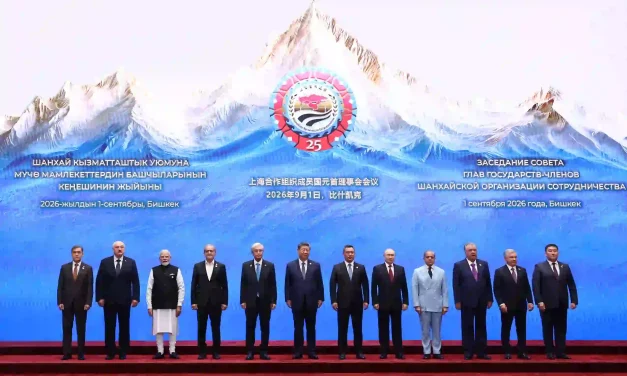
SCFR Online – Opinion: The Shanghai Cooperation Organization summit has created a new opportunity for Iran to transform its membership from a political achievement into economic and transit cooperation.
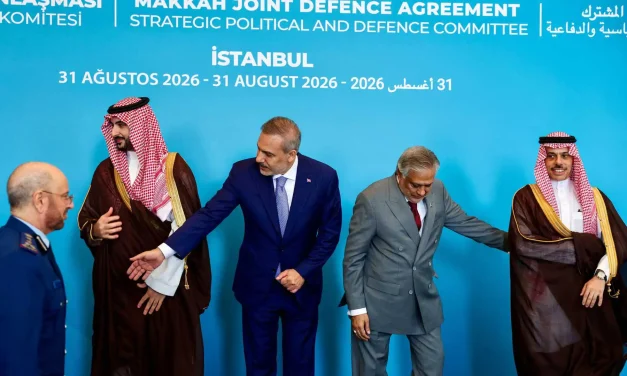
Strategic Council Online – Note: The Makkah Defense Pact can be seen as a sign of regional countries’ efforts to reduce security dependence on extra-regional powers and redefine the balance in West Asia.

SCFR Online – Opinion: The Ukraine war, by exhausting US military capability on one hand and strengthening European defense capacity on the other, has altered the balance of power in the European continent, cast uncertainty over NATO’s future, and is driving it toward a European NATO.
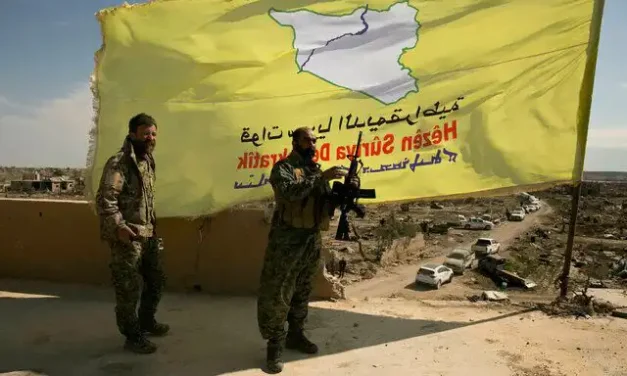
SCFR Online – Opinion: The dissolution of the SDF, although considered an achievement for Turkey’s security, does not put an end to the challenges arising from the Israeli regime’s aggression and expansionism, refugees, and Syria’s fragility.
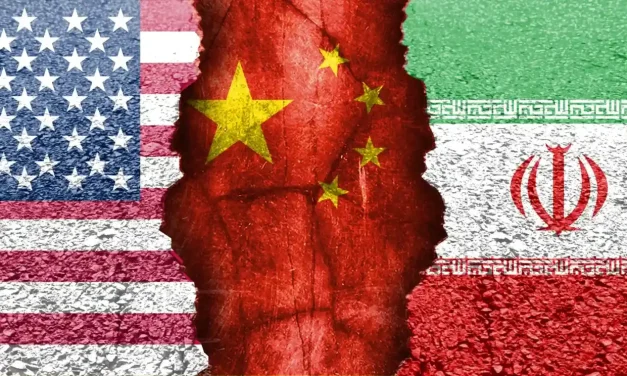
SCFR Online – Opinion: Concurrent with the official commencement of the United States’ economic war against our country, focusing on sanctions instruments, isolation, and economic pressure, what has now become increasingly important is the lack of alignment of other major global powers, especially China, with this policy.
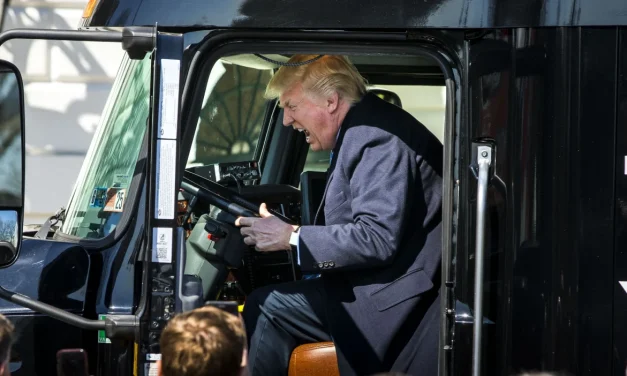
SCFR Online – Opinion: The new US sanctions against Iran, despite extensive propaganda, face serious obstacles to success due to the ineffectiveness of sanctions tools and opposition from some of Tehran’s trading partners.


Strategic Council Online – Opinion: In the strategic geography of the global economy, certain regions attain such significance that they effectively become determining factors of the international order. The Strait of Hormuz is among these points; a narrow yet vital passage through which a considerable portion of the world’s energy transits, and whose stability is directly intertwined with the interests and economic security of many countries. However, the importance of the Strait of Hormuz is not limited solely to the volume of energy passing through it. This strait is also a stage upon which the limitations and challenges of great power politics are revealed. From China’s perspective, the policy of the United States regarding the security of this strategic chokepoint, rather than reflecting a stable order, demonstrates a set of contradictions and strategic difficulties that Washington faces in managing the regional order.

Strategic Council Online – Opinion: The four-point proposal announced by Xi Jinping, President of China, can be described as a new strategic framework for “peace and stability in West Asia and the Persian Gulf.”

Strategic Council Online – Opinion: Following the intensification of war crimes by the Zionist regime in Lebanon and Palestine, as well as acts of warmongering that have weakened the foundations of peace, stability, and sustainable security in the region—producing highly destructive economic, security, and political consequences at the global level—for the first time since the establishment of the Israeli regime in 1948, a wave of coordinated and increasing pressure has emerged in Europe to halt military cooperation with this regime; a wave that is influenced by the growing opposition of European public opinion to the criminal actions of the Zionist regime in West Asia.

SCFR Online – Note: Donald Trump, President of the United States, announced on Monday morning, April 12, 2026, via his Truth Social platform that the US Navy would block the Strait of Hormuz. This decision, taken in response to the failure of Islamabad’s negotiations with Pakistan, represents—from the perspective of international relations philosophy—not merely a tactical error, but rather a reproduction of the same self-destructive logic that, from the era of ancient Greek city-states to modern empires, has drawn all hegemons emerging from “pure coercion” into the abyss of destruction.

SCFR Online – Note: Attacks against critical infrastructure—including bridges, power plants, water infrastructure such as desalination facilities, and hospitals—constitute a blatant violation of the laws of war and represent a serious test for the efficacy of the international legal order.

SCFR Online – Note: Iran’s control over the Strait of Hormuz constitutes an undeniable geopolitical reality, and any military operation aimed at reopening the strait without securing Tehran’s political consent is doomed to failure. Iran has demonstrably proven its dominion over the global energy and fertilizer lifelines. Hormoz Bayani – Economic Affairs Analyst

SCFR Online – Report: The joint US-Zionist regime attack on Iran has placed Washington on the verge of one of its most sensitive strategic decisions. Donald Trump, who had previously presented intervention in Venezuela as a successful model for exerting pressure on more steadfast adversaries, now faces the temptation of replicating this model vis-à-vis Iran.

Strategic Council Online –Opinion: The “Greater Israel” project, whose realization requires the annexation of parts of the territory of regional countries into the occupied lands, has long passed the stage of theorization and, especially in recent months, has taken on an operational form. This plan, which was once discussed in extremist Zionist circles as an unattainable ideal, is today, with the explicit support of the United States, being transformed into an executive program targeting the regional order.

Strategic Council Online – Opinion: The expiration of the New START treaty between the United States and Russia can be considered as the end of one of the most important mechanisms for regulating nuclear competition in the international system.

Strategic Council Online – Opinion: Europe has spoken of “strategic autonomy” for years, but each new crisis reveals that the gap between its aspiration for self-reliance and the reality of its security dependence on the United States remains significantly unbridged.
SCFR Online – Opinion: The intensification of U.S. sanctions against Iran on the eve of the U.S. midterm elections indicates Washington’s inability to achieve its war objectives.
SCFR Online – Opinion: The competition between Washington and Beijing over chips and artificial intelligence, simultaneously with the shifting of technological balances, has taken on new economic and security dimensions.
SCFR Online – Opinion: The Shanghai Cooperation Organization summit has created a new opportunity for Iran to transform its membership from a political achievement into economic and transit cooperation.
Strategic Council Online – Note: The Makkah Defense Pact can be seen as a sign of regional countries’ efforts to reduce security dependence on extra-regional powers and redefine the balance in West Asia.
SCFR Online – Opinion: The Ukraine war, by exhausting US military capability on one hand and strengthening European defense capacity on the other, has altered the balance of power in the European continent, cast uncertainty over NATO’s future, and is driving it toward a European NATO.
SCFR Online – Opinion: The dissolution of the SDF, although considered an achievement for Turkey’s security, does not put an end to the challenges arising from the Israeli regime’s aggression and expansionism, refugees, and Syria’s fragility.
SCFR Online – Opinion: Concurrent with the official commencement of the United States’ economic war against our country, focusing on sanctions instruments, isolation, and economic pressure, what has now become increasingly important is the lack of alignment of other major global powers, especially China, with this policy.
SCFR Online – Opinion: The new US sanctions against Iran, despite extensive propaganda, face serious obstacles to success due to the ineffectiveness of sanctions tools and opposition from some of Tehran’s trading partners.
Strategic Council Online – Opinion: In the strategic geography of the global economy, certain regions attain such significance that they effectively become determining factors of the international order. The Strait of Hormuz is among these points; a narrow yet vital passage through which a considerable portion of the world’s energy transits, and whose stability is directly intertwined with the interests and economic security of many countries. However, the importance of the Strait of Hormuz is not limited solely to the volume of energy passing through it. This strait is also a stage upon which the limitations and challenges of great power politics are revealed. From China’s perspective, the policy of the United States regarding the security of this strategic chokepoint, rather than reflecting a stable order, demonstrates a set of contradictions and strategic difficulties that Washington faces in managing the regional order.
Strategic Council Online – Opinion: The four-point proposal announced by Xi Jinping, President of China, can be described as a new strategic framework for “peace and stability in West Asia and the Persian Gulf.”
Strategic Council Online – Opinion: Following the intensification of war crimes by the Zionist regime in Lebanon and Palestine, as well as acts of warmongering that have weakened the foundations of peace, stability, and sustainable security in the region—producing highly destructive economic, security, and political consequences at the global level—for the first time since the establishment of the Israeli regime in 1948, a wave of coordinated and increasing pressure has emerged in Europe to halt military cooperation with this regime; a wave that is influenced by the growing opposition of European public opinion to the criminal actions of the Zionist regime in West Asia.
SCFR Online – Note: Donald Trump, President of the United States, announced on Monday morning, April 12, 2026, via his Truth Social platform that the US Navy would block the Strait of Hormuz. This decision, taken in response to the failure of Islamabad’s negotiations with Pakistan, represents—from the perspective of international relations philosophy—not merely a tactical error, but rather a reproduction of the same self-destructive logic that, from the era of ancient Greek city-states to modern empires, has drawn all hegemons emerging from “pure coercion” into the abyss of destruction.
SCFR Online – Note: Attacks against critical infrastructure—including bridges, power plants, water infrastructure such as desalination facilities, and hospitals—constitute a blatant violation of the laws of war and represent a serious test for the efficacy of the international legal order.
SCFR Online – Note: Iran’s control over the Strait of Hormuz constitutes an undeniable geopolitical reality, and any military operation aimed at reopening the strait without securing Tehran’s political consent is doomed to failure. Iran has demonstrably proven its dominion over the global energy and fertilizer lifelines. Hormoz Bayani – Economic Affairs Analyst
SCFR Online – Report: The joint US-Zionist regime attack on Iran has placed Washington on the verge of one of its most sensitive strategic decisions. Donald Trump, who had previously presented intervention in Venezuela as a successful model for exerting pressure on more steadfast adversaries, now faces the temptation of replicating this model vis-à-vis Iran.
Strategic Council Online –Opinion: The “Greater Israel” project, whose realization requires the annexation of parts of the territory of regional countries into the occupied lands, has long passed the stage of theorization and, especially in recent months, has taken on an operational form. This plan, which was once discussed in extremist Zionist circles as an unattainable ideal, is today, with the explicit support of the United States, being transformed into an executive program targeting the regional order.
Strategic Council Online – Opinion: The expiration of the New START treaty between the United States and Russia can be considered as the end of one of the most important mechanisms for regulating nuclear competition in the international system.
Strategic Council Online – Opinion: Europe has spoken of “strategic autonomy” for years, but each new crisis reveals that the gap between its aspiration for self-reliance and the reality of its security dependence on the United States remains significantly unbridged.
Strategic Council Online – Opinion: In the strategic geography of the global economy, certain regions attain such significance that they effectively become determining factors of the international order. The Strait of Hormuz is among these points; a narrow yet vital passage through which a considerable portion of the world’s energy transits, and whose stability is directly intertwined with the interests and economic security of many countries. However, the importance of the Strait of Hormuz is not limited solely to the volume of energy passing through it. This strait is also a stage upon which the limitations and challenges of great power politics are revealed. From China’s perspective, the policy of the United States regarding the security of this strategic chokepoint, rather than reflecting a stable order, demonstrates a set of contradictions and strategic difficulties that Washington faces in managing the regional order.
Strategic Council Online – Opinion: The four-point proposal announced by Xi Jinping, President of China, can be described as a new strategic framework for “peace and stability in West Asia and the Persian Gulf.”
Strategic Council Online – Opinion: Following the intensification of war crimes by the Zionist regime in Lebanon and Palestine, as well as acts of warmongering that have weakened the foundations of peace, stability, and sustainable security in the region—producing highly destructive economic, security, and political consequences at the global level—for the first time since the establishment of the Israeli regime in 1948, a wave of coordinated and increasing pressure has emerged in Europe to halt military cooperation with this regime; a wave that is influenced by the growing opposition of European public opinion to the criminal actions of the Zionist regime in West Asia.
SCFR Online – Note: Donald Trump, President of the United States, announced on Monday morning, April 12, 2026, via his Truth Social platform that the US Navy would block the Strait of Hormuz. This decision, taken in response to the failure of Islamabad’s negotiations with Pakistan, represents—from the perspective of international relations philosophy—not merely a tactical error, but rather a reproduction of the same self-destructive logic that, from the era of ancient Greek city-states to modern empires, has drawn all hegemons emerging from “pure coercion” into the abyss of destruction.
SCFR Online – Note: Attacks against critical infrastructure—including bridges, power plants, water infrastructure such as desalination facilities, and hospitals—constitute a blatant violation of the laws of war and represent a serious test for the efficacy of the international legal order.
SCFR Online – Note: Iran’s control over the Strait of Hormuz constitutes an undeniable geopolitical reality, and any military operation aimed at reopening the strait without securing Tehran’s political consent is doomed to failure. Iran has demonstrably proven its dominion over the global energy and fertilizer lifelines. Hormoz Bayani – Economic Affairs Analyst
SCFR Online – Report: The joint US-Zionist regime attack on Iran has placed Washington on the verge of one of its most sensitive strategic decisions. Donald Trump, who had previously presented intervention in Venezuela as a successful model for exerting pressure on more steadfast adversaries, now faces the temptation of replicating this model vis-à-vis Iran.
Strategic Council Online –Opinion: The “Greater Israel” project, whose realization requires the annexation of parts of the territory of regional countries into the occupied lands, has long passed the stage of theorization and, especially in recent months, has taken on an operational form. This plan, which was once discussed in extremist Zionist circles as an unattainable ideal, is today, with the explicit support of the United States, being transformed into an executive program targeting the regional order.
Strategic Council Online – Opinion: The expiration of the New START treaty between the United States and Russia can be considered as the end of one of the most important mechanisms for regulating nuclear competition in the international system.
Strategic Council Online – Opinion: Europe has spoken of “strategic autonomy” for years, but each new crisis reveals that the gap between its aspiration for self-reliance and the reality of its security dependence on the United States remains significantly unbridged.
SCFR Online – Opinion: The intensification of U.S. sanctions against Iran on the eve of the U.S. midterm elections indicates Washington’s inability to achieve its war objectives.
SCFR Online – Opinion: The competition between Washington and Beijing over chips and artificial intelligence, simultaneously with the shifting of technological balances, has taken on new economic and security dimensions.
SCFR Online – Opinion: The Shanghai Cooperation Organization summit has created a new opportunity for Iran to transform its membership from a political achievement into economic and transit cooperation.
Strategic Council Online – Note: The Makkah Defense Pact can be seen as a sign of regional countries’ efforts to reduce security dependence on extra-regional powers and redefine the balance in West Asia.
SCFR Online – Opinion: The Ukraine war, by exhausting US military capability on one hand and strengthening European defense capacity on the other, has altered the balance of power in the European continent, cast uncertainty over NATO’s future, and is driving it toward a European NATO.
SCFR Online – Opinion: The dissolution of the SDF, although considered an achievement for Turkey’s security, does not put an end to the challenges arising from the Israeli regime’s aggression and expansionism, refugees, and Syria’s fragility.
SCFR Online – Opinion: Concurrent with the official commencement of the United States’ economic war against our country, focusing on sanctions instruments, isolation, and economic pressure, what has now become increasingly important is the lack of alignment of other major global powers, especially China, with this policy.
SCFR Online – Opinion: The new US sanctions against Iran, despite extensive propaganda, face serious obstacles to success due to the ineffectiveness of sanctions tools and opposition from some of Tehran’s trading partners.
Strategic Council Online – Opinion: In the strategic geography of the global economy, certain regions attain such significance that they effectively become determining factors of the international order. The Strait of Hormuz is among these points; a narrow yet vital passage through which a considerable portion of the world’s energy transits, and whose stability is directly intertwined with the interests and economic security of many countries. However, the importance of the Strait of Hormuz is not limited solely to the volume of energy passing through it. This strait is also a stage upon which the limitations and challenges of great power politics are revealed. From China’s perspective, the policy of the United States regarding the security of this strategic chokepoint, rather than reflecting a stable order, demonstrates a set of contradictions and strategic difficulties that Washington faces in managing the regional order.
Strategic Council Online – Opinion: The four-point proposal announced by Xi Jinping, President of China, can be described as a new strategic framework for “peace and stability in West Asia and the Persian Gulf.”
Strategic Council Online – Opinion: Following the intensification of war crimes by the Zionist regime in Lebanon and Palestine, as well as acts of warmongering that have weakened the foundations of peace, stability, and sustainable security in the region—producing highly destructive economic, security, and political consequences at the global level—for the first time since the establishment of the Israeli regime in 1948, a wave of coordinated and increasing pressure has emerged in Europe to halt military cooperation with this regime; a wave that is influenced by the growing opposition of European public opinion to the criminal actions of the Zionist regime in West Asia.
SCFR Online – Note: Donald Trump, President of the United States, announced on Monday morning, April 12, 2026, via his Truth Social platform that the US Navy would block the Strait of Hormuz. This decision, taken in response to the failure of Islamabad’s negotiations with Pakistan, represents—from the perspective of international relations philosophy—not merely a tactical error, but rather a reproduction of the same self-destructive logic that, from the era of ancient Greek city-states to modern empires, has drawn all hegemons emerging from “pure coercion” into the abyss of destruction.
SCFR Online – Note: Attacks against critical infrastructure—including bridges, power plants, water infrastructure such as desalination facilities, and hospitals—constitute a blatant violation of the laws of war and represent a serious test for the efficacy of the international legal order.
SCFR Online – Note: Iran’s control over the Strait of Hormuz constitutes an undeniable geopolitical reality, and any military operation aimed at reopening the strait without securing Tehran’s political consent is doomed to failure. Iran has demonstrably proven its dominion over the global energy and fertilizer lifelines. Hormoz Bayani – Economic Affairs Analyst
SCFR Online – Report: The joint US-Zionist regime attack on Iran has placed Washington on the verge of one of its most sensitive strategic decisions. Donald Trump, who had previously presented intervention in Venezuela as a successful model for exerting pressure on more steadfast adversaries, now faces the temptation of replicating this model vis-à-vis Iran.
Strategic Council Online –Opinion: The “Greater Israel” project, whose realization requires the annexation of parts of the territory of regional countries into the occupied lands, has long passed the stage of theorization and, especially in recent months, has taken on an operational form. This plan, which was once discussed in extremist Zionist circles as an unattainable ideal, is today, with the explicit support of the United States, being transformed into an executive program targeting the regional order.
Strategic Council Online – Opinion: The expiration of the New START treaty between the United States and Russia can be considered as the end of one of the most important mechanisms for regulating nuclear competition in the international system.
Strategic Council Online – Opinion: Europe has spoken of “strategic autonomy” for years, but each new crisis reveals that the gap between its aspiration for self-reliance and the reality of its security dependence on the United States remains significantly unbridged.
SCFR Online – Opinion: The intensification of U.S. sanctions against Iran on the eve of the U.S. midterm elections indicates Washington’s inability to achieve its war objectives.
SCFR Online – Opinion: The competition between Washington and Beijing over chips and artificial intelligence, simultaneously with the shifting of technological balances, has taken on new economic and security dimensions.
SCFR Online – Opinion: The Shanghai Cooperation Organization summit has created a new opportunity for Iran to transform its membership from a political achievement into economic and transit cooperation.
Strategic Council Online – Note: The Makkah Defense Pact can be seen as a sign of regional countries’ efforts to reduce security dependence on extra-regional powers and redefine the balance in West Asia.
SCFR Online – Opinion: The Ukraine war, by exhausting US military capability on one hand and strengthening European defense capacity on the other, has altered the balance of power in the European continent, cast uncertainty over NATO’s future, and is driving it toward a European NATO.
SCFR Online – Opinion: The dissolution of the SDF, although considered an achievement for Turkey’s security, does not put an end to the challenges arising from the Israeli regime’s aggression and expansionism, refugees, and Syria’s fragility.
SCFR Online – Opinion: Concurrent with the official commencement of the United States’ economic war against our country, focusing on sanctions instruments, isolation, and economic pressure, what has now become increasingly important is the lack of alignment of other major global powers, especially China, with this policy.
SCFR Online – Opinion: The new US sanctions against Iran, despite extensive propaganda, face serious obstacles to success due to the ineffectiveness of sanctions tools and opposition from some of Tehran’s trading partners.
Strategic Council Online – Opinion: In the strategic geography of the global economy, certain regions attain such significance that they effectively become determining factors of the international order. The Strait of Hormuz is among these points; a narrow yet vital passage through which a considerable portion of the world’s energy transits, and whose stability is directly intertwined with the interests and economic security of many countries. However, the importance of the Strait of Hormuz is not limited solely to the volume of energy passing through it. This strait is also a stage upon which the limitations and challenges of great power politics are revealed. From China’s perspective, the policy of the United States regarding the security of this strategic chokepoint, rather than reflecting a stable order, demonstrates a set of contradictions and strategic difficulties that Washington faces in managing the regional order.
Strategic Council Online – Opinion: The four-point proposal announced by Xi Jinping, President of China, can be described as a new strategic framework for “peace and stability in West Asia and the Persian Gulf.”
Strategic Council Online – Opinion: Following the intensification of war crimes by the Zionist regime in Lebanon and Palestine, as well as acts of warmongering that have weakened the foundations of peace, stability, and sustainable security in the region—producing highly destructive economic, security, and political consequences at the global level—for the first time since the establishment of the Israeli regime in 1948, a wave of coordinated and increasing pressure has emerged in Europe to halt military cooperation with this regime; a wave that is influenced by the growing opposition of European public opinion to the criminal actions of the Zionist regime in West Asia.
SCFR Online – Note: Donald Trump, President of the United States, announced on Monday morning, April 12, 2026, via his Truth Social platform that the US Navy would block the Strait of Hormuz. This decision, taken in response to the failure of Islamabad’s negotiations with Pakistan, represents—from the perspective of international relations philosophy—not merely a tactical error, but rather a reproduction of the same self-destructive logic that, from the era of ancient Greek city-states to modern empires, has drawn all hegemons emerging from “pure coercion” into the abyss of destruction.
SCFR Online – Note: Attacks against critical infrastructure—including bridges, power plants, water infrastructure such as desalination facilities, and hospitals—constitute a blatant violation of the laws of war and represent a serious test for the efficacy of the international legal order.
SCFR Online – Note: Iran’s control over the Strait of Hormuz constitutes an undeniable geopolitical reality, and any military operation aimed at reopening the strait without securing Tehran’s political consent is doomed to failure. Iran has demonstrably proven its dominion over the global energy and fertilizer lifelines. Hormoz Bayani – Economic Affairs Analyst
SCFR Online – Report: The joint US-Zionist regime attack on Iran has placed Washington on the verge of one of its most sensitive strategic decisions. Donald Trump, who had previously presented intervention in Venezuela as a successful model for exerting pressure on more steadfast adversaries, now faces the temptation of replicating this model vis-à-vis Iran.
Strategic Council Online –Opinion: The “Greater Israel” project, whose realization requires the annexation of parts of the territory of regional countries into the occupied lands, has long passed the stage of theorization and, especially in recent months, has taken on an operational form. This plan, which was once discussed in extremist Zionist circles as an unattainable ideal, is today, with the explicit support of the United States, being transformed into an executive program targeting the regional order.
Strategic Council Online – Opinion: The expiration of the New START treaty between the United States and Russia can be considered as the end of one of the most important mechanisms for regulating nuclear competition in the international system.
Strategic Council Online – Opinion: Europe has spoken of “strategic autonomy” for years, but each new crisis reveals that the gap between its aspiration for self-reliance and the reality of its security dependence on the United States remains significantly unbridged.
SCFR Online – Opinion: The intensification of U.S. sanctions against Iran on the eve of the U.S. midterm elections indicates Washington’s inability to achieve its war objectives.
SCFR Online – Opinion: The competition between Washington and Beijing over chips and artificial intelligence, simultaneously with the shifting of technological balances, has taken on new economic and security dimensions.
SCFR Online – Opinion: The Shanghai Cooperation Organization summit has created a new opportunity for Iran to transform its membership from a political achievement into economic and transit cooperation.
Strategic Council Online – Note: The Makkah Defense Pact can be seen as a sign of regional countries’ efforts to reduce security dependence on extra-regional powers and redefine the balance in West Asia.
SCFR Online – Opinion: The Ukraine war, by exhausting US military capability on one hand and strengthening European defense capacity on the other, has altered the balance of power in the European continent, cast uncertainty over NATO’s future, and is driving it toward a European NATO.
SCFR Online – Opinion: The dissolution of the SDF, although considered an achievement for Turkey’s security, does not put an end to the challenges arising from the Israeli regime’s aggression and expansionism, refugees, and Syria’s fragility.
SCFR Online – Opinion: Concurrent with the official commencement of the United States’ economic war against our country, focusing on sanctions instruments, isolation, and economic pressure, what has now become increasingly important is the lack of alignment of other major global powers, especially China, with this policy.
SCFR Online – Opinion: The new US sanctions against Iran, despite extensive propaganda, face serious obstacles to success due to the ineffectiveness of sanctions tools and opposition from some of Tehran’s trading partners.
Strategic Council Online – Opinion: In the strategic geography of the global economy, certain regions attain such significance that they effectively become determining factors of the international order. The Strait of Hormuz is among these points; a narrow yet vital passage through which a considerable portion of the world’s energy transits, and whose stability is directly intertwined with the interests and economic security of many countries. However, the importance of the Strait of Hormuz is not limited solely to the volume of energy passing through it. This strait is also a stage upon which the limitations and challenges of great power politics are revealed. From China’s perspective, the policy of the United States regarding the security of this strategic chokepoint, rather than reflecting a stable order, demonstrates a set of contradictions and strategic difficulties that Washington faces in managing the regional order.
Strategic Council Online – Opinion: The four-point proposal announced by Xi Jinping, President of China, can be described as a new strategic framework for “peace and stability in West Asia and the Persian Gulf.”
Strategic Council Online – Opinion: Following the intensification of war crimes by the Zionist regime in Lebanon and Palestine, as well as acts of warmongering that have weakened the foundations of peace, stability, and sustainable security in the region—producing highly destructive economic, security, and political consequences at the global level—for the first time since the establishment of the Israeli regime in 1948, a wave of coordinated and increasing pressure has emerged in Europe to halt military cooperation with this regime; a wave that is influenced by the growing opposition of European public opinion to the criminal actions of the Zionist regime in West Asia.
SCFR Online – Note: Donald Trump, President of the United States, announced on Monday morning, April 12, 2026, via his Truth Social platform that the US Navy would block the Strait of Hormuz. This decision, taken in response to the failure of Islamabad’s negotiations with Pakistan, represents—from the perspective of international relations philosophy—not merely a tactical error, but rather a reproduction of the same self-destructive logic that, from the era of ancient Greek city-states to modern empires, has drawn all hegemons emerging from “pure coercion” into the abyss of destruction.
SCFR Online – Note: Attacks against critical infrastructure—including bridges, power plants, water infrastructure such as desalination facilities, and hospitals—constitute a blatant violation of the laws of war and represent a serious test for the efficacy of the international legal order.
SCFR Online – Note: Iran’s control over the Strait of Hormuz constitutes an undeniable geopolitical reality, and any military operation aimed at reopening the strait without securing Tehran’s political consent is doomed to failure. Iran has demonstrably proven its dominion over the global energy and fertilizer lifelines. Hormoz Bayani – Economic Affairs Analyst
SCFR Online – Report: The joint US-Zionist regime attack on Iran has placed Washington on the verge of one of its most sensitive strategic decisions. Donald Trump, who had previously presented intervention in Venezuela as a successful model for exerting pressure on more steadfast adversaries, now faces the temptation of replicating this model vis-à-vis Iran.
Strategic Council Online –Opinion: The “Greater Israel” project, whose realization requires the annexation of parts of the territory of regional countries into the occupied lands, has long passed the stage of theorization and, especially in recent months, has taken on an operational form. This plan, which was once discussed in extremist Zionist circles as an unattainable ideal, is today, with the explicit support of the United States, being transformed into an executive program targeting the regional order.
Strategic Council Online – Opinion: The expiration of the New START treaty between the United States and Russia can be considered as the end of one of the most important mechanisms for regulating nuclear competition in the international system.
Strategic Council Online – Opinion: Europe has spoken of “strategic autonomy” for years, but each new crisis reveals that the gap between its aspiration for self-reliance and the reality of its security dependence on the United States remains significantly unbridged.
SCFR Online – Opinion: The intensification of U.S. sanctions against Iran on the eve of the U.S. midterm elections indicates Washington’s inability to achieve its war objectives.
SCFR Online – Opinion: The competition between Washington and Beijing over chips and artificial intelligence, simultaneously with the shifting of technological balances, has taken on new economic and security dimensions.
SCFR Online – Opinion: The Shanghai Cooperation Organization summit has created a new opportunity for Iran to transform its membership from a political achievement into economic and transit cooperation.
Strategic Council Online – Note: The Makkah Defense Pact can be seen as a sign of regional countries’ efforts to reduce security dependence on extra-regional powers and redefine the balance in West Asia.
SCFR Online – Opinion: The Ukraine war, by exhausting US military capability on one hand and strengthening European defense capacity on the other, has altered the balance of power in the European continent, cast uncertainty over NATO’s future, and is driving it toward a European NATO.
SCFR Online – Opinion: The dissolution of the SDF, although considered an achievement for Turkey’s security, does not put an end to the challenges arising from the Israeli regime’s aggression and expansionism, refugees, and Syria’s fragility.
SCFR Online – Opinion: Concurrent with the official commencement of the United States’ economic war against our country, focusing on sanctions instruments, isolation, and economic pressure, what has now become increasingly important is the lack of alignment of other major global powers, especially China, with this policy.
SCFR Online – Opinion: The new US sanctions against Iran, despite extensive propaganda, face serious obstacles to success due to the ineffectiveness of sanctions tools and opposition from some of Tehran’s trading partners.
Strategic Council Online – Opinion: In the strategic geography of the global economy, certain regions attain such significance that they effectively become determining factors of the international order. The Strait of Hormuz is among these points; a narrow yet vital passage through which a considerable portion of the world’s energy transits, and whose stability is directly intertwined with the interests and economic security of many countries. However, the importance of the Strait of Hormuz is not limited solely to the volume of energy passing through it. This strait is also a stage upon which the limitations and challenges of great power politics are revealed. From China’s perspective, the policy of the United States regarding the security of this strategic chokepoint, rather than reflecting a stable order, demonstrates a set of contradictions and strategic difficulties that Washington faces in managing the regional order.
Strategic Council Online – Opinion: The four-point proposal announced by Xi Jinping, President of China, can be described as a new strategic framework for “peace and stability in West Asia and the Persian Gulf.”
Strategic Council Online – Opinion: Following the intensification of war crimes by the Zionist regime in Lebanon and Palestine, as well as acts of warmongering that have weakened the foundations of peace, stability, and sustainable security in the region—producing highly destructive economic, security, and political consequences at the global level—for the first time since the establishment of the Israeli regime in 1948, a wave of coordinated and increasing pressure has emerged in Europe to halt military cooperation with this regime; a wave that is influenced by the growing opposition of European public opinion to the criminal actions of the Zionist regime in West Asia.
SCFR Online – Note: Donald Trump, President of the United States, announced on Monday morning, April 12, 2026, via his Truth Social platform that the US Navy would block the Strait of Hormuz. This decision, taken in response to the failure of Islamabad’s negotiations with Pakistan, represents—from the perspective of international relations philosophy—not merely a tactical error, but rather a reproduction of the same self-destructive logic that, from the era of ancient Greek city-states to modern empires, has drawn all hegemons emerging from “pure coercion” into the abyss of destruction.
SCFR Online – Note: Attacks against critical infrastructure—including bridges, power plants, water infrastructure such as desalination facilities, and hospitals—constitute a blatant violation of the laws of war and represent a serious test for the efficacy of the international legal order.
SCFR Online – Note: Iran’s control over the Strait of Hormuz constitutes an undeniable geopolitical reality, and any military operation aimed at reopening the strait without securing Tehran’s political consent is doomed to failure. Iran has demonstrably proven its dominion over the global energy and fertilizer lifelines. Hormoz Bayani – Economic Affairs Analyst
SCFR Online – Report: The joint US-Zionist regime attack on Iran has placed Washington on the verge of one of its most sensitive strategic decisions. Donald Trump, who had previously presented intervention in Venezuela as a successful model for exerting pressure on more steadfast adversaries, now faces the temptation of replicating this model vis-à-vis Iran.
Strategic Council Online –Opinion: The “Greater Israel” project, whose realization requires the annexation of parts of the territory of regional countries into the occupied lands, has long passed the stage of theorization and, especially in recent months, has taken on an operational form. This plan, which was once discussed in extremist Zionist circles as an unattainable ideal, is today, with the explicit support of the United States, being transformed into an executive program targeting the regional order.
Strategic Council Online – Opinion: The expiration of the New START treaty between the United States and Russia can be considered as the end of one of the most important mechanisms for regulating nuclear competition in the international system.
Strategic Council Online – Opinion: Europe has spoken of “strategic autonomy” for years, but each new crisis reveals that the gap between its aspiration for self-reliance and the reality of its security dependence on the United States remains significantly unbridged.
SCFR Online – Opinion: The intensification of U.S. sanctions against Iran on the eve of the U.S. midterm elections indicates Washington’s inability to achieve its war objectives.
SCFR Online – Opinion: The competition between Washington and Beijing over chips and artificial intelligence, simultaneously with the shifting of technological balances, has taken on new economic and security dimensions.
SCFR Online – Opinion: The Shanghai Cooperation Organization summit has created a new opportunity for Iran to transform its membership from a political achievement into economic and transit cooperation.
Strategic Council Online – Note: The Makkah Defense Pact can be seen as a sign of regional countries’ efforts to reduce security dependence on extra-regional powers and redefine the balance in West Asia.
SCFR Online – Opinion: The Ukraine war, by exhausting US military capability on one hand and strengthening European defense capacity on the other, has altered the balance of power in the European continent, cast uncertainty over NATO’s future, and is driving it toward a European NATO.
SCFR Online – Opinion: The dissolution of the SDF, although considered an achievement for Turkey’s security, does not put an end to the challenges arising from the Israeli regime’s aggression and expansionism, refugees, and Syria’s fragility.
SCFR Online – Opinion: Concurrent with the official commencement of the United States’ economic war against our country, focusing on sanctions instruments, isolation, and economic pressure, what has now become increasingly important is the lack of alignment of other major global powers, especially China, with this policy.
SCFR Online – Opinion: The new US sanctions against Iran, despite extensive propaganda, face serious obstacles to success due to the ineffectiveness of sanctions tools and opposition from some of Tehran’s trading partners.