Specialized Meeting on Roots, Implications of anti-Islamism in West

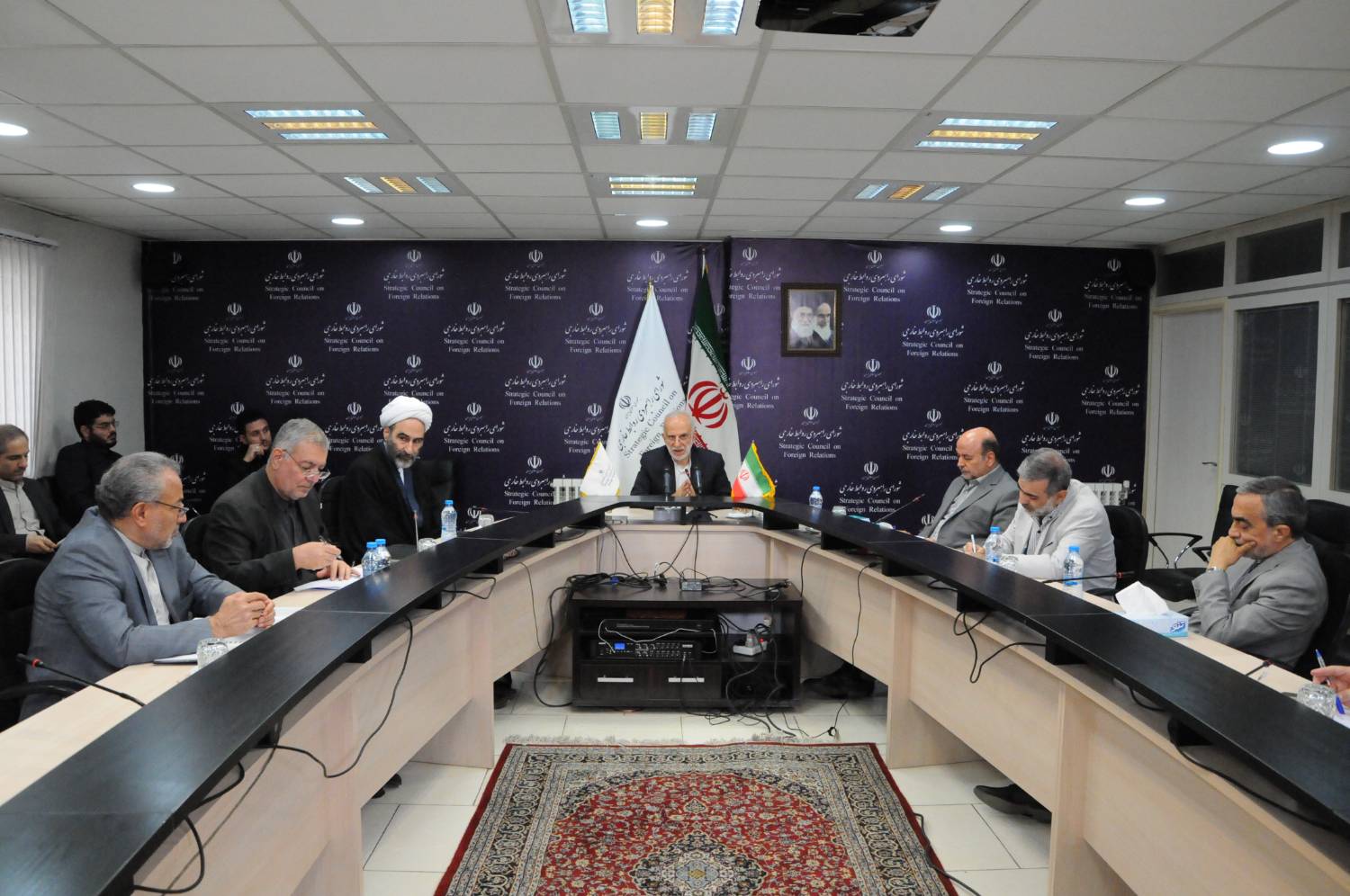
Strategic Council Online: The specialized meeting on “Roots and Implications of Anti-Islamism in the West” was held Wednesday under the chairmanship of Mr. Mostafavi, the head of the Cultural Commission of the Strategic Council on Foreign Relations.

In the meeting, Mr. Mostafavi emphasized the need to identify the reasons for desecration sanctities in the West. He stated that preventive measures should be taken to deal with such a trend throughout the Islamic world.

In the meeting, Ayatollah Ahmad Moballeghi, a university professor and member of the Assembly of Experts, referred to the recent Koran burnings in Sweden and Denmark and emphasized the need to avoid passive movements in the face of intensification of anti-Islamism in the West and considered strengthening of religious identity and Islamic unity as well as informing the world of the Word of God as one of the strategies to encounter with this trend.

Dr. Majidi, a university professor and Secretary General of the Asian Councils, while explaining a long history of anti-Islamism in the West, welcomed the initiatives of Islamic countries, including the recent meeting of the Organization of Islamic Cooperation, in the face of the desecration of religious sanctities, and proposed several methods, including in the fields of diplomacy, legal, media and popular to deal with anti-Islamism in the West.

In this meeting, Dr. Khorramshad, a university professor, explained the main reason the West for confronting the Islamic civilization as a serious competitor of the Western civilization and stated that it is necessary to make the best use of the recent opportunity that has led to unity among Muslims by creating civilizational awareness and civilizational thinking to defend and elucidate Islam.

Another speaker, Dr. Suleimanpour, a university professor, explained the transformation of intellectual foundations in Europe due to political and security developments, and by stating that Europe has moved from multilateralism to networked world order, added that this thinking seeks to redefine values and opposition to values such as religious values.

Nasir Abdul Mohsen Abdullah, Iraq’s ambassador to Iran, emphasized and clarified the necessity of strengthening the beliefs of Muslims and the dialogue among Islamic religions and clarified that according to statistics, it is said that more than 60 percent of the European population will be Muslims in 2050. Therefore this situation has caused panic in Europe.

Dr. Ahani, former Iranian ambassador to France, Belgium, and Italy, also emphasized that the Zionists’ efforts to incite insult to religious sanctities should not be neglected. Attention should be paid to the consequences of anti-Islamism, including the growth and strengthening of Islamism, and strengthening of the determination of Muslims in the West to implement Islamic rules and regulations, especially in the young generation, and intensified hatred and violence, racism, and violent behavior in the West.


0 Comments

LATEST CONTENT

Balancing in the chain of chokepoints; from sea-based deterrence to pluralistic diplomacy

Strategic Council Online – Note: Recent developments in the political geography of West Asia, from rising tensions in the Persian Gulf to missile and drone activities in the Red Sea and the recent warning by Kaja Kallas, the European Union’s foreign policy chief, regarding the threat to freedom of navigation, indicate a key pattern shift; the US-Iran war has moved beyond the scope of a regional and local confrontation and has linked two vital passageways for the global economy: the Strait of Hormuz and the Bab el-Mandeb Strait.

Indicators for Choosing Between War and Diplomacy

SCFR Online – Opinion: Foreign policy analysis is valid when it evaluates decisions based on the information and circumstances prevailing at the time they were made, not on the basis of outcomes that only become apparent after the crisis has ended.

Loading

Últimas publicaciones

Balancing in the chain of chokepoints; from sea-based deterrence to pluralistic diplomacy

Strategic Council Online – Note: Recent developments in the political geography of West Asia, from rising tensions in the Persian Gulf to missile and drone activities in the Red Sea and the recent warning by Kaja Kallas, the European Union’s foreign policy chief, regarding the threat to freedom of navigation, indicate a key pattern shift; the US-Iran war has moved beyond the scope of a regional and local confrontation and has linked two vital passageways for the global economy: the Strait of Hormuz and the Bab el-Mandeb Strait.

Indicators for Choosing Between War and Diplomacy

SCFR Online – Opinion: Foreign policy analysis is valid when it evaluates decisions based on the information and circumstances prevailing at the time they were made, not on the basis of outcomes that only become apparent after the crisis has ended.

Loading

DERNIER CONTENU

Balancing in the chain of chokepoints; from sea-based deterrence to pluralistic diplomacy

Strategic Council Online – Note: Recent developments in the political geography of West Asia, from rising tensions in the Persian Gulf to missile and drone activities in the Red Sea and the recent warning by Kaja Kallas, the European Union’s foreign policy chief, regarding the threat to freedom of navigation, indicate a key pattern shift; the US-Iran war has moved beyond the scope of a regional and local confrontation and has linked two vital passageways for the global economy: the Strait of Hormuz and the Bab el-Mandeb Strait.

Indicators for Choosing Between War and Diplomacy

SCFR Online – Opinion: Foreign policy analysis is valid when it evaluates decisions based on the information and circumstances prevailing at the time they were made, not on the basis of outcomes that only become apparent after the crisis has ended.

Loading

DERNIER CONTENU

Balancing in the chain of chokepoints; from sea-based deterrence to pluralistic diplomacy

Strategic Council Online – Note: Recent developments in the political geography of West Asia, from rising tensions in the Persian Gulf to missile and drone activities in the Red Sea and the recent warning by Kaja Kallas, the European Union’s foreign policy chief, regarding the threat to freedom of navigation, indicate a key pattern shift; the US-Iran war has moved beyond the scope of a regional and local confrontation and has linked two vital passageways for the global economy: the Strait of Hormuz and the Bab el-Mandeb Strait.

Indicators for Choosing Between War and Diplomacy

SCFR Online – Opinion: Foreign policy analysis is valid when it evaluates decisions based on the information and circumstances prevailing at the time they were made, not on the basis of outcomes that only become apparent after the crisis has ended.

Loading

DERNIER CONTENU

Balancing in the chain of chokepoints; from sea-based deterrence to pluralistic diplomacy

Strategic Council Online – Note: Recent developments in the political geography of West Asia, from rising tensions in the Persian Gulf to missile and drone activities in the Red Sea and the recent warning by Kaja Kallas, the European Union’s foreign policy chief, regarding the threat to freedom of navigation, indicate a key pattern shift; the US-Iran war has moved beyond the scope of a regional and local confrontation and has linked two vital passageways for the global economy: the Strait of Hormuz and the Bab el-Mandeb Strait.

Indicators for Choosing Between War and Diplomacy

SCFR Online – Opinion: Foreign policy analysis is valid when it evaluates decisions based on the information and circumstances prevailing at the time they were made, not on the basis of outcomes that only become apparent after the crisis has ended.

Loading