Trump and Greenland: Securing Strategic Interests and Competing with China

Strategic Council Online – Opinion: Donald Trump's comments suggest that controlling Greenland is not a dream but a serious and strategic possibility.

Majid Mohammad Sharifi – Assistant Professor of International Relations, Khwarizmi University


Repeatedly repeating the possibility that the US should take control of Greenland, Trump has now begun efforts to implement this plan and has even had a conversation with Danish Prime Minister Mette Frederiksen about this. The conversation was reportedly tense, with the Danish Prime Minister emphasizing that Greenland is unsellable.

Previously, Donald Trump had also raised the idea of ​​purchasing Greenland during his first term in office, describing it as an inevitable necessity to ensure America’s international security. In Trump’s view, control of Greenland is so important to the United States that if it is not achieved through diplomatic and conciliatory channels, the United States may resort to unfriendly measures. However, he has never clearly explained the nature of these unfriendly measures.

In a controversial statement, he explicitly claimed that the United States will eventually acquire Greenland because this action is necessary for world security. Considering these statements and their repetition by Trump and some members of his cabinet, the important question is why Greenland is so important to Trump, and what goals does he pursue by trying to buy or control this region by any means possible?

It seems that Trump’s interest in controlling Greenland should be considered in terms of the importance of this region from various dimensions. First, Greenland is situated along the shortest route between America and Europe, and controlling this region will enable the United States to make the route to Europe shorter and less expensive. Such a development is important from a strategic perspective for the United States.

Second, the presence of rare mineral resources, especially uranium, has increased the importance of Greenland. The need for America and concerns about China’s access to these resources have led Trump to consider the acquisition of Greenland a strategic victory for the United States. The resources available in Greenland are significant because they are found in large quantities that are not available elsewhere.

Undoubtedly, controlling these resources can be considered a significant strategic advantage for the United States. According to analysts and experts, Greenland’s valuable mineral reserves, including rare metals, and economic opportunities arising from melting ice and access to new energy sources have made this region a focus for competition between global powers.

In addition, the United States is now increasingly competing with China and Russia over the natural resources of the Arctic and access to strategic reserves such as lithium, cobalt, and graphite, which has made the Greenland region more important in the competition between great powers. The United States, China, and Russia have been competing for access to the Arctic for years, and each of these countries has sent exploration ships to the region. The United States heavily depends on China for some abundant minerals in the Arctic. Using these materials in communication technologies and military weapons has intensified the competition between the United States and China in this region.

Considering the increasing global demand for electric vehicles and renewable energy, Trump believes access to the resources of the Greenland region to be strategic for maintaining America’s position and ability to compete with China. Some analysts believe that the minerals available in the Greenland region are used in many areas, especially defense and military affairs. For this reason, the United States considers control over them vital to its national security. The United States seems to have fallen behind its competitors, especially China, in accessing these resources, which has led to Trump’s rush to control the Greenland region.

In general, it can be seen that Trump’s idea of ​​controlling or purchasing the Greenland region stems from the strategic competition of great powers. Trump’s attempt to implement this idea should be considered a competition requirement with China. Trump is concerned about China’s and even Russia’s access to the valuable resources of this region and the Arctic and assumes control of Greenland to be the key to American superiority and dominance. Although the exact dimensions of Trump’s plan have not yet been clearly explained, increasing tensions can be expected during the implementation of this plan, which could affect American relations with Denmark and Europe.


0 Comments

LATEST CONTENT

Realities of the Tripartite Makkah Pact

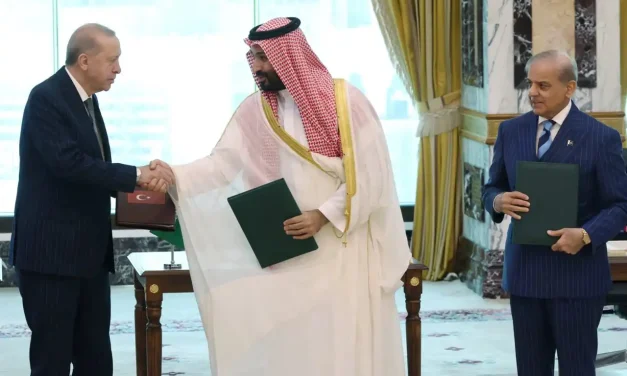
SCFR Online – Interview: The signing of the Makkah agreement between Saudi Arabia, Pakistan, and Turkey has raised questions about the future of the region’s security structure and the position of these countries in West Asian equations. Can this agreement become a genuine collective defense mechanism, or does it have more of a political and deterrent function than creating new military capacity?

Strategic Implications of the Reduction of US Weapons Stockpiles

SCFR Online – Opinion: The continuation of the US war against Iran, in addition to increasing operational costs, has called into question the actual capacity of the American arsenal to simultaneously fulfill security commitments on multiple fronts; an issue that affects deterrence, defense production capacity, and Washington’s resource prioritization.

The Formation of a New Order in Relations Between Powers

SCFR Online – Opinion: The Russia-Ukraine war and the war of the United States and the Israeli regime against Iran have been formed with different objectives and actors, but field and political developments indicate that they are not entirely separate from one another.

An Analysis of the Makkah Defense Pact

SCFR Online – Opinion: On Friday, August 7, the heads of state of three countries – Saudi Arabia, Turkey, and Pakistan – signed a text under the title “Makkah Joint Defense Agreement.”

Dimensions and challenges of the initiative to revive the Hejaz Railway

Strategic Council Online – Note: The initiative to revive the Hejaz Railway, beyond being a transportation project, constitutes an attempt to redefine geopolitics, the economy, and Turkey’s regional position; however, its realization appears to face significant financial, security, and institutional challenges.

Loading

Últimas publicaciones

Realities of the Tripartite Makkah Pact

SCFR Online – Interview: The signing of the Makkah agreement between Saudi Arabia, Pakistan, and Turkey has raised questions about the future of the region’s security structure and the position of these countries in West Asian equations. Can this agreement become a genuine collective defense mechanism, or does it have more of a political and deterrent function than creating new military capacity?

Strategic Implications of the Reduction of US Weapons Stockpiles

SCFR Online – Opinion: The continuation of the US war against Iran, in addition to increasing operational costs, has called into question the actual capacity of the American arsenal to simultaneously fulfill security commitments on multiple fronts; an issue that affects deterrence, defense production capacity, and Washington’s resource prioritization.

The Formation of a New Order in Relations Between Powers

SCFR Online – Opinion: The Russia-Ukraine war and the war of the United States and the Israeli regime against Iran have been formed with different objectives and actors, but field and political developments indicate that they are not entirely separate from one another.

An Analysis of the Makkah Defense Pact

SCFR Online – Opinion: On Friday, August 7, the heads of state of three countries – Saudi Arabia, Turkey, and Pakistan – signed a text under the title “Makkah Joint Defense Agreement.”

Dimensions and challenges of the initiative to revive the Hejaz Railway

Strategic Council Online – Note: The initiative to revive the Hejaz Railway, beyond being a transportation project, constitutes an attempt to redefine geopolitics, the economy, and Turkey’s regional position; however, its realization appears to face significant financial, security, and institutional challenges.

Loading

DERNIER CONTENU

Realities of the Tripartite Makkah Pact

SCFR Online – Interview: The signing of the Makkah agreement between Saudi Arabia, Pakistan, and Turkey has raised questions about the future of the region’s security structure and the position of these countries in West Asian equations. Can this agreement become a genuine collective defense mechanism, or does it have more of a political and deterrent function than creating new military capacity?

Strategic Implications of the Reduction of US Weapons Stockpiles

SCFR Online – Opinion: The continuation of the US war against Iran, in addition to increasing operational costs, has called into question the actual capacity of the American arsenal to simultaneously fulfill security commitments on multiple fronts; an issue that affects deterrence, defense production capacity, and Washington’s resource prioritization.

The Formation of a New Order in Relations Between Powers

SCFR Online – Opinion: The Russia-Ukraine war and the war of the United States and the Israeli regime against Iran have been formed with different objectives and actors, but field and political developments indicate that they are not entirely separate from one another.

An Analysis of the Makkah Defense Pact

SCFR Online – Opinion: On Friday, August 7, the heads of state of three countries – Saudi Arabia, Turkey, and Pakistan – signed a text under the title “Makkah Joint Defense Agreement.”

Dimensions and challenges of the initiative to revive the Hejaz Railway

Strategic Council Online – Note: The initiative to revive the Hejaz Railway, beyond being a transportation project, constitutes an attempt to redefine geopolitics, the economy, and Turkey’s regional position; however, its realization appears to face significant financial, security, and institutional challenges.

Loading

DERNIER CONTENU

Realities of the Tripartite Makkah Pact

SCFR Online – Interview: The signing of the Makkah agreement between Saudi Arabia, Pakistan, and Turkey has raised questions about the future of the region’s security structure and the position of these countries in West Asian equations. Can this agreement become a genuine collective defense mechanism, or does it have more of a political and deterrent function than creating new military capacity?

Strategic Implications of the Reduction of US Weapons Stockpiles

SCFR Online – Opinion: The continuation of the US war against Iran, in addition to increasing operational costs, has called into question the actual capacity of the American arsenal to simultaneously fulfill security commitments on multiple fronts; an issue that affects deterrence, defense production capacity, and Washington’s resource prioritization.

The Formation of a New Order in Relations Between Powers

SCFR Online – Opinion: The Russia-Ukraine war and the war of the United States and the Israeli regime against Iran have been formed with different objectives and actors, but field and political developments indicate that they are not entirely separate from one another.

An Analysis of the Makkah Defense Pact

SCFR Online – Opinion: On Friday, August 7, the heads of state of three countries – Saudi Arabia, Turkey, and Pakistan – signed a text under the title “Makkah Joint Defense Agreement.”

Dimensions and challenges of the initiative to revive the Hejaz Railway

Strategic Council Online – Note: The initiative to revive the Hejaz Railway, beyond being a transportation project, constitutes an attempt to redefine geopolitics, the economy, and Turkey’s regional position; however, its realization appears to face significant financial, security, and institutional challenges.

Loading

DERNIER CONTENU

Realities of the Tripartite Makkah Pact

SCFR Online – Interview: The signing of the Makkah agreement between Saudi Arabia, Pakistan, and Turkey has raised questions about the future of the region’s security structure and the position of these countries in West Asian equations. Can this agreement become a genuine collective defense mechanism, or does it have more of a political and deterrent function than creating new military capacity?

Strategic Implications of the Reduction of US Weapons Stockpiles

SCFR Online – Opinion: The continuation of the US war against Iran, in addition to increasing operational costs, has called into question the actual capacity of the American arsenal to simultaneously fulfill security commitments on multiple fronts; an issue that affects deterrence, defense production capacity, and Washington’s resource prioritization.

The Formation of a New Order in Relations Between Powers

SCFR Online – Opinion: The Russia-Ukraine war and the war of the United States and the Israeli regime against Iran have been formed with different objectives and actors, but field and political developments indicate that they are not entirely separate from one another.

An Analysis of the Makkah Defense Pact

SCFR Online – Opinion: On Friday, August 7, the heads of state of three countries – Saudi Arabia, Turkey, and Pakistan – signed a text under the title “Makkah Joint Defense Agreement.”

Dimensions and challenges of the initiative to revive the Hejaz Railway

Strategic Council Online – Note: The initiative to revive the Hejaz Railway, beyond being a transportation project, constitutes an attempt to redefine geopolitics, the economy, and Turkey’s regional position; however, its realization appears to face significant financial, security, and institutional challenges.

Loading