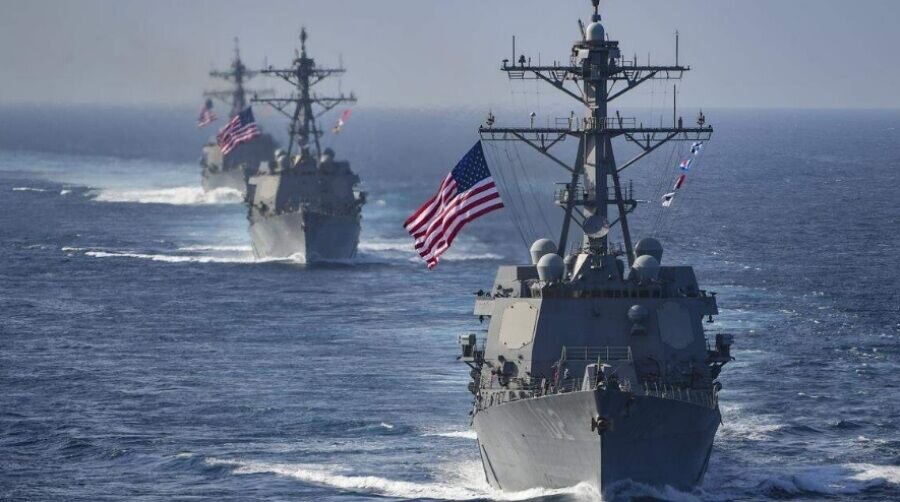
An Analysis of the U.S. Military Intervention Plan in Venezuela and Its Consequences

Online Strategic Council - Dialogue: A Latin American affairs expert stated that the United States has recently announced it is engaged in an "armed war" with drug cartels in Latin America, and its forces have targeted several boats belonging to Venezuela and Colombia. The President of Colombia has condemned this action and even said that Donald Trump should be prosecuted. In light of these actions, Trump is moving further away each week from his commitment that "no new wars" would be started during his second term.

Hadi Alami Farimani, in an interview with the website of the Strategic Council on Foreign Relations, stated: “In recent years, the United States has introduced a new term, ‘narco-terrorism,’ into its political lexicon, meaning it has linked issues related to drug trafficking to terrorist topics.” He added: “In line with this, citing the executive order issued on January 25th at the beginning of Trump’s presidency, international drug cartels were defined as legitimate targets for attack.”
According to Farimani, this approach is now institutionalized in the United States’ political lexicon. It grants the country the right to militarily confront drug cartels and traffickers anywhere in the world based on this concept, even if it means entering the national territory of other countries.
The Latin American affairs expert said, “Regarding Venezuela, it seems that the U.S. government is dissatisfied with the successive failures of the opposition in that country. The opposition and opponents of Hugo Chávez —the anti-Chavistas in Venezuela —have so far failed to gain a majority in any presidential, referendum, or local elections, and have always been defeated. Therefore, it appears that the United States is tired of this situation and is trying to use the accusation of drug trafficking against Nicolás Maduro, the President of Venezuela, who is somewhat continuing Chávez’s path, to question his political legitimacy and pave the way for military action.”
He pointed out that the intensity of these attacks and pressures has currently increased, adding: “Today, the siege around Venezuela has tightened, and the U.S. Southern Command is using attack aircraft to assess various targets within the country to gauge the level of readiness of Venezuela’s civil and military defense. These actions show that Washington is seriously pursuing a strategy of regime change in Caracas.”
Farimani believes that Venezuela, due to the continuation of socialist policies and the non-transfer of power through elections, is currently in a position of isolation. Meanwhile, some countries in the region, such as Mexico and Colombia, although they have entered into tensions with the United States, are acting more cautiously for fear of becoming targets of similar interventions.
Alami Farimani explained the legal basis of the U.S. attacks: “From the perspective of international law, these attacks lack legitimacy, and the law that the United States has created for itself in the realm of transnational drug crimes holds no international status or credibility. In fact, this is the first time that the Trump administration has introduced the concept of drugs into the security and military lexicon and labeled traffickers as terrorists. Previously, no such definition existed in international law, and no other country had provided such an interpretation of the fight against drugs.”
According to this expert, before the Trump era, the U.S. Southern Command was only active in the areas of aerial reconnaissance and surveillance and the limited pursuit of drug traffickers, focusing more on financial and equipment assistance to governments in the region, such as Colombia, Peru, and Mexico. But now, by adding the word “terrorism” to this concept, authorization to use fighter jets and military force has been issued, and the U.S. Army is directly intervening in this process.”
He added: “This action, from the perspective of international law, lacks any legitimacy and is a fabricated, unilateral structure created solely by the United States itself.”
The Latin American affairs expert regarding the objectives and consequences of this U.S. action said: “The United States today unilaterally intervenes in many countries around the world and is promoting a strategy of peace through power. Other countries also know these actions are unilateral, but because Washington has significant military power and informational superiority, it carries them out. Although this approach has increased international protests and severely reduced its legitimacy among the governments of Latin America.”
He continued: “Another consequence of this policy is that other major powers may also take similar actions in response to Washington’s behavior. Under these circumstances, by pursuing these policies, the United States has effectively returned to reviving the ‘Monroe Doctrine’; an old doctrine aimed at maintaining U.S. control over Latin America and keeping other powers, especially China, away from this region.”
Alami Farimani explained: “Through these actions, Washington is trying to limit Beijing’s influence and force the countries of the Latin American region to become more dependent on itself. But this approach has consequences, including the fact that public trust among the nations and governments of Latin America towards the United States has declined. Among many of these countries, especially after the tariff policies, harsh treatment of immigrants, and the claim linking drug trafficking to terrorism, U.S. legitimacy will be further diminished.”

0 Comments

LATEST CONTENT

The Makkah Pact; Reasons for its Formation and Challenges Ahead

SCFR Online – Opinion: The Makkah Pact, signed between Saudi Arabia, Pakistan, and Turkey under the motto “an attack on one is an attack on all,” is viewed by some analysts less as a full-fledged military coalition and more as an attempt to reduce security dependence on an external power and to establish a regional security mechanism.

Implications of the US-Saudi Nuclear Agreement

SCFR Online – Opinion: The new US-Saudi nuclear agreement, despite legal and political ambiguities, could alter previous non-proliferation standards in West Asia and intensify nuclear competition, ushering it into a new phase.

An Analysis of Recent Turkey-Israeli Regime Tensions

SCFR Online – Opinion: Recent developments in Syria indicate an intensification of strategic rivalry between Turkey and the Israeli regime, but mutual considerations and the role of the United States have limited the likelihood of direct war.

Increasing criticism of the extensive Zionist lobby network

SCFR Online – Opinion: An examination of the mechanisms of the Israeli regime’s influence in the United States depicts a complex picture of shared interests, strategic dependencies, and the limitations of this relationship.

Realities of the Tripartite Makkah Pact

SCFR Online – Interview: The signing of the Makkah agreement between Saudi Arabia, Pakistan, and Turkey has raised questions about the future of the region’s security structure and the position of these countries in West Asian equations. Can this agreement become a genuine collective defense mechanism, or does it have more of a political and deterrent function than creating new military capacity?

Strategic Implications of the Reduction of US Weapons Stockpiles

SCFR Online – Opinion: The continuation of the US war against Iran, in addition to increasing operational costs, has called into question the actual capacity of the American arsenal to simultaneously fulfill security commitments on multiple fronts; an issue that affects deterrence, defense production capacity, and Washington’s resource prioritization.

The Formation of a New Order in Relations Between Powers

SCFR Online – Opinion: The Russia-Ukraine war and the war of the United States and the Israeli regime against Iran have been formed with different objectives and actors, but field and political developments indicate that they are not entirely separate from one another.

Loading

Últimas publicaciones

The Makkah Pact; Reasons for its Formation and Challenges Ahead

SCFR Online – Opinion: The Makkah Pact, signed between Saudi Arabia, Pakistan, and Turkey under the motto “an attack on one is an attack on all,” is viewed by some analysts less as a full-fledged military coalition and more as an attempt to reduce security dependence on an external power and to establish a regional security mechanism.

Implications of the US-Saudi Nuclear Agreement

SCFR Online – Opinion: The new US-Saudi nuclear agreement, despite legal and political ambiguities, could alter previous non-proliferation standards in West Asia and intensify nuclear competition, ushering it into a new phase.

An Analysis of Recent Turkey-Israeli Regime Tensions

SCFR Online – Opinion: Recent developments in Syria indicate an intensification of strategic rivalry between Turkey and the Israeli regime, but mutual considerations and the role of the United States have limited the likelihood of direct war.

Increasing criticism of the extensive Zionist lobby network

SCFR Online – Opinion: An examination of the mechanisms of the Israeli regime’s influence in the United States depicts a complex picture of shared interests, strategic dependencies, and the limitations of this relationship.

Realities of the Tripartite Makkah Pact

SCFR Online – Interview: The signing of the Makkah agreement between Saudi Arabia, Pakistan, and Turkey has raised questions about the future of the region’s security structure and the position of these countries in West Asian equations. Can this agreement become a genuine collective defense mechanism, or does it have more of a political and deterrent function than creating new military capacity?

Strategic Implications of the Reduction of US Weapons Stockpiles

SCFR Online – Opinion: The continuation of the US war against Iran, in addition to increasing operational costs, has called into question the actual capacity of the American arsenal to simultaneously fulfill security commitments on multiple fronts; an issue that affects deterrence, defense production capacity, and Washington’s resource prioritization.

The Formation of a New Order in Relations Between Powers

SCFR Online – Opinion: The Russia-Ukraine war and the war of the United States and the Israeli regime against Iran have been formed with different objectives and actors, but field and political developments indicate that they are not entirely separate from one another.

Loading

DERNIER CONTENU

The Makkah Pact; Reasons for its Formation and Challenges Ahead

SCFR Online – Opinion: The Makkah Pact, signed between Saudi Arabia, Pakistan, and Turkey under the motto “an attack on one is an attack on all,” is viewed by some analysts less as a full-fledged military coalition and more as an attempt to reduce security dependence on an external power and to establish a regional security mechanism.

Implications of the US-Saudi Nuclear Agreement

SCFR Online – Opinion: The new US-Saudi nuclear agreement, despite legal and political ambiguities, could alter previous non-proliferation standards in West Asia and intensify nuclear competition, ushering it into a new phase.

An Analysis of Recent Turkey-Israeli Regime Tensions

SCFR Online – Opinion: Recent developments in Syria indicate an intensification of strategic rivalry between Turkey and the Israeli regime, but mutual considerations and the role of the United States have limited the likelihood of direct war.

Increasing criticism of the extensive Zionist lobby network

SCFR Online – Opinion: An examination of the mechanisms of the Israeli regime’s influence in the United States depicts a complex picture of shared interests, strategic dependencies, and the limitations of this relationship.

Realities of the Tripartite Makkah Pact

SCFR Online – Interview: The signing of the Makkah agreement between Saudi Arabia, Pakistan, and Turkey has raised questions about the future of the region’s security structure and the position of these countries in West Asian equations. Can this agreement become a genuine collective defense mechanism, or does it have more of a political and deterrent function than creating new military capacity?

Strategic Implications of the Reduction of US Weapons Stockpiles

SCFR Online – Opinion: The continuation of the US war against Iran, in addition to increasing operational costs, has called into question the actual capacity of the American arsenal to simultaneously fulfill security commitments on multiple fronts; an issue that affects deterrence, defense production capacity, and Washington’s resource prioritization.

The Formation of a New Order in Relations Between Powers

SCFR Online – Opinion: The Russia-Ukraine war and the war of the United States and the Israeli regime against Iran have been formed with different objectives and actors, but field and political developments indicate that they are not entirely separate from one another.

Loading

DERNIER CONTENU

The Makkah Pact; Reasons for its Formation and Challenges Ahead

SCFR Online – Opinion: The Makkah Pact, signed between Saudi Arabia, Pakistan, and Turkey under the motto “an attack on one is an attack on all,” is viewed by some analysts less as a full-fledged military coalition and more as an attempt to reduce security dependence on an external power and to establish a regional security mechanism.

Implications of the US-Saudi Nuclear Agreement

SCFR Online – Opinion: The new US-Saudi nuclear agreement, despite legal and political ambiguities, could alter previous non-proliferation standards in West Asia and intensify nuclear competition, ushering it into a new phase.

An Analysis of Recent Turkey-Israeli Regime Tensions

SCFR Online – Opinion: Recent developments in Syria indicate an intensification of strategic rivalry between Turkey and the Israeli regime, but mutual considerations and the role of the United States have limited the likelihood of direct war.

Increasing criticism of the extensive Zionist lobby network

SCFR Online – Opinion: An examination of the mechanisms of the Israeli regime’s influence in the United States depicts a complex picture of shared interests, strategic dependencies, and the limitations of this relationship.

Realities of the Tripartite Makkah Pact

SCFR Online – Interview: The signing of the Makkah agreement between Saudi Arabia, Pakistan, and Turkey has raised questions about the future of the region’s security structure and the position of these countries in West Asian equations. Can this agreement become a genuine collective defense mechanism, or does it have more of a political and deterrent function than creating new military capacity?

Strategic Implications of the Reduction of US Weapons Stockpiles

SCFR Online – Opinion: The continuation of the US war against Iran, in addition to increasing operational costs, has called into question the actual capacity of the American arsenal to simultaneously fulfill security commitments on multiple fronts; an issue that affects deterrence, defense production capacity, and Washington’s resource prioritization.

The Formation of a New Order in Relations Between Powers

SCFR Online – Opinion: The Russia-Ukraine war and the war of the United States and the Israeli regime against Iran have been formed with different objectives and actors, but field and political developments indicate that they are not entirely separate from one another.

Loading

DERNIER CONTENU

The Makkah Pact; Reasons for its Formation and Challenges Ahead

SCFR Online – Opinion: The Makkah Pact, signed between Saudi Arabia, Pakistan, and Turkey under the motto “an attack on one is an attack on all,” is viewed by some analysts less as a full-fledged military coalition and more as an attempt to reduce security dependence on an external power and to establish a regional security mechanism.

Implications of the US-Saudi Nuclear Agreement

SCFR Online – Opinion: The new US-Saudi nuclear agreement, despite legal and political ambiguities, could alter previous non-proliferation standards in West Asia and intensify nuclear competition, ushering it into a new phase.

An Analysis of Recent Turkey-Israeli Regime Tensions

SCFR Online – Opinion: Recent developments in Syria indicate an intensification of strategic rivalry between Turkey and the Israeli regime, but mutual considerations and the role of the United States have limited the likelihood of direct war.

Increasing criticism of the extensive Zionist lobby network

SCFR Online – Opinion: An examination of the mechanisms of the Israeli regime’s influence in the United States depicts a complex picture of shared interests, strategic dependencies, and the limitations of this relationship.

Realities of the Tripartite Makkah Pact

SCFR Online – Interview: The signing of the Makkah agreement between Saudi Arabia, Pakistan, and Turkey has raised questions about the future of the region’s security structure and the position of these countries in West Asian equations. Can this agreement become a genuine collective defense mechanism, or does it have more of a political and deterrent function than creating new military capacity?

Strategic Implications of the Reduction of US Weapons Stockpiles

SCFR Online – Opinion: The continuation of the US war against Iran, in addition to increasing operational costs, has called into question the actual capacity of the American arsenal to simultaneously fulfill security commitments on multiple fronts; an issue that affects deterrence, defense production capacity, and Washington’s resource prioritization.

The Formation of a New Order in Relations Between Powers

SCFR Online – Opinion: The Russia-Ukraine war and the war of the United States and the Israeli regime against Iran have been formed with different objectives and actors, but field and political developments indicate that they are not entirely separate from one another.

Loading





