Tensions between Pakistan and Afghanistan: the Potential for Iran’s Stabilizing Role

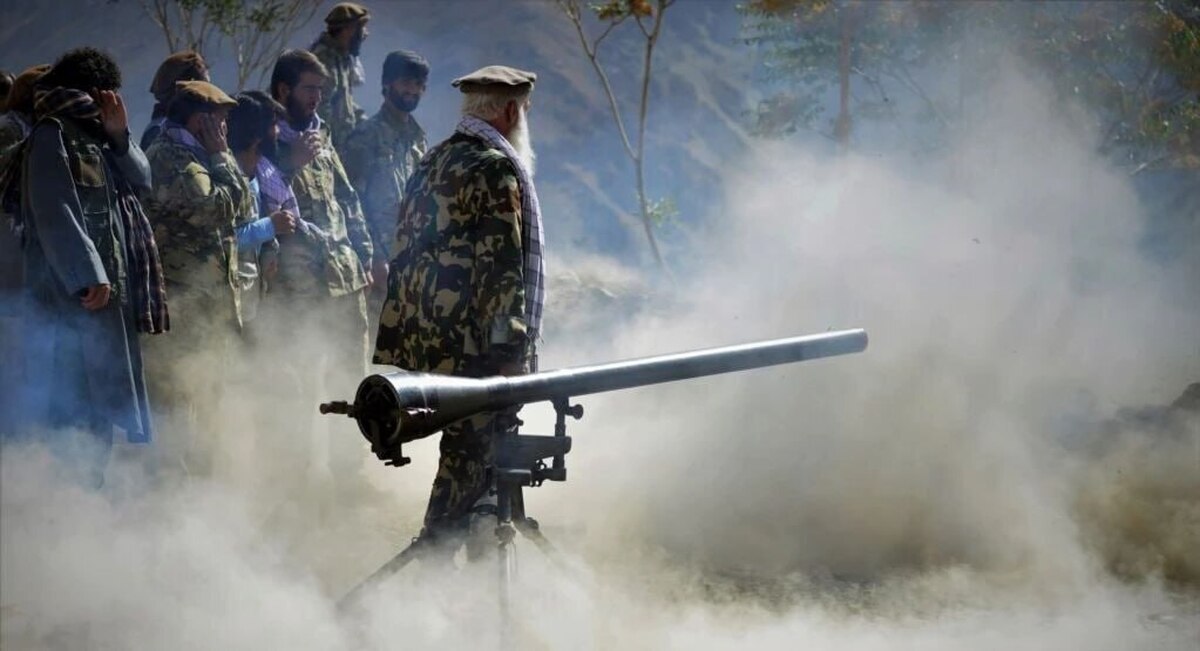
Online Strategic Council - Interview: A senior Afghan affairs analyst stated: Recently, Afghan media reported on airstrikes on Kabul and the sound of massive explosions. Local sources and news networks claimed that the Pakistani army had taken responsibility for this operation, and the target of the operation was identified as the leader of the Pakistani Taliban movement. Local Taliban spokesmen confirmed the occurrence of the explosion and announced that investigations had begun. The escalation of this incident, which occurred amid rising border and political tensions between Islamabad and Kabul, could affect the security equations in West and South Asia.

Roots of Tension

Abdolmohammad Taheri, in an interview with the website of the Strategic Council on Foreign Relations, stated: “Islamabad’s relations with the Taliban are rooted in years of intelligence, security, and logistical support. In past decades, the Taliban were a direct product of the policies of the Pakistani army’s intelligence agency and were initially considered a tool to strengthen Islamabad’s strategic depth in Afghan soil.” He noted that “this historical pattern emerged when Pakistan sought to ensure its security on its western borders by creating proxy forces.”

The senior Afghan affairs analyst emphasized: “During the years after the return of the Afghan Taliban to power, the connection between the Afghan Taliban, the Pakistani Taliban, and groups like Lashkar-e-Taiba had created a network of shared interests and threats that Islamabad consistently failed to control.” According to him, “When the Taliban government was established in its second period of rule over Kabul, the perception formed in Islamabad that Kabul could be an obedient and aligned neighbor; but the ground reality proved otherwise.” Taheri recalled that “over the past two years, the Afghan Taliban have sought to strengthen their decision-making independence and, more importantly, have provided serious support to the Pakistani Taliban and Lashkar-e-Taiba. These two issues gradually led to a deep rift between the two capitals.”

The senior Pakistani affairs analyst said that “border disputes, the dispute over the Durand Line, and the Afghan Taliban’s harboring of elements of the Pakistani Taliban (TTP) on their soil, led to an escalation of tensions, which ultimately resulted in the recent military action.”

Islamabad’s Calculations and the Logic of the Airstrike

In another part of his analysis, the senior Afghan affairs analyst described “the Pakistani army’s action as containing multi-layered objectives” and clarified that “the recent airstrike in Kabul is not merely a military action but carries a political and security message for domestic, regional, and extra-regional actors.” Taheri emphasized that “over the past two years, the Pakistani army has been under pressure from public opinion, the bloody attacks of the Pakistani Taliban, and increasing economic crises, and needed to demonstrate power. Therefore, the attack on Kabul was carried out not only to eliminate the leader of the Pakistani Taliban physically but also to restore the credibility of the country’s army.”

The university professor added: “The choice of the airstrike model from within Afghan soil was not unrelated to past patterns; just as the United States had designed a similar operation to target Ayman al-Zawahiri in Kabul in previous years.” According to him, “Pakistan, by using the same pattern, tried to show that it has the necessary capability for targeted cross-border action.” The South Asia researcher noted that “in Pakistan’s security structure, such actions are often carried out in coordination with the army’s public relations department (ISPR) to legitimize the action domestically and also send a clear international message.”

The senior Afghan affairs analyst recalled that “although this operation may lead to the removal of a key element of the Pakistani Taliban in the short term, in the medium term, it will inevitably intensify tensions between Kabul and Islamabad.” He said that “although the Afghan Taliban have taken a seemingly conservative stance, in their inner layers, they consider this action a violation of national sovereignty and may respond with indirect actions in the future.” The senior Afghan affairs analyst noted that “this reciprocal cycle could turn into a kind of new proxy war on the borders of Pakistan and Afghanistan, the consequences of which would be beyond the control of both sides.”

Foreign Actors and Regional Impacts

Taheri, regarding the role of extra-regional actors, said: “The presence and influence of the United States behind the recent developments are undeniable.” He explained that “after the humiliating withdrawal of the United States from Afghanistan, Washington seeks to redefine its position in the region. Therefore, efforts for the US return to Bagram and Washington’s security cooperation with Islamabad in carrying out the recent attack could pave the way for the Americans’ return to the scene of Afghan developments.” The university professor clarified that “the recent visits of Pakistani officials to Washington and their meetings at the White House showed that the groundwork for new coordination between the two sides had been laid.”

The senior Afghan affairs analyst noted that “for the United States, returning to Bagram at any cost, as well as controlling the Afghan Taliban and preventing the country from becoming a safe haven for international terrorism, is a priority, and on the other hand, Pakistan, by receiving financial and military aid, has found sufficient motivation to play a role in this equation.” He recalled that “in such circumstances, Afghanistan will be used not as a partner, but as a field for competition and settling scores.”

Taheri emphasized: “In this context, the roles of China, Russia, and Iran should not be overlooked.” According to him, “All three countries are concerned about the increased US presence on their eastern borders and know that the continuation of the crisis in Afghanistan could lead to the spread of instability in Central Asia and Iran’s eastern borders.” The Afghanistan researcher added that “from a geopolitical perspective, the greater the rift between Kabul and Islamabad, the more ground is prepared for increased Washington influence and the weakening of the Eastern Axis. Therefore, from now on, Russia and China will seek to contain the crisis and manage potential tensions so that space is not created for the US to play a role.”

The senior Afghan affairs analyst added: “The increase in conflict between Islamabad and the Afghan Taliban provides an opportunity for small and independent terrorist groups to take advantage of the power vacuum and, by carrying out scattered operations in border areas, increase the scope of insecurity. In such circumstances, Tehran must use the path of active diplomacy, effective mediation, and multilateral security cooperation.” Taheri clarified that “Iran, having relatively balanced relations with Kabul and Islamabad, should provide a platform for dialogue between the two sides to prevent the repetition of disastrous scenarios of the past.” He emphasized that “in regional foreign policy, ‘passivity’ is equivalent to ceding the stage to external powers, and this is exactly what Washington is seeking.”

The university professor, in his final analysis, “described Pakistan’s attack on Kabul not as an isolated event, but as a sign of a change in the balance of power in South Asia.” He recalled that “although the conflict between the Taliban and Pakistan may temporarily shift the focus of the threat away from Iran’s borders, in the case of sustained instability, its human and security consequences will sooner or later spread to other countries in the region, including Iran.”


0 Comments

LATEST CONTENT

Iran’s Success in the Narrative Battle in Cyberspace

SCFR Online – Opinion: In the war between Iran and the United States, the main battlefield was not defined solely in the military domain; rather, the battle of narratives in cyberspace—particularly through memes—reached a decisive level.

The Global Energy Shock Situation and Future Scenarios

SCFR Online – Opinion: Only one month after the beginning of the Ramadan War, maritime traffic in the Strait of Hormuz decreased dramatically, with Bloomberg announcing a reduction of 103 vessels; Brent oil prices rose by more than 50 percent, and gasoline prices in the United States increased by 31.4 percent. Additionally, benchmark gas prices in Europe showed a 73.4 percent increase.

Al-Zaydi’s Selection as Prime Minister, The Beginning of a New Chapter in Iraq

SCFR Online – Note: After approximately five months of political deadlock and institutional confusion, Ali al-Zaydi has finally been selected as Iraq’s Prime Minister. Al-Zaydi’s selection as Prime Minister represents a positive sign of the completion of the government formation process and the beginning of a new phase in Iraqi politics and governance. The emergence of a young, technocratic figure from the third generation of politicians—in a context where the country has been administered by traditional figures for decades—revives hope that Iraq may perhaps distance itself from the repetitive cycle of crises and experience a new path of stability, efficiency, and regional convergence.

Intensifying Intra-Party Divisions in the United States Regarding the Zionist Regime

SCFR Online – Note: Over recent decades, support for the Zionist regime has been one of the few issues commanding bipartisan consensus in US foreign policy. Since the Cold War era, Republicans and Democrats have generally agreed on the necessity of preserving the security and survival of the Zionist regime as Washington’s most strategic ally in West Asia—and indeed, globally. However, developments in recent years—particularly the Gaza war, escalating regional conflicts, the expansion of tensions into Lebanon, and this regime’s recent warmongering against Iran—have caused this traditional consensus, especially within the Democratic Party, to face significant fractures.

Public Opinion Disappointment of the Zionist Regime Regarding Success in War with Iran

SCFR Online – Opinion: The internal situation of the Israeli regime during the 40-day war can be analyzed from several perspectives. The popularity levels of Benjamin Netanyahu, the Likud Party, and the ruling coalition led by Netanyahu until February 28, 2026, remained approximately the same as during the preceding year. The most recent factor that had somewhat increased Netanyahu’s popularity was the advancement of the 2024 war with Hezbollah Lebanon. Subsequently, his popularity temporarily increased during the 12-day war with Iran, but after the war, it returned to its previous state.

Loading

Últimas publicaciones

Iran’s Success in the Narrative Battle in Cyberspace

SCFR Online – Opinion: In the war between Iran and the United States, the main battlefield was not defined solely in the military domain; rather, the battle of narratives in cyberspace—particularly through memes—reached a decisive level.

The Global Energy Shock Situation and Future Scenarios

SCFR Online – Opinion: Only one month after the beginning of the Ramadan War, maritime traffic in the Strait of Hormuz decreased dramatically, with Bloomberg announcing a reduction of 103 vessels; Brent oil prices rose by more than 50 percent, and gasoline prices in the United States increased by 31.4 percent. Additionally, benchmark gas prices in Europe showed a 73.4 percent increase.

Al-Zaydi’s Selection as Prime Minister, The Beginning of a New Chapter in Iraq

SCFR Online – Note: After approximately five months of political deadlock and institutional confusion, Ali al-Zaydi has finally been selected as Iraq’s Prime Minister. Al-Zaydi’s selection as Prime Minister represents a positive sign of the completion of the government formation process and the beginning of a new phase in Iraqi politics and governance. The emergence of a young, technocratic figure from the third generation of politicians—in a context where the country has been administered by traditional figures for decades—revives hope that Iraq may perhaps distance itself from the repetitive cycle of crises and experience a new path of stability, efficiency, and regional convergence.

Intensifying Intra-Party Divisions in the United States Regarding the Zionist Regime

SCFR Online – Note: Over recent decades, support for the Zionist regime has been one of the few issues commanding bipartisan consensus in US foreign policy. Since the Cold War era, Republicans and Democrats have generally agreed on the necessity of preserving the security and survival of the Zionist regime as Washington’s most strategic ally in West Asia—and indeed, globally. However, developments in recent years—particularly the Gaza war, escalating regional conflicts, the expansion of tensions into Lebanon, and this regime’s recent warmongering against Iran—have caused this traditional consensus, especially within the Democratic Party, to face significant fractures.

Public Opinion Disappointment of the Zionist Regime Regarding Success in War with Iran

SCFR Online – Opinion: The internal situation of the Israeli regime during the 40-day war can be analyzed from several perspectives. The popularity levels of Benjamin Netanyahu, the Likud Party, and the ruling coalition led by Netanyahu until February 28, 2026, remained approximately the same as during the preceding year. The most recent factor that had somewhat increased Netanyahu’s popularity was the advancement of the 2024 war with Hezbollah Lebanon. Subsequently, his popularity temporarily increased during the 12-day war with Iran, but after the war, it returned to its previous state.

Loading

DERNIER CONTENU

Iran’s Success in the Narrative Battle in Cyberspace

SCFR Online – Opinion: In the war between Iran and the United States, the main battlefield was not defined solely in the military domain; rather, the battle of narratives in cyberspace—particularly through memes—reached a decisive level.

The Global Energy Shock Situation and Future Scenarios

SCFR Online – Opinion: Only one month after the beginning of the Ramadan War, maritime traffic in the Strait of Hormuz decreased dramatically, with Bloomberg announcing a reduction of 103 vessels; Brent oil prices rose by more than 50 percent, and gasoline prices in the United States increased by 31.4 percent. Additionally, benchmark gas prices in Europe showed a 73.4 percent increase.

Al-Zaydi’s Selection as Prime Minister, The Beginning of a New Chapter in Iraq

SCFR Online – Note: After approximately five months of political deadlock and institutional confusion, Ali al-Zaydi has finally been selected as Iraq’s Prime Minister. Al-Zaydi’s selection as Prime Minister represents a positive sign of the completion of the government formation process and the beginning of a new phase in Iraqi politics and governance. The emergence of a young, technocratic figure from the third generation of politicians—in a context where the country has been administered by traditional figures for decades—revives hope that Iraq may perhaps distance itself from the repetitive cycle of crises and experience a new path of stability, efficiency, and regional convergence.

Intensifying Intra-Party Divisions in the United States Regarding the Zionist Regime

SCFR Online – Note: Over recent decades, support for the Zionist regime has been one of the few issues commanding bipartisan consensus in US foreign policy. Since the Cold War era, Republicans and Democrats have generally agreed on the necessity of preserving the security and survival of the Zionist regime as Washington’s most strategic ally in West Asia—and indeed, globally. However, developments in recent years—particularly the Gaza war, escalating regional conflicts, the expansion of tensions into Lebanon, and this regime’s recent warmongering against Iran—have caused this traditional consensus, especially within the Democratic Party, to face significant fractures.

Public Opinion Disappointment of the Zionist Regime Regarding Success in War with Iran

SCFR Online – Opinion: The internal situation of the Israeli regime during the 40-day war can be analyzed from several perspectives. The popularity levels of Benjamin Netanyahu, the Likud Party, and the ruling coalition led by Netanyahu until February 28, 2026, remained approximately the same as during the preceding year. The most recent factor that had somewhat increased Netanyahu’s popularity was the advancement of the 2024 war with Hezbollah Lebanon. Subsequently, his popularity temporarily increased during the 12-day war with Iran, but after the war, it returned to its previous state.

Loading

DERNIER CONTENU

Iran’s Success in the Narrative Battle in Cyberspace

SCFR Online – Opinion: In the war between Iran and the United States, the main battlefield was not defined solely in the military domain; rather, the battle of narratives in cyberspace—particularly through memes—reached a decisive level.

The Global Energy Shock Situation and Future Scenarios

SCFR Online – Opinion: Only one month after the beginning of the Ramadan War, maritime traffic in the Strait of Hormuz decreased dramatically, with Bloomberg announcing a reduction of 103 vessels; Brent oil prices rose by more than 50 percent, and gasoline prices in the United States increased by 31.4 percent. Additionally, benchmark gas prices in Europe showed a 73.4 percent increase.

Al-Zaydi’s Selection as Prime Minister, The Beginning of a New Chapter in Iraq

SCFR Online – Note: After approximately five months of political deadlock and institutional confusion, Ali al-Zaydi has finally been selected as Iraq’s Prime Minister. Al-Zaydi’s selection as Prime Minister represents a positive sign of the completion of the government formation process and the beginning of a new phase in Iraqi politics and governance. The emergence of a young, technocratic figure from the third generation of politicians—in a context where the country has been administered by traditional figures for decades—revives hope that Iraq may perhaps distance itself from the repetitive cycle of crises and experience a new path of stability, efficiency, and regional convergence.

Intensifying Intra-Party Divisions in the United States Regarding the Zionist Regime

SCFR Online – Note: Over recent decades, support for the Zionist regime has been one of the few issues commanding bipartisan consensus in US foreign policy. Since the Cold War era, Republicans and Democrats have generally agreed on the necessity of preserving the security and survival of the Zionist regime as Washington’s most strategic ally in West Asia—and indeed, globally. However, developments in recent years—particularly the Gaza war, escalating regional conflicts, the expansion of tensions into Lebanon, and this regime’s recent warmongering against Iran—have caused this traditional consensus, especially within the Democratic Party, to face significant fractures.

Public Opinion Disappointment of the Zionist Regime Regarding Success in War with Iran

SCFR Online – Opinion: The internal situation of the Israeli regime during the 40-day war can be analyzed from several perspectives. The popularity levels of Benjamin Netanyahu, the Likud Party, and the ruling coalition led by Netanyahu until February 28, 2026, remained approximately the same as during the preceding year. The most recent factor that had somewhat increased Netanyahu’s popularity was the advancement of the 2024 war with Hezbollah Lebanon. Subsequently, his popularity temporarily increased during the 12-day war with Iran, but after the war, it returned to its previous state.

Loading

DERNIER CONTENU

Iran’s Success in the Narrative Battle in Cyberspace

SCFR Online – Opinion: In the war between Iran and the United States, the main battlefield was not defined solely in the military domain; rather, the battle of narratives in cyberspace—particularly through memes—reached a decisive level.

The Global Energy Shock Situation and Future Scenarios

SCFR Online – Opinion: Only one month after the beginning of the Ramadan War, maritime traffic in the Strait of Hormuz decreased dramatically, with Bloomberg announcing a reduction of 103 vessels; Brent oil prices rose by more than 50 percent, and gasoline prices in the United States increased by 31.4 percent. Additionally, benchmark gas prices in Europe showed a 73.4 percent increase.

Al-Zaydi’s Selection as Prime Minister, The Beginning of a New Chapter in Iraq

SCFR Online – Note: After approximately five months of political deadlock and institutional confusion, Ali al-Zaydi has finally been selected as Iraq’s Prime Minister. Al-Zaydi’s selection as Prime Minister represents a positive sign of the completion of the government formation process and the beginning of a new phase in Iraqi politics and governance. The emergence of a young, technocratic figure from the third generation of politicians—in a context where the country has been administered by traditional figures for decades—revives hope that Iraq may perhaps distance itself from the repetitive cycle of crises and experience a new path of stability, efficiency, and regional convergence.

Intensifying Intra-Party Divisions in the United States Regarding the Zionist Regime

SCFR Online – Note: Over recent decades, support for the Zionist regime has been one of the few issues commanding bipartisan consensus in US foreign policy. Since the Cold War era, Republicans and Democrats have generally agreed on the necessity of preserving the security and survival of the Zionist regime as Washington’s most strategic ally in West Asia—and indeed, globally. However, developments in recent years—particularly the Gaza war, escalating regional conflicts, the expansion of tensions into Lebanon, and this regime’s recent warmongering against Iran—have caused this traditional consensus, especially within the Democratic Party, to face significant fractures.

Public Opinion Disappointment of the Zionist Regime Regarding Success in War with Iran

SCFR Online – Opinion: The internal situation of the Israeli regime during the 40-day war can be analyzed from several perspectives. The popularity levels of Benjamin Netanyahu, the Likud Party, and the ruling coalition led by Netanyahu until February 28, 2026, remained approximately the same as during the preceding year. The most recent factor that had somewhat increased Netanyahu’s popularity was the advancement of the 2024 war with Hezbollah Lebanon. Subsequently, his popularity temporarily increased during the 12-day war with Iran, but after the war, it returned to its previous state.

Loading





