
Dr. Kamran Karami – Researcher on Persian Gulf Affairs
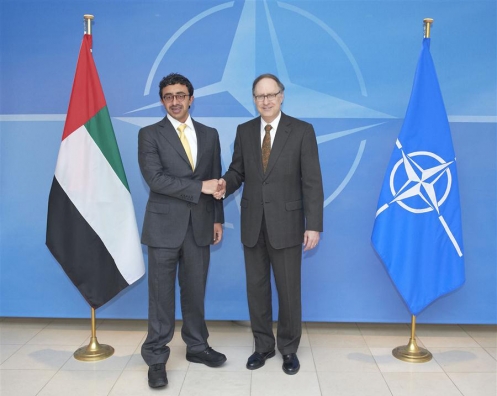
The reality is that security cooperation between NATO and Persian Gulf Arab states has a history spanning nearly two decades, formally pursued since 2008 within the framework of the “Istanbul Cooperation Initiative.” Qatar, Bahrain, Kuwait, and the UAE have cooperated with NATO during these years in domains such as military training, cybersecurity, information exchange, counterterrorism, and protection of critical infrastructure. From this perspective, the presence of these countries at NATO’s recent summit represents less the formation of a new security alliance and more an effort to redefine and update existing cooperation under new regional conditions—an effort that will, however, confront an ambiguous and questionable outlook.
Developments over the past two years—particularly the US and Zionist regime’s war against Iran and its resulting security consequences—constitute the most significant variable influencing this security reassessment. Reciprocal attacks, the expansion of drone and missile warfare, and the vulnerability of energy infrastructure and maritime corridors in the Persian Gulf have confronted the region’s Arab governments with a new reality: that America’s security umbrella no longer possesses its former efficacy and certainty. Attacks on oil facilities, threats to shipping lanes, and concerns about the spillover of conflict into the deeper Persian Gulf have prompted Persian Gulf Cooperation Council countries to move toward a form of security risk hedging—meaning that alongside maintaining traditional relations with Washington, they seek to diversify their security partners and enhance their own deterrent capabilities.
Within this framework, expanded cooperation with NATO should be understood as part of a strategy for managing uncertainties, not as a precursor to entering a comprehensive defense pact against Iran. The leaders of Arab Persian Gulf states are well aware that future wars will rely less on classic military confrontation and more on hybrid warfare, cyberattacks, precision missiles, and drones. Consequently, their focus has shifted toward acquiring early-warning systems, air defense technologies, cybersecurity capabilities, and intelligence coordination. These countries are essentially attempting to reduce the costs of their vulnerability without entering into a direct and costly regional confrontation.
However, an important point is that redefining security structures in the Persian Gulf does not necessarily mean closing the path to dialogue with Iran. Experience in recent years has demonstrated that even at the height of regional tensions, Arab governments have consistently sought to maintain their communication channels with Tehran. The Iran-Saudi agreement mediated by China and ongoing dialogues with Qatar and Oman indicate that the preferred security model in the Persian Gulf focuses less on absolute confrontation and more on managing tensions and preventing widespread instability.
In this regard, the differing approaches of Saudi Arabia and Oman compared to certain other GCC members are significant. Riyadh and Muscat have preferred to maintain a clear distance from any overtly anti-Iranian security framework. Saudi Arabia, particularly following the experience of the 2019 Aramco facility attack, has concluded that sustainable security in the Persian Gulf is not achieved solely through external alliances but requires a form of balance between deterrence and regional diplomacy. Oman continues to emphasize its long-standing tradition of mediation and maintaining equilibrium in regional relations.
Therefore, what is taking shape today is not a rigid security bloc reminiscent of the Cold War era, but rather a form of fluid, multi-layered security arrangement in the Persian Gulf. GCC countries are, on one hand, seeking to enhance their defensive capacities and hedge against risks arising from regional crises, while on the other hand attempting to prevent the Persian Gulf from becoming a theater of all-out confrontation between Iran and the United States. Put differently, these countries seek to establish a balance between hard security and regional diplomacy.
Under such circumstances, the future of Persian Gulf security will depend more than ever on the regional actors’ capacity to manage tensions. Although cooperation with NATO and extra-regional powers may compensate for certain existing security gaps, the region’s geopolitical realities indicate that no sustainable and reassuring security mechanism will emerge without Iran’s participation and dialogue. Consequently, the current process should be understood as encompassing two parallel tracks: first, efforts to strengthen deterrence and reduce vulnerability; and second, maintaining diplomatic channels to prevent the region from entering a cycle of uncontrollable tensions.









0 Comments