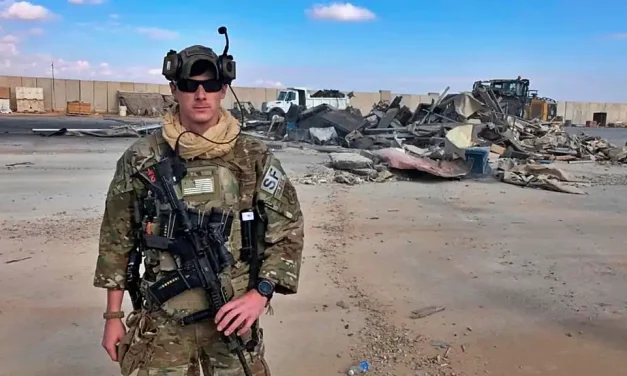
U.S. and the Afghanistan peace process

2018/12/18 | News, Opinion, Publications

Strategic Council Online: The United States seems to be pursuing two main goals in Afghanistan: First make the Taliban part of the power in Afghanistan, that is to put other parties and groups that are opposed to the Taliban in a position to accept the Taliban's share of power. The second goal is to have a state entirely aligned with Washington’s goals. Pir Mohammad Molazehi, Expert on Afghanistan Affairs

The Geneva Conference on Afghanistan hosted by Kabul and the United Nations, with delegations from 16 countries and 53 international organizations, and representatives of civil society, the private sector and the media in attendance, took place on November 27-28 in Geneva, Switzerland.

Regarding the results of this confab and the Taliban perspective on peace talks with the Afghan government, there are a few points to note:

The Geneva Peace Conference comprised two parts: one was peace-related and the other related to a report by President Ashraf Ghani on the concerns of the West (donors to Afghanistan). Because rumours have spread about financial corruption, wasting credits, and a decline in Western countries’ willingness to continue donations. Therefore, the main purpose of Ashraf Ghani at the Geneva conference was not the issue of peace but his top priority was to convince the Western contributors to continue donations, The Afghan president seems to have succeeded in achieving this goal and persuading the West about the need to continue aid to Afghanistan.

As for the peace talks, it should be noted that this process involves several parties and is not only limited to the Kabul government and the Taliban; Because the big countries, the neighbouring countries of Afghanistan, and the Islamic and non-Islamic countries that have defined some interests in Afghanistan, are also involved in this peace process. Therefore, you cannot simply imagine a peace plan in Afghanistan that would bring all the parties together in a single summit in which peace can be established in Afghanistan.

Furthermore, one should not forget that the Taliban did not attend the Geneva talks at all. Therefore, any decision made at the conference would be naturally unacceptable by the Taliban. Therefore, peace talks through Geneva or the mediation of international centres are not very consistent with Afghanistan’s realities, and the peace efforts are focused elsewhere. In fact, the mission of Mr Zalmay Khalilzad (an Afghan by origin and an important Neocon figure in the United States) as the special envoy of Donald Trump on Afghanistan is of particular importance at this time. Khalilzad has travelled to the region and held three rounds of talks with the Taliban, the Afghan government and Pakistan with the third round consultations still continuing.

In other words, on the one hand, the presidential election commission announced the timing of the election which is scheduled to be held on April 20 next year; on the other hand, rumours are spreading that the United States and its envoy Khalilzad are seeking to postpone the election. Based on analysts the U.S. aim behind the postponement is the formation of a transitional government with the Taliban being part of it and attain peace through bypass democratic mechanisms.

Of course, there is another scenario the Americans are believed to be looking for: An experience that had taken place under former U.S. Secretary of State John Kerry when the presidential election between Abdullah Abdullah and Ashraf Ghani faced an impasse. At that time Kerry proposed a National Unity Government, in which Mr Abdullah took the chair of the Chief Executive and Ashraf Ghani as the president. This time too, the Americans seem to be seeking a transitional government with the participation of the Taliban for the sake of peace.

Khalilzad recently expressed hope in an interview that before the election conditions would be created to bring the peace talks to an end. Given the circumstances and complexities of Afghanistan, it is very important and obvious that the Americans are following plans other than those put forward at the Geneva conference or by the Afghan government to form a transitional government with the partnership of the Taliban. During this process, they are also seeking a situation where political parties, ethnic groups and religious parties will also agree with such a government. So, behind the curtain, there is a stream in work which is not consistent with what is announced publicly.

Eventually, the United States seems to be pursuing two main goals: First make the Taliban part of the power in Afghanistan, that is to put other parties and groups that are opposed to the Taliban in a position to accept the Taliban’s share of power. The second goal is to have a state entirely aligned with Washington’s goals.

In this regard, it can be predicted that the Americans are no longer counting on figures like Ashraf Ghani or Abdullah Abdullah and are looking for newer faces.
0 Comments

Submit a Comment

Your email address will not be published. Required fields are marked *

LATEST CONTENT

China’s Rejection of US Sanctions; Strengthening Iran’s Geopolitical Leverage

SCFR Online – Opinion: Concurrent with the official commencement of the United States’ economic war against our country, focusing on sanctions instruments, isolation, and economic pressure, what has now become increasingly important is the lack of alignment of other major global powers, especially China, with this policy.

The Makkah Pact; Reasons for its Formation and Challenges Ahead

SCFR Online – Opinion: The Makkah Pact, signed between Saudi Arabia, Pakistan, and Turkey under the motto “an attack on one is an attack on all,” is viewed by some analysts less as a full-fledged military coalition and more as an attempt to reduce security dependence on an external power and to establish a regional security mechanism.

Implications of the US-Saudi Nuclear Agreement

SCFR Online – Opinion: The new US-Saudi nuclear agreement, despite legal and political ambiguities, could alter previous non-proliferation standards in West Asia and intensify nuclear competition, ushering it into a new phase.

An Analysis of Recent Turkey-Israeli Regime Tensions

SCFR Online – Opinion: Recent developments in Syria indicate an intensification of strategic rivalry between Turkey and the Israeli regime, but mutual considerations and the role of the United States have limited the likelihood of direct war.

Loading

Últimas publicaciones

China’s Rejection of US Sanctions; Strengthening Iran’s Geopolitical Leverage

SCFR Online – Opinion: Concurrent with the official commencement of the United States’ economic war against our country, focusing on sanctions instruments, isolation, and economic pressure, what has now become increasingly important is the lack of alignment of other major global powers, especially China, with this policy.

The Makkah Pact; Reasons for its Formation and Challenges Ahead

SCFR Online – Opinion: The Makkah Pact, signed between Saudi Arabia, Pakistan, and Turkey under the motto “an attack on one is an attack on all,” is viewed by some analysts less as a full-fledged military coalition and more as an attempt to reduce security dependence on an external power and to establish a regional security mechanism.

Implications of the US-Saudi Nuclear Agreement

SCFR Online – Opinion: The new US-Saudi nuclear agreement, despite legal and political ambiguities, could alter previous non-proliferation standards in West Asia and intensify nuclear competition, ushering it into a new phase.

An Analysis of Recent Turkey-Israeli Regime Tensions

SCFR Online – Opinion: Recent developments in Syria indicate an intensification of strategic rivalry between Turkey and the Israeli regime, but mutual considerations and the role of the United States have limited the likelihood of direct war.

Loading

DERNIER CONTENU

China’s Rejection of US Sanctions; Strengthening Iran’s Geopolitical Leverage

SCFR Online – Opinion: Concurrent with the official commencement of the United States’ economic war against our country, focusing on sanctions instruments, isolation, and economic pressure, what has now become increasingly important is the lack of alignment of other major global powers, especially China, with this policy.

The Makkah Pact; Reasons for its Formation and Challenges Ahead

SCFR Online – Opinion: The Makkah Pact, signed between Saudi Arabia, Pakistan, and Turkey under the motto “an attack on one is an attack on all,” is viewed by some analysts less as a full-fledged military coalition and more as an attempt to reduce security dependence on an external power and to establish a regional security mechanism.

Implications of the US-Saudi Nuclear Agreement

SCFR Online – Opinion: The new US-Saudi nuclear agreement, despite legal and political ambiguities, could alter previous non-proliferation standards in West Asia and intensify nuclear competition, ushering it into a new phase.

An Analysis of Recent Turkey-Israeli Regime Tensions

SCFR Online – Opinion: Recent developments in Syria indicate an intensification of strategic rivalry between Turkey and the Israeli regime, but mutual considerations and the role of the United States have limited the likelihood of direct war.

Loading

DERNIER CONTENU

China’s Rejection of US Sanctions; Strengthening Iran’s Geopolitical Leverage

SCFR Online – Opinion: Concurrent with the official commencement of the United States’ economic war against our country, focusing on sanctions instruments, isolation, and economic pressure, what has now become increasingly important is the lack of alignment of other major global powers, especially China, with this policy.

The Makkah Pact; Reasons for its Formation and Challenges Ahead

SCFR Online – Opinion: The Makkah Pact, signed between Saudi Arabia, Pakistan, and Turkey under the motto “an attack on one is an attack on all,” is viewed by some analysts less as a full-fledged military coalition and more as an attempt to reduce security dependence on an external power and to establish a regional security mechanism.

Implications of the US-Saudi Nuclear Agreement

SCFR Online – Opinion: The new US-Saudi nuclear agreement, despite legal and political ambiguities, could alter previous non-proliferation standards in West Asia and intensify nuclear competition, ushering it into a new phase.

An Analysis of Recent Turkey-Israeli Regime Tensions

SCFR Online – Opinion: Recent developments in Syria indicate an intensification of strategic rivalry between Turkey and the Israeli regime, but mutual considerations and the role of the United States have limited the likelihood of direct war.

Loading

DERNIER CONTENU

China’s Rejection of US Sanctions; Strengthening Iran’s Geopolitical Leverage

SCFR Online – Opinion: Concurrent with the official commencement of the United States’ economic war against our country, focusing on sanctions instruments, isolation, and economic pressure, what has now become increasingly important is the lack of alignment of other major global powers, especially China, with this policy.

The Makkah Pact; Reasons for its Formation and Challenges Ahead

SCFR Online – Opinion: The Makkah Pact, signed between Saudi Arabia, Pakistan, and Turkey under the motto “an attack on one is an attack on all,” is viewed by some analysts less as a full-fledged military coalition and more as an attempt to reduce security dependence on an external power and to establish a regional security mechanism.

Implications of the US-Saudi Nuclear Agreement

SCFR Online – Opinion: The new US-Saudi nuclear agreement, despite legal and political ambiguities, could alter previous non-proliferation standards in West Asia and intensify nuclear competition, ushering it into a new phase.

An Analysis of Recent Turkey-Israeli Regime Tensions

SCFR Online – Opinion: Recent developments in Syria indicate an intensification of strategic rivalry between Turkey and the Israeli regime, but mutual considerations and the role of the United States have limited the likelihood of direct war.

Loading