Effective Components in Venezuelan Developments

2019/02/18 | Opinion, Politics

Strategic Council Online - If the Army maintains loyalty and support for the legal government in Venezuela, the Maduro Administration would probably remain in power and foreign countries would not be able to do anything about it; but if the Army stops its support for the Maduro government, as one or two army commanders have tilted towards Guaido, the developments in Venezuela may take a different turn. Seyed Jafar Hashemi, Former Iranian Ambassador to Brazil

Juan Guaido, the coup d’état leader in Venezuela, has been striving since January 11, 2019, to topple Nicholas Maduro under the pretext that the presidential elections were rigged. As a result of a number of foreign countries, such as the United States, have voiced support for Guaido and recognized him as the interim president. This is while it has been revealed that the Americans themselves had engineered the coup plot. US National Security Advisor John Bolton’s meetings with some of Maduro’s opponents, as well as some leaders of Venezuelan neighbouring countries, indicates that Washington seeks to topple the legitimate president of the country in any way possible.

If we want to examine the main reason for such a move, we must point to the failures of the United States in Latin America and losing its status in the region in recent decades. Therefore, the theory that Latin American countries are the backyard of America was dismissed with the emergence of anti-American governments in countries like Cuba, Bolivia, Brazil and Venezuela under Hugo Chavez. Therefore, Washington felt it was in danger and made a lot of efforts to prevent the continuation of this process. Eventually, with the coming to power of Jair Bolsonaro in Brazil who is called the Trump of Latin America, Washington began to gradually create obstacles in the way of the countries that had come out of the US domination.

In the meantime, Venezuela’s economic dilemma and dissatisfactions inside the country made Guaido win some support from among the people. Also, Venezuelans have been suffering from a very turbulent economic situation for many years, and this has led them to migrate to neighbouring countries. The host countries meantime are not happy about the flood of immigrants from Venezuela and for the same reason support the shift of power in the country.

There is no doubt that there are many problems and much corruption in Venezuela, but as stipulated in international relations laws no other country is authorized to decide for the country in trouble and set a deadline for the country to hold new elections otherwise another person would take over as interim president.

Adoption of such a policy reminds one of the colonialist approaches. Even if the Venezuelan government was inefficient the problem must be resolved by the people of Venezuela and in a peaceful manner. Therefore, the countries that have voiced support for Guaido have violated the international norms. Another strange thing is that many countries in the world remain silent about this issue and foreign interventions, which is a huge disaster.

So, at the current juncture, two groups of countries have emerged from the developments in Venezuela: a US-led group that includes the European Union member states.

After Guido called himself Venezuelan President, Germany, France, Spain, Britain, Portugal, the Netherlands and Belgium gave Venezuelan President Nicholas Maduro eight days to hold new elections otherwise they would recognize the interim presidency of Juan Guaido. The deadline ended Sunday, and they recognized Guaido as the interim president of Venezuela. Obviously, other countries will join this group in the coming months.

Another batch of countries that have taken positions in support of the legitimate government in Venezuela includes Russia, China, North Korea, Turkey and Iran. These countries, especially China, have invested heavily in Venezuela over the past years, and therefore will not easily let the United States and other countries create trouble for or topple a legitimate government.

 A country like the Islamic Republic of Iran too has also taken a position against these steps that are not legal.

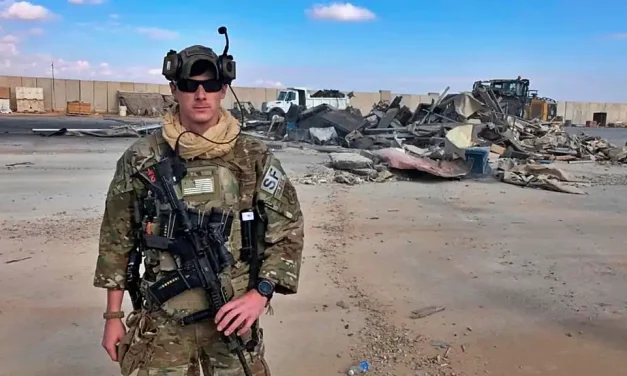
Finally, one of the key determinants in Venezuela’s developments is the Army; if the Army maintains loyalty and supports the government, Maduro will probably survive and foreign countries would not be able to do anything, but if the Army stops its support for the Maduro government — as one or two army commanders have tilted towards Guaido, the developments in Venezuela may take a different turn.
0 Comments

Submit a Comment

Your email address will not be published. Required fields are marked *

LATEST CONTENT

China’s Rejection of US Sanctions; Strengthening Iran’s Geopolitical Leverage

SCFR Online – Opinion: Concurrent with the official commencement of the United States’ economic war against our country, focusing on sanctions instruments, isolation, and economic pressure, what has now become increasingly important is the lack of alignment of other major global powers, especially China, with this policy.

The Makkah Pact; Reasons for its Formation and Challenges Ahead

SCFR Online – Opinion: The Makkah Pact, signed between Saudi Arabia, Pakistan, and Turkey under the motto “an attack on one is an attack on all,” is viewed by some analysts less as a full-fledged military coalition and more as an attempt to reduce security dependence on an external power and to establish a regional security mechanism.

Implications of the US-Saudi Nuclear Agreement

SCFR Online – Opinion: The new US-Saudi nuclear agreement, despite legal and political ambiguities, could alter previous non-proliferation standards in West Asia and intensify nuclear competition, ushering it into a new phase.

An Analysis of Recent Turkey-Israeli Regime Tensions

SCFR Online – Opinion: Recent developments in Syria indicate an intensification of strategic rivalry between Turkey and the Israeli regime, but mutual considerations and the role of the United States have limited the likelihood of direct war.

Loading

Últimas publicaciones

China’s Rejection of US Sanctions; Strengthening Iran’s Geopolitical Leverage

SCFR Online – Opinion: Concurrent with the official commencement of the United States’ economic war against our country, focusing on sanctions instruments, isolation, and economic pressure, what has now become increasingly important is the lack of alignment of other major global powers, especially China, with this policy.

The Makkah Pact; Reasons for its Formation and Challenges Ahead

SCFR Online – Opinion: The Makkah Pact, signed between Saudi Arabia, Pakistan, and Turkey under the motto “an attack on one is an attack on all,” is viewed by some analysts less as a full-fledged military coalition and more as an attempt to reduce security dependence on an external power and to establish a regional security mechanism.

Implications of the US-Saudi Nuclear Agreement

SCFR Online – Opinion: The new US-Saudi nuclear agreement, despite legal and political ambiguities, could alter previous non-proliferation standards in West Asia and intensify nuclear competition, ushering it into a new phase.

An Analysis of Recent Turkey-Israeli Regime Tensions

SCFR Online – Opinion: Recent developments in Syria indicate an intensification of strategic rivalry between Turkey and the Israeli regime, but mutual considerations and the role of the United States have limited the likelihood of direct war.

Loading

DERNIER CONTENU

China’s Rejection of US Sanctions; Strengthening Iran’s Geopolitical Leverage

SCFR Online – Opinion: Concurrent with the official commencement of the United States’ economic war against our country, focusing on sanctions instruments, isolation, and economic pressure, what has now become increasingly important is the lack of alignment of other major global powers, especially China, with this policy.

The Makkah Pact; Reasons for its Formation and Challenges Ahead

SCFR Online – Opinion: The Makkah Pact, signed between Saudi Arabia, Pakistan, and Turkey under the motto “an attack on one is an attack on all,” is viewed by some analysts less as a full-fledged military coalition and more as an attempt to reduce security dependence on an external power and to establish a regional security mechanism.

Implications of the US-Saudi Nuclear Agreement

SCFR Online – Opinion: The new US-Saudi nuclear agreement, despite legal and political ambiguities, could alter previous non-proliferation standards in West Asia and intensify nuclear competition, ushering it into a new phase.

An Analysis of Recent Turkey-Israeli Regime Tensions

SCFR Online – Opinion: Recent developments in Syria indicate an intensification of strategic rivalry between Turkey and the Israeli regime, but mutual considerations and the role of the United States have limited the likelihood of direct war.

Loading

DERNIER CONTENU

China’s Rejection of US Sanctions; Strengthening Iran’s Geopolitical Leverage

SCFR Online – Opinion: Concurrent with the official commencement of the United States’ economic war against our country, focusing on sanctions instruments, isolation, and economic pressure, what has now become increasingly important is the lack of alignment of other major global powers, especially China, with this policy.

The Makkah Pact; Reasons for its Formation and Challenges Ahead

SCFR Online – Opinion: The Makkah Pact, signed between Saudi Arabia, Pakistan, and Turkey under the motto “an attack on one is an attack on all,” is viewed by some analysts less as a full-fledged military coalition and more as an attempt to reduce security dependence on an external power and to establish a regional security mechanism.

Implications of the US-Saudi Nuclear Agreement

SCFR Online – Opinion: The new US-Saudi nuclear agreement, despite legal and political ambiguities, could alter previous non-proliferation standards in West Asia and intensify nuclear competition, ushering it into a new phase.

An Analysis of Recent Turkey-Israeli Regime Tensions

SCFR Online – Opinion: Recent developments in Syria indicate an intensification of strategic rivalry between Turkey and the Israeli regime, but mutual considerations and the role of the United States have limited the likelihood of direct war.

Loading

DERNIER CONTENU

China’s Rejection of US Sanctions; Strengthening Iran’s Geopolitical Leverage

SCFR Online – Opinion: Concurrent with the official commencement of the United States’ economic war against our country, focusing on sanctions instruments, isolation, and economic pressure, what has now become increasingly important is the lack of alignment of other major global powers, especially China, with this policy.

The Makkah Pact; Reasons for its Formation and Challenges Ahead

SCFR Online – Opinion: The Makkah Pact, signed between Saudi Arabia, Pakistan, and Turkey under the motto “an attack on one is an attack on all,” is viewed by some analysts less as a full-fledged military coalition and more as an attempt to reduce security dependence on an external power and to establish a regional security mechanism.

Implications of the US-Saudi Nuclear Agreement

SCFR Online – Opinion: The new US-Saudi nuclear agreement, despite legal and political ambiguities, could alter previous non-proliferation standards in West Asia and intensify nuclear competition, ushering it into a new phase.

An Analysis of Recent Turkey-Israeli Regime Tensions

SCFR Online – Opinion: Recent developments in Syria indicate an intensification of strategic rivalry between Turkey and the Israeli regime, but mutual considerations and the role of the United States have limited the likelihood of direct war.

Loading