New Lebanese Government: A Step towards Consolidating Political Stability

2019/03/09 | Opinion, Politics

Strategic Council Online: Hezbollah's goal in contributing to Lebanon’s political trends is for the “Resistance” to maintain its arms; Hezbollah has never sought to tribalize politics. Dr. Ahmad Zarean - University professor

Lebanese Hezbollah Secretary-General Sayyed Hassan Nasrallah delivered a speech focusing on the latest developments in Lebanon and the formation of a new government in Lebanon on Monday, February 4. Given the fact that the Lebanese parliamentary elections were held in May this year and the formation of a government was delayed, the introduction of ministers and the formation of a new Lebanese government is an important step in the path of political stability. Following the parliamentary elections in May, which was held with a delay of four years, the March 8 Alliance, which is the political current supporting the Resistance, won 67 seats out of 128 parliamentary seats and emerged as the victor in the elections. With Michelle Aoun becoming the president he called on Saad Hariri to form a cabinet but disagreement over the choice of ministers made the formation of the cabinet difficult. Until finally, on January 31st, Saad Hariri announced the list of his cabinet members after a nine-month deadlock, and Lebanon left this crucial political stage behind.

In his speech, Hassan Nasrallah described the positions of the Hezbollah in relation to the new government in Lebanon; Referring to statements by Benjamin Netanyahu that the new Lebanese government was controlled by Hezbollah he said: “I would like to draw the attention of political factions and the media to the point that the Israeli Prime Minister Benjamin Netanyahu has been claiming over the past two or three days that this government is controlled by the Hezbollah. He wants to provoke the Americans and the Europeans against the Lebanese government. He also aims to incite the Persian Gulf states because they are now friends (of Israel) which will encourage them to stand against the Lebanese government. Netanyahu’s claim is just an allegation but some internal Lebanese currents are likely to side with Netanyahu and say that this government is a government of Hezbollah. Of course, for me and for Hezbollah, it is a matter of strength and honor, but first of all what Netanyahu says is not true. The current government is not a Hezbollah government and there are other political currents in this government. Hezbollah is just one of these political factions. “

Hassan Nasrallah also stated: “I emphasize that our presence in this government has a great impact so that more than any other time our presence is influential. Because our discussions and cooperation in the government will be more than ever, and our participation in responsibility will leave its impacts more than ever, but this does not mean this government is controlled by the Hezbollah. “

It is common ground among all experts that Hezbollah’s political action in Lebanon’s domestic arena is wise: Hezbollah’s goal of political participation is for the Resistance to preserve its arms, and Hezbollah has never sought to tribalize politics. Considering the type of political system dominating Lebanon, namely an adaptive democracy in which power is distributed on the basis of tribalism and tribal rivalry, the Hezbollah’s non-tribal approach is very important in Lebanon’s much tribalized political environment and is considered a constructive approach based on national interests.

In his address, Nasrallah also noted that Netanyahu’s claim was unfounded because he is seeking to provoke foreign players opposed to the Hezbollah in Lebanon. Foreign actors opposed to the Resistance are worried about Hezbollah’s power in the Lebanese political arena. Netanyahu intends to increase the worries of these players by influencing Lebanon’s political move forward and preventing the continuation of political stability in Lebanon. Meanwhile, players supporting the Resistance Axis such as the Islamic Republic of Iran are in favor of continuation of the current process and political stability in Lebanon.

Hassan Nasrallah also said that according to the agreements they had reached with political currents prior to the elections and before the formation of the government, economy is at the top of their priorities. “Fighting corruption and campaign against wasting public property is at the top of our efforts to improve the situation. “

Nasrallah’s emphasis on giving the priority to the economy is due to economic problems caused by chronic political instability in the country. As noted above, after the parliamentary elections, the deadlock of forming the Lebanese government lasted about 9 months, during which Saad Hariri served as head of state to handle daily affairs in Lebanon. In fact, there was no real government in Lebanon during this time. On the other hand, the presence of displaced Syrians in Lebanon has increased its economic troubles. Therefore, it is natural that the first priority of the Hezbollah and other national currents is to solve the economic problems. The question of economy is also important from other perspectives, because perpetuation of economic setbacks can help the growth of terrorist groups and extremists.


0 Comments

Submit a Comment

Your email address will not be published. Required fields are marked *

LATEST CONTENT

China’s Rejection of US Sanctions; Strengthening Iran’s Geopolitical Leverage

SCFR Online – Opinion: Concurrent with the official commencement of the United States’ economic war against our country, focusing on sanctions instruments, isolation, and economic pressure, what has now become increasingly important is the lack of alignment of other major global powers, especially China, with this policy.

The Makkah Pact; Reasons for its Formation and Challenges Ahead

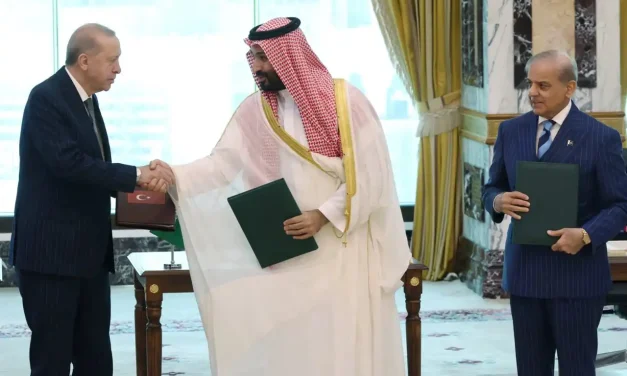
SCFR Online – Opinion: The Makkah Pact, signed between Saudi Arabia, Pakistan, and Turkey under the motto “an attack on one is an attack on all,” is viewed by some analysts less as a full-fledged military coalition and more as an attempt to reduce security dependence on an external power and to establish a regional security mechanism.

Implications of the US-Saudi Nuclear Agreement

SCFR Online – Opinion: The new US-Saudi nuclear agreement, despite legal and political ambiguities, could alter previous non-proliferation standards in West Asia and intensify nuclear competition, ushering it into a new phase.

An Analysis of Recent Turkey-Israeli Regime Tensions

SCFR Online – Opinion: Recent developments in Syria indicate an intensification of strategic rivalry between Turkey and the Israeli regime, but mutual considerations and the role of the United States have limited the likelihood of direct war.

Loading

Últimas publicaciones

China’s Rejection of US Sanctions; Strengthening Iran’s Geopolitical Leverage

SCFR Online – Opinion: Concurrent with the official commencement of the United States’ economic war against our country, focusing on sanctions instruments, isolation, and economic pressure, what has now become increasingly important is the lack of alignment of other major global powers, especially China, with this policy.

The Makkah Pact; Reasons for its Formation and Challenges Ahead

SCFR Online – Opinion: The Makkah Pact, signed between Saudi Arabia, Pakistan, and Turkey under the motto “an attack on one is an attack on all,” is viewed by some analysts less as a full-fledged military coalition and more as an attempt to reduce security dependence on an external power and to establish a regional security mechanism.

Implications of the US-Saudi Nuclear Agreement

SCFR Online – Opinion: The new US-Saudi nuclear agreement, despite legal and political ambiguities, could alter previous non-proliferation standards in West Asia and intensify nuclear competition, ushering it into a new phase.

An Analysis of Recent Turkey-Israeli Regime Tensions

SCFR Online – Opinion: Recent developments in Syria indicate an intensification of strategic rivalry between Turkey and the Israeli regime, but mutual considerations and the role of the United States have limited the likelihood of direct war.

Loading

DERNIER CONTENU

China’s Rejection of US Sanctions; Strengthening Iran’s Geopolitical Leverage

SCFR Online – Opinion: Concurrent with the official commencement of the United States’ economic war against our country, focusing on sanctions instruments, isolation, and economic pressure, what has now become increasingly important is the lack of alignment of other major global powers, especially China, with this policy.

The Makkah Pact; Reasons for its Formation and Challenges Ahead

SCFR Online – Opinion: The Makkah Pact, signed between Saudi Arabia, Pakistan, and Turkey under the motto “an attack on one is an attack on all,” is viewed by some analysts less as a full-fledged military coalition and more as an attempt to reduce security dependence on an external power and to establish a regional security mechanism.

Implications of the US-Saudi Nuclear Agreement

SCFR Online – Opinion: The new US-Saudi nuclear agreement, despite legal and political ambiguities, could alter previous non-proliferation standards in West Asia and intensify nuclear competition, ushering it into a new phase.

An Analysis of Recent Turkey-Israeli Regime Tensions

SCFR Online – Opinion: Recent developments in Syria indicate an intensification of strategic rivalry between Turkey and the Israeli regime, but mutual considerations and the role of the United States have limited the likelihood of direct war.

Loading

DERNIER CONTENU

China’s Rejection of US Sanctions; Strengthening Iran’s Geopolitical Leverage

SCFR Online – Opinion: Concurrent with the official commencement of the United States’ economic war against our country, focusing on sanctions instruments, isolation, and economic pressure, what has now become increasingly important is the lack of alignment of other major global powers, especially China, with this policy.

The Makkah Pact; Reasons for its Formation and Challenges Ahead

SCFR Online – Opinion: The Makkah Pact, signed between Saudi Arabia, Pakistan, and Turkey under the motto “an attack on one is an attack on all,” is viewed by some analysts less as a full-fledged military coalition and more as an attempt to reduce security dependence on an external power and to establish a regional security mechanism.

Implications of the US-Saudi Nuclear Agreement

SCFR Online – Opinion: The new US-Saudi nuclear agreement, despite legal and political ambiguities, could alter previous non-proliferation standards in West Asia and intensify nuclear competition, ushering it into a new phase.

An Analysis of Recent Turkey-Israeli Regime Tensions

SCFR Online – Opinion: Recent developments in Syria indicate an intensification of strategic rivalry between Turkey and the Israeli regime, but mutual considerations and the role of the United States have limited the likelihood of direct war.

Loading

DERNIER CONTENU

China’s Rejection of US Sanctions; Strengthening Iran’s Geopolitical Leverage

SCFR Online – Opinion: Concurrent with the official commencement of the United States’ economic war against our country, focusing on sanctions instruments, isolation, and economic pressure, what has now become increasingly important is the lack of alignment of other major global powers, especially China, with this policy.

The Makkah Pact; Reasons for its Formation and Challenges Ahead

SCFR Online – Opinion: The Makkah Pact, signed between Saudi Arabia, Pakistan, and Turkey under the motto “an attack on one is an attack on all,” is viewed by some analysts less as a full-fledged military coalition and more as an attempt to reduce security dependence on an external power and to establish a regional security mechanism.

Implications of the US-Saudi Nuclear Agreement

SCFR Online – Opinion: The new US-Saudi nuclear agreement, despite legal and political ambiguities, could alter previous non-proliferation standards in West Asia and intensify nuclear competition, ushering it into a new phase.

An Analysis of Recent Turkey-Israeli Regime Tensions

SCFR Online – Opinion: Recent developments in Syria indicate an intensification of strategic rivalry between Turkey and the Israeli regime, but mutual considerations and the role of the United States have limited the likelihood of direct war.

Loading