Consequences of Global Sanctions Against the Israeli Regime

2025/09/28 | interview, Politics, top news

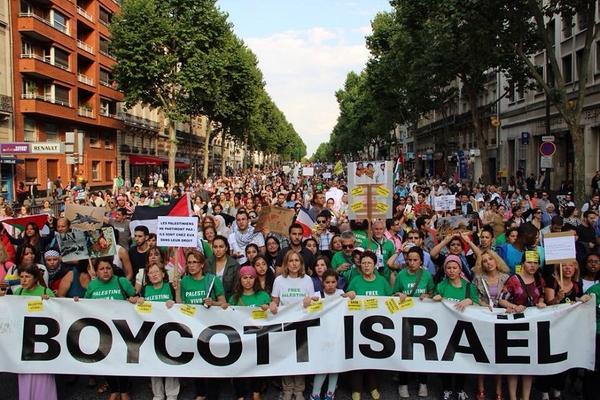
Strategic Council Online – Interview: An international affairs expert stated that in recent months, a multitude of political, economic, cultural, and scientific sanctions have been imposed against the Israeli regime, which, in the interpretation of many analysts, constitutes an "unprecedented set" of multi-layered global pressures. This wave, from the European Union to academic circles, from music festivals to world cinema, has targeted Tel Aviv's international legitimacy and placed it in an increasingly tight spot. The message of these sanctions is also clear; the Israeli regime can no longer rely on its traditional immunity in the West to escape the moral and political consequences of its crimes in Gaza. Diplomatic isolation, economic restrictions, civil pressures, and damage to cultural prestige are all shaping an environment that can not only limit the Israeli regime's freedom of action on the international stage but also challenges the credibility and legitimacy of this regime in global public opinion; a challenge that, in principle, should lead to a change in behavior or even internal political equations of the Israeli regime.

Ali Bigdeli, in an interview with the Strategic Council on Foreign Relations’ website, stated, “The recent decision of the European Union to impose sanctions against the Israeli regime is a turning point in the history of European foreign policy and its relations with West Asia.” According to this senior European affairs analyst, “The European Union’s unprecedented move to impose sanctions on officials and extremist settlers of the Israeli regime not only indicates a serious shift in political balances within Europe but also reflects increasing pressures from European public opinion and national parliaments on the EU leaders.” He believes that “the continuation of the slaughter in Gaza has driven the European political atmosphere in a direction where even governments with conservative approaches can no longer remain indifferent to the crimes of the Israeli regime.”

From the perspective of this university lecturer, “By imposing these sanctions, the European Union has, in a way, challenged the international legitimacy of the Israeli regime.” Bigdeli emphasizes that “this action is not only focused on human rights dimensions but will also have economic and political consequences. The suspension of some provisions of trade agreements with the Israeli regime could gradually impose serious economic pressures on this regime and show that the European Union is ready to move beyond the stage of mere statements and enter the arena of practical measures.”

From the viewpoint of this international affairs expert, “The continuation and intensification of sanctions could become a model for other international institutions.” He recalls that “In the past, the European Union, in the face of similar crises, from South Africa to the former Yugoslavia, has used the tool of sanctions to force the involved parties to stop the violence and return to the negotiating table. Therefore, the current action could possibly initiate a period in which, for the first time in the history of its foreign relations with the West, the Israeli regime faces real, and not merely propaganda, isolation.”

Escalation of Diplomatic Tension Between Paris and Tel Aviv

Bigdeli further refers to the recent diplomatic crisis between France and the Israeli regime, considering it the most unprecedented level of tension between the two sides in recent decades. This senior European affairs analyst believes that “Paris’s warning about the possible expulsion of diplomats of the Israeli regime and the closure of the French consulate in Jerusalem is not only a sign of intensified bilateral differences but could also initiate a deeper rift between the Israeli regime and some European powers.”

He explains that “Due to its relatively more independent policies in West Asia, France has always tried to maintain a relative balance between the Israeli regime and the Palestinians, but the continuation of violence in Gaza and Tel Aviv’s disregard for repeated warnings from Paris has brought this policy to a breaking point.” According to this university lecturer, “The recent action of the Israeli regime in threatening to close the French consulate after Paris’s attempt to initiate a diplomatic wave for the recognition of a Palestinian state was crossing a red line, which has now increased the likelihood of a harsher reaction from Tel Aviv and, subsequently, Paris.”

Bigdeli refers to “the issue of Benjamin Netanyahu’s fear of crossing the airspace of some European countries on his way to New York” and calls this situation “a fundamental change in the international standing of the Israeli regime.” He emphasizes that “Netanyahu’s avoidance of flying over countries that might execute an international arrest warrant against him shows the increasing pressure that, even symbolically, has tarnished the image of the Israeli regime on the global stage.” This international affairs expert adds that “The restriction of flight routes for leaders of the Israeli regime, although seemingly a symbolic action, in practice indicates a kind of geopolitical isolation that has no precedent for the leaders of this regime in the past.”

Wave of Cultural and Scientific Sanctions Against the Israeli Regime

Bigdeli also addresses the widespread wave of civil, cultural, and scientific sanctions against the Israeli regime, calling it the “awakened conscience of the world.” He says that “Filmmakers, musicians, Nobel Prize winners, and academics around the world, by boycotting the Israeli regime, have shown that the fields of culture and science cannot remain indifferent to genocide and crimes against humanity.” This senior European affairs analyst notes that “In the field of cinema, the signing of a statement by thousands of prominent artists to cut cooperation with Israeli institutions has been a turning point in global cultural convergence against this regime.”

According to this university lecturer, “The action of European countries in threatening to boycott the Israeli regime in the Eurovision song contest also has an important symbolic dimension.” He emphasizes that “Today, when festivals like Eurovision become arenas for moral protest against the Israeli regime, the traditional boundaries between politics and culture actually collapse.”

From the viewpoint of this international affairs expert, in the academic field as well, “The halt of scientific cooperation with Israeli institutions in Europe and Latin America shows that even science, which is usually considered independent of politics, cannot now shirk its moral responsibility. Universities and scientific associations, through these sanctions, have sent a clear message to Tel Aviv: cooperation with institutions complicit in crime is complicity in oppression, and the world’s scientific community will not tolerate this stain.” Bigdeli also recalls that “The sending of numerous letters by Nobel Prize winners, especially Nobel Peace Prize winners, to end the disaster in Gaza and stop the Israeli regime’s killing machine confirms that now no political line or standard in any country can justify the crimes of the last two years against the Palestinian people.” This university lecturer finally notes that “This wave of cultural and scientific sanctions, alongside the political and economic actions of governments, paints a picture of the unprecedented isolation of the Israeli regime. The world that once remained silent has now, in the form of art, science, and politics, raised a unified voice against genocide and violence, and this change will be a starting point for redefining the international legitimacy of the Israeli regime.”


0 Comments

LATEST CONTENT

Iran’s Success in the Narrative Battle in Cyberspace

SCFR Online – Opinion: In the war between Iran and the United States, the main battlefield was not defined solely in the military domain; rather, the battle of narratives in cyberspace—particularly through memes—reached a decisive level.

The Global Energy Shock Situation and Future Scenarios

SCFR Online – Opinion: Only one month after the beginning of the Ramadan War, maritime traffic in the Strait of Hormuz decreased dramatically, with Bloomberg announcing a reduction of 103 vessels; Brent oil prices rose by more than 50 percent, and gasoline prices in the United States increased by 31.4 percent. Additionally, benchmark gas prices in Europe showed a 73.4 percent increase.

Al-Zaydi’s Selection as Prime Minister, The Beginning of a New Chapter in Iraq

SCFR Online – Note: After approximately five months of political deadlock and institutional confusion, Ali al-Zaydi has finally been selected as Iraq’s Prime Minister. Al-Zaydi’s selection as Prime Minister represents a positive sign of the completion of the government formation process and the beginning of a new phase in Iraqi politics and governance. The emergence of a young, technocratic figure from the third generation of politicians—in a context where the country has been administered by traditional figures for decades—revives hope that Iraq may perhaps distance itself from the repetitive cycle of crises and experience a new path of stability, efficiency, and regional convergence.

Intensifying Intra-Party Divisions in the United States Regarding the Zionist Regime

SCFR Online – Note: Over recent decades, support for the Zionist regime has been one of the few issues commanding bipartisan consensus in US foreign policy. Since the Cold War era, Republicans and Democrats have generally agreed on the necessity of preserving the security and survival of the Zionist regime as Washington’s most strategic ally in West Asia—and indeed, globally. However, developments in recent years—particularly the Gaza war, escalating regional conflicts, the expansion of tensions into Lebanon, and this regime’s recent warmongering against Iran—have caused this traditional consensus, especially within the Democratic Party, to face significant fractures.

Public Opinion Disappointment of the Zionist Regime Regarding Success in War with Iran

SCFR Online – Opinion: The internal situation of the Israeli regime during the 40-day war can be analyzed from several perspectives. The popularity levels of Benjamin Netanyahu, the Likud Party, and the ruling coalition led by Netanyahu until February 28, 2026, remained approximately the same as during the preceding year. The most recent factor that had somewhat increased Netanyahu’s popularity was the advancement of the 2024 war with Hezbollah Lebanon. Subsequently, his popularity temporarily increased during the 12-day war with Iran, but after the war, it returned to its previous state.

Loading

Últimas publicaciones

Iran’s Success in the Narrative Battle in Cyberspace

SCFR Online – Opinion: In the war between Iran and the United States, the main battlefield was not defined solely in the military domain; rather, the battle of narratives in cyberspace—particularly through memes—reached a decisive level.

The Global Energy Shock Situation and Future Scenarios

SCFR Online – Opinion: Only one month after the beginning of the Ramadan War, maritime traffic in the Strait of Hormuz decreased dramatically, with Bloomberg announcing a reduction of 103 vessels; Brent oil prices rose by more than 50 percent, and gasoline prices in the United States increased by 31.4 percent. Additionally, benchmark gas prices in Europe showed a 73.4 percent increase.

Al-Zaydi’s Selection as Prime Minister, The Beginning of a New Chapter in Iraq

SCFR Online – Note: After approximately five months of political deadlock and institutional confusion, Ali al-Zaydi has finally been selected as Iraq’s Prime Minister. Al-Zaydi’s selection as Prime Minister represents a positive sign of the completion of the government formation process and the beginning of a new phase in Iraqi politics and governance. The emergence of a young, technocratic figure from the third generation of politicians—in a context where the country has been administered by traditional figures for decades—revives hope that Iraq may perhaps distance itself from the repetitive cycle of crises and experience a new path of stability, efficiency, and regional convergence.

Intensifying Intra-Party Divisions in the United States Regarding the Zionist Regime

SCFR Online – Note: Over recent decades, support for the Zionist regime has been one of the few issues commanding bipartisan consensus in US foreign policy. Since the Cold War era, Republicans and Democrats have generally agreed on the necessity of preserving the security and survival of the Zionist regime as Washington’s most strategic ally in West Asia—and indeed, globally. However, developments in recent years—particularly the Gaza war, escalating regional conflicts, the expansion of tensions into Lebanon, and this regime’s recent warmongering against Iran—have caused this traditional consensus, especially within the Democratic Party, to face significant fractures.

Public Opinion Disappointment of the Zionist Regime Regarding Success in War with Iran

SCFR Online – Opinion: The internal situation of the Israeli regime during the 40-day war can be analyzed from several perspectives. The popularity levels of Benjamin Netanyahu, the Likud Party, and the ruling coalition led by Netanyahu until February 28, 2026, remained approximately the same as during the preceding year. The most recent factor that had somewhat increased Netanyahu’s popularity was the advancement of the 2024 war with Hezbollah Lebanon. Subsequently, his popularity temporarily increased during the 12-day war with Iran, but after the war, it returned to its previous state.

Loading

DERNIER CONTENU

Iran’s Success in the Narrative Battle in Cyberspace

SCFR Online – Opinion: In the war between Iran and the United States, the main battlefield was not defined solely in the military domain; rather, the battle of narratives in cyberspace—particularly through memes—reached a decisive level.

The Global Energy Shock Situation and Future Scenarios

SCFR Online – Opinion: Only one month after the beginning of the Ramadan War, maritime traffic in the Strait of Hormuz decreased dramatically, with Bloomberg announcing a reduction of 103 vessels; Brent oil prices rose by more than 50 percent, and gasoline prices in the United States increased by 31.4 percent. Additionally, benchmark gas prices in Europe showed a 73.4 percent increase.

Al-Zaydi’s Selection as Prime Minister, The Beginning of a New Chapter in Iraq

SCFR Online – Note: After approximately five months of political deadlock and institutional confusion, Ali al-Zaydi has finally been selected as Iraq’s Prime Minister. Al-Zaydi’s selection as Prime Minister represents a positive sign of the completion of the government formation process and the beginning of a new phase in Iraqi politics and governance. The emergence of a young, technocratic figure from the third generation of politicians—in a context where the country has been administered by traditional figures for decades—revives hope that Iraq may perhaps distance itself from the repetitive cycle of crises and experience a new path of stability, efficiency, and regional convergence.

Intensifying Intra-Party Divisions in the United States Regarding the Zionist Regime

SCFR Online – Note: Over recent decades, support for the Zionist regime has been one of the few issues commanding bipartisan consensus in US foreign policy. Since the Cold War era, Republicans and Democrats have generally agreed on the necessity of preserving the security and survival of the Zionist regime as Washington’s most strategic ally in West Asia—and indeed, globally. However, developments in recent years—particularly the Gaza war, escalating regional conflicts, the expansion of tensions into Lebanon, and this regime’s recent warmongering against Iran—have caused this traditional consensus, especially within the Democratic Party, to face significant fractures.

Public Opinion Disappointment of the Zionist Regime Regarding Success in War with Iran

SCFR Online – Opinion: The internal situation of the Israeli regime during the 40-day war can be analyzed from several perspectives. The popularity levels of Benjamin Netanyahu, the Likud Party, and the ruling coalition led by Netanyahu until February 28, 2026, remained approximately the same as during the preceding year. The most recent factor that had somewhat increased Netanyahu’s popularity was the advancement of the 2024 war with Hezbollah Lebanon. Subsequently, his popularity temporarily increased during the 12-day war with Iran, but after the war, it returned to its previous state.

Loading

DERNIER CONTENU

Iran’s Success in the Narrative Battle in Cyberspace

SCFR Online – Opinion: In the war between Iran and the United States, the main battlefield was not defined solely in the military domain; rather, the battle of narratives in cyberspace—particularly through memes—reached a decisive level.

The Global Energy Shock Situation and Future Scenarios

SCFR Online – Opinion: Only one month after the beginning of the Ramadan War, maritime traffic in the Strait of Hormuz decreased dramatically, with Bloomberg announcing a reduction of 103 vessels; Brent oil prices rose by more than 50 percent, and gasoline prices in the United States increased by 31.4 percent. Additionally, benchmark gas prices in Europe showed a 73.4 percent increase.

Al-Zaydi’s Selection as Prime Minister, The Beginning of a New Chapter in Iraq

SCFR Online – Note: After approximately five months of political deadlock and institutional confusion, Ali al-Zaydi has finally been selected as Iraq’s Prime Minister. Al-Zaydi’s selection as Prime Minister represents a positive sign of the completion of the government formation process and the beginning of a new phase in Iraqi politics and governance. The emergence of a young, technocratic figure from the third generation of politicians—in a context where the country has been administered by traditional figures for decades—revives hope that Iraq may perhaps distance itself from the repetitive cycle of crises and experience a new path of stability, efficiency, and regional convergence.

Intensifying Intra-Party Divisions in the United States Regarding the Zionist Regime

SCFR Online – Note: Over recent decades, support for the Zionist regime has been one of the few issues commanding bipartisan consensus in US foreign policy. Since the Cold War era, Republicans and Democrats have generally agreed on the necessity of preserving the security and survival of the Zionist regime as Washington’s most strategic ally in West Asia—and indeed, globally. However, developments in recent years—particularly the Gaza war, escalating regional conflicts, the expansion of tensions into Lebanon, and this regime’s recent warmongering against Iran—have caused this traditional consensus, especially within the Democratic Party, to face significant fractures.

Public Opinion Disappointment of the Zionist Regime Regarding Success in War with Iran

SCFR Online – Opinion: The internal situation of the Israeli regime during the 40-day war can be analyzed from several perspectives. The popularity levels of Benjamin Netanyahu, the Likud Party, and the ruling coalition led by Netanyahu until February 28, 2026, remained approximately the same as during the preceding year. The most recent factor that had somewhat increased Netanyahu’s popularity was the advancement of the 2024 war with Hezbollah Lebanon. Subsequently, his popularity temporarily increased during the 12-day war with Iran, but after the war, it returned to its previous state.

Loading

DERNIER CONTENU

Iran’s Success in the Narrative Battle in Cyberspace

SCFR Online – Opinion: In the war between Iran and the United States, the main battlefield was not defined solely in the military domain; rather, the battle of narratives in cyberspace—particularly through memes—reached a decisive level.

The Global Energy Shock Situation and Future Scenarios

SCFR Online – Opinion: Only one month after the beginning of the Ramadan War, maritime traffic in the Strait of Hormuz decreased dramatically, with Bloomberg announcing a reduction of 103 vessels; Brent oil prices rose by more than 50 percent, and gasoline prices in the United States increased by 31.4 percent. Additionally, benchmark gas prices in Europe showed a 73.4 percent increase.

Al-Zaydi’s Selection as Prime Minister, The Beginning of a New Chapter in Iraq

SCFR Online – Note: After approximately five months of political deadlock and institutional confusion, Ali al-Zaydi has finally been selected as Iraq’s Prime Minister. Al-Zaydi’s selection as Prime Minister represents a positive sign of the completion of the government formation process and the beginning of a new phase in Iraqi politics and governance. The emergence of a young, technocratic figure from the third generation of politicians—in a context where the country has been administered by traditional figures for decades—revives hope that Iraq may perhaps distance itself from the repetitive cycle of crises and experience a new path of stability, efficiency, and regional convergence.

Intensifying Intra-Party Divisions in the United States Regarding the Zionist Regime

SCFR Online – Note: Over recent decades, support for the Zionist regime has been one of the few issues commanding bipartisan consensus in US foreign policy. Since the Cold War era, Republicans and Democrats have generally agreed on the necessity of preserving the security and survival of the Zionist regime as Washington’s most strategic ally in West Asia—and indeed, globally. However, developments in recent years—particularly the Gaza war, escalating regional conflicts, the expansion of tensions into Lebanon, and this regime’s recent warmongering against Iran—have caused this traditional consensus, especially within the Democratic Party, to face significant fractures.

Public Opinion Disappointment of the Zionist Regime Regarding Success in War with Iran

SCFR Online – Opinion: The internal situation of the Israeli regime during the 40-day war can be analyzed from several perspectives. The popularity levels of Benjamin Netanyahu, the Likud Party, and the ruling coalition led by Netanyahu until February 28, 2026, remained approximately the same as during the preceding year. The most recent factor that had somewhat increased Netanyahu’s popularity was the advancement of the 2024 war with Hezbollah Lebanon. Subsequently, his popularity temporarily increased during the 12-day war with Iran, but after the war, it returned to its previous state.

Loading



