An Analysis of Zelenskyy’s Recent Trip to Washington

2025/10/23 | Note, Politics, Top News

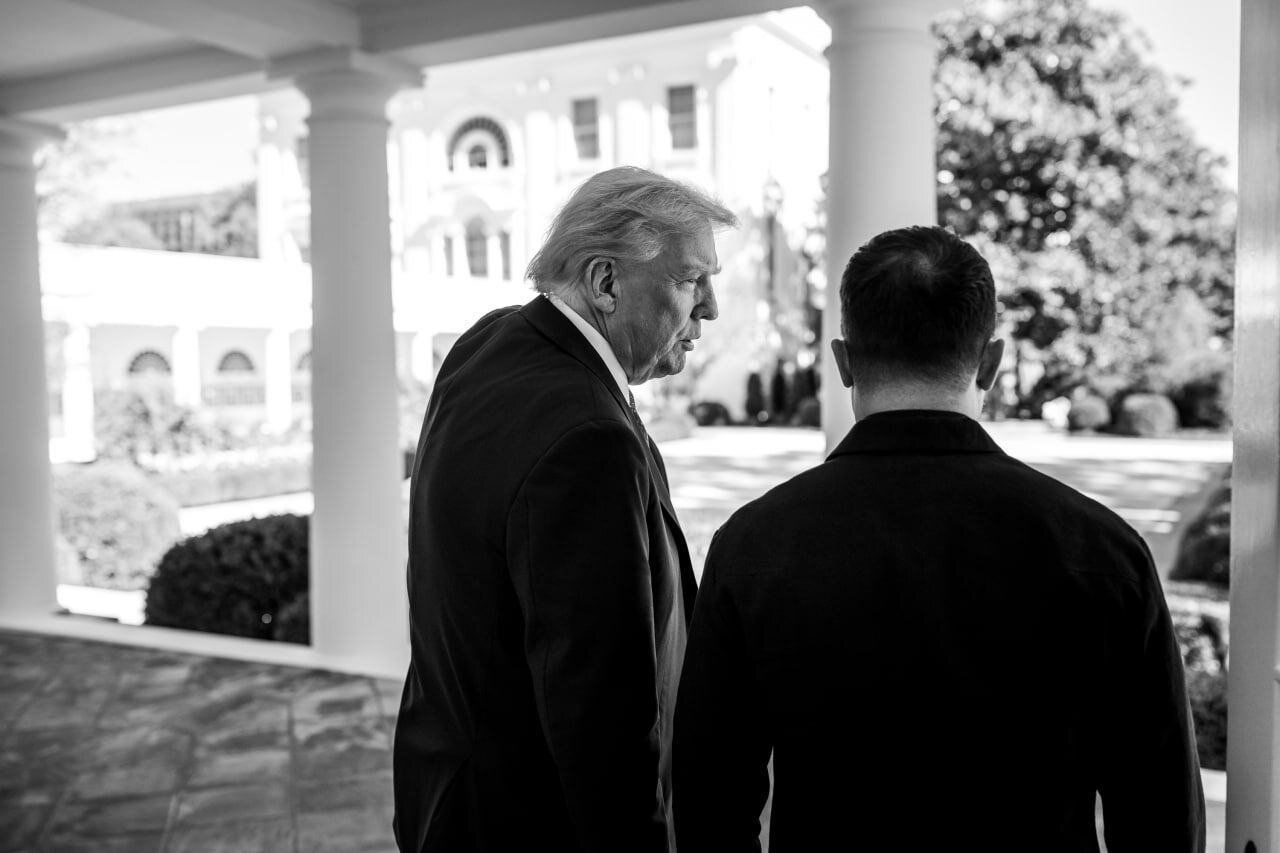
Online Strategic Council – Note: Volodymyr Zelenskyy's third trip to Washington this year as President of Ukraine must be considered a turning point in the Ukraine war. This trip took place one day after a two-and-a-half-hour phone call between Trump and Putin. It coincided with speculation about holding a second meeting between the presidents of the United States and Russia in Budapest.

Morteza Makki – European Affairs Expert
In his meeting with Zelenskyy, although Trump spoke of an “immediate end to the war,” he refrained from making a specific commitment regarding sending long-range Tomahawk missiles. He called these weapons an “open option” and emphasized that their use could lead to a “dangerous escalation of the conflict.” Zelenskyy tried to pull Washington towards a more active stance in this meeting, but Trump, by proposing the slogan of “stop where they are,” effectively emphasized a kind of ceasefire without determining the status of borders; a plan which, in practice, means accepting the current situation and solidifying Russia’s field gains. For Ukraine, such an agreement would mean retreating from its maximalist demands and accepting a form of imposed peace.

Sources close to the White House say that Trump, in his phone conversation with Putin, emphasized the “necessity to stop the bloodshed” and asked the Russian president to be ready for a “comprehensive agreement.” Putin, while warning against sending Tomahawks to Ukraine, stated that Russia has not yet left the path of diplomacy. At first glance, this position could be a sign of both sides’ cautious willingness to negotiate, but in reality, it reflects a dual calculation. Moscow still has the upper hand on the battlefield and is using negotiations to buy time, while Washington is trying to force the Kremlin into making political concessions through psychological pressure and military threats.

In Washington, some analysts believe that Trump is seeking a kind of “Trump peace,” a quick and propagandistic agreement that declares the end of the war without actually resolving the conflict. In such a scenario, he might ignore Zelenskyy’s demands and even those of European allies and agree to a deal that realizes Russia’s maximalist interests. From the Europeans’ perspective, this is the very nightmare that could cause a rift in the transatlantic alliance. But behind all these developments lies a hidden reality. The Russian economy has been damaged by the continuation of the war and Western sanctions, but it is still far from collapse. Relying on oil revenues, China’s support, and parallel paths in international trade, Putin has managed to keep the economic structure afloat. However, if pressures continue, the Kremlin might move towards a limited compromise to reduce costs and focus on internal reconstruction.

Meanwhile, Europe is worried that the new process, in the absence of effective Union participation, will lead to a purely American-Russian decision. If Washington enters into a bilateral agreement without consulting Brussels, it could pave the way for a new rift in relations across the Atlantic. Such a rift would not only weaken Western cohesion against Russia but would also cast doubt on security calculations within NATO.

In summary, Zelenskyy’s trip to America and Trump’s call with Putin should be seen as two sides of the same coin. Washington is testing pressure and negotiation options simultaneously, while Moscow is seeking more time through the path of dialogue to consolidate its position on the ground. In the meantime, Ukraine and Europe find themselves in a position where their future is more than ever tied to the decisions made behind the closed doors of the White House and the Kremlin. The war in Eastern Europe has become a mirror of the future of the international order, one in which alliances are weaker, national interests are more prominent, and Europe is more marginalized than ever.
0 Comments

LATEST CONTENT

The Makkah Pact; Reasons for its Formation and Challenges Ahead

SCFR Online – Opinion: The Makkah Pact, signed between Saudi Arabia, Pakistan, and Turkey under the motto “an attack on one is an attack on all,” is viewed by some analysts less as a full-fledged military coalition and more as an attempt to reduce security dependence on an external power and to establish a regional security mechanism.

Implications of the US-Saudi Nuclear Agreement

SCFR Online – Opinion: The new US-Saudi nuclear agreement, despite legal and political ambiguities, could alter previous non-proliferation standards in West Asia and intensify nuclear competition, ushering it into a new phase.

An Analysis of Recent Turkey-Israeli Regime Tensions

SCFR Online – Opinion: Recent developments in Syria indicate an intensification of strategic rivalry between Turkey and the Israeli regime, but mutual considerations and the role of the United States have limited the likelihood of direct war.

Increasing criticism of the extensive Zionist lobby network

SCFR Online – Opinion: An examination of the mechanisms of the Israeli regime’s influence in the United States depicts a complex picture of shared interests, strategic dependencies, and the limitations of this relationship.

Realities of the Tripartite Makkah Pact

SCFR Online – Interview: The signing of the Makkah agreement between Saudi Arabia, Pakistan, and Turkey has raised questions about the future of the region’s security structure and the position of these countries in West Asian equations. Can this agreement become a genuine collective defense mechanism, or does it have more of a political and deterrent function than creating new military capacity?

Loading

Últimas publicaciones

The Makkah Pact; Reasons for its Formation and Challenges Ahead

SCFR Online – Opinion: The Makkah Pact, signed between Saudi Arabia, Pakistan, and Turkey under the motto “an attack on one is an attack on all,” is viewed by some analysts less as a full-fledged military coalition and more as an attempt to reduce security dependence on an external power and to establish a regional security mechanism.

Implications of the US-Saudi Nuclear Agreement

SCFR Online – Opinion: The new US-Saudi nuclear agreement, despite legal and political ambiguities, could alter previous non-proliferation standards in West Asia and intensify nuclear competition, ushering it into a new phase.

An Analysis of Recent Turkey-Israeli Regime Tensions

SCFR Online – Opinion: Recent developments in Syria indicate an intensification of strategic rivalry between Turkey and the Israeli regime, but mutual considerations and the role of the United States have limited the likelihood of direct war.

Increasing criticism of the extensive Zionist lobby network

SCFR Online – Opinion: An examination of the mechanisms of the Israeli regime’s influence in the United States depicts a complex picture of shared interests, strategic dependencies, and the limitations of this relationship.

Realities of the Tripartite Makkah Pact

SCFR Online – Interview: The signing of the Makkah agreement between Saudi Arabia, Pakistan, and Turkey has raised questions about the future of the region’s security structure and the position of these countries in West Asian equations. Can this agreement become a genuine collective defense mechanism, or does it have more of a political and deterrent function than creating new military capacity?

Loading

DERNIER CONTENU

The Makkah Pact; Reasons for its Formation and Challenges Ahead

SCFR Online – Opinion: The Makkah Pact, signed between Saudi Arabia, Pakistan, and Turkey under the motto “an attack on one is an attack on all,” is viewed by some analysts less as a full-fledged military coalition and more as an attempt to reduce security dependence on an external power and to establish a regional security mechanism.

Implications of the US-Saudi Nuclear Agreement

SCFR Online – Opinion: The new US-Saudi nuclear agreement, despite legal and political ambiguities, could alter previous non-proliferation standards in West Asia and intensify nuclear competition, ushering it into a new phase.

An Analysis of Recent Turkey-Israeli Regime Tensions

SCFR Online – Opinion: Recent developments in Syria indicate an intensification of strategic rivalry between Turkey and the Israeli regime, but mutual considerations and the role of the United States have limited the likelihood of direct war.

Increasing criticism of the extensive Zionist lobby network

SCFR Online – Opinion: An examination of the mechanisms of the Israeli regime’s influence in the United States depicts a complex picture of shared interests, strategic dependencies, and the limitations of this relationship.

Realities of the Tripartite Makkah Pact

SCFR Online – Interview: The signing of the Makkah agreement between Saudi Arabia, Pakistan, and Turkey has raised questions about the future of the region’s security structure and the position of these countries in West Asian equations. Can this agreement become a genuine collective defense mechanism, or does it have more of a political and deterrent function than creating new military capacity?

Loading

DERNIER CONTENU

The Makkah Pact; Reasons for its Formation and Challenges Ahead

SCFR Online – Opinion: The Makkah Pact, signed between Saudi Arabia, Pakistan, and Turkey under the motto “an attack on one is an attack on all,” is viewed by some analysts less as a full-fledged military coalition and more as an attempt to reduce security dependence on an external power and to establish a regional security mechanism.

Implications of the US-Saudi Nuclear Agreement

SCFR Online – Opinion: The new US-Saudi nuclear agreement, despite legal and political ambiguities, could alter previous non-proliferation standards in West Asia and intensify nuclear competition, ushering it into a new phase.

An Analysis of Recent Turkey-Israeli Regime Tensions

SCFR Online – Opinion: Recent developments in Syria indicate an intensification of strategic rivalry between Turkey and the Israeli regime, but mutual considerations and the role of the United States have limited the likelihood of direct war.

Increasing criticism of the extensive Zionist lobby network

SCFR Online – Opinion: An examination of the mechanisms of the Israeli regime’s influence in the United States depicts a complex picture of shared interests, strategic dependencies, and the limitations of this relationship.

Realities of the Tripartite Makkah Pact

SCFR Online – Interview: The signing of the Makkah agreement between Saudi Arabia, Pakistan, and Turkey has raised questions about the future of the region’s security structure and the position of these countries in West Asian equations. Can this agreement become a genuine collective defense mechanism, or does it have more of a political and deterrent function than creating new military capacity?

Loading

DERNIER CONTENU

The Makkah Pact; Reasons for its Formation and Challenges Ahead

SCFR Online – Opinion: The Makkah Pact, signed between Saudi Arabia, Pakistan, and Turkey under the motto “an attack on one is an attack on all,” is viewed by some analysts less as a full-fledged military coalition and more as an attempt to reduce security dependence on an external power and to establish a regional security mechanism.

Implications of the US-Saudi Nuclear Agreement

SCFR Online – Opinion: The new US-Saudi nuclear agreement, despite legal and political ambiguities, could alter previous non-proliferation standards in West Asia and intensify nuclear competition, ushering it into a new phase.

An Analysis of Recent Turkey-Israeli Regime Tensions

SCFR Online – Opinion: Recent developments in Syria indicate an intensification of strategic rivalry between Turkey and the Israeli regime, but mutual considerations and the role of the United States have limited the likelihood of direct war.

Increasing criticism of the extensive Zionist lobby network

SCFR Online – Opinion: An examination of the mechanisms of the Israeli regime’s influence in the United States depicts a complex picture of shared interests, strategic dependencies, and the limitations of this relationship.

Realities of the Tripartite Makkah Pact

SCFR Online – Interview: The signing of the Makkah agreement between Saudi Arabia, Pakistan, and Turkey has raised questions about the future of the region’s security structure and the position of these countries in West Asian equations. Can this agreement become a genuine collective defense mechanism, or does it have more of a political and deterrent function than creating new military capacity?

Loading