Ecological Outlook and Intra-Regional Interaction in the Persian Gulf

Strategic Council Online: Ecology, in its simplest sense, is the study of the relationship of the living organisms and their environment. In an ecological environment, demographic phenomena, type of nutrition, shape, size and amount, habits and behavior of animals in that environment are influential in its survival or vulnerability. In addition to the complex internal relationship, the extra systemic relationship of any ecological environment is effective in its survival. If the external systemic relations of a specific ecological environment fluctuate with other environments, its vulnerability is certain.

Dr. Ebrahim Romina – Assistant Professor of Political Geography and Geopolitics, Tarbiat Modares University

Political systems also live in ecological environments. In the internal space of political systems, complex relations prevail that are the result of a long period of time in which social, cultural, political and economic factors are interacting and the deficiency or fluctuations of each of these relations make the system unstable. On the other hand, a political system also has extra systemic relations. Under the present circumstances of the world, there is no system that can survive on its own and enjoy sustainability. Therefore, the stability of political systems is based on the regulation of the correct intra and extra systemic relations, and deficiency in any of them will cause its instability.

In extra systemic relations, what is important is the identification of the type, level and intensity of the data and output and their evaluation. In such a situation, if the political systems are in a complementary direction, their stability is guaranteed. Complementary forces take steps on the path to improve the situation and by meeting each other’s needs, prepare the required ground for their own stability and that of other political systems. On the contrary, if political structures move on the path of contradiction, forces of conflict and destruction will be activated and with the energy released from them, not only the political structures will face challenges and crises, but will spread it to other neighbouring systems. This issue becomes important in regional contexts which has multiple political players and therefore it is essential to be taken into consideration.

In a geographical area, there may be a variety of political structures, each with their own ideals, ideology, culture, customs, and legislative and political structures. According to the law of ecological dependence, they need each other. The essential role of political players is to reduce the gap created by those differences and conflicts.

The political structures around the Persian Gulf consist of eight countries that, with the exception of Iran, Oman and Saudi Arabia, other peripheral countries are highly dependent on it. On the other hand, the Persian Gulf has oil and gas resources to which the world currently depends on, and with the increase in the need of global citizens to those resources historical presence of the powers in this region was strengthened. However, with Iran’s revolution, their level, type and method of engagement changed in nature.

It is necessary to see the Persian Gulf basin as an ecological phenomenon with high vulnerability. Endless competition from countries within the region and the presence of outside players have further increased its vulnerability. Undeveloped spaces are dominant over the region, and these undeveloped spaces themselves provoke more destructive activisms. Although the southern part of the Persian Gulf, in the islands and partially, has experienced rapid economic growth in Dubai, Doha and Kuwait, this growth is not intra systemic and is dependent on the trans-regional environment and superstructural factors and has not led to development.

The ecological outlook of the Persian Gulf sees it as a shared environment, the survival of which depends on the close cooperation of the political structures around it. Intra-regional competition has nothing but a waste of revenue. Basically, development takes place in a region where most of the countries in that region are in the process of development. Since all the countries of the Persian Gulf region are interdependent, although the island and limited growth have taken place in the southern shores of the Persian Gulf, this process, along with intra-regional contradictions, will not lead to development.

The Persian Gulf region is the supplier of basic needs of the world for oil and gas. All countries in the region should take a united approach in addressing and guaranteeing this global need.

Oil and gas resources are limited and will be depleted. With the depletion of oil and gas resources, the geo-economic values ​​of the Persian Gulf basin will become meaningless. An ecological outlook to the Persian Gulf will help to intensify the idea of ​​cooperation within the region.

The different political, cultural and religious structures of the countries of the Persian Gulf region can be oriented with proper management towards intra systemic synergy.

Despite the religious commonalities, the citizens of the Persian Gulf countries, especially in its southern and northern parts, know little about each other. More familiarity will prepare the ground for more interaction. The tourism area is one of the important grounds in this direction.

Development of strong regional infrastructure and communication networks can be effective in the sustainability of the relations of the citizens of the region.

Presence of regional powers in the Persian Gulf and their role-playing cannot be ignored. It is natural for any measure in this direction to be taken with rational management and taking into account their current interests.

The militaristic thinking and the rivalries under their influence that have led to the depot of the most advanced military weapons in the region can be replaced by the thinking of regional development, which will lead to increased regional security.

Establishment of a water-based Persian Gulf regional institute or organization is the first step to reduce the existing tensions and take steps on the path towards regional development.

In addition to formal governmental actions among countries of the Persian Gulf region, social networks are the most effective and sustainable means of interaction in the new era. The scientific and academic sectors, film and cinema, music and sports can help and facilitate interactions within the region with the focus on the Persian Gulf countries.

0 Comments

Submit a Comment

Your email address will not be published. Required fields are marked *

LATEST CONTENT

The Makkah Pact; Reasons for its Formation and Challenges Ahead

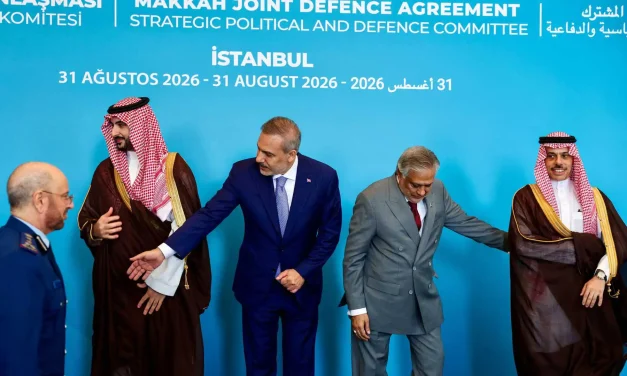
SCFR Online – Opinion: The Makkah Pact, signed between Saudi Arabia, Pakistan, and Turkey under the motto “an attack on one is an attack on all,” is viewed by some analysts less as a full-fledged military coalition and more as an attempt to reduce security dependence on an external power and to establish a regional security mechanism.

Implications of the US-Saudi Nuclear Agreement

SCFR Online – Opinion: The new US-Saudi nuclear agreement, despite legal and political ambiguities, could alter previous non-proliferation standards in West Asia and intensify nuclear competition, ushering it into a new phase.

An Analysis of Recent Turkey-Israeli Regime Tensions

SCFR Online – Opinion: Recent developments in Syria indicate an intensification of strategic rivalry between Turkey and the Israeli regime, but mutual considerations and the role of the United States have limited the likelihood of direct war.

Increasing criticism of the extensive Zionist lobby network

SCFR Online – Opinion: An examination of the mechanisms of the Israeli regime’s influence in the United States depicts a complex picture of shared interests, strategic dependencies, and the limitations of this relationship.

Realities of the Tripartite Makkah Pact

SCFR Online – Interview: The signing of the Makkah agreement between Saudi Arabia, Pakistan, and Turkey has raised questions about the future of the region’s security structure and the position of these countries in West Asian equations. Can this agreement become a genuine collective defense mechanism, or does it have more of a political and deterrent function than creating new military capacity?

Strategic Implications of the Reduction of US Weapons Stockpiles

SCFR Online – Opinion: The continuation of the US war against Iran, in addition to increasing operational costs, has called into question the actual capacity of the American arsenal to simultaneously fulfill security commitments on multiple fronts; an issue that affects deterrence, defense production capacity, and Washington’s resource prioritization.

The Formation of a New Order in Relations Between Powers

SCFR Online – Opinion: The Russia-Ukraine war and the war of the United States and the Israeli regime against Iran have been formed with different objectives and actors, but field and political developments indicate that they are not entirely separate from one another.

Loading

Últimas publicaciones

The Makkah Pact; Reasons for its Formation and Challenges Ahead

SCFR Online – Opinion: The Makkah Pact, signed between Saudi Arabia, Pakistan, and Turkey under the motto “an attack on one is an attack on all,” is viewed by some analysts less as a full-fledged military coalition and more as an attempt to reduce security dependence on an external power and to establish a regional security mechanism.

Implications of the US-Saudi Nuclear Agreement

SCFR Online – Opinion: The new US-Saudi nuclear agreement, despite legal and political ambiguities, could alter previous non-proliferation standards in West Asia and intensify nuclear competition, ushering it into a new phase.

An Analysis of Recent Turkey-Israeli Regime Tensions

SCFR Online – Opinion: Recent developments in Syria indicate an intensification of strategic rivalry between Turkey and the Israeli regime, but mutual considerations and the role of the United States have limited the likelihood of direct war.

Increasing criticism of the extensive Zionist lobby network

SCFR Online – Opinion: An examination of the mechanisms of the Israeli regime’s influence in the United States depicts a complex picture of shared interests, strategic dependencies, and the limitations of this relationship.

Realities of the Tripartite Makkah Pact

SCFR Online – Interview: The signing of the Makkah agreement between Saudi Arabia, Pakistan, and Turkey has raised questions about the future of the region’s security structure and the position of these countries in West Asian equations. Can this agreement become a genuine collective defense mechanism, or does it have more of a political and deterrent function than creating new military capacity?

Strategic Implications of the Reduction of US Weapons Stockpiles

SCFR Online – Opinion: The continuation of the US war against Iran, in addition to increasing operational costs, has called into question the actual capacity of the American arsenal to simultaneously fulfill security commitments on multiple fronts; an issue that affects deterrence, defense production capacity, and Washington’s resource prioritization.

The Formation of a New Order in Relations Between Powers

SCFR Online – Opinion: The Russia-Ukraine war and the war of the United States and the Israeli regime against Iran have been formed with different objectives and actors, but field and political developments indicate that they are not entirely separate from one another.

Loading

DERNIER CONTENU

The Makkah Pact; Reasons for its Formation and Challenges Ahead

SCFR Online – Opinion: The Makkah Pact, signed between Saudi Arabia, Pakistan, and Turkey under the motto “an attack on one is an attack on all,” is viewed by some analysts less as a full-fledged military coalition and more as an attempt to reduce security dependence on an external power and to establish a regional security mechanism.

Implications of the US-Saudi Nuclear Agreement

SCFR Online – Opinion: The new US-Saudi nuclear agreement, despite legal and political ambiguities, could alter previous non-proliferation standards in West Asia and intensify nuclear competition, ushering it into a new phase.

An Analysis of Recent Turkey-Israeli Regime Tensions

SCFR Online – Opinion: Recent developments in Syria indicate an intensification of strategic rivalry between Turkey and the Israeli regime, but mutual considerations and the role of the United States have limited the likelihood of direct war.

Increasing criticism of the extensive Zionist lobby network

SCFR Online – Opinion: An examination of the mechanisms of the Israeli regime’s influence in the United States depicts a complex picture of shared interests, strategic dependencies, and the limitations of this relationship.

Realities of the Tripartite Makkah Pact

SCFR Online – Interview: The signing of the Makkah agreement between Saudi Arabia, Pakistan, and Turkey has raised questions about the future of the region’s security structure and the position of these countries in West Asian equations. Can this agreement become a genuine collective defense mechanism, or does it have more of a political and deterrent function than creating new military capacity?

Strategic Implications of the Reduction of US Weapons Stockpiles

SCFR Online – Opinion: The continuation of the US war against Iran, in addition to increasing operational costs, has called into question the actual capacity of the American arsenal to simultaneously fulfill security commitments on multiple fronts; an issue that affects deterrence, defense production capacity, and Washington’s resource prioritization.

The Formation of a New Order in Relations Between Powers

SCFR Online – Opinion: The Russia-Ukraine war and the war of the United States and the Israeli regime against Iran have been formed with different objectives and actors, but field and political developments indicate that they are not entirely separate from one another.

Loading

DERNIER CONTENU

The Makkah Pact; Reasons for its Formation and Challenges Ahead

SCFR Online – Opinion: The Makkah Pact, signed between Saudi Arabia, Pakistan, and Turkey under the motto “an attack on one is an attack on all,” is viewed by some analysts less as a full-fledged military coalition and more as an attempt to reduce security dependence on an external power and to establish a regional security mechanism.

Implications of the US-Saudi Nuclear Agreement

SCFR Online – Opinion: The new US-Saudi nuclear agreement, despite legal and political ambiguities, could alter previous non-proliferation standards in West Asia and intensify nuclear competition, ushering it into a new phase.

An Analysis of Recent Turkey-Israeli Regime Tensions

SCFR Online – Opinion: Recent developments in Syria indicate an intensification of strategic rivalry between Turkey and the Israeli regime, but mutual considerations and the role of the United States have limited the likelihood of direct war.

Increasing criticism of the extensive Zionist lobby network

SCFR Online – Opinion: An examination of the mechanisms of the Israeli regime’s influence in the United States depicts a complex picture of shared interests, strategic dependencies, and the limitations of this relationship.

Realities of the Tripartite Makkah Pact

SCFR Online – Interview: The signing of the Makkah agreement between Saudi Arabia, Pakistan, and Turkey has raised questions about the future of the region’s security structure and the position of these countries in West Asian equations. Can this agreement become a genuine collective defense mechanism, or does it have more of a political and deterrent function than creating new military capacity?

Strategic Implications of the Reduction of US Weapons Stockpiles

SCFR Online – Opinion: The continuation of the US war against Iran, in addition to increasing operational costs, has called into question the actual capacity of the American arsenal to simultaneously fulfill security commitments on multiple fronts; an issue that affects deterrence, defense production capacity, and Washington’s resource prioritization.

The Formation of a New Order in Relations Between Powers

SCFR Online – Opinion: The Russia-Ukraine war and the war of the United States and the Israeli regime against Iran have been formed with different objectives and actors, but field and political developments indicate that they are not entirely separate from one another.

Loading

DERNIER CONTENU

The Makkah Pact; Reasons for its Formation and Challenges Ahead

SCFR Online – Opinion: The Makkah Pact, signed between Saudi Arabia, Pakistan, and Turkey under the motto “an attack on one is an attack on all,” is viewed by some analysts less as a full-fledged military coalition and more as an attempt to reduce security dependence on an external power and to establish a regional security mechanism.

Implications of the US-Saudi Nuclear Agreement

SCFR Online – Opinion: The new US-Saudi nuclear agreement, despite legal and political ambiguities, could alter previous non-proliferation standards in West Asia and intensify nuclear competition, ushering it into a new phase.

An Analysis of Recent Turkey-Israeli Regime Tensions

SCFR Online – Opinion: Recent developments in Syria indicate an intensification of strategic rivalry between Turkey and the Israeli regime, but mutual considerations and the role of the United States have limited the likelihood of direct war.

Increasing criticism of the extensive Zionist lobby network

SCFR Online – Opinion: An examination of the mechanisms of the Israeli regime’s influence in the United States depicts a complex picture of shared interests, strategic dependencies, and the limitations of this relationship.

Realities of the Tripartite Makkah Pact

SCFR Online – Interview: The signing of the Makkah agreement between Saudi Arabia, Pakistan, and Turkey has raised questions about the future of the region’s security structure and the position of these countries in West Asian equations. Can this agreement become a genuine collective defense mechanism, or does it have more of a political and deterrent function than creating new military capacity?

Strategic Implications of the Reduction of US Weapons Stockpiles

SCFR Online – Opinion: The continuation of the US war against Iran, in addition to increasing operational costs, has called into question the actual capacity of the American arsenal to simultaneously fulfill security commitments on multiple fronts; an issue that affects deterrence, defense production capacity, and Washington’s resource prioritization.

The Formation of a New Order in Relations Between Powers

SCFR Online – Opinion: The Russia-Ukraine war and the war of the United States and the Israeli regime against Iran have been formed with different objectives and actors, but field and political developments indicate that they are not entirely separate from one another.

Loading