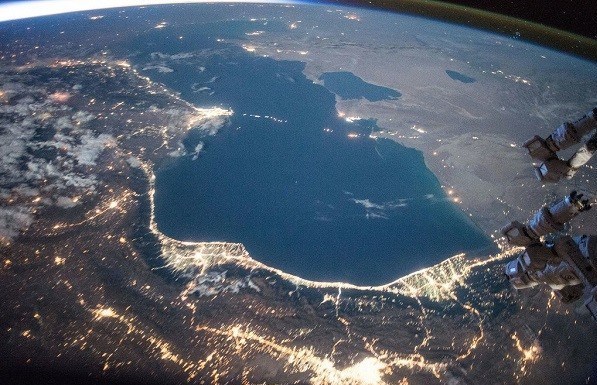
Consequences and solutions to prevent the decrease of the water level of the Caspian Sea

Strategic Council Online-Opinion: The unprecedented decrease in the water level of the Caspian Sea has recently become important news in the media, political, and environmental circles. The continuous and rapid reduction in the level of the Caspian Sea began in 1996 and continues to this day. Barsam Mohammadi-Expert of regional affairs

The water level of the Caspian Sea, which is even more profound than the Persian Gulf, has decreased by about one meter in recent years and may decrease by another 9 to 18 meters by the end of the 21st century, losing a quarter of its area of ​​93,000 square kilometers. In the last two years, about 60 centimeters of retreat has occurred on Iran’s coasts. On the Kazakhstan side, this number is several tens of kilometers. The drop in the level of the Caspian Sea is more noticeable in its shallow northern shores.

The Ministry of Environment of Kazakhstan has confirmed that the water area of ​​the Caspian Sea has decreased by more than 22 thousand square kilometers, more than half of which belongs to the northern part of the Caspian Sea, i.e., 7% in Kazakhstan.

Regarding the reasons for the decrease in the water level of the Caspian Sea, three categories of natural and human factors can be identified:

The first factor is climate change, such as global warming, lack of sufficient precipitation, increased evaporation, etc., about which there are disagreements among scientists so some do not consider this factor one of the main reasons.

The second factor, the fundamental cause in this regard, is the construction of Russian dams on the Volga River. The water of the Caspian Sea is supplied by about 130 rivers, 85% of which belong to the Volga, the longest river in Europe with a length of 3,700 km, which passes through 20 major cities of Russia. In recent years, Russia has built 40 dams on this river, and the construction of 18 more dams is underway. This issue is vital in reducing water flow entering the Caspian Sea.

In addition, the development of Octao Port, which was once a town, should be mentioned as the second human factor. This port, which was originally a tiny uranium mining town, has been transformed into a small city with the creation of a new nuclear power plant and a desalination plant, and the majority of its industrial water is supplied from the Caspian Sea. Pollution caused by oil drilling is another cause in this field.

If a principled and correct solution is not considered to prevent the reduction of Caspian water, this phenomenon can have serious economic and demographic consequences, in addition to the significant retreat of the sea and the increase in the level of the land and the coast, especially in the upstream countries (Russia and Kazakhstan) and the consequences of drying of wetlands and protected areas, geopolitics and security for the entire region, especially for its five coastal countries.

In the environmental and economic field, we can refer to the following as important consequences of the reduction of the Caspian water: an increase in the salinity of seawater and intensified harmful effects of sewage released into the sea, desertification, endangering the health of the population of coastal countries from dust storms and minerals, the extinction of animal species and the life chain, the challenges facing the operation of ports and shipping and as a result the disruption in their economic and industrial processes, the sharp decrease in income from fishing, etc.

Reducing the Caspian Sea water is not without consequences in the political and security fields. Considering that environmental crises in various ways, such as the destruction of agricultural lands, the closure of conversion industries, the decrease in the welfare of residents, migration, the decline of the tourism industry, the reduction in the maritime income of coastal residents, the spread of unemployment, the spread of various diseases, etc. have a direct effect on life and the economy and the livelihood of the people in the coastal countries, in the medium term, due to public distrust towards the performance of the governments and as a result fueling popular protests, it can lead to various security and political problems, including challenges in managing the internal space and weakening and threatening the national existence for these countries, especially in the upstream and ultimately endanger their national security.

In the geopolitical arena, the reduction of the Caspian Sea water can lead to the expansion of geopolitical conflicts in the region with the efforts of the coastal countries, especially in the upstream, to avoid the economic and social risks caused by this issue and to maintain the transit and shipping lines will result in the expansion of geopolitical conflicts.

In conclusion, considering the importance of the threats affected by the reduction of Caspian Sea water and the necessity of immediate action and developing a strategy to deal with it, the following solutions are suggested:

One, the coastal countries’ special efforts to implement the framework convention for the protection of the marine environment of the Caspian Sea, approved on November 4, 2003.

Two; Strict control of the water resources of the Volga River by committing and exerting political, legal, and even economic pressure on Russia, with the consultation of the interested countries and the effective understanding of this issue to Moscow that the action of this country in its territory should be in line with the principle of “preventing harm” and reasonable and fair exploitation of the Volga River and preventing damage to other countries;

Three; A coordinated effort between the Caspian Sea border countries to implement a combined watershed management approach with a better understanding of the Caspian Sea’s climate changes so that models can be prepared better to predict the level and area of ​​the Caspian Sea.

Four; Strict monitoring with a guarantee of implementation on the use of the water of this lake for agricultural and industrial purposes;

Five; Closing the water route to Kara-Bogaz-Gol Bay in Turkmenistan to reduce sea evaporation;

Six; Advising coastal industries on preparatory measures such as dredging to protect critical infrastructure;

Seven; Increasing public awareness and creating a discourse about the crisis that has arisen can pave the way for re-establishing the balance and revitalizing the Caspian Sea by exerting pressure of the public opinion of the coastal countries on the governments;

Eight; Attracting the serious participation of international organizations through specialized cooperation and allocating financial resources in the management of the environmental crisis of the Caspian Sea.


0 Comments

LATEST CONTENT

Consequences of Declining Trust in the Judiciary in Europe

SCFRonline – Opinion: The increase in public distrust of the French judicial system, which in recent surveys has reached approximately two-thirds of citizens, should be analyzed within a framework broader than temporary dissatisfaction or an emotional reaction to a particular criminal case.

Iran’s Potential Levers of Power

SCFRonline– Opinion: Iran’s geopolitical power is not limited solely to oil and the Strait of Hormuz; the unintended emergence of disruptions in the future global food and energy security chains can also demonstrate Iran’s strategic importance.

The Inseparability of the Lebanese Front from the Axis of Resistance

SCFR Online–Opinion: By providing an extensive network of social, healthcare, educational, and post-war reconstruction services, Hezbollah has established a strong social base for itself among Lebanon’s Shiites and Sunnis, and even beyond that, among other segments of Lebanese society, including Christians. Hezbollah has never been an external actor imposed upon Lebanon; rather, it is a phenomenon fundamentally born out of the occupation and crimes of the Zionist regime and itself influenced by popular resistance.

The Increasing Efforts of the Zionist Regime to Redefine Borders and the Regional Order and Its Consequences

SCFR Online– Opinion: Security and military developments in the region over recent months indicate that the ongoing crises and wars in Gaza, southern Lebanon, and parts of Syrian territory encompass broader dimensions of geopolitical and geostrategic transformations. In this context, the increased military presence and control of the Zionist regime over parts of the territories of these areas, along with proposals regarding the creation of buffer zones or even the expansion of security borders, have raised serious questions about the future of the regional order and its consequences for the countries of West Asia.

Loading

Últimas publicaciones

Consequences of Declining Trust in the Judiciary in Europe

SCFRonline – Opinion: The increase in public distrust of the French judicial system, which in recent surveys has reached approximately two-thirds of citizens, should be analyzed within a framework broader than temporary dissatisfaction or an emotional reaction to a particular criminal case.

Iran’s Potential Levers of Power

SCFRonline– Opinion: Iran’s geopolitical power is not limited solely to oil and the Strait of Hormuz; the unintended emergence of disruptions in the future global food and energy security chains can also demonstrate Iran’s strategic importance.

The Inseparability of the Lebanese Front from the Axis of Resistance

SCFR Online–Opinion: By providing an extensive network of social, healthcare, educational, and post-war reconstruction services, Hezbollah has established a strong social base for itself among Lebanon’s Shiites and Sunnis, and even beyond that, among other segments of Lebanese society, including Christians. Hezbollah has never been an external actor imposed upon Lebanon; rather, it is a phenomenon fundamentally born out of the occupation and crimes of the Zionist regime and itself influenced by popular resistance.

The Increasing Efforts of the Zionist Regime to Redefine Borders and the Regional Order and Its Consequences

SCFR Online– Opinion: Security and military developments in the region over recent months indicate that the ongoing crises and wars in Gaza, southern Lebanon, and parts of Syrian territory encompass broader dimensions of geopolitical and geostrategic transformations. In this context, the increased military presence and control of the Zionist regime over parts of the territories of these areas, along with proposals regarding the creation of buffer zones or even the expansion of security borders, have raised serious questions about the future of the regional order and its consequences for the countries of West Asia.

Loading

DERNIER CONTENU

Consequences of Declining Trust in the Judiciary in Europe

SCFRonline – Opinion: The increase in public distrust of the French judicial system, which in recent surveys has reached approximately two-thirds of citizens, should be analyzed within a framework broader than temporary dissatisfaction or an emotional reaction to a particular criminal case.

Iran’s Potential Levers of Power

SCFRonline– Opinion: Iran’s geopolitical power is not limited solely to oil and the Strait of Hormuz; the unintended emergence of disruptions in the future global food and energy security chains can also demonstrate Iran’s strategic importance.

The Inseparability of the Lebanese Front from the Axis of Resistance

SCFR Online–Opinion: By providing an extensive network of social, healthcare, educational, and post-war reconstruction services, Hezbollah has established a strong social base for itself among Lebanon’s Shiites and Sunnis, and even beyond that, among other segments of Lebanese society, including Christians. Hezbollah has never been an external actor imposed upon Lebanon; rather, it is a phenomenon fundamentally born out of the occupation and crimes of the Zionist regime and itself influenced by popular resistance.

The Increasing Efforts of the Zionist Regime to Redefine Borders and the Regional Order and Its Consequences

SCFR Online– Opinion: Security and military developments in the region over recent months indicate that the ongoing crises and wars in Gaza, southern Lebanon, and parts of Syrian territory encompass broader dimensions of geopolitical and geostrategic transformations. In this context, the increased military presence and control of the Zionist regime over parts of the territories of these areas, along with proposals regarding the creation of buffer zones or even the expansion of security borders, have raised serious questions about the future of the regional order and its consequences for the countries of West Asia.

Loading

DERNIER CONTENU

Consequences of Declining Trust in the Judiciary in Europe

SCFRonline – Opinion: The increase in public distrust of the French judicial system, which in recent surveys has reached approximately two-thirds of citizens, should be analyzed within a framework broader than temporary dissatisfaction or an emotional reaction to a particular criminal case.

Iran’s Potential Levers of Power

SCFRonline– Opinion: Iran’s geopolitical power is not limited solely to oil and the Strait of Hormuz; the unintended emergence of disruptions in the future global food and energy security chains can also demonstrate Iran’s strategic importance.

The Inseparability of the Lebanese Front from the Axis of Resistance

SCFR Online–Opinion: By providing an extensive network of social, healthcare, educational, and post-war reconstruction services, Hezbollah has established a strong social base for itself among Lebanon’s Shiites and Sunnis, and even beyond that, among other segments of Lebanese society, including Christians. Hezbollah has never been an external actor imposed upon Lebanon; rather, it is a phenomenon fundamentally born out of the occupation and crimes of the Zionist regime and itself influenced by popular resistance.

The Increasing Efforts of the Zionist Regime to Redefine Borders and the Regional Order and Its Consequences

SCFR Online– Opinion: Security and military developments in the region over recent months indicate that the ongoing crises and wars in Gaza, southern Lebanon, and parts of Syrian territory encompass broader dimensions of geopolitical and geostrategic transformations. In this context, the increased military presence and control of the Zionist regime over parts of the territories of these areas, along with proposals regarding the creation of buffer zones or even the expansion of security borders, have raised serious questions about the future of the regional order and its consequences for the countries of West Asia.

Loading

DERNIER CONTENU

Consequences of Declining Trust in the Judiciary in Europe

SCFRonline – Opinion: The increase in public distrust of the French judicial system, which in recent surveys has reached approximately two-thirds of citizens, should be analyzed within a framework broader than temporary dissatisfaction or an emotional reaction to a particular criminal case.

Iran’s Potential Levers of Power

SCFRonline– Opinion: Iran’s geopolitical power is not limited solely to oil and the Strait of Hormuz; the unintended emergence of disruptions in the future global food and energy security chains can also demonstrate Iran’s strategic importance.

The Inseparability of the Lebanese Front from the Axis of Resistance

SCFR Online–Opinion: By providing an extensive network of social, healthcare, educational, and post-war reconstruction services, Hezbollah has established a strong social base for itself among Lebanon’s Shiites and Sunnis, and even beyond that, among other segments of Lebanese society, including Christians. Hezbollah has never been an external actor imposed upon Lebanon; rather, it is a phenomenon fundamentally born out of the occupation and crimes of the Zionist regime and itself influenced by popular resistance.

The Increasing Efforts of the Zionist Regime to Redefine Borders and the Regional Order and Its Consequences

SCFR Online– Opinion: Security and military developments in the region over recent months indicate that the ongoing crises and wars in Gaza, southern Lebanon, and parts of Syrian territory encompass broader dimensions of geopolitical and geostrategic transformations. In this context, the increased military presence and control of the Zionist regime over parts of the territories of these areas, along with proposals regarding the creation of buffer zones or even the expansion of security borders, have raised serious questions about the future of the regional order and its consequences for the countries of West Asia.

Loading



