Perspective of US Role Playing in Syria

2019/02/19 | Opinion

Strategic Council Online: In commentaries, Americans seem to have finally accepted that the political establishment in Syria under the leadership of Bashar Assad cannot be changed; also the possibility of toppling Assad's government and the US desired changes in Syria will not be realized; therefore, Europe and the United States will gradually but informally proceed towards recognizing the status quo. Amir Ali AbolFatah, American Affairs expert

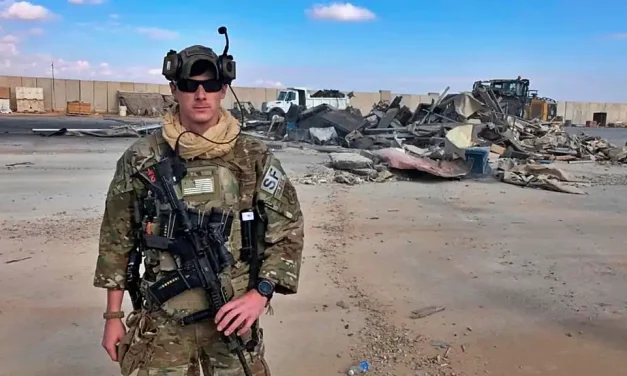
It was late in December that US President Donald Trump claimed that ISIS was the only reason for his country’s military presence in Syria and that with the defeat of this group the US will pull out its troops from Syria. The decision, however, was faced with some opposition inside the United States as some believed this would be an early departure.

Meanwhile, US Secretary of State Mike Pompeo addressing a recent meeting of the foreign ministers of the Global Coalition against ISIS member states called the terrorist group an ongoing threat. He stressed that Washington’s decision to withdraw forces from Syria does not mean the end of the war with ISIS.

But in general, evidence suggests that the United States is about to end its military presence in Syria and withdraw its two thousand military troops out of the country but where these forces would be deployed is open to debate. According to announcements, very few troops will return to the United States and most of them will be redeployed in US bases in Iraq.

It appears that the Americans have finally accepted that the Syrian political establishment under the leadership of Bashar Assad cannot be changed; Also the possibility of toppling Assad’s government and the US desired changes in Syria will not be realized; therefore, Europe and the United States will gradually but informally proceed towards recognizing the status quo. They hope that there will be elections in the future and the grounds will be prepared to bring currents following the lines of the United States and Europe to power in Syria. But whether this would take place will depend on the developments ahead.

In any case, what is certain is that the Americans are currently planning to minimize their military presence and their political role-playing in Syria.

In fact, it seems that Washington has reached the end of the line on this issue because they could not create changes militarily in Syria. This is while they have openly armed a wide range of Assad’s opponents from secular Westernized groups to forces close to ISIS.

There are even evidence that some Americans have also armed ISIS in the hope that Bashar Assad will be overthrown, or they have turned a blind eye to arming of ISIS. But not only this did not happen but a big split occurred in the American camp. Initially, a Western-Arab-Hebrew coalition was forged against Syria, which was weakened after the withdrawal of Turkey. On the other hand, direct involvement of Russia and Iran in the Syrian case changed the balance of power in favour of the political system in Syria, and the Americans came to the conclusion that a military solution in Syria would no longer be possible.

Politically too, Washington did not have a calling card to exercise its military influence on the ground, so its political role gradually diminished, and the initiative was shifted to Moscow, Tehran and Ankara.

At present, these three countries are advancing Syria’s events without the presence of the United States. According to Donald Trump and his advisers, Syria is a lost territory and that is why they are withdrawing their troops from the country. At the same time, they hope to put forward a good ground for replacing the case of Syria. For example, the US president announced several days ago that he would send troops to Iraq to monitor Iran. It should also be noted that there are still debates that ISIS has not yet been eliminated, and therefore it is necessary for the US troops to remain in the region. Of course, the survival of American forces does not mean they will be present on the territory of Syria. They can stay in Iraqi territory and carry out operations from their bases in Iraq.

In this way, it can be said that there is still ambiguity in America’s perspective on the issue of Syria, and there are different messages coming out from Washington; on the one hand, Trump insists on speeding up the withdrawal process from Syria; anti-war currents maintain that the United States should reduce its wars at least in less important areas, and yet others believe that the United States should continue to consider war as an option to advance its foreign policy.

Therefore, the conflict inside the United States continues, and it is unclear which front will eventually advance its views. Apparently, Trump as the President and Commander-in-Chief of the Armed Forces holds the upper hand to advance his plans, but there are some infrastructural intrusions that prevent the realization of Trump’s commands on quick withdrawal from Syria or parallel missions to US forces to maintain a strong presence in other parts of West Asia.
0 Comments

Submit a Comment

Your email address will not be published. Required fields are marked *

LATEST CONTENT

China’s Rejection of US Sanctions; Strengthening Iran’s Geopolitical Leverage

SCFR Online – Opinion: Concurrent with the official commencement of the United States’ economic war against our country, focusing on sanctions instruments, isolation, and economic pressure, what has now become increasingly important is the lack of alignment of other major global powers, especially China, with this policy.

The Makkah Pact; Reasons for its Formation and Challenges Ahead

SCFR Online – Opinion: The Makkah Pact, signed between Saudi Arabia, Pakistan, and Turkey under the motto “an attack on one is an attack on all,” is viewed by some analysts less as a full-fledged military coalition and more as an attempt to reduce security dependence on an external power and to establish a regional security mechanism.

Implications of the US-Saudi Nuclear Agreement

SCFR Online – Opinion: The new US-Saudi nuclear agreement, despite legal and political ambiguities, could alter previous non-proliferation standards in West Asia and intensify nuclear competition, ushering it into a new phase.

An Analysis of Recent Turkey-Israeli Regime Tensions

SCFR Online – Opinion: Recent developments in Syria indicate an intensification of strategic rivalry between Turkey and the Israeli regime, but mutual considerations and the role of the United States have limited the likelihood of direct war.

Loading

Últimas publicaciones

China’s Rejection of US Sanctions; Strengthening Iran’s Geopolitical Leverage

SCFR Online – Opinion: Concurrent with the official commencement of the United States’ economic war against our country, focusing on sanctions instruments, isolation, and economic pressure, what has now become increasingly important is the lack of alignment of other major global powers, especially China, with this policy.

The Makkah Pact; Reasons for its Formation and Challenges Ahead

SCFR Online – Opinion: The Makkah Pact, signed between Saudi Arabia, Pakistan, and Turkey under the motto “an attack on one is an attack on all,” is viewed by some analysts less as a full-fledged military coalition and more as an attempt to reduce security dependence on an external power and to establish a regional security mechanism.

Implications of the US-Saudi Nuclear Agreement

SCFR Online – Opinion: The new US-Saudi nuclear agreement, despite legal and political ambiguities, could alter previous non-proliferation standards in West Asia and intensify nuclear competition, ushering it into a new phase.

An Analysis of Recent Turkey-Israeli Regime Tensions

SCFR Online – Opinion: Recent developments in Syria indicate an intensification of strategic rivalry between Turkey and the Israeli regime, but mutual considerations and the role of the United States have limited the likelihood of direct war.

Loading

DERNIER CONTENU

China’s Rejection of US Sanctions; Strengthening Iran’s Geopolitical Leverage

SCFR Online – Opinion: Concurrent with the official commencement of the United States’ economic war against our country, focusing on sanctions instruments, isolation, and economic pressure, what has now become increasingly important is the lack of alignment of other major global powers, especially China, with this policy.

The Makkah Pact; Reasons for its Formation and Challenges Ahead

SCFR Online – Opinion: The Makkah Pact, signed between Saudi Arabia, Pakistan, and Turkey under the motto “an attack on one is an attack on all,” is viewed by some analysts less as a full-fledged military coalition and more as an attempt to reduce security dependence on an external power and to establish a regional security mechanism.

Implications of the US-Saudi Nuclear Agreement

SCFR Online – Opinion: The new US-Saudi nuclear agreement, despite legal and political ambiguities, could alter previous non-proliferation standards in West Asia and intensify nuclear competition, ushering it into a new phase.

An Analysis of Recent Turkey-Israeli Regime Tensions

SCFR Online – Opinion: Recent developments in Syria indicate an intensification of strategic rivalry between Turkey and the Israeli regime, but mutual considerations and the role of the United States have limited the likelihood of direct war.

Loading

DERNIER CONTENU

China’s Rejection of US Sanctions; Strengthening Iran’s Geopolitical Leverage

SCFR Online – Opinion: Concurrent with the official commencement of the United States’ economic war against our country, focusing on sanctions instruments, isolation, and economic pressure, what has now become increasingly important is the lack of alignment of other major global powers, especially China, with this policy.

The Makkah Pact; Reasons for its Formation and Challenges Ahead

SCFR Online – Opinion: The Makkah Pact, signed between Saudi Arabia, Pakistan, and Turkey under the motto “an attack on one is an attack on all,” is viewed by some analysts less as a full-fledged military coalition and more as an attempt to reduce security dependence on an external power and to establish a regional security mechanism.

Implications of the US-Saudi Nuclear Agreement

SCFR Online – Opinion: The new US-Saudi nuclear agreement, despite legal and political ambiguities, could alter previous non-proliferation standards in West Asia and intensify nuclear competition, ushering it into a new phase.

An Analysis of Recent Turkey-Israeli Regime Tensions

SCFR Online – Opinion: Recent developments in Syria indicate an intensification of strategic rivalry between Turkey and the Israeli regime, but mutual considerations and the role of the United States have limited the likelihood of direct war.

Loading

DERNIER CONTENU

China’s Rejection of US Sanctions; Strengthening Iran’s Geopolitical Leverage

SCFR Online – Opinion: Concurrent with the official commencement of the United States’ economic war against our country, focusing on sanctions instruments, isolation, and economic pressure, what has now become increasingly important is the lack of alignment of other major global powers, especially China, with this policy.

The Makkah Pact; Reasons for its Formation and Challenges Ahead

SCFR Online – Opinion: The Makkah Pact, signed between Saudi Arabia, Pakistan, and Turkey under the motto “an attack on one is an attack on all,” is viewed by some analysts less as a full-fledged military coalition and more as an attempt to reduce security dependence on an external power and to establish a regional security mechanism.

Implications of the US-Saudi Nuclear Agreement

SCFR Online – Opinion: The new US-Saudi nuclear agreement, despite legal and political ambiguities, could alter previous non-proliferation standards in West Asia and intensify nuclear competition, ushering it into a new phase.

An Analysis of Recent Turkey-Israeli Regime Tensions

SCFR Online – Opinion: Recent developments in Syria indicate an intensification of strategic rivalry between Turkey and the Israeli regime, but mutual considerations and the role of the United States have limited the likelihood of direct war.

Loading