Impact of Conservatives’ Victory on British Political Future and Brexit

2019/12/25 | interview, Politics, top news

Strategic Council Online: Conservatives victory in the British parliament does not mean the end of the Brexit political crisis for Britain and Johnson, says an expert on European affairs. "Brexit is a win-win case for the United States from two perspectives: On the one hand, the EU as a trade rival will be weakened and on the other hand, Washington could enter into bilateral agreements with the United Kingdom which would have more benefits for the US.

Speaking to the website of the Strategic Council on Foreign Relations on the deep political divide created in Britain in recent years, especially after the Brexit issue, Abbas Sarvestani noted: After a decade of political turmoil in British society, especially after Brexit, for the first time a government has been formed in UK that has a sufficient majority to carry out its electoral promises and retain power for the next five years.

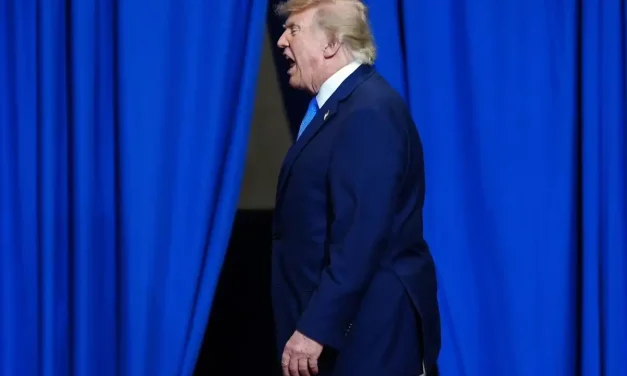
He cited holding five major elections in less than five years as a sign of the turbulence of British politics, saying: As a matter of fact the key to the victory of the Conservatives in this election slogan was the end of political turmoil and accomplishment of Brexit. As Johnson noted in his victory speech, the country deserves to be free from endless political debate over Brexit.”

The European affairs analyst described the recent British parliamentary elections as important in several respects: firstly, for the first time since 1987, it marked an unprecedented victory for the Conservative Party; secondly, the composition of the constituencies represented a profound change in British domestic politics. And some of the constituencies held by the Labor Party for nearly a century were taken by the Conservatives; third, the victory of Johnson and the Conservative Party could be seen as a sign of support for the far-right.

Finally, although Johnson’s landslide victory in the election put him in a better position to leave the European Union, but the Nationalists’ victory in Scotland and Northern Ireland’s border concerns, as well as the risk of prolongation of Brexit or an exit without deal in view of the country’s large volume of trade with the European Union, there is a risk of significant slowdown in its economic growth as well as its disintegration of Britain.

Referring to the protests by opponents of Brexit after election results were announced, he said: “Following the Conservative Party’s victory and despite Boris Johnson’s promises to improve the situation, we have witnessed protests with the slogan “No to Boris Johnson” in some cities. The most important reason for the protests was that the 2019 election was not voting for Conservative Party politics, but about voting for Brexit.

The expert on European affairs described the process of prolongation of Britain’s exit from EU after three years of debate as a source of anger and frustration for many people.

“The uncertainty about the Labor Party’s approach and the indecision of Jeremy Corbin about Brexit prompted the Conservative Party to conquer seats that had been in the hands of the Labor Party for years known as “Red Wall”.

In an interview before the election Corbin had said he has no specific opinion on Brexit and that in case of victory he would hold a new referendum.

Among other factors for the Conservatives’ win he referred to the neo-liberal policies of hardline Conservatives, Johnson’s election promises and the personality traits of the Labor leader, adding: “In the end, the British election and Johnson’s victory was another victory for the far-right. At least 108 of those who entered parliament in recent elections have been accused of racism, anti-immigration convictions and Islamophobia, and Boris Johnson himself had likened the burqa wearing women to letter boxes in 2018. This reflects the deep concern of the British community over EU immigration policies and, consequently, the vote for Johnson to win Brexit.

The European affairs expert on Britain’s future relations with the European Union, in particular with regard to the outcome of the Brexit vote, reiterated: “This election put Johnson in a better position in negotiations with the European Union.” After winning a landslide victory and a majority in parliament, he seeks to fulfill his original promise on Brexit. In his victory speech, Johnson promised that he would leave the EU by the end of January 2020. European leaders, meanwhile, expressed hope at a recent summit that Brexit would be voted on by parliament as soon as possible.

Sarvestani, referring to the remarks by Charles Michel, who chaired the EU summit, added that the British Parliament should vote on an agreement with the EU to determine the conditions for Britain’s exit from EU as soon as possible. He added: It is not the end of the Brexit political crisis for UK and Johnson because Johnson’s approaches on hard and soft Brexit are not known yet.

Although Johnson said in his victory speech that he wanted an election that would include the European Union Customs Union, the single market and ending the overall jurisdiction of the European Court of Justice, but because of the electoral ratification process and any intermediary agreement in the EU and the veto right each member state has it will not be possible to strike a comprehensive agreement by January, and we are likely to see an extension of the transitional period for 2 years or a Brexit without agreement would occur.

Sarvestani said another challenge to the vote was the decisive victory of the Scottish National Party, saying it won 48 of the 59 seats in Scotland. The party’s leader and first minister, Nicola Sturgeon, raised the issue of Scotland’s independence shortly after the election, saying it was the people of Scotland who decided their future, not Johnson and his government. She said Johnson has no obligation to make Scotland exit EU and will announce her plan for a referendum on independence next week.

He said that in the 2014 referendum, 45 percent of Scottish voters backed independence but this was not accepted by the Central Government, adding that a repeat of the referendum would imply the risk of political turmoil similar to what happened in Spain’s Catalonia. On the other hand, the contradiction between the Brexit law and the Belfast agreement and the unclear status of the border between the European Union and Northern Ireland is another challenge that has failed to secure previous agreements and remains unresolved in the Johnson administration.

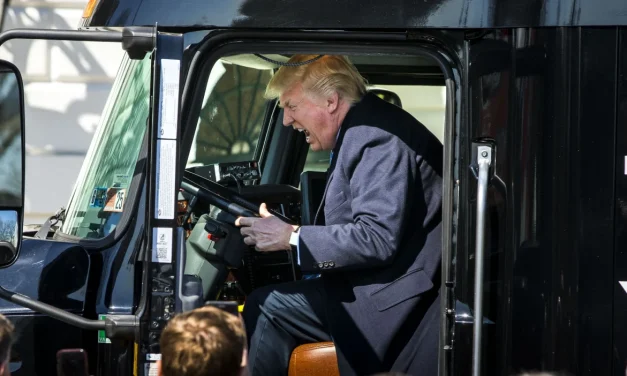
“The Trump administration supports hard Brexit because it prefers bilateral trade agreements to multilateral and binding treaties in the context of ‘America First’ strategy,” he said. The same is true of England, and as we saw in Trump’s tweet congratulating Johnson on his victory, it paves the way for an agreement between Britain and the United States, and that deal could be much bigger and more lucrative than any deal with the European Union.

But both Johnson’s and Trump’s enthusiasm for a trade deal cannot circumvent the reality of what is needed to enter into a bilateral trade agreement because the mechanisms of closing trade are so complex and typically take years, and this cannot prevent Britain’s economic growth decline in the event of hard Brexit.

The expert added: “If the Brexit deal is concluded, there will be a time period for leaving the EU, and during this time, the British government will still have to abide by EU law.” This means that Britain and the United States cannot officially enter into a new trade deal for at least two years.

“In addition, the United States can form an Anglo-Saxon alliance with the United Kingdom because the British are closer to the Americans. Therefore, Brexit could be a win-win case for the United States,” he said. On the one hand, its trade rival is weakened and, given that Britain is the sixth largest trading power in the world, it can conclude bilateral agreements that are of greater interest to them.

Sarvestani went on to say that Trump was “exultant” with the outcome of the British election. “Trump’s preference is to shift from multilateralism to bilateral negotiations. Because in this situation it has more bargaining power and can reduce its trade deficits. In addition, traditional European powers such as Germany and France do not like the United States, especially Trump. Trump seeks to divide Eastern Europe because they are more associated with the United States than France and Germany, and they are spending more on NATO. In fact, the United States seeks to pit new and old Europe against one another, and Brexit is one important step in that direction.

0 Comments

Submit a Comment

Your email address will not be published. Required fields are marked *

LATEST CONTENT

The Components of Iran’s Deterrence Power

SCFR Online – Opinion: At a time when regional security equations have reached a sensitive stage under the influence of Iran’s strategic confrontation with the United States and the Zionist regime, the question of the nature of Tehran’s defensive power has gained greater significance than ever before. While Washington and Tel Aviv rely on their technological superiority, the Islamic Republic of Iran has presented a model of deterrence that extends beyond the material calculations of the world’s classical militaries. This power, rooted in the connection between “the field” and “the people,” has not only altered the balance of power in recent conflicts but has also disrupted adversaries’ calculations when confronting Iran’s strategic depth.

The Persian Gulf; A Cold Battlefield Between Beijing and Washington

SCFR Online – Opinion: The competition in recent years between the United States and China encompasses various geographical regions—including the Indo-Pacific, West Asia, the Arctic and Antarctic, and Africa—as well as multiple domains such as economics and technology. Within this context, a strategic competition has also emerged in the Persian Gulf region across economic, technological, and military spheres.

Europe’s Enduring Dependence on Persian Gulf Energy

SCFR Online – Opinion: The dominant discourse in the field of European energy security over the past two decades has revolved around diversification of supply sources and the gradual reduction of dependence on fossil fuels. This narrative, which gained particular momentum after the Ukraine gas crisis in 2006 and its intensification in 2014 and 2022, was based on the assumption that Europe could free itself from the geopolitical vulnerabilities arising from dependence on specific suppliers through investment in renewable energy, imports of liquefied natural gas from diversified sources, and the establishment of new infrastructure. However, a closer analysis of energy trade data and the structure of the global oil and gas supply chain presents a different picture. Europe has not only failed to meaningfully reduce its dependence on the Persian Gulf, but in some sectors — particularly in liquefied natural gas imports — this dependence has deepened. This reality, which is often overlooked in public discourse, raises fundamental questions about the sustainability of Europe’s energy security strategies and their impact on regional power equations.

The Challenge of Hezbollah’s Low-Cost “FPV” Drones for the Zionist Regime

SCFR Online – Opinion: In modern warfare, it has always been assumed that the more expensive, and advanced the weapon—particularly from well-known companies—the more certain the victory will be. However, developments on the northern front of occupied Palestine in recent months have challenged this long-held belief. Here, the Zionist regime’s military, despite possessing the most advanced defense systems such as Iron Dome, David’s Sling, and Arrow, as well as fifth-generation F-35 fighter jets, Merkava tanks, and other modern equipment found in few countries worldwide, has effectively been rendered helpless against Hezbollah Lebanon’s few-hundred-dollar drones. Benjamin Netanyahu’s bitter admission regarding the inability to counter this threat, and his order to allocate an unlimited budget to find a solution, underscores the reality that the era of pure superiority through expensive technologies has come to an end.

Loading

Últimas publicaciones

The Components of Iran’s Deterrence Power

SCFR Online – Opinion: At a time when regional security equations have reached a sensitive stage under the influence of Iran’s strategic confrontation with the United States and the Zionist regime, the question of the nature of Tehran’s defensive power has gained greater significance than ever before. While Washington and Tel Aviv rely on their technological superiority, the Islamic Republic of Iran has presented a model of deterrence that extends beyond the material calculations of the world’s classical militaries. This power, rooted in the connection between “the field” and “the people,” has not only altered the balance of power in recent conflicts but has also disrupted adversaries’ calculations when confronting Iran’s strategic depth.

The Persian Gulf; A Cold Battlefield Between Beijing and Washington

SCFR Online – Opinion: The competition in recent years between the United States and China encompasses various geographical regions—including the Indo-Pacific, West Asia, the Arctic and Antarctic, and Africa—as well as multiple domains such as economics and technology. Within this context, a strategic competition has also emerged in the Persian Gulf region across economic, technological, and military spheres.

Europe’s Enduring Dependence on Persian Gulf Energy

SCFR Online – Opinion: The dominant discourse in the field of European energy security over the past two decades has revolved around diversification of supply sources and the gradual reduction of dependence on fossil fuels. This narrative, which gained particular momentum after the Ukraine gas crisis in 2006 and its intensification in 2014 and 2022, was based on the assumption that Europe could free itself from the geopolitical vulnerabilities arising from dependence on specific suppliers through investment in renewable energy, imports of liquefied natural gas from diversified sources, and the establishment of new infrastructure. However, a closer analysis of energy trade data and the structure of the global oil and gas supply chain presents a different picture. Europe has not only failed to meaningfully reduce its dependence on the Persian Gulf, but in some sectors — particularly in liquefied natural gas imports — this dependence has deepened. This reality, which is often overlooked in public discourse, raises fundamental questions about the sustainability of Europe’s energy security strategies and their impact on regional power equations.

The Challenge of Hezbollah’s Low-Cost “FPV” Drones for the Zionist Regime

SCFR Online – Opinion: In modern warfare, it has always been assumed that the more expensive, and advanced the weapon—particularly from well-known companies—the more certain the victory will be. However, developments on the northern front of occupied Palestine in recent months have challenged this long-held belief. Here, the Zionist regime’s military, despite possessing the most advanced defense systems such as Iron Dome, David’s Sling, and Arrow, as well as fifth-generation F-35 fighter jets, Merkava tanks, and other modern equipment found in few countries worldwide, has effectively been rendered helpless against Hezbollah Lebanon’s few-hundred-dollar drones. Benjamin Netanyahu’s bitter admission regarding the inability to counter this threat, and his order to allocate an unlimited budget to find a solution, underscores the reality that the era of pure superiority through expensive technologies has come to an end.

Loading

DERNIER CONTENU

The Components of Iran’s Deterrence Power

SCFR Online – Opinion: At a time when regional security equations have reached a sensitive stage under the influence of Iran’s strategic confrontation with the United States and the Zionist regime, the question of the nature of Tehran’s defensive power has gained greater significance than ever before. While Washington and Tel Aviv rely on their technological superiority, the Islamic Republic of Iran has presented a model of deterrence that extends beyond the material calculations of the world’s classical militaries. This power, rooted in the connection between “the field” and “the people,” has not only altered the balance of power in recent conflicts but has also disrupted adversaries’ calculations when confronting Iran’s strategic depth.

The Persian Gulf; A Cold Battlefield Between Beijing and Washington

SCFR Online – Opinion: The competition in recent years between the United States and China encompasses various geographical regions—including the Indo-Pacific, West Asia, the Arctic and Antarctic, and Africa—as well as multiple domains such as economics and technology. Within this context, a strategic competition has also emerged in the Persian Gulf region across economic, technological, and military spheres.

Europe’s Enduring Dependence on Persian Gulf Energy

SCFR Online – Opinion: The dominant discourse in the field of European energy security over the past two decades has revolved around diversification of supply sources and the gradual reduction of dependence on fossil fuels. This narrative, which gained particular momentum after the Ukraine gas crisis in 2006 and its intensification in 2014 and 2022, was based on the assumption that Europe could free itself from the geopolitical vulnerabilities arising from dependence on specific suppliers through investment in renewable energy, imports of liquefied natural gas from diversified sources, and the establishment of new infrastructure. However, a closer analysis of energy trade data and the structure of the global oil and gas supply chain presents a different picture. Europe has not only failed to meaningfully reduce its dependence on the Persian Gulf, but in some sectors — particularly in liquefied natural gas imports — this dependence has deepened. This reality, which is often overlooked in public discourse, raises fundamental questions about the sustainability of Europe’s energy security strategies and their impact on regional power equations.

The Challenge of Hezbollah’s Low-Cost “FPV” Drones for the Zionist Regime

SCFR Online – Opinion: In modern warfare, it has always been assumed that the more expensive, and advanced the weapon—particularly from well-known companies—the more certain the victory will be. However, developments on the northern front of occupied Palestine in recent months have challenged this long-held belief. Here, the Zionist regime’s military, despite possessing the most advanced defense systems such as Iron Dome, David’s Sling, and Arrow, as well as fifth-generation F-35 fighter jets, Merkava tanks, and other modern equipment found in few countries worldwide, has effectively been rendered helpless against Hezbollah Lebanon’s few-hundred-dollar drones. Benjamin Netanyahu’s bitter admission regarding the inability to counter this threat, and his order to allocate an unlimited budget to find a solution, underscores the reality that the era of pure superiority through expensive technologies has come to an end.

Loading

DERNIER CONTENU

The Components of Iran’s Deterrence Power

SCFR Online – Opinion: At a time when regional security equations have reached a sensitive stage under the influence of Iran’s strategic confrontation with the United States and the Zionist regime, the question of the nature of Tehran’s defensive power has gained greater significance than ever before. While Washington and Tel Aviv rely on their technological superiority, the Islamic Republic of Iran has presented a model of deterrence that extends beyond the material calculations of the world’s classical militaries. This power, rooted in the connection between “the field” and “the people,” has not only altered the balance of power in recent conflicts but has also disrupted adversaries’ calculations when confronting Iran’s strategic depth.

The Persian Gulf; A Cold Battlefield Between Beijing and Washington

SCFR Online – Opinion: The competition in recent years between the United States and China encompasses various geographical regions—including the Indo-Pacific, West Asia, the Arctic and Antarctic, and Africa—as well as multiple domains such as economics and technology. Within this context, a strategic competition has also emerged in the Persian Gulf region across economic, technological, and military spheres.

Europe’s Enduring Dependence on Persian Gulf Energy

SCFR Online – Opinion: The dominant discourse in the field of European energy security over the past two decades has revolved around diversification of supply sources and the gradual reduction of dependence on fossil fuels. This narrative, which gained particular momentum after the Ukraine gas crisis in 2006 and its intensification in 2014 and 2022, was based on the assumption that Europe could free itself from the geopolitical vulnerabilities arising from dependence on specific suppliers through investment in renewable energy, imports of liquefied natural gas from diversified sources, and the establishment of new infrastructure. However, a closer analysis of energy trade data and the structure of the global oil and gas supply chain presents a different picture. Europe has not only failed to meaningfully reduce its dependence on the Persian Gulf, but in some sectors — particularly in liquefied natural gas imports — this dependence has deepened. This reality, which is often overlooked in public discourse, raises fundamental questions about the sustainability of Europe’s energy security strategies and their impact on regional power equations.

The Challenge of Hezbollah’s Low-Cost “FPV” Drones for the Zionist Regime

SCFR Online – Opinion: In modern warfare, it has always been assumed that the more expensive, and advanced the weapon—particularly from well-known companies—the more certain the victory will be. However, developments on the northern front of occupied Palestine in recent months have challenged this long-held belief. Here, the Zionist regime’s military, despite possessing the most advanced defense systems such as Iron Dome, David’s Sling, and Arrow, as well as fifth-generation F-35 fighter jets, Merkava tanks, and other modern equipment found in few countries worldwide, has effectively been rendered helpless against Hezbollah Lebanon’s few-hundred-dollar drones. Benjamin Netanyahu’s bitter admission regarding the inability to counter this threat, and his order to allocate an unlimited budget to find a solution, underscores the reality that the era of pure superiority through expensive technologies has come to an end.

Loading

DERNIER CONTENU

The Components of Iran’s Deterrence Power

SCFR Online – Opinion: At a time when regional security equations have reached a sensitive stage under the influence of Iran’s strategic confrontation with the United States and the Zionist regime, the question of the nature of Tehran’s defensive power has gained greater significance than ever before. While Washington and Tel Aviv rely on their technological superiority, the Islamic Republic of Iran has presented a model of deterrence that extends beyond the material calculations of the world’s classical militaries. This power, rooted in the connection between “the field” and “the people,” has not only altered the balance of power in recent conflicts but has also disrupted adversaries’ calculations when confronting Iran’s strategic depth.

The Persian Gulf; A Cold Battlefield Between Beijing and Washington

SCFR Online – Opinion: The competition in recent years between the United States and China encompasses various geographical regions—including the Indo-Pacific, West Asia, the Arctic and Antarctic, and Africa—as well as multiple domains such as economics and technology. Within this context, a strategic competition has also emerged in the Persian Gulf region across economic, technological, and military spheres.

Europe’s Enduring Dependence on Persian Gulf Energy

SCFR Online – Opinion: The dominant discourse in the field of European energy security over the past two decades has revolved around diversification of supply sources and the gradual reduction of dependence on fossil fuels. This narrative, which gained particular momentum after the Ukraine gas crisis in 2006 and its intensification in 2014 and 2022, was based on the assumption that Europe could free itself from the geopolitical vulnerabilities arising from dependence on specific suppliers through investment in renewable energy, imports of liquefied natural gas from diversified sources, and the establishment of new infrastructure. However, a closer analysis of energy trade data and the structure of the global oil and gas supply chain presents a different picture. Europe has not only failed to meaningfully reduce its dependence on the Persian Gulf, but in some sectors — particularly in liquefied natural gas imports — this dependence has deepened. This reality, which is often overlooked in public discourse, raises fundamental questions about the sustainability of Europe’s energy security strategies and their impact on regional power equations.

The Challenge of Hezbollah’s Low-Cost “FPV” Drones for the Zionist Regime

SCFR Online – Opinion: In modern warfare, it has always been assumed that the more expensive, and advanced the weapon—particularly from well-known companies—the more certain the victory will be. However, developments on the northern front of occupied Palestine in recent months have challenged this long-held belief. Here, the Zionist regime’s military, despite possessing the most advanced defense systems such as Iron Dome, David’s Sling, and Arrow, as well as fifth-generation F-35 fighter jets, Merkava tanks, and other modern equipment found in few countries worldwide, has effectively been rendered helpless against Hezbollah Lebanon’s few-hundred-dollar drones. Benjamin Netanyahu’s bitter admission regarding the inability to counter this threat, and his order to allocate an unlimited budget to find a solution, underscores the reality that the era of pure superiority through expensive technologies has come to an end.

Loading