Dimensions of New Tensions between Islamabad & Delhi

2020/02/18 | interview, Politics, Top News

Strategic Council Online: An Asian affairs analyst attributed the recent tension between Islamabad and New Delhi to the Kashmir issue and to some extent to Afghanistan, saying Kashmir has become a symbolic and prestigious matter for both sides and despite the strong role of the two countries' military in foreign policy, the BJP's extreme nationalist stance and its negative view of Muslims will not only fail to resolve the differences between the two countries in the near future but will continue in the form of war of words, as well as political and sometimes military conflicts.

In an interview with the website of the Strategic Council on Foreign Relations on the recent war of words between Indian and Pakistani officials, Behrouz Ayaz cited the nature and core of the two countries’ differences and hostilities to the Kashmir issue, adding that Kashmir remains the most dangerous region in the world after 73 years of differences between Islamabad and New Delhi, which have repeatedly confronted each other and tied the security of the South Asian region to the two countries’ relations.


Kashmiri Muslims Do Not Want to Stay with India

Referring to historical developments that led to the Kashmir conflict, he said: “Evidence suggests that most Kashmiri Muslims do not want to stay with India, but India takes advantage of the violent methods of Kashmiri militias as an excuse to justify its most violent controls in Kashmir.”

Ayaz said that Kashmir is the identity and nature of the old and deep animosity between India and Pakistan, adding that the recent war of words between the two countries’ officials was caused by India’s recent moves in Kashmir and Pakistan’s response. During a February 14, 2019 suicide attack in Pulwama (in Jammu and Kashmir, India) by a Pakistani Muslim militant killing 46 Indian officers and accepting responsibility by the Jaish Mohammed militant group, a new chapter in the division between Islamabad and New Delhi was opened that still continues.

Referring to India’s retaliatory attack on the group’s headquarters in Balakot, Pakistan, killing 350 people and escalation of the two countries’ border clashes, he noted: Revocation of Article 370 of the Indian Constitution on the Special Status of Jammu and Kashmir and the Citizenship Amendment Bill offering citizenship to non-Muslims have sparked protests by Islamabad and outbreak of military clashes in Kashmir. Adding to these issues India’s increasing influence in Afghanistan and Pakistan’s dissatisfaction with the issue, we will have a better understanding of the causes of tensions between the two countries, which is a different matter.


India Seeks Supremacy in the Region

“India has always sought regional supremacy in its foreign policy,” the Asia-Pacific affairs expert said, citing the tensions in the region and the management of the two countries’ relations. Becoming a subcontinent superpower, economic development, becoming the superior economic power, influencing important international events, promoting and transferring the pattern of Indian culture of adaptation and democracy, efforts to win a permanent seat at the UN Security Council are just part of India’s aims at the regional and global levels. Any instability in the region could deter New Delhi from achieving these goals throw obstacles in the way of furthering its goals regionally and globally.

Saying that Pakistan has widespread internal social and economic problems that could be doubled by war and instability, he said the revocation of bilateral trade, the closure of airspace to flights between the two countries, the expulsion of each other’s ambassadors are among measures taken by India and Pakistan against each other. This will be to the detriment of both countries and will reduce economic growth, lower security and relative stability,” he added.

Emphasizing the strategic importance of the South Asian region, he added: “Any conflict, tension and instability could while losing regional security control will increase border clashes, which would enhance arms competition and add to the volume of nuclear arsenals and warheads. As a result, there will be a new balance and it will prompt the countries in the region to seek more allies.


Spread of Extremism a Result of Tensions in South Asia

The spread of extremism and the rise of extremist groups will be another consequence of these tensions, and the terrorist groups, especially ISIS, will make the most of this turbulent region and have an opportunity to spread and strengthen their positions which will mean further instability for the region, the Asia-Pacific affairs analyst said.


India, Pakistan in Zero-Sum Game Mode

Saying that the future of relations between the two countries depends on internal factors such as identity, culture and political elite, as well as regional factors and major international actors, he explained: Given that India-Pakistan differences are about economic issues rather than completely political, but also strategic, identity, and cultural, and the two countries’ policies derive from this factor, they are in a state of zero-sum game.

He noted: For the Indians, especially its nationalists, Indian history is a long story of the Hindu struggle against invasion, and India has in the past millennium been a particular civilizational battleground between Hindus and Muslims. The fact is that the dominant empires of India, the Delhi monarchy and the Gurkan and Mongol empires were enough for the Indians to view Islam as alien domination over their indigenous peoples. On the other hand, Islam has been a factor for Pakistan to define its nature and to recognize India as its “another”. Indeed, since Pakistan’s independence, we have witnessed the confrontation of Hinduism and Islam in the subcontinent, and the formation of Pakistan has been a manifestation of this conflict.

“The same applies to Kashmir,” Ayaz added. According to India, Kashmir, as a Muslim-majority state, only shows the secular nature of Indian politics. The issue of Hindu nationalists led by the BJP and its leader Narendra Modi focuses on other aspects. They believe that India must be a Hindu state, and the loss of Kashmir represents the victory of Muslims over Hinduism. That is, they interpret Kashmir as part of India and as part of India’s Indians. Therefore Kashmiri Muslims must either leave their country or learn to live in an Indian country.

Stating that the claim of Pakistan’s ownership of Kashmir and its response to the events in Kashmir by Indian nationalists is used as evidence of an Islamic threat, the expert said: The issue shows the depth of disagreement and complexity of the crisis and the zero-sum game between the two countries.

Therefore, Kashmir has become a symbolic and prestigious issue for the two countries and, given the controversial issue, the bold role of the two countries’ military in foreign policy, the BJP’s extremist nationalist stance and its negative outlook about Muslims, the differences between the two countries are not expected to be resolved in a near future and will remain in the form of verbal, political and sometimes military conflicts.


Kashmir & Afghanistan Cause of Tension between Islamabad & New Delhi

Ayaz added: Although the tension between Islamabad and New Delhi is related to the Kashmir issue and to some extent to Afghanistan and the two regions (Kashmir and Afghanistan) have become a battleground for them, attention to the major international actors and their polarization against one another, in the subcontinent, could illuminate another angle of the region’s future.

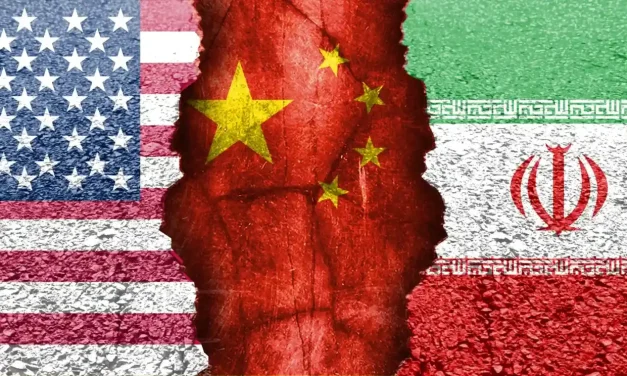
Noting that the great powers have maintained a footprint in the region since the independence of these countries, he referred to the historical support of the USSR for India, and the US and China support for Pakistan and added: Attention to the long-standing friendship of India and China and the old friendship of Pakistan and China will help us seek for part of the causes of these tensions, as well as the solutions and future of the subcontinent in the game of the big powers especially that the United States, as India’s current ally, is trying to contain China along with India. On the other hand, China is trying to control India through Pakistan.

Big Powers Logic & Interests Prevent India-Pak Major Confrontation

Emphasizing that the logic of the big powers and their interests in the region will prevent a major conflict between India and Pakistan, the Asia affairs expert said: The United States has identified South Asia as a centre of terrorism and religious extremism and it is therefore interested in ensuring regional stability, preventing the proliferation of nuclear weapons and minimizing the potential of a nuclear war between India and Pakistan due to its importance to the region and its interests.

“China also has ties with India and Pakistan on the one hand, and the need for regional stability and peace to pursue its goals such as the One Belt One Road, part of which crosses Kashmir, on the other, calls for restraint on both sides and focusing on regional peace and stability. Therefore, these two nuclear states will never go to full-scale war against each other because of the rationality behind the logic of nuclear weapons and given the set of circumstances, but these conflicts will remain between the two countries in a limited scale.

0 Comments

Submit a Comment

Your email address will not be published. Required fields are marked *

LATEST CONTENT

The Inseparability of the Lebanese Front from the Axis of Resistance

SCFR Online–Opinion: By providing an extensive network of social, healthcare, educational, and post-war reconstruction services, Hezbollah has established a strong social base for itself among Lebanon’s Shiites and Sunnis, and even beyond that, among other segments of Lebanese society, including Christians. Hezbollah has never been an external actor imposed upon Lebanon; rather, it is a phenomenon fundamentally born out of the occupation and crimes of the Zionist regime and itself influenced by popular resistance.

The Increasing Efforts of the Zionist Regime to Redefine Borders and the Regional Order and Its Consequences

SCFR Online– Opinion: Security and military developments in the region over recent months indicate that the ongoing crises and wars in Gaza, southern Lebanon, and parts of Syrian territory encompass broader dimensions of geopolitical and geostrategic transformations. In this context, the increased military presence and control of the Zionist regime over parts of the territories of these areas, along with proposals regarding the creation of buffer zones or even the expansion of security borders, have raised serious questions about the future of the regional order and its consequences for the countries of West Asia.

The Components of Iran’s Deterrence Power

SCFR Online – Opinion: At a time when regional security equations have reached a sensitive stage under the influence of Iran’s strategic confrontation with the United States and the Zionist regime, the question of the nature of Tehran’s defensive power has gained greater significance than ever before. While Washington and Tel Aviv rely on their technological superiority, the Islamic Republic of Iran has presented a model of deterrence that extends beyond the material calculations of the world’s classical militaries. This power, rooted in the connection between “the field” and “the people,” has not only altered the balance of power in recent conflicts but has also disrupted adversaries’ calculations when confronting Iran’s strategic depth.

The Persian Gulf; A Cold Battlefield Between Beijing and Washington

SCFR Online – Opinion: The competition in recent years between the United States and China encompasses various geographical regions—including the Indo-Pacific, West Asia, the Arctic and Antarctic, and Africa—as well as multiple domains such as economics and technology. Within this context, a strategic competition has also emerged in the Persian Gulf region across economic, technological, and military spheres.

Europe’s Enduring Dependence on Persian Gulf Energy

SCFR Online – Opinion: The dominant discourse in the field of European energy security over the past two decades has revolved around diversification of supply sources and the gradual reduction of dependence on fossil fuels. This narrative, which gained particular momentum after the Ukraine gas crisis in 2006 and its intensification in 2014 and 2022, was based on the assumption that Europe could free itself from the geopolitical vulnerabilities arising from dependence on specific suppliers through investment in renewable energy, imports of liquefied natural gas from diversified sources, and the establishment of new infrastructure. However, a closer analysis of energy trade data and the structure of the global oil and gas supply chain presents a different picture. Europe has not only failed to meaningfully reduce its dependence on the Persian Gulf, but in some sectors — particularly in liquefied natural gas imports — this dependence has deepened. This reality, which is often overlooked in public discourse, raises fundamental questions about the sustainability of Europe’s energy security strategies and their impact on regional power equations.

Loading

Últimas publicaciones

The Inseparability of the Lebanese Front from the Axis of Resistance

SCFR Online–Opinion: By providing an extensive network of social, healthcare, educational, and post-war reconstruction services, Hezbollah has established a strong social base for itself among Lebanon’s Shiites and Sunnis, and even beyond that, among other segments of Lebanese society, including Christians. Hezbollah has never been an external actor imposed upon Lebanon; rather, it is a phenomenon fundamentally born out of the occupation and crimes of the Zionist regime and itself influenced by popular resistance.

The Increasing Efforts of the Zionist Regime to Redefine Borders and the Regional Order and Its Consequences

SCFR Online– Opinion: Security and military developments in the region over recent months indicate that the ongoing crises and wars in Gaza, southern Lebanon, and parts of Syrian territory encompass broader dimensions of geopolitical and geostrategic transformations. In this context, the increased military presence and control of the Zionist regime over parts of the territories of these areas, along with proposals regarding the creation of buffer zones or even the expansion of security borders, have raised serious questions about the future of the regional order and its consequences for the countries of West Asia.

The Components of Iran’s Deterrence Power

SCFR Online – Opinion: At a time when regional security equations have reached a sensitive stage under the influence of Iran’s strategic confrontation with the United States and the Zionist regime, the question of the nature of Tehran’s defensive power has gained greater significance than ever before. While Washington and Tel Aviv rely on their technological superiority, the Islamic Republic of Iran has presented a model of deterrence that extends beyond the material calculations of the world’s classical militaries. This power, rooted in the connection between “the field” and “the people,” has not only altered the balance of power in recent conflicts but has also disrupted adversaries’ calculations when confronting Iran’s strategic depth.

The Persian Gulf; A Cold Battlefield Between Beijing and Washington

SCFR Online – Opinion: The competition in recent years between the United States and China encompasses various geographical regions—including the Indo-Pacific, West Asia, the Arctic and Antarctic, and Africa—as well as multiple domains such as economics and technology. Within this context, a strategic competition has also emerged in the Persian Gulf region across economic, technological, and military spheres.

Europe’s Enduring Dependence on Persian Gulf Energy

SCFR Online – Opinion: The dominant discourse in the field of European energy security over the past two decades has revolved around diversification of supply sources and the gradual reduction of dependence on fossil fuels. This narrative, which gained particular momentum after the Ukraine gas crisis in 2006 and its intensification in 2014 and 2022, was based on the assumption that Europe could free itself from the geopolitical vulnerabilities arising from dependence on specific suppliers through investment in renewable energy, imports of liquefied natural gas from diversified sources, and the establishment of new infrastructure. However, a closer analysis of energy trade data and the structure of the global oil and gas supply chain presents a different picture. Europe has not only failed to meaningfully reduce its dependence on the Persian Gulf, but in some sectors — particularly in liquefied natural gas imports — this dependence has deepened. This reality, which is often overlooked in public discourse, raises fundamental questions about the sustainability of Europe’s energy security strategies and their impact on regional power equations.

Loading

DERNIER CONTENU

The Inseparability of the Lebanese Front from the Axis of Resistance

SCFR Online–Opinion: By providing an extensive network of social, healthcare, educational, and post-war reconstruction services, Hezbollah has established a strong social base for itself among Lebanon’s Shiites and Sunnis, and even beyond that, among other segments of Lebanese society, including Christians. Hezbollah has never been an external actor imposed upon Lebanon; rather, it is a phenomenon fundamentally born out of the occupation and crimes of the Zionist regime and itself influenced by popular resistance.

The Increasing Efforts of the Zionist Regime to Redefine Borders and the Regional Order and Its Consequences

SCFR Online– Opinion: Security and military developments in the region over recent months indicate that the ongoing crises and wars in Gaza, southern Lebanon, and parts of Syrian territory encompass broader dimensions of geopolitical and geostrategic transformations. In this context, the increased military presence and control of the Zionist regime over parts of the territories of these areas, along with proposals regarding the creation of buffer zones or even the expansion of security borders, have raised serious questions about the future of the regional order and its consequences for the countries of West Asia.

The Components of Iran’s Deterrence Power

SCFR Online – Opinion: At a time when regional security equations have reached a sensitive stage under the influence of Iran’s strategic confrontation with the United States and the Zionist regime, the question of the nature of Tehran’s defensive power has gained greater significance than ever before. While Washington and Tel Aviv rely on their technological superiority, the Islamic Republic of Iran has presented a model of deterrence that extends beyond the material calculations of the world’s classical militaries. This power, rooted in the connection between “the field” and “the people,” has not only altered the balance of power in recent conflicts but has also disrupted adversaries’ calculations when confronting Iran’s strategic depth.

The Persian Gulf; A Cold Battlefield Between Beijing and Washington

SCFR Online – Opinion: The competition in recent years between the United States and China encompasses various geographical regions—including the Indo-Pacific, West Asia, the Arctic and Antarctic, and Africa—as well as multiple domains such as economics and technology. Within this context, a strategic competition has also emerged in the Persian Gulf region across economic, technological, and military spheres.

Europe’s Enduring Dependence on Persian Gulf Energy

SCFR Online – Opinion: The dominant discourse in the field of European energy security over the past two decades has revolved around diversification of supply sources and the gradual reduction of dependence on fossil fuels. This narrative, which gained particular momentum after the Ukraine gas crisis in 2006 and its intensification in 2014 and 2022, was based on the assumption that Europe could free itself from the geopolitical vulnerabilities arising from dependence on specific suppliers through investment in renewable energy, imports of liquefied natural gas from diversified sources, and the establishment of new infrastructure. However, a closer analysis of energy trade data and the structure of the global oil and gas supply chain presents a different picture. Europe has not only failed to meaningfully reduce its dependence on the Persian Gulf, but in some sectors — particularly in liquefied natural gas imports — this dependence has deepened. This reality, which is often overlooked in public discourse, raises fundamental questions about the sustainability of Europe’s energy security strategies and their impact on regional power equations.

Loading

DERNIER CONTENU

The Inseparability of the Lebanese Front from the Axis of Resistance

SCFR Online–Opinion: By providing an extensive network of social, healthcare, educational, and post-war reconstruction services, Hezbollah has established a strong social base for itself among Lebanon’s Shiites and Sunnis, and even beyond that, among other segments of Lebanese society, including Christians. Hezbollah has never been an external actor imposed upon Lebanon; rather, it is a phenomenon fundamentally born out of the occupation and crimes of the Zionist regime and itself influenced by popular resistance.

The Increasing Efforts of the Zionist Regime to Redefine Borders and the Regional Order and Its Consequences

SCFR Online– Opinion: Security and military developments in the region over recent months indicate that the ongoing crises and wars in Gaza, southern Lebanon, and parts of Syrian territory encompass broader dimensions of geopolitical and geostrategic transformations. In this context, the increased military presence and control of the Zionist regime over parts of the territories of these areas, along with proposals regarding the creation of buffer zones or even the expansion of security borders, have raised serious questions about the future of the regional order and its consequences for the countries of West Asia.

The Components of Iran’s Deterrence Power

SCFR Online – Opinion: At a time when regional security equations have reached a sensitive stage under the influence of Iran’s strategic confrontation with the United States and the Zionist regime, the question of the nature of Tehran’s defensive power has gained greater significance than ever before. While Washington and Tel Aviv rely on their technological superiority, the Islamic Republic of Iran has presented a model of deterrence that extends beyond the material calculations of the world’s classical militaries. This power, rooted in the connection between “the field” and “the people,” has not only altered the balance of power in recent conflicts but has also disrupted adversaries’ calculations when confronting Iran’s strategic depth.

The Persian Gulf; A Cold Battlefield Between Beijing and Washington

SCFR Online – Opinion: The competition in recent years between the United States and China encompasses various geographical regions—including the Indo-Pacific, West Asia, the Arctic and Antarctic, and Africa—as well as multiple domains such as economics and technology. Within this context, a strategic competition has also emerged in the Persian Gulf region across economic, technological, and military spheres.

Europe’s Enduring Dependence on Persian Gulf Energy

SCFR Online – Opinion: The dominant discourse in the field of European energy security over the past two decades has revolved around diversification of supply sources and the gradual reduction of dependence on fossil fuels. This narrative, which gained particular momentum after the Ukraine gas crisis in 2006 and its intensification in 2014 and 2022, was based on the assumption that Europe could free itself from the geopolitical vulnerabilities arising from dependence on specific suppliers through investment in renewable energy, imports of liquefied natural gas from diversified sources, and the establishment of new infrastructure. However, a closer analysis of energy trade data and the structure of the global oil and gas supply chain presents a different picture. Europe has not only failed to meaningfully reduce its dependence on the Persian Gulf, but in some sectors — particularly in liquefied natural gas imports — this dependence has deepened. This reality, which is often overlooked in public discourse, raises fundamental questions about the sustainability of Europe’s energy security strategies and their impact on regional power equations.

Loading

DERNIER CONTENU

The Inseparability of the Lebanese Front from the Axis of Resistance

SCFR Online–Opinion: By providing an extensive network of social, healthcare, educational, and post-war reconstruction services, Hezbollah has established a strong social base for itself among Lebanon’s Shiites and Sunnis, and even beyond that, among other segments of Lebanese society, including Christians. Hezbollah has never been an external actor imposed upon Lebanon; rather, it is a phenomenon fundamentally born out of the occupation and crimes of the Zionist regime and itself influenced by popular resistance.

The Increasing Efforts of the Zionist Regime to Redefine Borders and the Regional Order and Its Consequences

SCFR Online– Opinion: Security and military developments in the region over recent months indicate that the ongoing crises and wars in Gaza, southern Lebanon, and parts of Syrian territory encompass broader dimensions of geopolitical and geostrategic transformations. In this context, the increased military presence and control of the Zionist regime over parts of the territories of these areas, along with proposals regarding the creation of buffer zones or even the expansion of security borders, have raised serious questions about the future of the regional order and its consequences for the countries of West Asia.

The Components of Iran’s Deterrence Power

SCFR Online – Opinion: At a time when regional security equations have reached a sensitive stage under the influence of Iran’s strategic confrontation with the United States and the Zionist regime, the question of the nature of Tehran’s defensive power has gained greater significance than ever before. While Washington and Tel Aviv rely on their technological superiority, the Islamic Republic of Iran has presented a model of deterrence that extends beyond the material calculations of the world’s classical militaries. This power, rooted in the connection between “the field” and “the people,” has not only altered the balance of power in recent conflicts but has also disrupted adversaries’ calculations when confronting Iran’s strategic depth.

The Persian Gulf; A Cold Battlefield Between Beijing and Washington

SCFR Online – Opinion: The competition in recent years between the United States and China encompasses various geographical regions—including the Indo-Pacific, West Asia, the Arctic and Antarctic, and Africa—as well as multiple domains such as economics and technology. Within this context, a strategic competition has also emerged in the Persian Gulf region across economic, technological, and military spheres.

Europe’s Enduring Dependence on Persian Gulf Energy

SCFR Online – Opinion: The dominant discourse in the field of European energy security over the past two decades has revolved around diversification of supply sources and the gradual reduction of dependence on fossil fuels. This narrative, which gained particular momentum after the Ukraine gas crisis in 2006 and its intensification in 2014 and 2022, was based on the assumption that Europe could free itself from the geopolitical vulnerabilities arising from dependence on specific suppliers through investment in renewable energy, imports of liquefied natural gas from diversified sources, and the establishment of new infrastructure. However, a closer analysis of energy trade data and the structure of the global oil and gas supply chain presents a different picture. Europe has not only failed to meaningfully reduce its dependence on the Persian Gulf, but in some sectors — particularly in liquefied natural gas imports — this dependence has deepened. This reality, which is often overlooked in public discourse, raises fundamental questions about the sustainability of Europe’s energy security strategies and their impact on regional power equations.

Loading