Impact of November Election on US-Iranian Relations

Strategic Council Online: Given the economic and social implications of the coronavirus in the United States, maybe it would be more attractive if Trump was defeated by his Democratic rival, Joe Biden. However, even if this would be the case given the US governing structure in practice, it is unlikely for Biden to be able to make effective changes in the US strategy towards the Islamic Republic of Iran. Saeed Shokouhi - Faculty Member of Allameh Tabatabai University

Following the successful launch of the Nour satellite by the Islamic Revolutionary Guard Corps (IRGC) Air Force, John Bolton, a former national security adviser to Donald Trump who during his presence at the White House tried to intensify US policy of maximum pressure on Iran, admitted that contrary to Trump’s claims this policy has failed to deter Iran. John Bolton tweeted that the successful launch is an indication that despite Washington’s policy of maximum pressure, ‘we are still not applying enough pressure’.

In fact, he implicitly criticizes Trump, claiming that because his tough policies toward Iran have not been implemented, Tehran has now become a challenging actor.

It should be noted that one of the goals of the maximum US pressure was to limit Iran’s financial resources and access, which they continue to pursue.

Meanwhile, tensions between Iran and the United States in the Persian Gulf region have recently heightened again. The US Navy’s Fifth Fleet, based in Bahrain, said in a statement on Thursday, April 17, that 11 Iranian military vessels had approached six US Navy warships in the northern Persian Gulf and caused them disturbance.

On the same day, Iranian Foreign Minister Mohammad Javad Zarif tweeted: “US Navy can’t seem to find its way around our waters. Perhaps because it hasn’t figured out its name: Persian Gulf, as it’s been called for 2,000 yrs longer than the US has existed. Or maybe it doesn’t know what it’s doing in our backyard, 7,000 miles from home.”

A few days later, US President Donald Trump tweeted: “I have instructed the United States Navy to shoot down and destroy any and all Iranian gunboats if they harass our ships at sea.” However, a US official immediately corrected Trump’s stance.

Based on the logic of international relations Iran’s actions and manoeuvres against US bullying in the region which is a perfectly appropriate move, are in line with the show of power.

In this regard, American economist Thomas Schelling enumerates four functions for power in the international system, namely: deterrence, coercion, self-defence, and a policy of showoff or prestige. If we consider these four functions, Iran will pursue both the goal of deterrence and the issue of showoff and prestige by demonstrating its power in the field of missiles in the Persian Gulf.

Regarding the scenarios ahead about relations between Iran and the United States, several points should be noted: First, Trump’s ideal was and is for Iran to sit at the negotiating table before November 2020 elections. In fact, because the president of the United States has no achievements in foreign policy, if he could reach an agreement with Iran, he would have won the election, so Trump’s wish is for Iran to come to the negotiating table.

Given the economic and social implications of the coronavirus in the United States, maybe it would be more attractive if Trump was defeated by his Democratic rival, Joe Biden. However, even if this would be the case given the US governing structure in practice it is unlikely for Biden to be able to make effective changes in the US strategy towards the Islamic Republic of Iran.

Another point goes back to the US’s tough laws and sanctions against Iran, which means that despite these tough laws, Biden will not be able to return to the Iran Nuclear Agreement (also known as the Joint Comprehensive Plan of Action)  easily and quickly.

So, in general, Biden’s rise to power seems better than Trump’s, because it shows the failure of Trump’s wrong policies, but his presence in the White House will not solve the problem. On the other hand, the laws and regulations passed against Iran and the existing obstacles also help to maintain the problems between Tehran and Washington unless there is a change in them. The only difference is that in the Biden era, we will no longer see the intensity of Trump’s actions and his ill-considered steps.

But on the other hand, if Trump wins the presidential race again because he will no longer need the renewed vote of American voters, he will probably intensify his hostile policies against Iran.
0 Comments

Submit a Comment

Your email address will not be published. Required fields are marked *

LATEST CONTENT

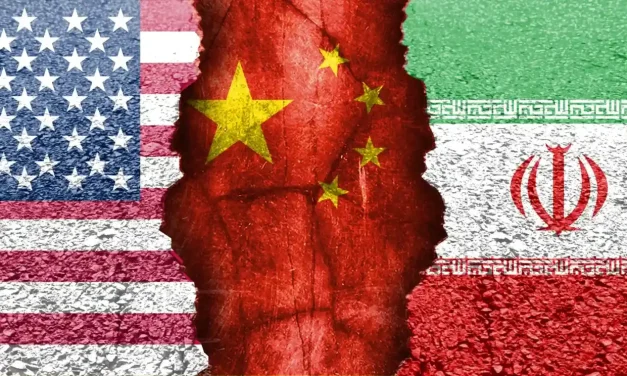
China’s Rejection of US Sanctions; Strengthening Iran’s Geopolitical Leverage

SCFR Online – Opinion: Concurrent with the official commencement of the United States’ economic war against our country, focusing on sanctions instruments, isolation, and economic pressure, what has now become increasingly important is the lack of alignment of other major global powers, especially China, with this policy.

The Makkah Pact; Reasons for its Formation and Challenges Ahead

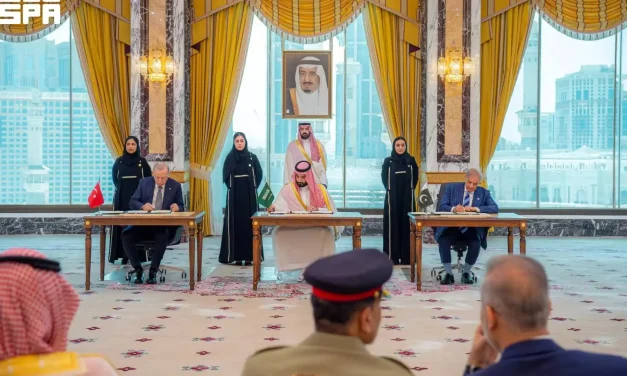
SCFR Online – Opinion: The Makkah Pact, signed between Saudi Arabia, Pakistan, and Turkey under the motto “an attack on one is an attack on all,” is viewed by some analysts less as a full-fledged military coalition and more as an attempt to reduce security dependence on an external power and to establish a regional security mechanism.

Implications of the US-Saudi Nuclear Agreement

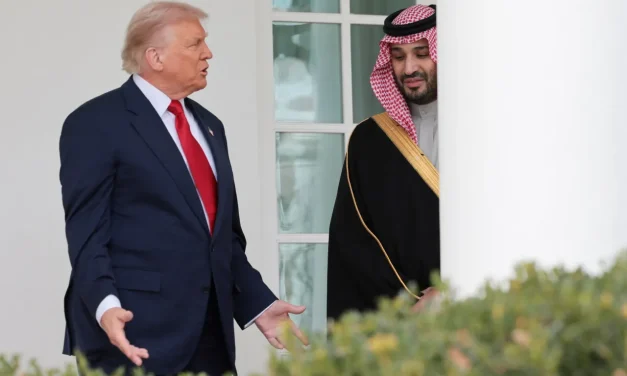
SCFR Online – Opinion: The new US-Saudi nuclear agreement, despite legal and political ambiguities, could alter previous non-proliferation standards in West Asia and intensify nuclear competition, ushering it into a new phase.

Loading

Últimas publicaciones

China’s Rejection of US Sanctions; Strengthening Iran’s Geopolitical Leverage

SCFR Online – Opinion: Concurrent with the official commencement of the United States’ economic war against our country, focusing on sanctions instruments, isolation, and economic pressure, what has now become increasingly important is the lack of alignment of other major global powers, especially China, with this policy.

The Makkah Pact; Reasons for its Formation and Challenges Ahead

SCFR Online – Opinion: The Makkah Pact, signed between Saudi Arabia, Pakistan, and Turkey under the motto “an attack on one is an attack on all,” is viewed by some analysts less as a full-fledged military coalition and more as an attempt to reduce security dependence on an external power and to establish a regional security mechanism.

Implications of the US-Saudi Nuclear Agreement

SCFR Online – Opinion: The new US-Saudi nuclear agreement, despite legal and political ambiguities, could alter previous non-proliferation standards in West Asia and intensify nuclear competition, ushering it into a new phase.

Loading

DERNIER CONTENU

China’s Rejection of US Sanctions; Strengthening Iran’s Geopolitical Leverage

SCFR Online – Opinion: Concurrent with the official commencement of the United States’ economic war against our country, focusing on sanctions instruments, isolation, and economic pressure, what has now become increasingly important is the lack of alignment of other major global powers, especially China, with this policy.

The Makkah Pact; Reasons for its Formation and Challenges Ahead

SCFR Online – Opinion: The Makkah Pact, signed between Saudi Arabia, Pakistan, and Turkey under the motto “an attack on one is an attack on all,” is viewed by some analysts less as a full-fledged military coalition and more as an attempt to reduce security dependence on an external power and to establish a regional security mechanism.

Implications of the US-Saudi Nuclear Agreement

SCFR Online – Opinion: The new US-Saudi nuclear agreement, despite legal and political ambiguities, could alter previous non-proliferation standards in West Asia and intensify nuclear competition, ushering it into a new phase.

Loading

DERNIER CONTENU

China’s Rejection of US Sanctions; Strengthening Iran’s Geopolitical Leverage

SCFR Online – Opinion: Concurrent with the official commencement of the United States’ economic war against our country, focusing on sanctions instruments, isolation, and economic pressure, what has now become increasingly important is the lack of alignment of other major global powers, especially China, with this policy.

The Makkah Pact; Reasons for its Formation and Challenges Ahead

SCFR Online – Opinion: The Makkah Pact, signed between Saudi Arabia, Pakistan, and Turkey under the motto “an attack on one is an attack on all,” is viewed by some analysts less as a full-fledged military coalition and more as an attempt to reduce security dependence on an external power and to establish a regional security mechanism.

Implications of the US-Saudi Nuclear Agreement

SCFR Online – Opinion: The new US-Saudi nuclear agreement, despite legal and political ambiguities, could alter previous non-proliferation standards in West Asia and intensify nuclear competition, ushering it into a new phase.

Loading

DERNIER CONTENU

China’s Rejection of US Sanctions; Strengthening Iran’s Geopolitical Leverage

SCFR Online – Opinion: Concurrent with the official commencement of the United States’ economic war against our country, focusing on sanctions instruments, isolation, and economic pressure, what has now become increasingly important is the lack of alignment of other major global powers, especially China, with this policy.

The Makkah Pact; Reasons for its Formation and Challenges Ahead

SCFR Online – Opinion: The Makkah Pact, signed between Saudi Arabia, Pakistan, and Turkey under the motto “an attack on one is an attack on all,” is viewed by some analysts less as a full-fledged military coalition and more as an attempt to reduce security dependence on an external power and to establish a regional security mechanism.

Implications of the US-Saudi Nuclear Agreement

SCFR Online – Opinion: The new US-Saudi nuclear agreement, despite legal and political ambiguities, could alter previous non-proliferation standards in West Asia and intensify nuclear competition, ushering it into a new phase.

Loading