Corona and Intensification of Global Divergence

2020/05/09 | interview, Politics, Top News

Strategic Council Online: A university professor says the United States is still embroiled in divergence after the outbreak of the corona crisis, adding that today every country is concerned with its own problems, and unfortunately, the world is moving towards non-convergence and escalation of divergent policies.

Dr Mahmoud Dehghan in an interview with the website of the Strategic Council on Foreign Relations said that the global outbreak of corona in the 21st century has equivalents such as cholera and tuberculosis in other centuries that killed millions is a test for the human being who claims to be civilized and learned the solutions better. He said the Western media has fueled this.” The outbreak of corona in China’s Wuhan and the fact that no other city in China has been contaminated and quarantined, and the return of this city to normal conditions and the rapid spread of the virus in other countries, is very questionable and ambiguous.

Trump Urges Countries to Join US in Charging China

He added that the performance of the virus in medical terms was ambiguous and open to question, adding that in the current situation, the United States is trying to draw the support of the European states in accusing China. They raise ambiguities about the corona, including the fact that CAVID-19 virus was tested at laboratory and that the Chinese government is hiding its dimensions. Of course, many countries have also noticed this.

“It’s very important for Mr Trump, who is in the run-up to the election year, to resort to blame game and run forward and put the blame on others,” he said, referring to the US president’s criticism of China and the World Health Organization. Meantime, by creating an anti-Chinese front he is trying to reduce the pressure on himself.

Dehghan pointed to telephone calls between heads of state and consultations on controlling the coronavirus and its political and economic dimensions and said: “The United Nations Secretary-General has criticized major states and governments for getting politically motivated instead of adopting a logical approach in preventing the spread of coronavirus. Even the United States cut its contribution to the World Health Organization and pursued its own interests.

US Continued Divergence after Corona

About the possibility of creating cooperation grounds between the powers, he noted: “Ever since Trump took the helm of power he has disturbed the global cooperation desk and we have seen its implications in different domains. This is a kind of divergence against the convergence that was taking shape in the world. These are not issues that can be ignored. After the outbreak of the coronavirus, the United States continued to pursue divergent issues, and instead of focusing on global issues, as in the past, with the slogan “America First,” it focused only on its own issues. Corona, in fact, fueled this policy and its consequences.

World Is Seeking Non-Convergence & Intensification of Divergent Policies

“Unfortunately, the world is moving towards a lack of convergence and escalation of divergent policies, and the communication that is being made between the leaders of the world countries is more aimed at getting their country out of the economic crisis,” he said. Certainly, the impact of the virus on the global economy has exacerbated divergent policies, and each country is currently embroiled in its own problems.

The outcome of Intensification and Strengthening of Nationalism Is Catastrophic

Dehghan explained that in the future we will see a crisis like the one in 1929: that crisis was accompanied by a major global recession, which led to the rise of the Nazism in Germany and Fascism in Italy. Then World War II broke out in 1945. Today, the world is moving towards intensifying and strengthening of nationalism, the result of which can be catastrophic for the whole world.

Explaining the detrimental consequences of corona disease for the economies of countries, he added: “In the current situation, all countries acknowledge that their growth has stopped or is negative or has led to borrowing.” Production has fallen in all countries. Even in some US states, violent behaviour has surfaced that has been unprecedented. In general, it cannot be ignored that, unfortunately, there is no positive outlook.”

Referring to the situation in Europe and the economy of the EU member states, especially Germany, Italy and Spain, the professor said: In this situation, by creating social and economic dissatisfaction, governments will be practically confronting nations. It has not yet shown its effects on unemployment and inflation, and with the emergence of these conditions, they will certainly show more of their problems, and in such a situation, governments will only seek to solve their national dilemmas.
 

0 Comments

Submit a Comment

Your email address will not be published. Required fields are marked *

LATEST CONTENT

Realities of the Tripartite Makkah Pact

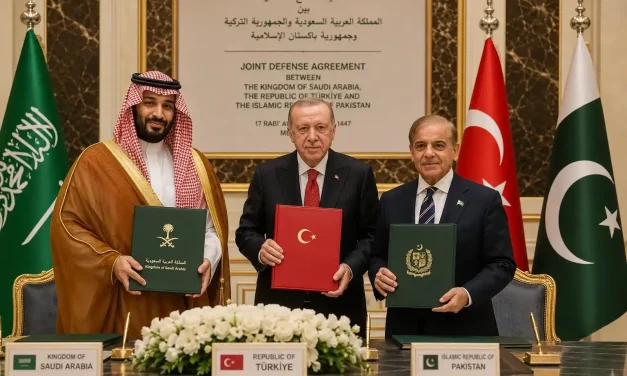
SCFR Online – Interview: The signing of the Makkah agreement between Saudi Arabia, Pakistan, and Turkey has raised questions about the future of the region’s security structure and the position of these countries in West Asian equations. Can this agreement become a genuine collective defense mechanism, or does it have more of a political and deterrent function than creating new military capacity?

Strategic Implications of the Reduction of US Weapons Stockpiles

SCFR Online – Opinion: The continuation of the US war against Iran, in addition to increasing operational costs, has called into question the actual capacity of the American arsenal to simultaneously fulfill security commitments on multiple fronts; an issue that affects deterrence, defense production capacity, and Washington’s resource prioritization.

The Formation of a New Order in Relations Between Powers

SCFR Online – Opinion: The Russia-Ukraine war and the war of the United States and the Israeli regime against Iran have been formed with different objectives and actors, but field and political developments indicate that they are not entirely separate from one another.

An Analysis of the Makkah Defense Pact

SCFR Online – Opinion: On Friday, August 7, the heads of state of three countries – Saudi Arabia, Turkey, and Pakistan – signed a text under the title “Makkah Joint Defense Agreement.”

Dimensions and challenges of the initiative to revive the Hejaz Railway

Strategic Council Online – Note: The initiative to revive the Hejaz Railway, beyond being a transportation project, constitutes an attempt to redefine geopolitics, the economy, and Turkey’s regional position; however, its realization appears to face significant financial, security, and institutional challenges.

Loading

Últimas publicaciones

Realities of the Tripartite Makkah Pact

SCFR Online – Interview: The signing of the Makkah agreement between Saudi Arabia, Pakistan, and Turkey has raised questions about the future of the region’s security structure and the position of these countries in West Asian equations. Can this agreement become a genuine collective defense mechanism, or does it have more of a political and deterrent function than creating new military capacity?

Strategic Implications of the Reduction of US Weapons Stockpiles

SCFR Online – Opinion: The continuation of the US war against Iran, in addition to increasing operational costs, has called into question the actual capacity of the American arsenal to simultaneously fulfill security commitments on multiple fronts; an issue that affects deterrence, defense production capacity, and Washington’s resource prioritization.

The Formation of a New Order in Relations Between Powers

SCFR Online – Opinion: The Russia-Ukraine war and the war of the United States and the Israeli regime against Iran have been formed with different objectives and actors, but field and political developments indicate that they are not entirely separate from one another.

An Analysis of the Makkah Defense Pact

SCFR Online – Opinion: On Friday, August 7, the heads of state of three countries – Saudi Arabia, Turkey, and Pakistan – signed a text under the title “Makkah Joint Defense Agreement.”

Dimensions and challenges of the initiative to revive the Hejaz Railway

Strategic Council Online – Note: The initiative to revive the Hejaz Railway, beyond being a transportation project, constitutes an attempt to redefine geopolitics, the economy, and Turkey’s regional position; however, its realization appears to face significant financial, security, and institutional challenges.

Loading

DERNIER CONTENU

Realities of the Tripartite Makkah Pact

SCFR Online – Interview: The signing of the Makkah agreement between Saudi Arabia, Pakistan, and Turkey has raised questions about the future of the region’s security structure and the position of these countries in West Asian equations. Can this agreement become a genuine collective defense mechanism, or does it have more of a political and deterrent function than creating new military capacity?

Strategic Implications of the Reduction of US Weapons Stockpiles

SCFR Online – Opinion: The continuation of the US war against Iran, in addition to increasing operational costs, has called into question the actual capacity of the American arsenal to simultaneously fulfill security commitments on multiple fronts; an issue that affects deterrence, defense production capacity, and Washington’s resource prioritization.

The Formation of a New Order in Relations Between Powers

SCFR Online – Opinion: The Russia-Ukraine war and the war of the United States and the Israeli regime against Iran have been formed with different objectives and actors, but field and political developments indicate that they are not entirely separate from one another.

An Analysis of the Makkah Defense Pact

SCFR Online – Opinion: On Friday, August 7, the heads of state of three countries – Saudi Arabia, Turkey, and Pakistan – signed a text under the title “Makkah Joint Defense Agreement.”

Dimensions and challenges of the initiative to revive the Hejaz Railway

Strategic Council Online – Note: The initiative to revive the Hejaz Railway, beyond being a transportation project, constitutes an attempt to redefine geopolitics, the economy, and Turkey’s regional position; however, its realization appears to face significant financial, security, and institutional challenges.

Loading

DERNIER CONTENU

Realities of the Tripartite Makkah Pact

SCFR Online – Interview: The signing of the Makkah agreement between Saudi Arabia, Pakistan, and Turkey has raised questions about the future of the region’s security structure and the position of these countries in West Asian equations. Can this agreement become a genuine collective defense mechanism, or does it have more of a political and deterrent function than creating new military capacity?

Strategic Implications of the Reduction of US Weapons Stockpiles

SCFR Online – Opinion: The continuation of the US war against Iran, in addition to increasing operational costs, has called into question the actual capacity of the American arsenal to simultaneously fulfill security commitments on multiple fronts; an issue that affects deterrence, defense production capacity, and Washington’s resource prioritization.

The Formation of a New Order in Relations Between Powers

SCFR Online – Opinion: The Russia-Ukraine war and the war of the United States and the Israeli regime against Iran have been formed with different objectives and actors, but field and political developments indicate that they are not entirely separate from one another.

An Analysis of the Makkah Defense Pact

SCFR Online – Opinion: On Friday, August 7, the heads of state of three countries – Saudi Arabia, Turkey, and Pakistan – signed a text under the title “Makkah Joint Defense Agreement.”

Dimensions and challenges of the initiative to revive the Hejaz Railway

Strategic Council Online – Note: The initiative to revive the Hejaz Railway, beyond being a transportation project, constitutes an attempt to redefine geopolitics, the economy, and Turkey’s regional position; however, its realization appears to face significant financial, security, and institutional challenges.

Loading

DERNIER CONTENU

Realities of the Tripartite Makkah Pact

SCFR Online – Interview: The signing of the Makkah agreement between Saudi Arabia, Pakistan, and Turkey has raised questions about the future of the region’s security structure and the position of these countries in West Asian equations. Can this agreement become a genuine collective defense mechanism, or does it have more of a political and deterrent function than creating new military capacity?

Strategic Implications of the Reduction of US Weapons Stockpiles

SCFR Online – Opinion: The continuation of the US war against Iran, in addition to increasing operational costs, has called into question the actual capacity of the American arsenal to simultaneously fulfill security commitments on multiple fronts; an issue that affects deterrence, defense production capacity, and Washington’s resource prioritization.

The Formation of a New Order in Relations Between Powers

SCFR Online – Opinion: The Russia-Ukraine war and the war of the United States and the Israeli regime against Iran have been formed with different objectives and actors, but field and political developments indicate that they are not entirely separate from one another.

An Analysis of the Makkah Defense Pact

SCFR Online – Opinion: On Friday, August 7, the heads of state of three countries – Saudi Arabia, Turkey, and Pakistan – signed a text under the title “Makkah Joint Defense Agreement.”

Dimensions and challenges of the initiative to revive the Hejaz Railway

Strategic Council Online – Note: The initiative to revive the Hejaz Railway, beyond being a transportation project, constitutes an attempt to redefine geopolitics, the economy, and Turkey’s regional position; however, its realization appears to face significant financial, security, and institutional challenges.

Loading