Reasons for Group 7 Opposition to Vaccination Funding for Poor States

Strategic Council Online - An expert on international affairs, commenting on the indifference of the G7 leaders to the global calls for allocating billions of pounds to end the shortage of Corona vaccine in poor countries said: The recent G7 meetings to decide whether to help the world’s poor countries fight with the Coronavirus have remained a mere political and media maneuver.

Speaking in an interview with the website of the Strategic Council on Foreign Relations, Hassan Hanizadeh said: Despite the promise of the world’s seven largest industrialized nations, known as the Group of Seven, to allocate one billion doses of Corona vaccine to needy countries, critics of the plan say it will not help solve their structural problems.

The expert further elaborated: Over the past year, the seven major industrialized nations have failed to come up with a proper mechanism to help the poor countries that have fallen victim to international competition.

According to the expert, many of those seven industrialized countries did not fulfill their promises to help the Third World countries; because those countries have a monopoly on the Corona vaccine.

Hanizadeh added: The deprivation of poor countries of having access to adequate vaccines is the result of the failure of the global policies of the seven great powers; because those powers do not care about the fate of the Third World nations.

He continued by saying: Therefore, during the G7 summit, despite allocating funds to help poor countries, especially African countries, this decision is not certain to be implemented, because the mechanisms of this type of aid are not completely transparent.

As for the shift in the attention of the Third World and poor countries from the West, led by the United States, to China, he said: The new international order that emerged after the expulsion of the Iraqi army from Kuwait, and specifically after the collapse of the Soviet Union by George W. Bush, after three decades, has become inefficient and is collapsing. After the collapse of the former Soviet Union, the United States sought to rule the world in a unipolar manner, so it used all its economic, political and military resources to dominate the world.

According to Hanizadeh, the occupation of Iraq in 2003 and the occupation of Afghanistan in 2001 cost the United States nearly 15,000 billion dollars and left 40,000 dead and wounded for it.

The expert on West Asia affairs said: This one-sided, monopolistic adventure has led the United States to form three new economic, military and ideological fronts.

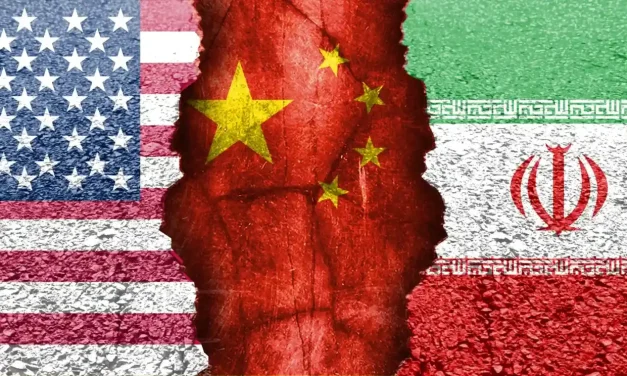
He continued: On the economic front, China has been able to increase its annual trade volume to more than 4 trillion dollars over the past three decades, while Russia, emerging from the former Soviet Union, has become a world-class military power in the world. In West Asia, the Islamic Republic of Iran, as an influential regional power by relying on religious beliefs, has had an active presence in the regional arena.

Hanizadeh, saying that the three countries of Iran, China and Russia, at the same time with the US efforts to disrupt the political chess of the region, have been in a common front for the past decade, noted: This front has caused failure of the US efforts to completely dominate West Asian nations, including Syria, Iraq, Lebanon and Yemen.

Commenting on the economic situation in the United States, he said: Today, the United States is facing an economic crisis and a debt of 22 trillion dollars, while China has sharply increased its investment in West Asia and Africa. It is also predicted that in the next decade, China will become the world’s leading economic power, and Russia will become the largest exporter of strategic weapons. Iran will also become a regional superpower with an active presence in the region and assistance to the axis of resistance, and naturally the economic, military and geopolitical balances will change in the future in favor of Tehran, Beijing and Moscow.

In conclusion, Hanizadeh stressed that in such a process, it is natural for the great industrial powers, especially the United States and some European countries, to focus on confronting the Chinese, Russian and Iranian front instead of addressing the economic problems of the Third World countries. It has created a spirit of despair among the world’s poor nations over industrial powers. Because the United States and European countries have so far not taken any measure to help poor countries in the fight against the Coronavirus. Under such circumstances, it is natural that the consequences of the carelessness of those powers for the fate of the nations of the world will be felt by the United States and the West.

0 Comments

Submit a Comment

Your email address will not be published. Required fields are marked *

LATEST CONTENT

The Impact of West Asian Developments on the Ukraine War

SCFR Online – Note: Vladimir Putin, President of Russia, recently announced—more than four years after the commencement of military aggression against Ukraine—that he believes the conflict between Russia and Ukraine is drawing to a close.

Temporary China–U.S. Trade Truce in the Shadow of Fundamental Distrust

SCFR Online – Opinion: The recent visit of the President of the United States to China is significant from various aspects; because China is recognized as the world’s second-largest economic power and a growing economy. The Chinese are also advancing in various fields, including the space sector, artificial intelligence, and military industries; to the extent that in the military sector, whereas they previously lacked an aircraft carrier, they now possess their third aircraft carrier. On the other hand, the United States, as a superpower, has always regarded China as its rival and continues to view it as such today.

Iran’s Success in the Narrative Battle in Cyberspace

SCFR Online – Opinion: In the war between Iran and the United States, the main battlefield was not defined solely in the military domain; rather, the battle of narratives in cyberspace—particularly through memes—reached a decisive level.

The Global Energy Shock Situation and Future Scenarios

SCFR Online – Opinion: Only one month after the beginning of the Ramadan War, maritime traffic in the Strait of Hormuz decreased dramatically, with Bloomberg announcing a reduction of 103 vessels; Brent oil prices rose by more than 50 percent, and gasoline prices in the United States increased by 31.4 percent. Additionally, benchmark gas prices in Europe showed a 73.4 percent increase.

Loading

Últimas publicaciones

The Impact of West Asian Developments on the Ukraine War

SCFR Online – Note: Vladimir Putin, President of Russia, recently announced—more than four years after the commencement of military aggression against Ukraine—that he believes the conflict between Russia and Ukraine is drawing to a close.

Temporary China–U.S. Trade Truce in the Shadow of Fundamental Distrust

SCFR Online – Opinion: The recent visit of the President of the United States to China is significant from various aspects; because China is recognized as the world’s second-largest economic power and a growing economy. The Chinese are also advancing in various fields, including the space sector, artificial intelligence, and military industries; to the extent that in the military sector, whereas they previously lacked an aircraft carrier, they now possess their third aircraft carrier. On the other hand, the United States, as a superpower, has always regarded China as its rival and continues to view it as such today.

Iran’s Success in the Narrative Battle in Cyberspace

SCFR Online – Opinion: In the war between Iran and the United States, the main battlefield was not defined solely in the military domain; rather, the battle of narratives in cyberspace—particularly through memes—reached a decisive level.

The Global Energy Shock Situation and Future Scenarios

SCFR Online – Opinion: Only one month after the beginning of the Ramadan War, maritime traffic in the Strait of Hormuz decreased dramatically, with Bloomberg announcing a reduction of 103 vessels; Brent oil prices rose by more than 50 percent, and gasoline prices in the United States increased by 31.4 percent. Additionally, benchmark gas prices in Europe showed a 73.4 percent increase.

Loading

DERNIER CONTENU

The Impact of West Asian Developments on the Ukraine War

SCFR Online – Note: Vladimir Putin, President of Russia, recently announced—more than four years after the commencement of military aggression against Ukraine—that he believes the conflict between Russia and Ukraine is drawing to a close.

Temporary China–U.S. Trade Truce in the Shadow of Fundamental Distrust

SCFR Online – Opinion: The recent visit of the President of the United States to China is significant from various aspects; because China is recognized as the world’s second-largest economic power and a growing economy. The Chinese are also advancing in various fields, including the space sector, artificial intelligence, and military industries; to the extent that in the military sector, whereas they previously lacked an aircraft carrier, they now possess their third aircraft carrier. On the other hand, the United States, as a superpower, has always regarded China as its rival and continues to view it as such today.

Iran’s Success in the Narrative Battle in Cyberspace

SCFR Online – Opinion: In the war between Iran and the United States, the main battlefield was not defined solely in the military domain; rather, the battle of narratives in cyberspace—particularly through memes—reached a decisive level.

The Global Energy Shock Situation and Future Scenarios

SCFR Online – Opinion: Only one month after the beginning of the Ramadan War, maritime traffic in the Strait of Hormuz decreased dramatically, with Bloomberg announcing a reduction of 103 vessels; Brent oil prices rose by more than 50 percent, and gasoline prices in the United States increased by 31.4 percent. Additionally, benchmark gas prices in Europe showed a 73.4 percent increase.

Loading

DERNIER CONTENU

The Impact of West Asian Developments on the Ukraine War

SCFR Online – Note: Vladimir Putin, President of Russia, recently announced—more than four years after the commencement of military aggression against Ukraine—that he believes the conflict between Russia and Ukraine is drawing to a close.

Temporary China–U.S. Trade Truce in the Shadow of Fundamental Distrust

SCFR Online – Opinion: The recent visit of the President of the United States to China is significant from various aspects; because China is recognized as the world’s second-largest economic power and a growing economy. The Chinese are also advancing in various fields, including the space sector, artificial intelligence, and military industries; to the extent that in the military sector, whereas they previously lacked an aircraft carrier, they now possess their third aircraft carrier. On the other hand, the United States, as a superpower, has always regarded China as its rival and continues to view it as such today.

Iran’s Success in the Narrative Battle in Cyberspace

SCFR Online – Opinion: In the war between Iran and the United States, the main battlefield was not defined solely in the military domain; rather, the battle of narratives in cyberspace—particularly through memes—reached a decisive level.

The Global Energy Shock Situation and Future Scenarios

SCFR Online – Opinion: Only one month after the beginning of the Ramadan War, maritime traffic in the Strait of Hormuz decreased dramatically, with Bloomberg announcing a reduction of 103 vessels; Brent oil prices rose by more than 50 percent, and gasoline prices in the United States increased by 31.4 percent. Additionally, benchmark gas prices in Europe showed a 73.4 percent increase.

Loading

DERNIER CONTENU

The Impact of West Asian Developments on the Ukraine War

SCFR Online – Note: Vladimir Putin, President of Russia, recently announced—more than four years after the commencement of military aggression against Ukraine—that he believes the conflict between Russia and Ukraine is drawing to a close.

Temporary China–U.S. Trade Truce in the Shadow of Fundamental Distrust

SCFR Online – Opinion: The recent visit of the President of the United States to China is significant from various aspects; because China is recognized as the world’s second-largest economic power and a growing economy. The Chinese are also advancing in various fields, including the space sector, artificial intelligence, and military industries; to the extent that in the military sector, whereas they previously lacked an aircraft carrier, they now possess their third aircraft carrier. On the other hand, the United States, as a superpower, has always regarded China as its rival and continues to view it as such today.

Iran’s Success in the Narrative Battle in Cyberspace

SCFR Online – Opinion: In the war between Iran and the United States, the main battlefield was not defined solely in the military domain; rather, the battle of narratives in cyberspace—particularly through memes—reached a decisive level.

The Global Energy Shock Situation and Future Scenarios

SCFR Online – Opinion: Only one month after the beginning of the Ramadan War, maritime traffic in the Strait of Hormuz decreased dramatically, with Bloomberg announcing a reduction of 103 vessels; Brent oil prices rose by more than 50 percent, and gasoline prices in the United States increased by 31.4 percent. Additionally, benchmark gas prices in Europe showed a 73.4 percent increase.

Loading