Failure of US Global Security Strategy

2021/09/13 | interview, Politics, Top News

Strategic Council Online - Interview: A professor of the University of Tehran commenting about challenges of the US political-military strategy in the world said: After the Vietnam War, the US put a strategy on the agenda based on which it decided to arm its allies to ensure its security; but Washington’s decision to withdraw its troops from Iraq and Afghanistan seems to be a sign of the failure of that strategy.

Dr. Fouad Izadi, speaking in an interview with the website of the Strategic Council on Foreign Relations, stated: The United States has been pursuing such strategy in its foreign policy since World War II, or perhaps even before that. Since then, the United States has been in contact with military institutions of the countries with the reason that they wanted to help them, and would manage and direct the middle and upper-class military personnel. For this reason, the White House would monitor the military institutions of the countries as much as it could.

Noting that the US policy is still going on, Izadi added: Washington continues to have this policy on its agenda to infiltrate the military institutions of the countries under the pretext of military aid.

The Tehran University professor explained: The policy of US military influence is aimed at staging a military coup and taking over the power if its civilian government ever goes in the wrong direction.

He continued: An example of this US policy can be seen in Chile, where Mr. Pinochet, the Minister of Defense of the Allende administration, staged a coup against him, or in Egypt, where al-Sisi, who was the Minister of Defense of Mohamed Morsi, staged a coup.

The expert on US affairs, explaining that another policy called “state-building” is also being pursued by that country, said: This policy is now being challenged given the experience of Afghanistan and Iraq. The policy of state-building means that when a powerful country is dissatisfied with the government of another country and does not see it compatible with its interests, tries to change that government and build a government that can be both controlled and monitor other institutions.

Emphasizing that the United States implemented this policy in Afghanistan but it failed, Izadi continued: After such a scandalous defeat, Joe Biden declared several times last month that this policy of state-building was a policy that had not given an answer. Therefore, the experience of the United States in Iraq and Afghanistan has changed the eyes of the US statesmen on this policy of state-building, but it still has the policy of infiltrating and arming its allies on the agenda.

Asked whether Washington’s policies would change with the change of parties, the university professor said: There has been no change in the policy of communication and influence in the military institutions of the countries, neither among Democrats nor Republicans over the past few decades. In terms of state-building policy, it is unlikely that with the change of administration and establishment of a Republican government, they will want to re-experience state-building policy.

He continued: The US plan to leave Afghanistan was designed during the Republican era, and the Republican Party had decided that they should leave Afghanistan.

Noting that Donald Trump was not interested in spending for other countries, Izadi said: But that was Trump’s characteristic and not the main body of the Republicans. As far as the Democrats are concerned, we are witnessing that they have no problem with such spending.

In response to the question that failure of the US policies in Iraq and Afghanistan has brought the power of that country under question, the professor of the University of Tehran said: Washington suffered a heavy defeat with its withdrawal from Afghanistan. Because they could not even take out those to whom they had promised support and whom worked for them. The US State Department said those who had visa and worked for Washington in Afghanistan were mostly relocated to other countries, such as Mexico and Uganda, and were not expected to be taken to the United States.

In conclusion, Izadi stressed that the US withdrawal from Afghanistan without any achievement at a cost of 2 trillion dollars and killing of several thousand Americans after 20 years, is a catastrophe for that country’s foreign policy.

0 Comments

Submit a Comment

Your email address will not be published. Required fields are marked *

LATEST CONTENT

An Analysis of the Establishment of a Joint Arab Command in Kuwait

SCFR Online – Opinion: The establishment of a joint Arab command in Kuwait will contribute to sustainable Persian Gulf security only when it distances itself from dependence on America and is based on pursuing the participation and cooperation of all regional countries.

The Impact of the Political Deadlock in the Israeli Regime on the Future of the War Against Iran

SCFR Online – Opinion: The deadlock in forming a new cabinet in the Israeli regime, simultaneous with the continuation of the atmosphere of military confrontation between Iran and the United States and the relevant diplomatic process, is considered an important variable in West Asian security calculations. Although the political developments of the Israeli regime alone do not determine the fate of the war, they can affect the timing, level, and manner of the continuation of military confrontation.

Strategic Consequences of the US Midterm Elections

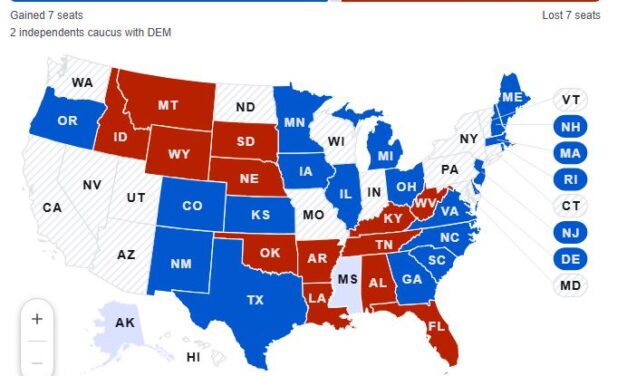
SCFR Online – Opinion: The results of the US midterm elections, by exposing the political and economic costs of the war against Iran, will affect the scope of maneuver of the Trump administration and Washington’s regional calculations.

A Reflection on the Capacities and Challenges of the Istanbul Ministerial Meeting

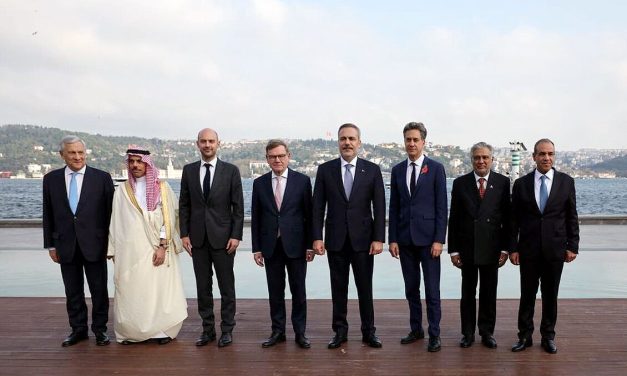
SCFR Online – Opinion: The meeting of the foreign ministers of Turkey, Saudi Arabia, Pakistan, and Egypt in Istanbul has provided an opportunity for diplomatic coordination regarding West Asian crises, but its success will depend on the participation of key actors and the transformation of consultations into practical measures.

Loading

Últimas publicaciones

An Analysis of the Establishment of a Joint Arab Command in Kuwait

SCFR Online – Opinion: The establishment of a joint Arab command in Kuwait will contribute to sustainable Persian Gulf security only when it distances itself from dependence on America and is based on pursuing the participation and cooperation of all regional countries.

The Impact of the Political Deadlock in the Israeli Regime on the Future of the War Against Iran

SCFR Online – Opinion: The deadlock in forming a new cabinet in the Israeli regime, simultaneous with the continuation of the atmosphere of military confrontation between Iran and the United States and the relevant diplomatic process, is considered an important variable in West Asian security calculations. Although the political developments of the Israeli regime alone do not determine the fate of the war, they can affect the timing, level, and manner of the continuation of military confrontation.

Strategic Consequences of the US Midterm Elections

SCFR Online – Opinion: The results of the US midterm elections, by exposing the political and economic costs of the war against Iran, will affect the scope of maneuver of the Trump administration and Washington’s regional calculations.

A Reflection on the Capacities and Challenges of the Istanbul Ministerial Meeting

SCFR Online – Opinion: The meeting of the foreign ministers of Turkey, Saudi Arabia, Pakistan, and Egypt in Istanbul has provided an opportunity for diplomatic coordination regarding West Asian crises, but its success will depend on the participation of key actors and the transformation of consultations into practical measures.

Loading

DERNIER CONTENU

An Analysis of the Establishment of a Joint Arab Command in Kuwait

SCFR Online – Opinion: The establishment of a joint Arab command in Kuwait will contribute to sustainable Persian Gulf security only when it distances itself from dependence on America and is based on pursuing the participation and cooperation of all regional countries.

The Impact of the Political Deadlock in the Israeli Regime on the Future of the War Against Iran

SCFR Online – Opinion: The deadlock in forming a new cabinet in the Israeli regime, simultaneous with the continuation of the atmosphere of military confrontation between Iran and the United States and the relevant diplomatic process, is considered an important variable in West Asian security calculations. Although the political developments of the Israeli regime alone do not determine the fate of the war, they can affect the timing, level, and manner of the continuation of military confrontation.

Strategic Consequences of the US Midterm Elections

SCFR Online – Opinion: The results of the US midterm elections, by exposing the political and economic costs of the war against Iran, will affect the scope of maneuver of the Trump administration and Washington’s regional calculations.

A Reflection on the Capacities and Challenges of the Istanbul Ministerial Meeting

SCFR Online – Opinion: The meeting of the foreign ministers of Turkey, Saudi Arabia, Pakistan, and Egypt in Istanbul has provided an opportunity for diplomatic coordination regarding West Asian crises, but its success will depend on the participation of key actors and the transformation of consultations into practical measures.

Loading