AUKUS Treaty; U.S Effort to Complete Asia-Pacific Strategy

2021/10/08 | Note, Politics, top news

Strategic Council Online- Opinion: U.S. leaders have underscored on the necessity of concentration on Asia Pacific region in the foreign policy of the country within the past decade. Mohammad Javad Ghahremani, Expert on Asia affairs

The strategic development has started since the presidency of Barak Obama, has continued and fortified until now. The U.S. strategy contains different economic, political, military and security aspects. Yet, within the past decade, the U.S. has achieved success in some of these areas. However, the strategy of the country has not been successful in other areas. AUKUS, the recent treaty among the U.S., UK and Australia is considered to be the latest measure taken by the U.S. in strategic prioritization over the Asia Pacific.

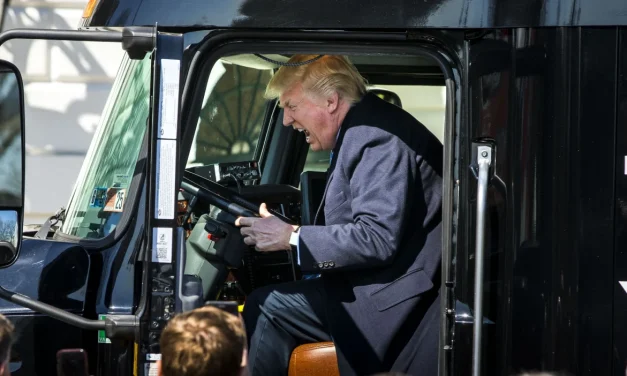
In economic field, the most important measure of Obama Administration was to join Trans-Pacific Partnership Agreement (known as TPP). The U.S. joined the negotiations of the economic bloc in 2009 which led to final signing of the Agreement in February 2016. But when Donald Trump, with his motto of “America First” took office, Washington withdrew from the initiative later.

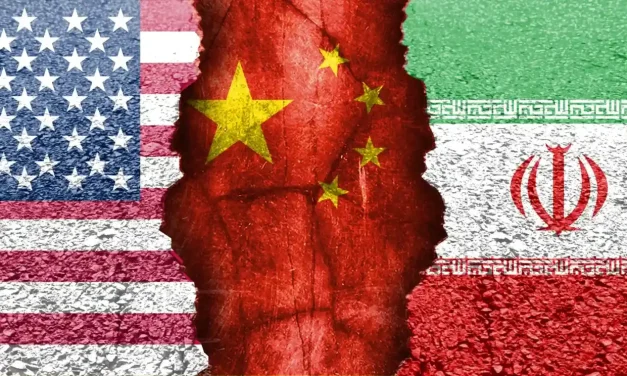
Yet, the U.S. stressed on bilateral economic cooperation even during his tenure of office and as a result of imposing trade sanctions against Beijing, a trade war started between the two countries that continued to remain until now.

“Built Back Better World” initiative of G-7 in June 2017 against “One Belt and One Road” Initiative of China was put forward that sought for helping to minimize the structural gap in the developing countries, which was also among the efforts led by the U.S. to make an alliance among her allies and partners in economic field.

The initiative by itself was based on “Blue Dot Networks” launched in 2019 by the U.S., Australia and Japan as a mechanism that aimed to promote infrastructural projects based on specific international standards.

In diplomatic field too, the U.S. has made efforts to be in line with the regional countries as the top title in her agenda in foreign policy.

The most important diplomatic initiative of the U.S. was to revive the Quadrilateral Security Dialogue known as QUAD, including the U.S., Japan, Australia and India) in 2017 aimed at bringing coordination among the member countries on different issues.

The first virtual Summit meeting of the group was held in March and the second physical Summit was held in September 2021 in Washington. Although in the statement issued followed by the Summit, China was not mentioned but it showed that China was the pivot of their objectives when they stressed on “Free and Open India and Pacific” and other issues under this title.

Signing the AUKUS Treaty among the U.S., UK and Australia that meant equipping Australia with nuclear sub-marines, embodies the U.S. intention to make an alliance with her allies from one hand and make effort to prevent any change in military balance in favor of China in the region from the other hand. The Treaty has a strong military dimension which is signed with an old ally of the U.S. in Asia Pacific region, a country that has accompanied the U.S. in all her wars. Washington needs to fill the challenge of her long distance with sensitive areas of Asia Pacific by strengthening the military capability of her regional allies.

AUKUS Treaty is considered to mean entering into a new phase of military developments of Asia Pacific region. It also means the possible involvement of Australia in any potential disputes in future between the U.S. and China. Although Australia has already tried to both preserve the security umbrella of the U.S. and to take the utmost benefit from her economic relations with China, but the recent tensions in relations between Canberra and Beijing has probably made the Australian officials to prefer the U.S. security Umbrella.

Having nuclear sub-marines enable Australia to be present in remote areas which means the country may have a stronger presence along with the U.S. in South China Sea or supporting Taiwan. Australia is now considered to be the first non-nuclear country that will possess nuclear sub-marines. It can also be a reaction to the U.S. marine intelligence based on which until 2030 China will add six nuclear sub-marines to her naval fleet.

To conclude, it must be said that AUKUS Treaty means strengthening military cooperation between the U.S. and her allies that was underscored in 2019 Indo-Pacific document of the country too. However, the Treaty does not necessarily mean a serious change in regional power balance or military encounter between the U.S. and her allies with China, but escalation of tensions and competitions will probably be its result.

0 Comments

Submit a Comment

Your email address will not be published. Required fields are marked *

LATEST CONTENT

The Impact of West Asian Developments on the Ukraine War

SCFR Online – Note: Vladimir Putin, President of Russia, recently announced—more than four years after the commencement of military aggression against Ukraine—that he believes the conflict between Russia and Ukraine is drawing to a close.

Temporary China–U.S. Trade Truce in the Shadow of Fundamental Distrust

SCFR Online – Opinion: The recent visit of the President of the United States to China is significant from various aspects; because China is recognized as the world’s second-largest economic power and a growing economy. The Chinese are also advancing in various fields, including the space sector, artificial intelligence, and military industries; to the extent that in the military sector, whereas they previously lacked an aircraft carrier, they now possess their third aircraft carrier. On the other hand, the United States, as a superpower, has always regarded China as its rival and continues to view it as such today.

Iran’s Success in the Narrative Battle in Cyberspace

SCFR Online – Opinion: In the war between Iran and the United States, the main battlefield was not defined solely in the military domain; rather, the battle of narratives in cyberspace—particularly through memes—reached a decisive level.

The Global Energy Shock Situation and Future Scenarios

SCFR Online – Opinion: Only one month after the beginning of the Ramadan War, maritime traffic in the Strait of Hormuz decreased dramatically, with Bloomberg announcing a reduction of 103 vessels; Brent oil prices rose by more than 50 percent, and gasoline prices in the United States increased by 31.4 percent. Additionally, benchmark gas prices in Europe showed a 73.4 percent increase.

Loading

Últimas publicaciones

The Impact of West Asian Developments on the Ukraine War

SCFR Online – Note: Vladimir Putin, President of Russia, recently announced—more than four years after the commencement of military aggression against Ukraine—that he believes the conflict between Russia and Ukraine is drawing to a close.

Temporary China–U.S. Trade Truce in the Shadow of Fundamental Distrust

SCFR Online – Opinion: The recent visit of the President of the United States to China is significant from various aspects; because China is recognized as the world’s second-largest economic power and a growing economy. The Chinese are also advancing in various fields, including the space sector, artificial intelligence, and military industries; to the extent that in the military sector, whereas they previously lacked an aircraft carrier, they now possess their third aircraft carrier. On the other hand, the United States, as a superpower, has always regarded China as its rival and continues to view it as such today.

Iran’s Success in the Narrative Battle in Cyberspace

SCFR Online – Opinion: In the war between Iran and the United States, the main battlefield was not defined solely in the military domain; rather, the battle of narratives in cyberspace—particularly through memes—reached a decisive level.

The Global Energy Shock Situation and Future Scenarios

SCFR Online – Opinion: Only one month after the beginning of the Ramadan War, maritime traffic in the Strait of Hormuz decreased dramatically, with Bloomberg announcing a reduction of 103 vessels; Brent oil prices rose by more than 50 percent, and gasoline prices in the United States increased by 31.4 percent. Additionally, benchmark gas prices in Europe showed a 73.4 percent increase.

Loading

DERNIER CONTENU

The Impact of West Asian Developments on the Ukraine War

SCFR Online – Note: Vladimir Putin, President of Russia, recently announced—more than four years after the commencement of military aggression against Ukraine—that he believes the conflict between Russia and Ukraine is drawing to a close.

Temporary China–U.S. Trade Truce in the Shadow of Fundamental Distrust

SCFR Online – Opinion: The recent visit of the President of the United States to China is significant from various aspects; because China is recognized as the world’s second-largest economic power and a growing economy. The Chinese are also advancing in various fields, including the space sector, artificial intelligence, and military industries; to the extent that in the military sector, whereas they previously lacked an aircraft carrier, they now possess their third aircraft carrier. On the other hand, the United States, as a superpower, has always regarded China as its rival and continues to view it as such today.

Iran’s Success in the Narrative Battle in Cyberspace

SCFR Online – Opinion: In the war between Iran and the United States, the main battlefield was not defined solely in the military domain; rather, the battle of narratives in cyberspace—particularly through memes—reached a decisive level.

The Global Energy Shock Situation and Future Scenarios

SCFR Online – Opinion: Only one month after the beginning of the Ramadan War, maritime traffic in the Strait of Hormuz decreased dramatically, with Bloomberg announcing a reduction of 103 vessels; Brent oil prices rose by more than 50 percent, and gasoline prices in the United States increased by 31.4 percent. Additionally, benchmark gas prices in Europe showed a 73.4 percent increase.

Loading

DERNIER CONTENU

The Impact of West Asian Developments on the Ukraine War

SCFR Online – Note: Vladimir Putin, President of Russia, recently announced—more than four years after the commencement of military aggression against Ukraine—that he believes the conflict between Russia and Ukraine is drawing to a close.

Temporary China–U.S. Trade Truce in the Shadow of Fundamental Distrust

SCFR Online – Opinion: The recent visit of the President of the United States to China is significant from various aspects; because China is recognized as the world’s second-largest economic power and a growing economy. The Chinese are also advancing in various fields, including the space sector, artificial intelligence, and military industries; to the extent that in the military sector, whereas they previously lacked an aircraft carrier, they now possess their third aircraft carrier. On the other hand, the United States, as a superpower, has always regarded China as its rival and continues to view it as such today.

Iran’s Success in the Narrative Battle in Cyberspace

SCFR Online – Opinion: In the war between Iran and the United States, the main battlefield was not defined solely in the military domain; rather, the battle of narratives in cyberspace—particularly through memes—reached a decisive level.

The Global Energy Shock Situation and Future Scenarios

SCFR Online – Opinion: Only one month after the beginning of the Ramadan War, maritime traffic in the Strait of Hormuz decreased dramatically, with Bloomberg announcing a reduction of 103 vessels; Brent oil prices rose by more than 50 percent, and gasoline prices in the United States increased by 31.4 percent. Additionally, benchmark gas prices in Europe showed a 73.4 percent increase.

Loading

DERNIER CONTENU

The Impact of West Asian Developments on the Ukraine War

SCFR Online – Note: Vladimir Putin, President of Russia, recently announced—more than four years after the commencement of military aggression against Ukraine—that he believes the conflict between Russia and Ukraine is drawing to a close.

Temporary China–U.S. Trade Truce in the Shadow of Fundamental Distrust

SCFR Online – Opinion: The recent visit of the President of the United States to China is significant from various aspects; because China is recognized as the world’s second-largest economic power and a growing economy. The Chinese are also advancing in various fields, including the space sector, artificial intelligence, and military industries; to the extent that in the military sector, whereas they previously lacked an aircraft carrier, they now possess their third aircraft carrier. On the other hand, the United States, as a superpower, has always regarded China as its rival and continues to view it as such today.

Iran’s Success in the Narrative Battle in Cyberspace

SCFR Online – Opinion: In the war between Iran and the United States, the main battlefield was not defined solely in the military domain; rather, the battle of narratives in cyberspace—particularly through memes—reached a decisive level.

The Global Energy Shock Situation and Future Scenarios

SCFR Online – Opinion: Only one month after the beginning of the Ramadan War, maritime traffic in the Strait of Hormuz decreased dramatically, with Bloomberg announcing a reduction of 103 vessels; Brent oil prices rose by more than 50 percent, and gasoline prices in the United States increased by 31.4 percent. Additionally, benchmark gas prices in Europe showed a 73.4 percent increase.

Loading