SCFR President Addresses 10th World Peace Forum:

The Persian Gulf Needs New Regional Arrangements

2022/07/04 | Council, Top News

Strategic Council Online: The President of the Strategic Council on Foreign Relations in his speech at the 10th world Peace Forum said that: the countries of the Persian Gulf region are mature enough to overcome their differences, complement each other, and turn their historical rivalries into cooperation by setting up a regional security mechanism.

Dr. Kamal Kharrazi, in his speech delivered virtually at the plenary session of the “Institutions and Regional Order”, said: “According to Paragraph 8 of UN Security Council Resolution 598, the Secretary-General of the United Nations has been asked to propose, in consultation with the regional states, a mechanism to promote security and stability in the Persian Gulf region, but unfortunately this task, has been neglected by the United Nations.

The SCFR President said that “The Islamic Republic of Iran, despite some serious differences with Saudi Arabia, believes that the two countries may complement each other” and added: “We are fully prepared to talk with the Saudi government on all bilateral and regional issues and are pleased that with the good offices of the Iraqi government, several rounds of talks have been held between the two governments.”


Dr. Kharrazi stated that “Unfortunately, some of the regional governments, with a fatal miscalculation, are trying to open the door to the war-mongering apartheid regime of Israel”, and added that: “They even go beyond the normalization of their relations and move towards forming an alliance with the Zionist regime of Israel. This is a big strategic mistake that will increase tensions and conflicts in the region at breakneck speed. The Islamic Republic of Iran warns in advance about the consequences of Israel’s presence in the Persian Gulf and holds those countries responsible for its dangerous consequences.”


Dr. Kharrazi said: “The Persian Gulf region is in need of a security mechanism that prevents the hegemony of any power, whether regional or global. Toward that goal, confidence-building measures have to be taken in areas such as water management, environmental protection, nuclear safety, energy security, tourism, economic cooperation, trade, investment, eradication of poverty, and empowerment of the people.”

The President of SCFR said that: the Islamic Republic of Iran has always stressed on holding dialogue as an effective means to resolve misunderstandings, settlement of disputes, and strengthen commonalities, and added: “Moving towards a “regional dialogue forum” would help to solve the regional security problems, and frank and candid dialogue among the countries of the region, without the presence and interference of foreigners, is the key to solving problems.”

The 10th World Peace Forum, organized by the Chinese People’s Institute of Foreign Relations and Xinhua University, was held in Beijing from July 11 to 13, with the participation of a large number of political officials from different countries.

Click to download the full text of the speech.

0 Comments

Submit a Comment

Your email address will not be published. Required fields are marked *

LATEST CONTENT

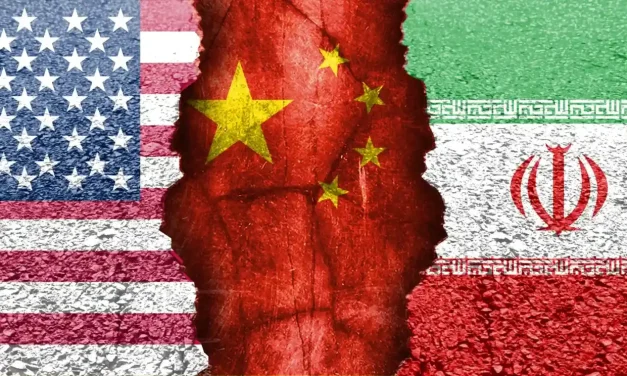
China’s Rejection of US Sanctions; Strengthening Iran’s Geopolitical Leverage

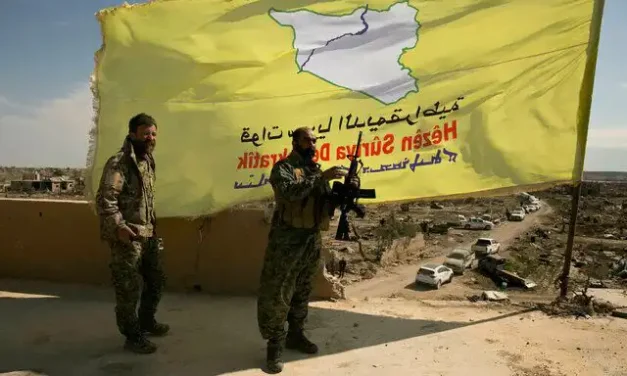
SCFR Online – Opinion: Concurrent with the official commencement of the United States’ economic war against our country, focusing on sanctions instruments, isolation, and economic pressure, what has now become increasingly important is the lack of alignment of other major global powers, especially China, with this policy.

The Makkah Pact; Reasons for its Formation and Challenges Ahead

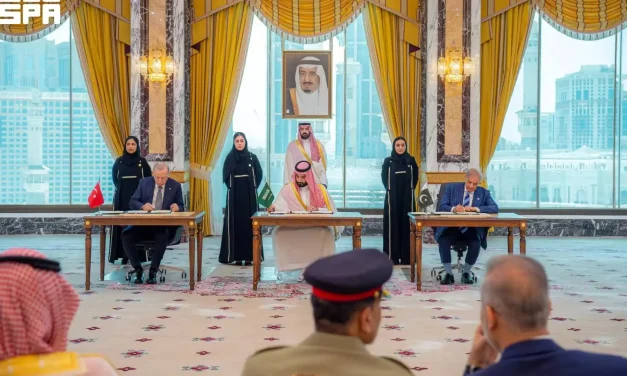
SCFR Online – Opinion: The Makkah Pact, signed between Saudi Arabia, Pakistan, and Turkey under the motto “an attack on one is an attack on all,” is viewed by some analysts less as a full-fledged military coalition and more as an attempt to reduce security dependence on an external power and to establish a regional security mechanism.

Implications of the US-Saudi Nuclear Agreement

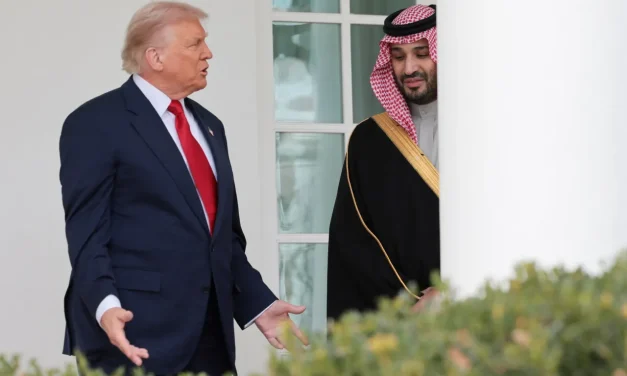
SCFR Online – Opinion: The new US-Saudi nuclear agreement, despite legal and political ambiguities, could alter previous non-proliferation standards in West Asia and intensify nuclear competition, ushering it into a new phase.

Loading

Últimas publicaciones

China’s Rejection of US Sanctions; Strengthening Iran’s Geopolitical Leverage

SCFR Online – Opinion: Concurrent with the official commencement of the United States’ economic war against our country, focusing on sanctions instruments, isolation, and economic pressure, what has now become increasingly important is the lack of alignment of other major global powers, especially China, with this policy.

The Makkah Pact; Reasons for its Formation and Challenges Ahead

SCFR Online – Opinion: The Makkah Pact, signed between Saudi Arabia, Pakistan, and Turkey under the motto “an attack on one is an attack on all,” is viewed by some analysts less as a full-fledged military coalition and more as an attempt to reduce security dependence on an external power and to establish a regional security mechanism.

Implications of the US-Saudi Nuclear Agreement

SCFR Online – Opinion: The new US-Saudi nuclear agreement, despite legal and political ambiguities, could alter previous non-proliferation standards in West Asia and intensify nuclear competition, ushering it into a new phase.

Loading

DERNIER CONTENU

China’s Rejection of US Sanctions; Strengthening Iran’s Geopolitical Leverage

SCFR Online – Opinion: Concurrent with the official commencement of the United States’ economic war against our country, focusing on sanctions instruments, isolation, and economic pressure, what has now become increasingly important is the lack of alignment of other major global powers, especially China, with this policy.

The Makkah Pact; Reasons for its Formation and Challenges Ahead

SCFR Online – Opinion: The Makkah Pact, signed between Saudi Arabia, Pakistan, and Turkey under the motto “an attack on one is an attack on all,” is viewed by some analysts less as a full-fledged military coalition and more as an attempt to reduce security dependence on an external power and to establish a regional security mechanism.

Implications of the US-Saudi Nuclear Agreement

SCFR Online – Opinion: The new US-Saudi nuclear agreement, despite legal and political ambiguities, could alter previous non-proliferation standards in West Asia and intensify nuclear competition, ushering it into a new phase.

Loading

DERNIER CONTENU

China’s Rejection of US Sanctions; Strengthening Iran’s Geopolitical Leverage

SCFR Online – Opinion: Concurrent with the official commencement of the United States’ economic war against our country, focusing on sanctions instruments, isolation, and economic pressure, what has now become increasingly important is the lack of alignment of other major global powers, especially China, with this policy.

The Makkah Pact; Reasons for its Formation and Challenges Ahead

SCFR Online – Opinion: The Makkah Pact, signed between Saudi Arabia, Pakistan, and Turkey under the motto “an attack on one is an attack on all,” is viewed by some analysts less as a full-fledged military coalition and more as an attempt to reduce security dependence on an external power and to establish a regional security mechanism.

Implications of the US-Saudi Nuclear Agreement

SCFR Online – Opinion: The new US-Saudi nuclear agreement, despite legal and political ambiguities, could alter previous non-proliferation standards in West Asia and intensify nuclear competition, ushering it into a new phase.

Loading

DERNIER CONTENU

China’s Rejection of US Sanctions; Strengthening Iran’s Geopolitical Leverage

SCFR Online – Opinion: Concurrent with the official commencement of the United States’ economic war against our country, focusing on sanctions instruments, isolation, and economic pressure, what has now become increasingly important is the lack of alignment of other major global powers, especially China, with this policy.

The Makkah Pact; Reasons for its Formation and Challenges Ahead

SCFR Online – Opinion: The Makkah Pact, signed between Saudi Arabia, Pakistan, and Turkey under the motto “an attack on one is an attack on all,” is viewed by some analysts less as a full-fledged military coalition and more as an attempt to reduce security dependence on an external power and to establish a regional security mechanism.

Implications of the US-Saudi Nuclear Agreement

SCFR Online – Opinion: The new US-Saudi nuclear agreement, despite legal and political ambiguities, could alter previous non-proliferation standards in West Asia and intensify nuclear competition, ushering it into a new phase.

Loading