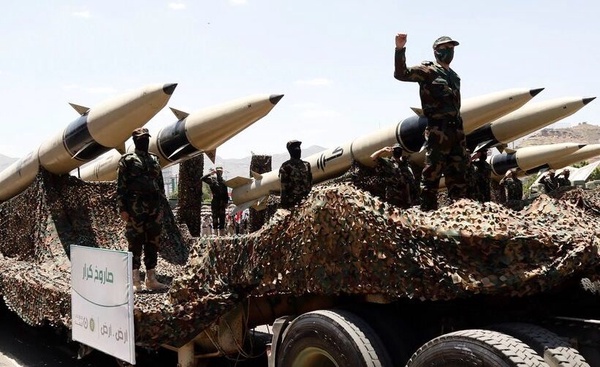
Prospect of Military Confrontation Between Yemen’s Ansarullah and the Zionist Regime

Strategic Council Online – Interview: A senior West Asia affairs analyst stated that the recent ceasefire agreement between Yemen’s Ansarullah and the U.S., mediated by Oman, led to the cessation of Ansarullah’s attacks on non-Israeli ships in the Red Sea and the suspension of American airstrikes. This agreement, reached after weeks of intense clashes—during which Ansarullah targeted the USS Harry Truman aircraft carrier with missile and drone attacks, inflicting over a billion dollars in losses on the U.S.—marks a turning point in Yemen’s strategic equations. Ansarullah’s military successes, from downing MQ-9 Reaper drones to missile strikes on Ben Gurion Airport, which halted its operations and sent millions of Zionists to shelters, have solidified its position as a key player in the Axis of Resistance.

Ansarullah’s Strategic Opportunities Under the Ceasefire

Hasan Lasjerdi, in an interview with the website of the Strategic Council on Foreign Relations, stated that the current ceasefire is the result of Ansarullah’s military and political pressure on the U.S. and the Zionist regime. Contrary to initial perceptions that the agreement was merely tactical and linked to Donald Trump’s visit to the region, it should instead be seen as a sign of Yemen’s resolve on the battlefield. Ansarullah compelled the U.S. to accept this agreement through successful attacks on Israeli targets and disruptions to trade with the Zionist regime via Red Sea shipping.

According to this analyst, Yemen can leverage this opportunity in three key areas:

  1. Strengthening regional diplomacy with influential Arab countries to pressure the Israeli regime, which could consolidate Ansarullah’s political standing.
  2. Expanding military and defense ties is a long-standing goal to enhance Yemen’s deterrence capabilities.
  3. Protecting strategic infrastructure, such as missile and weapons facilities, from Israeli regime attacks, which have intensified with the bombing of Sana’a Airport and oil installations.

Lasjerdi emphasized that the Zionist regime continues to destroy Yemen’s infrastructure to remove Ansarullah from regional equations. Thus, Ansarullah must vigilantly strengthen its foreign and domestic relations to withstand these pressures better.

He added that reinforcing internal resilience and engaging with key regional players, including countries opposed to the Israeli regime, could position Yemen advantageously. This approach is particularly crucial given Ansarullah’s recent military successes, which have challenged the Zionist regime’s dominance.

Geopolitical Consequences and Yemen’s Emergence as a Regional Power

Lasjerdi further stated that Ansarullah has demonstrated its influence over strategic regional routes through its operations in the Red Sea and the Gulf of Aden. Precision strikes on Israeli targets, including Ben Gurion Airport, have not only put the Zionist regime in a weaker position but also undermined its regional authority.

The West Asia analyst noted that these actions, coupled with heavy losses to the U.S. fleet and disruptions to Israeli-linked shipping, highlight Ansarullah’s upper hand in geopolitical dynamics. However, he warned that the Zionist regime, backed by some regional countries, seeks to neutralize this advantage. Therefore, Ansarullah must enhance military readiness and pursue diplomatic channels to counter Israeli efforts to exclude it from regional equations.

Lasjerdi pointed to the risk of indirect pressure by the Israeli regime through aligned states, urging Ansarullah to maintain calculated behavior and avoid impulsive actions. He noted that Ansarullah’s political-military maturity in recent years has enabled it to manage crises with logic and stability, potentially strengthening Yemen’s geopolitical influence and regional role.

Ceasefire Prospects: Sustainability or Tactical Pause?

Lasjerdi stated that the possibility of the ceasefire evolving into a lasting political solution depends on the behavior of the U.S. and the Israeli regime.

Referring to statements by Ansarullah spokesman Mohammed Abdul-Salam, who reaffirmed Yemen’s support for Gaza, the analyst viewed this stance as evidence of Yemen’s commitment to the Resistance’s goals. Given that the U.S. seeks to de-escalate tensions, it may attempt to restrain the Zionist regime from further aggression against Yemen. Oman’s mediation reinforces this possibility and could lead to a sustainable agreement. However, unlike the U.S., the Israeli regime seeks decisive military and geopolitical victory and views the ceasefire as a tactical opportunity to regroup.

Lasjerdi stressed that Ansarullah’s balanced approach and coordination with other regional actors increase the chances of the ceasefire holding. He cited multiple factors—including Iran-U.S. negotiations, energy resource management, and Arab states’ policies—that influence this process. The U.S., leveraging its superior position, could contribute to stability in Yemen and Gaza by restraining the Israeli regime.

Future Confrontation with the Israeli Regime: From Military Battles to Multi-Front Warfare

The senior West Asia analyst predicted that after the ceasefire, the Zionist regime may shift from direct military conflict to other methods, such as cyber warfare, assassinations, and economic pressure against Yemen.

Lasjerdi stated that the Israeli regime may attempt to weaken Ansarullah by fostering rival factions within Yemen or undermining its economy. He suggested that Ansarullah counter these pressures by strengthening regional ties and cooperating with countries opposed to the Israeli regime.

Emphasizing the importance of internal cohesion and preventing rival infiltration, he noted that Ansarullah’s crisis management experience equips it to resist the Zionist regime’s multi-faceted challenges.

He added that by building on recent military successes, such as downing U.S. drones and targeting Israeli infrastructure, Ansarullah can maintain its position as a formidable arm of the Resistance.


0 Comments

LATEST CONTENT

Increasing criticism of the extensive Zionist lobby network

SCFR Online – Opinion: An examination of the mechanisms of the Israeli regime’s influence in the United States depicts a complex picture of shared interests, strategic dependencies, and the limitations of this relationship.

Realities of the Tripartite Makkah Pact

SCFR Online – Interview: The signing of the Makkah agreement between Saudi Arabia, Pakistan, and Turkey has raised questions about the future of the region’s security structure and the position of these countries in West Asian equations. Can this agreement become a genuine collective defense mechanism, or does it have more of a political and deterrent function than creating new military capacity?

Strategic Implications of the Reduction of US Weapons Stockpiles

SCFR Online – Opinion: The continuation of the US war against Iran, in addition to increasing operational costs, has called into question the actual capacity of the American arsenal to simultaneously fulfill security commitments on multiple fronts; an issue that affects deterrence, defense production capacity, and Washington’s resource prioritization.

The Formation of a New Order in Relations Between Powers

SCFR Online – Opinion: The Russia-Ukraine war and the war of the United States and the Israeli regime against Iran have been formed with different objectives and actors, but field and political developments indicate that they are not entirely separate from one another.

An Analysis of the Makkah Defense Pact

SCFR Online – Opinion: On Friday, August 7, the heads of state of three countries – Saudi Arabia, Turkey, and Pakistan – signed a text under the title “Makkah Joint Defense Agreement.”

Dimensions and challenges of the initiative to revive the Hejaz Railway

Strategic Council Online – Note: The initiative to revive the Hejaz Railway, beyond being a transportation project, constitutes an attempt to redefine geopolitics, the economy, and Turkey’s regional position; however, its realization appears to face significant financial, security, and institutional challenges.

Loading

Últimas publicaciones

Increasing criticism of the extensive Zionist lobby network

SCFR Online – Opinion: An examination of the mechanisms of the Israeli regime’s influence in the United States depicts a complex picture of shared interests, strategic dependencies, and the limitations of this relationship.

Realities of the Tripartite Makkah Pact

SCFR Online – Interview: The signing of the Makkah agreement between Saudi Arabia, Pakistan, and Turkey has raised questions about the future of the region’s security structure and the position of these countries in West Asian equations. Can this agreement become a genuine collective defense mechanism, or does it have more of a political and deterrent function than creating new military capacity?

Strategic Implications of the Reduction of US Weapons Stockpiles

SCFR Online – Opinion: The continuation of the US war against Iran, in addition to increasing operational costs, has called into question the actual capacity of the American arsenal to simultaneously fulfill security commitments on multiple fronts; an issue that affects deterrence, defense production capacity, and Washington’s resource prioritization.

The Formation of a New Order in Relations Between Powers

SCFR Online – Opinion: The Russia-Ukraine war and the war of the United States and the Israeli regime against Iran have been formed with different objectives and actors, but field and political developments indicate that they are not entirely separate from one another.

An Analysis of the Makkah Defense Pact

SCFR Online – Opinion: On Friday, August 7, the heads of state of three countries – Saudi Arabia, Turkey, and Pakistan – signed a text under the title “Makkah Joint Defense Agreement.”

Dimensions and challenges of the initiative to revive the Hejaz Railway

Strategic Council Online – Note: The initiative to revive the Hejaz Railway, beyond being a transportation project, constitutes an attempt to redefine geopolitics, the economy, and Turkey’s regional position; however, its realization appears to face significant financial, security, and institutional challenges.

Loading

DERNIER CONTENU

Increasing criticism of the extensive Zionist lobby network

SCFR Online – Opinion: An examination of the mechanisms of the Israeli regime’s influence in the United States depicts a complex picture of shared interests, strategic dependencies, and the limitations of this relationship.

Realities of the Tripartite Makkah Pact

SCFR Online – Interview: The signing of the Makkah agreement between Saudi Arabia, Pakistan, and Turkey has raised questions about the future of the region’s security structure and the position of these countries in West Asian equations. Can this agreement become a genuine collective defense mechanism, or does it have more of a political and deterrent function than creating new military capacity?

Strategic Implications of the Reduction of US Weapons Stockpiles

SCFR Online – Opinion: The continuation of the US war against Iran, in addition to increasing operational costs, has called into question the actual capacity of the American arsenal to simultaneously fulfill security commitments on multiple fronts; an issue that affects deterrence, defense production capacity, and Washington’s resource prioritization.

The Formation of a New Order in Relations Between Powers

SCFR Online – Opinion: The Russia-Ukraine war and the war of the United States and the Israeli regime against Iran have been formed with different objectives and actors, but field and political developments indicate that they are not entirely separate from one another.

An Analysis of the Makkah Defense Pact

SCFR Online – Opinion: On Friday, August 7, the heads of state of three countries – Saudi Arabia, Turkey, and Pakistan – signed a text under the title “Makkah Joint Defense Agreement.”

Dimensions and challenges of the initiative to revive the Hejaz Railway

Strategic Council Online – Note: The initiative to revive the Hejaz Railway, beyond being a transportation project, constitutes an attempt to redefine geopolitics, the economy, and Turkey’s regional position; however, its realization appears to face significant financial, security, and institutional challenges.

Loading

DERNIER CONTENU

Increasing criticism of the extensive Zionist lobby network

SCFR Online – Opinion: An examination of the mechanisms of the Israeli regime’s influence in the United States depicts a complex picture of shared interests, strategic dependencies, and the limitations of this relationship.

Realities of the Tripartite Makkah Pact

SCFR Online – Interview: The signing of the Makkah agreement between Saudi Arabia, Pakistan, and Turkey has raised questions about the future of the region’s security structure and the position of these countries in West Asian equations. Can this agreement become a genuine collective defense mechanism, or does it have more of a political and deterrent function than creating new military capacity?

Strategic Implications of the Reduction of US Weapons Stockpiles

SCFR Online – Opinion: The continuation of the US war against Iran, in addition to increasing operational costs, has called into question the actual capacity of the American arsenal to simultaneously fulfill security commitments on multiple fronts; an issue that affects deterrence, defense production capacity, and Washington’s resource prioritization.

The Formation of a New Order in Relations Between Powers

SCFR Online – Opinion: The Russia-Ukraine war and the war of the United States and the Israeli regime against Iran have been formed with different objectives and actors, but field and political developments indicate that they are not entirely separate from one another.

An Analysis of the Makkah Defense Pact

SCFR Online – Opinion: On Friday, August 7, the heads of state of three countries – Saudi Arabia, Turkey, and Pakistan – signed a text under the title “Makkah Joint Defense Agreement.”

Dimensions and challenges of the initiative to revive the Hejaz Railway

Strategic Council Online – Note: The initiative to revive the Hejaz Railway, beyond being a transportation project, constitutes an attempt to redefine geopolitics, the economy, and Turkey’s regional position; however, its realization appears to face significant financial, security, and institutional challenges.

Loading

DERNIER CONTENU

Increasing criticism of the extensive Zionist lobby network

SCFR Online – Opinion: An examination of the mechanisms of the Israeli regime’s influence in the United States depicts a complex picture of shared interests, strategic dependencies, and the limitations of this relationship.

Realities of the Tripartite Makkah Pact

SCFR Online – Interview: The signing of the Makkah agreement between Saudi Arabia, Pakistan, and Turkey has raised questions about the future of the region’s security structure and the position of these countries in West Asian equations. Can this agreement become a genuine collective defense mechanism, or does it have more of a political and deterrent function than creating new military capacity?

Strategic Implications of the Reduction of US Weapons Stockpiles

SCFR Online – Opinion: The continuation of the US war against Iran, in addition to increasing operational costs, has called into question the actual capacity of the American arsenal to simultaneously fulfill security commitments on multiple fronts; an issue that affects deterrence, defense production capacity, and Washington’s resource prioritization.

The Formation of a New Order in Relations Between Powers

SCFR Online – Opinion: The Russia-Ukraine war and the war of the United States and the Israeli regime against Iran have been formed with different objectives and actors, but field and political developments indicate that they are not entirely separate from one another.

An Analysis of the Makkah Defense Pact

SCFR Online – Opinion: On Friday, August 7, the heads of state of three countries – Saudi Arabia, Turkey, and Pakistan – signed a text under the title “Makkah Joint Defense Agreement.”

Dimensions and challenges of the initiative to revive the Hejaz Railway

Strategic Council Online – Note: The initiative to revive the Hejaz Railway, beyond being a transportation project, constitutes an attempt to redefine geopolitics, the economy, and Turkey’s regional position; however, its realization appears to face significant financial, security, and institutional challenges.

Loading




