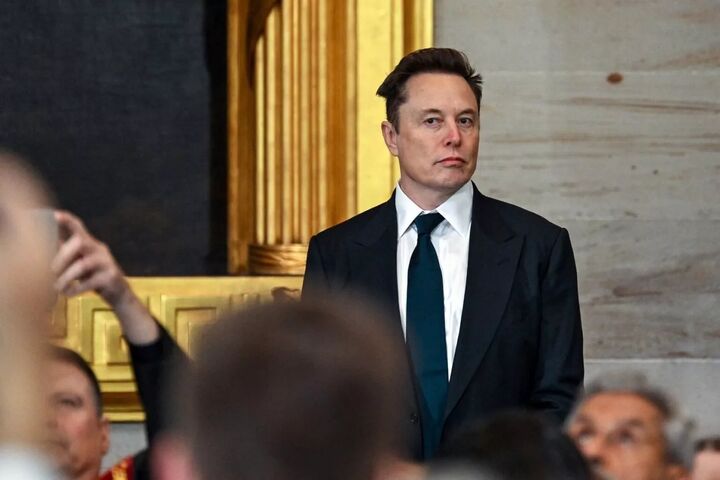
An Analysis of Elon Musk’s Right-Wing Political Interventions in Britain and Europe

Strategic Council Online - A senior US affairs analyst stated that the overt intervention of billionaire and media mogul Elon Musk in the UK's internal developments has once again brought the discussion about the role of non-state actors in international politics to the forefront of attention. With his provocative speech at the extreme right-wing rally in London, Musk not only called for the dissolution of parliament and early elections but also effectively sowed the seeds of political violence in the country's fragile social fabric by promoting a rhetoric of "resistance or destruction." UK Prime Minister Keir Starmer condemned these remarks, but the matter goes beyond a war of words. The emergence of figures like Musk, who simultaneously possess capital, media influence, and social popularity, has blurred the line between official politics and protest movements. This trend could become a serious challenge to the principle of non-interference in the internal affairs of countries, one of the fundamental principles of the UN Charter. International institutions have been designed primarily to control the actions of states, rather than billionaires who own global platforms. Today, however, developments show that technology and media giants can influence the political developments of countries as independent actors; a reality that could pose new questions to the international order regarding national sovereignty and political security.

Amirali Abolfath, in an interview with the Strategic Council on Foreign Relations’ website, said, “Elon Musk’s behavior cannot be considered merely the actions of a media figure; rather, he is practically acting as a transnational political actor.” The senior US affairs analyst says: “The history of these actions predates the 100,000-strong right-wing rally in London; back when billionaires like Musk believed that the victory of the right-wing movement centered around Trump in the 2024 US elections could provide a golden opportunity to revive similar movements in Europe.” According to him, “These individuals and groups, inspired by the slogans of the American right, are organizing, drafting agendas, and mobilizing forces to challenge the liberal and left-leaning governments of Europe.”

Abolfath emphasizes that “examples of this trend can be seen in Musk’s support for Germany’s Alternative für Deutschland party, the right-wing governments of Italy and Hungary, and even nationalist movements in Latin America in Brazil and Argentina.” According to this international affairs expert, “Billionaires like Musk believe that developments in Europe can, in a way, reflect trends in the United States; for this reason, they are seriously trying to turn Europe into a stage for global right-wing movements.”

Amirali Abolfath, referring to Musk’s unique personality among American economic elites, notes that “unlike traditional oligarchs, he is interested in being directly at the heart of political decision-making.” In his view, “Musk possesses wealth, media, and social popularity all at once.” For this reason, he believes that “the era when the super-rich were merely behind-the-scenes supporters of politics has ended. Today, they aspire to be leaders of political movements themselves. This trend is particularly evident in Trump’s second administration, during which Musk served as an advisor for a time. Still, after separating, he tried to establish his own party to play the role of an independent leader.”

According to this senior US affairs analyst, “Musk’s intervention in European developments is part of a larger strategy aimed at strengthening the right-wing in the United States.” He explains: “The potential victory of right-wing movements in Europe could inject fresh energy into the American right-wing and solidify their position in upcoming elections, particularly in Congress.” Abolfath recalls that “currently, the right-wing has a decisive superiority in the US Supreme Court and also controls the executive branch, but they still face limitations in the legislature; therefore, they are seeking to create conditions that silence opposing voices and pave the way for a kind of authoritarian rule.”

This US affairs expert highlights the transnational dimensions of Musk’s role-playing, noting that “Musk has not only had media and even field intervention in the Ukraine crisis and the Gaza war but has also tried to build a political image for himself by traveling to these regions.” Abolfath says: “A new phenomenon has emerged in which the super-rich possess not only financial resources but also the necessary media tools and social legitimacy to influence global politics directly.”

According to this analyst, “The emergence of such actors could pose new challenges to the international order. Existing institutions are primarily designed to curb the behavior of states and effectively lack effective tools against the intervention of non-state figures like Musk.” Abolfath warns that “The continuation of this trend could threaten the principle of national sovereignty and even the political security of countries, without there being a clear mechanism to counter it.”

Finally, this US affairs analyst emphasizes that “The recent experience in Britain is a serious warning for governments and international institutions to reconsider the growing power of non-state actors in the global political arena. In his view, the emergence of billionaires like Elon Musk as ‘shadow politicians’ could shatter the boundaries between the state, social movements, and media empires and outline a new perspective for international politics in the twenty-first century.”


0 Comments

LATEST CONTENT

Iran’s Potential Levers of Power

SCFRonline– Opinion: Iran’s geopolitical power is not limited solely to oil and the Strait of Hormuz; the unintended emergence of disruptions in the future global food and energy security chains can also demonstrate Iran’s strategic importance.

The Inseparability of the Lebanese Front from the Axis of Resistance

SCFR Online–Opinion: By providing an extensive network of social, healthcare, educational, and post-war reconstruction services, Hezbollah has established a strong social base for itself among Lebanon’s Shiites and Sunnis, and even beyond that, among other segments of Lebanese society, including Christians. Hezbollah has never been an external actor imposed upon Lebanon; rather, it is a phenomenon fundamentally born out of the occupation and crimes of the Zionist regime and itself influenced by popular resistance.

The Increasing Efforts of the Zionist Regime to Redefine Borders and the Regional Order and Its Consequences

SCFR Online– Opinion: Security and military developments in the region over recent months indicate that the ongoing crises and wars in Gaza, southern Lebanon, and parts of Syrian territory encompass broader dimensions of geopolitical and geostrategic transformations. In this context, the increased military presence and control of the Zionist regime over parts of the territories of these areas, along with proposals regarding the creation of buffer zones or even the expansion of security borders, have raised serious questions about the future of the regional order and its consequences for the countries of West Asia.

The Components of Iran’s Deterrence Power

SCFR Online – Opinion: At a time when regional security equations have reached a sensitive stage under the influence of Iran’s strategic confrontation with the United States and the Zionist regime, the question of the nature of Tehran’s defensive power has gained greater significance than ever before. While Washington and Tel Aviv rely on their technological superiority, the Islamic Republic of Iran has presented a model of deterrence that extends beyond the material calculations of the world’s classical militaries. This power, rooted in the connection between “the field” and “the people,” has not only altered the balance of power in recent conflicts but has also disrupted adversaries’ calculations when confronting Iran’s strategic depth.

Loading

Últimas publicaciones

Iran’s Potential Levers of Power

SCFRonline– Opinion: Iran’s geopolitical power is not limited solely to oil and the Strait of Hormuz; the unintended emergence of disruptions in the future global food and energy security chains can also demonstrate Iran’s strategic importance.

The Inseparability of the Lebanese Front from the Axis of Resistance

SCFR Online–Opinion: By providing an extensive network of social, healthcare, educational, and post-war reconstruction services, Hezbollah has established a strong social base for itself among Lebanon’s Shiites and Sunnis, and even beyond that, among other segments of Lebanese society, including Christians. Hezbollah has never been an external actor imposed upon Lebanon; rather, it is a phenomenon fundamentally born out of the occupation and crimes of the Zionist regime and itself influenced by popular resistance.

The Increasing Efforts of the Zionist Regime to Redefine Borders and the Regional Order and Its Consequences

SCFR Online– Opinion: Security and military developments in the region over recent months indicate that the ongoing crises and wars in Gaza, southern Lebanon, and parts of Syrian territory encompass broader dimensions of geopolitical and geostrategic transformations. In this context, the increased military presence and control of the Zionist regime over parts of the territories of these areas, along with proposals regarding the creation of buffer zones or even the expansion of security borders, have raised serious questions about the future of the regional order and its consequences for the countries of West Asia.

The Components of Iran’s Deterrence Power

SCFR Online – Opinion: At a time when regional security equations have reached a sensitive stage under the influence of Iran’s strategic confrontation with the United States and the Zionist regime, the question of the nature of Tehran’s defensive power has gained greater significance than ever before. While Washington and Tel Aviv rely on their technological superiority, the Islamic Republic of Iran has presented a model of deterrence that extends beyond the material calculations of the world’s classical militaries. This power, rooted in the connection between “the field” and “the people,” has not only altered the balance of power in recent conflicts but has also disrupted adversaries’ calculations when confronting Iran’s strategic depth.

Loading

DERNIER CONTENU

Iran’s Potential Levers of Power

SCFRonline– Opinion: Iran’s geopolitical power is not limited solely to oil and the Strait of Hormuz; the unintended emergence of disruptions in the future global food and energy security chains can also demonstrate Iran’s strategic importance.

The Inseparability of the Lebanese Front from the Axis of Resistance

SCFR Online–Opinion: By providing an extensive network of social, healthcare, educational, and post-war reconstruction services, Hezbollah has established a strong social base for itself among Lebanon’s Shiites and Sunnis, and even beyond that, among other segments of Lebanese society, including Christians. Hezbollah has never been an external actor imposed upon Lebanon; rather, it is a phenomenon fundamentally born out of the occupation and crimes of the Zionist regime and itself influenced by popular resistance.

The Increasing Efforts of the Zionist Regime to Redefine Borders and the Regional Order and Its Consequences

SCFR Online– Opinion: Security and military developments in the region over recent months indicate that the ongoing crises and wars in Gaza, southern Lebanon, and parts of Syrian territory encompass broader dimensions of geopolitical and geostrategic transformations. In this context, the increased military presence and control of the Zionist regime over parts of the territories of these areas, along with proposals regarding the creation of buffer zones or even the expansion of security borders, have raised serious questions about the future of the regional order and its consequences for the countries of West Asia.

The Components of Iran’s Deterrence Power

SCFR Online – Opinion: At a time when regional security equations have reached a sensitive stage under the influence of Iran’s strategic confrontation with the United States and the Zionist regime, the question of the nature of Tehran’s defensive power has gained greater significance than ever before. While Washington and Tel Aviv rely on their technological superiority, the Islamic Republic of Iran has presented a model of deterrence that extends beyond the material calculations of the world’s classical militaries. This power, rooted in the connection between “the field” and “the people,” has not only altered the balance of power in recent conflicts but has also disrupted adversaries’ calculations when confronting Iran’s strategic depth.

Loading

DERNIER CONTENU

Iran’s Potential Levers of Power

SCFRonline– Opinion: Iran’s geopolitical power is not limited solely to oil and the Strait of Hormuz; the unintended emergence of disruptions in the future global food and energy security chains can also demonstrate Iran’s strategic importance.

The Inseparability of the Lebanese Front from the Axis of Resistance

SCFR Online–Opinion: By providing an extensive network of social, healthcare, educational, and post-war reconstruction services, Hezbollah has established a strong social base for itself among Lebanon’s Shiites and Sunnis, and even beyond that, among other segments of Lebanese society, including Christians. Hezbollah has never been an external actor imposed upon Lebanon; rather, it is a phenomenon fundamentally born out of the occupation and crimes of the Zionist regime and itself influenced by popular resistance.

The Increasing Efforts of the Zionist Regime to Redefine Borders and the Regional Order and Its Consequences

SCFR Online– Opinion: Security and military developments in the region over recent months indicate that the ongoing crises and wars in Gaza, southern Lebanon, and parts of Syrian territory encompass broader dimensions of geopolitical and geostrategic transformations. In this context, the increased military presence and control of the Zionist regime over parts of the territories of these areas, along with proposals regarding the creation of buffer zones or even the expansion of security borders, have raised serious questions about the future of the regional order and its consequences for the countries of West Asia.

The Components of Iran’s Deterrence Power

SCFR Online – Opinion: At a time when regional security equations have reached a sensitive stage under the influence of Iran’s strategic confrontation with the United States and the Zionist regime, the question of the nature of Tehran’s defensive power has gained greater significance than ever before. While Washington and Tel Aviv rely on their technological superiority, the Islamic Republic of Iran has presented a model of deterrence that extends beyond the material calculations of the world’s classical militaries. This power, rooted in the connection between “the field” and “the people,” has not only altered the balance of power in recent conflicts but has also disrupted adversaries’ calculations when confronting Iran’s strategic depth.

Loading

DERNIER CONTENU

Iran’s Potential Levers of Power

SCFRonline– Opinion: Iran’s geopolitical power is not limited solely to oil and the Strait of Hormuz; the unintended emergence of disruptions in the future global food and energy security chains can also demonstrate Iran’s strategic importance.

The Inseparability of the Lebanese Front from the Axis of Resistance

SCFR Online–Opinion: By providing an extensive network of social, healthcare, educational, and post-war reconstruction services, Hezbollah has established a strong social base for itself among Lebanon’s Shiites and Sunnis, and even beyond that, among other segments of Lebanese society, including Christians. Hezbollah has never been an external actor imposed upon Lebanon; rather, it is a phenomenon fundamentally born out of the occupation and crimes of the Zionist regime and itself influenced by popular resistance.

The Increasing Efforts of the Zionist Regime to Redefine Borders and the Regional Order and Its Consequences

SCFR Online– Opinion: Security and military developments in the region over recent months indicate that the ongoing crises and wars in Gaza, southern Lebanon, and parts of Syrian territory encompass broader dimensions of geopolitical and geostrategic transformations. In this context, the increased military presence and control of the Zionist regime over parts of the territories of these areas, along with proposals regarding the creation of buffer zones or even the expansion of security borders, have raised serious questions about the future of the regional order and its consequences for the countries of West Asia.

The Components of Iran’s Deterrence Power

SCFR Online – Opinion: At a time when regional security equations have reached a sensitive stage under the influence of Iran’s strategic confrontation with the United States and the Zionist regime, the question of the nature of Tehran’s defensive power has gained greater significance than ever before. While Washington and Tel Aviv rely on their technological superiority, the Islamic Republic of Iran has presented a model of deterrence that extends beyond the material calculations of the world’s classical militaries. This power, rooted in the connection between “the field” and “the people,” has not only altered the balance of power in recent conflicts but has also disrupted adversaries’ calculations when confronting Iran’s strategic depth.

Loading



