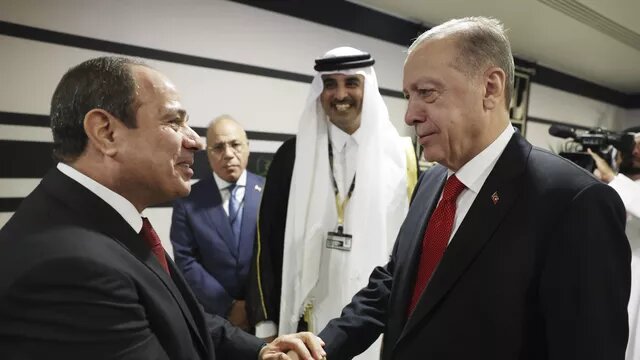
Egypt Seeks to Reduce Vulnerability vis-à-vis the Zionist Regime

2025/10/06 | interview, Politics, Top News

Online Strategic Council - Interview: A senior Egyptian affairs analyst stated that Egypt, the first Arab country to sign a peace agreement with the Zionist regime in 1979, has now adopted a new strategy due to concerns about the regime's expansionist policies. The developments following the 2023 Gaza war revealed that Tel Aviv, with the unconditional support of the United States, seeks to alter the balance of power in West Asia —a matter that has compelled Cairo to expand its relations with Iran and Turkey, two significant regional powers. By holding joint military exercises with Turkey, mediating in Iran's nuclear dossier, and seeking military and technological cooperation, Egypt is trying to prevent the Zionists' hegemony in the region. Although the formation of a trilateral military alliance seems unlikely for now, Cairo's rapprochement with Tehran and Ankara is considered a potential threat to the Israeli regime. In fact, in the face of regional pressures and border crises, Egypt is seeking to create a strategic balance to curb Tel Aviv's influence and enhance its own position in the West Asian equations.

Abdolamir Nabavi, in an interview with the website of the Strategic Council on Foreign Relations, stated: The main factor for the strategic redefinition of Egypt in the region is ‘facing the expansionism of the Israeli regime.” Reviewing the developments in general, this university professor emphasizes: “The speed and depth of geopolitical changes in West Asia, especially after the repeated aggressions of the Israeli regime against Syria, Lebanon, etc., as well as the attacks on Iran and Qatar, have compelled other governments to seek new, promising and reassuring anchors for themselves by diversifying partnerships and expanding economic and diplomatic relations, intending to manage crises.” According to him, “In recent years, Cairo has tried to strengthen its connections, in addition to Europe and the United States, with important actors such as China, Russia, Turkey, and Qatar, to rebuild its field of action and leverage in regional equations.”

The senior Egyptian affairs analyst says: “The pivotal factor for Cairo’s concern has been the intensification of the aggressive actions of the Israeli regime after the Gaza war in October 2023; an operation that, in his opinion, has extended beyond the borders of Palestine, and its most worrying effect is the explicit or implicit support or alignment of major foreign actors with this regime. These trends, especially when combined with uncertainty in security and stability indicators, have forced Cairo to review its foreign policy quickly.”

The senior West Asian affairs expert pointed to the overlapping internal and regional challenges of Egypt and stated: “The conflicts on Egypt’s eastern border and the Gaza crisis, persistent instability in Libya to the west, the civil war in Sudan to the south, and the water dispute with Ethiopia over Nile resources are among the other factors that have driven Cairo towards diversifying its relations.” He believes that “the combination of these risks has exposed Egypt, from a national security perspective, to political, economic, and humanitarian pressures and has doubled the necessity of diversifying strategic partners.”

This expert emphasizes: “In this framework, Cairo neither seeks to cut off relations with its strategic treaties with the West nor intends to sacrifice the economic and political interests derived from four-decade-old agreements like Camp David for new actions; rather, the goal is to intelligently use these cognitive and legal relations to exert pressure on various regional governments and manage threats.” Therefore, Nabavi points out that “Egypt, while expanding cooperation with other actors, also tries to manage its strategic relations with Washington and Tel Aviv.”

This university professor regarding Egypt-Turkey relations says: “The improvement of relations between the two countries has been subject to clear conditions, including controlling the political and media flows related to the Muslim Brotherhood based in Turkey, which is considered dangerous by Cairo.” He adds: “These conditions have been somewhat met in practice, and for this reason, the possibility of advancing military-defensive cooperation and joint exercises has been provided, but the formation of an independent regional ‘axis’ that specifically wants to stand against Western actors or Tel Aviv seems unlikely in the short term.”

The senior Egyptian affairs analyst simultaneously warns: “One of Egypt’s strategic concerns is the possibility of forced migration of Gaza Strip residents to the Sinai Peninsula; a phenomenon that from Cairo’s perspective could have long-term security, humanitarian, and economic consequences and reduce Egypt’s diplomatic maneuverability in the Palestinian dossier.” Therefore, he reminds that “any permanent settlement of Gazans in Sinai would impose additional pressure on Egypt’s fragile economy and bring complexities for border control, and for this reason, Egyptians are trying, through new agreements and diversifying their foreign relations, to seek a new balance against the Israeli regime.”

The West Asian affairs analyst also points to “other new regional agreements, such as the Saudi-Pakistani defense agreement, which could shift security equations against the Israeli regime,” and adds that “the entry of new actors into defense pacts, along with new military capabilities, adds new variables to the power equations that Egypt must carefully monitor and predict the outcome for its national interests.”

Nabavi outlines “Cairo’s selective position” as such: “Egypt has chosen the option of diversifying relations so that, by relying on several economic-diplomatic axes, it can remain safe from unilateral pressure and sudden changes in the region’s security environment; but at the same time, it maintains its strategic relationship with the West and international legal capacities as tools for survival and uses them to manage tensions and curb the unregulated growth of the influence and expansionism of the Israeli regime.”

0 Comments

LATEST CONTENT

The Inseparability of the Lebanese Front from the Axis of Resistance

SCFR Online–Opinion: By providing an extensive network of social, healthcare, educational, and post-war reconstruction services, Hezbollah has established a strong social base for itself among Lebanon’s Shiites and Sunnis, and even beyond that, among other segments of Lebanese society, including Christians. Hezbollah has never been an external actor imposed upon Lebanon; rather, it is a phenomenon fundamentally born out of the occupation and crimes of the Zionist regime and itself influenced by popular resistance.

The Increasing Efforts of the Zionist Regime to Redefine Borders and the Regional Order and Its Consequences

SCFR Online– Opinion: Security and military developments in the region over recent months indicate that the ongoing crises and wars in Gaza, southern Lebanon, and parts of Syrian territory encompass broader dimensions of geopolitical and geostrategic transformations. In this context, the increased military presence and control of the Zionist regime over parts of the territories of these areas, along with proposals regarding the creation of buffer zones or even the expansion of security borders, have raised serious questions about the future of the regional order and its consequences for the countries of West Asia.

The Components of Iran’s Deterrence Power

SCFR Online – Opinion: At a time when regional security equations have reached a sensitive stage under the influence of Iran’s strategic confrontation with the United States and the Zionist regime, the question of the nature of Tehran’s defensive power has gained greater significance than ever before. While Washington and Tel Aviv rely on their technological superiority, the Islamic Republic of Iran has presented a model of deterrence that extends beyond the material calculations of the world’s classical militaries. This power, rooted in the connection between “the field” and “the people,” has not only altered the balance of power in recent conflicts but has also disrupted adversaries’ calculations when confronting Iran’s strategic depth.

The Persian Gulf; A Cold Battlefield Between Beijing and Washington

SCFR Online – Opinion: The competition in recent years between the United States and China encompasses various geographical regions—including the Indo-Pacific, West Asia, the Arctic and Antarctic, and Africa—as well as multiple domains such as economics and technology. Within this context, a strategic competition has also emerged in the Persian Gulf region across economic, technological, and military spheres.

Europe’s Enduring Dependence on Persian Gulf Energy

SCFR Online – Opinion: The dominant discourse in the field of European energy security over the past two decades has revolved around diversification of supply sources and the gradual reduction of dependence on fossil fuels. This narrative, which gained particular momentum after the Ukraine gas crisis in 2006 and its intensification in 2014 and 2022, was based on the assumption that Europe could free itself from the geopolitical vulnerabilities arising from dependence on specific suppliers through investment in renewable energy, imports of liquefied natural gas from diversified sources, and the establishment of new infrastructure. However, a closer analysis of energy trade data and the structure of the global oil and gas supply chain presents a different picture. Europe has not only failed to meaningfully reduce its dependence on the Persian Gulf, but in some sectors — particularly in liquefied natural gas imports — this dependence has deepened. This reality, which is often overlooked in public discourse, raises fundamental questions about the sustainability of Europe’s energy security strategies and their impact on regional power equations.

Loading

Últimas publicaciones

The Inseparability of the Lebanese Front from the Axis of Resistance

SCFR Online–Opinion: By providing an extensive network of social, healthcare, educational, and post-war reconstruction services, Hezbollah has established a strong social base for itself among Lebanon’s Shiites and Sunnis, and even beyond that, among other segments of Lebanese society, including Christians. Hezbollah has never been an external actor imposed upon Lebanon; rather, it is a phenomenon fundamentally born out of the occupation and crimes of the Zionist regime and itself influenced by popular resistance.

The Increasing Efforts of the Zionist Regime to Redefine Borders and the Regional Order and Its Consequences

SCFR Online– Opinion: Security and military developments in the region over recent months indicate that the ongoing crises and wars in Gaza, southern Lebanon, and parts of Syrian territory encompass broader dimensions of geopolitical and geostrategic transformations. In this context, the increased military presence and control of the Zionist regime over parts of the territories of these areas, along with proposals regarding the creation of buffer zones or even the expansion of security borders, have raised serious questions about the future of the regional order and its consequences for the countries of West Asia.

The Components of Iran’s Deterrence Power

SCFR Online – Opinion: At a time when regional security equations have reached a sensitive stage under the influence of Iran’s strategic confrontation with the United States and the Zionist regime, the question of the nature of Tehran’s defensive power has gained greater significance than ever before. While Washington and Tel Aviv rely on their technological superiority, the Islamic Republic of Iran has presented a model of deterrence that extends beyond the material calculations of the world’s classical militaries. This power, rooted in the connection between “the field” and “the people,” has not only altered the balance of power in recent conflicts but has also disrupted adversaries’ calculations when confronting Iran’s strategic depth.

The Persian Gulf; A Cold Battlefield Between Beijing and Washington

SCFR Online – Opinion: The competition in recent years between the United States and China encompasses various geographical regions—including the Indo-Pacific, West Asia, the Arctic and Antarctic, and Africa—as well as multiple domains such as economics and technology. Within this context, a strategic competition has also emerged in the Persian Gulf region across economic, technological, and military spheres.

Europe’s Enduring Dependence on Persian Gulf Energy

SCFR Online – Opinion: The dominant discourse in the field of European energy security over the past two decades has revolved around diversification of supply sources and the gradual reduction of dependence on fossil fuels. This narrative, which gained particular momentum after the Ukraine gas crisis in 2006 and its intensification in 2014 and 2022, was based on the assumption that Europe could free itself from the geopolitical vulnerabilities arising from dependence on specific suppliers through investment in renewable energy, imports of liquefied natural gas from diversified sources, and the establishment of new infrastructure. However, a closer analysis of energy trade data and the structure of the global oil and gas supply chain presents a different picture. Europe has not only failed to meaningfully reduce its dependence on the Persian Gulf, but in some sectors — particularly in liquefied natural gas imports — this dependence has deepened. This reality, which is often overlooked in public discourse, raises fundamental questions about the sustainability of Europe’s energy security strategies and their impact on regional power equations.

Loading

DERNIER CONTENU

The Inseparability of the Lebanese Front from the Axis of Resistance

SCFR Online–Opinion: By providing an extensive network of social, healthcare, educational, and post-war reconstruction services, Hezbollah has established a strong social base for itself among Lebanon’s Shiites and Sunnis, and even beyond that, among other segments of Lebanese society, including Christians. Hezbollah has never been an external actor imposed upon Lebanon; rather, it is a phenomenon fundamentally born out of the occupation and crimes of the Zionist regime and itself influenced by popular resistance.

The Increasing Efforts of the Zionist Regime to Redefine Borders and the Regional Order and Its Consequences

SCFR Online– Opinion: Security and military developments in the region over recent months indicate that the ongoing crises and wars in Gaza, southern Lebanon, and parts of Syrian territory encompass broader dimensions of geopolitical and geostrategic transformations. In this context, the increased military presence and control of the Zionist regime over parts of the territories of these areas, along with proposals regarding the creation of buffer zones or even the expansion of security borders, have raised serious questions about the future of the regional order and its consequences for the countries of West Asia.

The Components of Iran’s Deterrence Power

SCFR Online – Opinion: At a time when regional security equations have reached a sensitive stage under the influence of Iran’s strategic confrontation with the United States and the Zionist regime, the question of the nature of Tehran’s defensive power has gained greater significance than ever before. While Washington and Tel Aviv rely on their technological superiority, the Islamic Republic of Iran has presented a model of deterrence that extends beyond the material calculations of the world’s classical militaries. This power, rooted in the connection between “the field” and “the people,” has not only altered the balance of power in recent conflicts but has also disrupted adversaries’ calculations when confronting Iran’s strategic depth.

The Persian Gulf; A Cold Battlefield Between Beijing and Washington

SCFR Online – Opinion: The competition in recent years between the United States and China encompasses various geographical regions—including the Indo-Pacific, West Asia, the Arctic and Antarctic, and Africa—as well as multiple domains such as economics and technology. Within this context, a strategic competition has also emerged in the Persian Gulf region across economic, technological, and military spheres.

Europe’s Enduring Dependence on Persian Gulf Energy

SCFR Online – Opinion: The dominant discourse in the field of European energy security over the past two decades has revolved around diversification of supply sources and the gradual reduction of dependence on fossil fuels. This narrative, which gained particular momentum after the Ukraine gas crisis in 2006 and its intensification in 2014 and 2022, was based on the assumption that Europe could free itself from the geopolitical vulnerabilities arising from dependence on specific suppliers through investment in renewable energy, imports of liquefied natural gas from diversified sources, and the establishment of new infrastructure. However, a closer analysis of energy trade data and the structure of the global oil and gas supply chain presents a different picture. Europe has not only failed to meaningfully reduce its dependence on the Persian Gulf, but in some sectors — particularly in liquefied natural gas imports — this dependence has deepened. This reality, which is often overlooked in public discourse, raises fundamental questions about the sustainability of Europe’s energy security strategies and their impact on regional power equations.

Loading

DERNIER CONTENU

The Inseparability of the Lebanese Front from the Axis of Resistance

SCFR Online–Opinion: By providing an extensive network of social, healthcare, educational, and post-war reconstruction services, Hezbollah has established a strong social base for itself among Lebanon’s Shiites and Sunnis, and even beyond that, among other segments of Lebanese society, including Christians. Hezbollah has never been an external actor imposed upon Lebanon; rather, it is a phenomenon fundamentally born out of the occupation and crimes of the Zionist regime and itself influenced by popular resistance.

The Increasing Efforts of the Zionist Regime to Redefine Borders and the Regional Order and Its Consequences

SCFR Online– Opinion: Security and military developments in the region over recent months indicate that the ongoing crises and wars in Gaza, southern Lebanon, and parts of Syrian territory encompass broader dimensions of geopolitical and geostrategic transformations. In this context, the increased military presence and control of the Zionist regime over parts of the territories of these areas, along with proposals regarding the creation of buffer zones or even the expansion of security borders, have raised serious questions about the future of the regional order and its consequences for the countries of West Asia.

The Components of Iran’s Deterrence Power

SCFR Online – Opinion: At a time when regional security equations have reached a sensitive stage under the influence of Iran’s strategic confrontation with the United States and the Zionist regime, the question of the nature of Tehran’s defensive power has gained greater significance than ever before. While Washington and Tel Aviv rely on their technological superiority, the Islamic Republic of Iran has presented a model of deterrence that extends beyond the material calculations of the world’s classical militaries. This power, rooted in the connection between “the field” and “the people,” has not only altered the balance of power in recent conflicts but has also disrupted adversaries’ calculations when confronting Iran’s strategic depth.

The Persian Gulf; A Cold Battlefield Between Beijing and Washington

SCFR Online – Opinion: The competition in recent years between the United States and China encompasses various geographical regions—including the Indo-Pacific, West Asia, the Arctic and Antarctic, and Africa—as well as multiple domains such as economics and technology. Within this context, a strategic competition has also emerged in the Persian Gulf region across economic, technological, and military spheres.

Europe’s Enduring Dependence on Persian Gulf Energy

SCFR Online – Opinion: The dominant discourse in the field of European energy security over the past two decades has revolved around diversification of supply sources and the gradual reduction of dependence on fossil fuels. This narrative, which gained particular momentum after the Ukraine gas crisis in 2006 and its intensification in 2014 and 2022, was based on the assumption that Europe could free itself from the geopolitical vulnerabilities arising from dependence on specific suppliers through investment in renewable energy, imports of liquefied natural gas from diversified sources, and the establishment of new infrastructure. However, a closer analysis of energy trade data and the structure of the global oil and gas supply chain presents a different picture. Europe has not only failed to meaningfully reduce its dependence on the Persian Gulf, but in some sectors — particularly in liquefied natural gas imports — this dependence has deepened. This reality, which is often overlooked in public discourse, raises fundamental questions about the sustainability of Europe’s energy security strategies and their impact on regional power equations.

Loading

DERNIER CONTENU

The Inseparability of the Lebanese Front from the Axis of Resistance

SCFR Online–Opinion: By providing an extensive network of social, healthcare, educational, and post-war reconstruction services, Hezbollah has established a strong social base for itself among Lebanon’s Shiites and Sunnis, and even beyond that, among other segments of Lebanese society, including Christians. Hezbollah has never been an external actor imposed upon Lebanon; rather, it is a phenomenon fundamentally born out of the occupation and crimes of the Zionist regime and itself influenced by popular resistance.

The Increasing Efforts of the Zionist Regime to Redefine Borders and the Regional Order and Its Consequences

SCFR Online– Opinion: Security and military developments in the region over recent months indicate that the ongoing crises and wars in Gaza, southern Lebanon, and parts of Syrian territory encompass broader dimensions of geopolitical and geostrategic transformations. In this context, the increased military presence and control of the Zionist regime over parts of the territories of these areas, along with proposals regarding the creation of buffer zones or even the expansion of security borders, have raised serious questions about the future of the regional order and its consequences for the countries of West Asia.

The Components of Iran’s Deterrence Power

SCFR Online – Opinion: At a time when regional security equations have reached a sensitive stage under the influence of Iran’s strategic confrontation with the United States and the Zionist regime, the question of the nature of Tehran’s defensive power has gained greater significance than ever before. While Washington and Tel Aviv rely on their technological superiority, the Islamic Republic of Iran has presented a model of deterrence that extends beyond the material calculations of the world’s classical militaries. This power, rooted in the connection between “the field” and “the people,” has not only altered the balance of power in recent conflicts but has also disrupted adversaries’ calculations when confronting Iran’s strategic depth.

The Persian Gulf; A Cold Battlefield Between Beijing and Washington

SCFR Online – Opinion: The competition in recent years between the United States and China encompasses various geographical regions—including the Indo-Pacific, West Asia, the Arctic and Antarctic, and Africa—as well as multiple domains such as economics and technology. Within this context, a strategic competition has also emerged in the Persian Gulf region across economic, technological, and military spheres.

Europe’s Enduring Dependence on Persian Gulf Energy

SCFR Online – Opinion: The dominant discourse in the field of European energy security over the past two decades has revolved around diversification of supply sources and the gradual reduction of dependence on fossil fuels. This narrative, which gained particular momentum after the Ukraine gas crisis in 2006 and its intensification in 2014 and 2022, was based on the assumption that Europe could free itself from the geopolitical vulnerabilities arising from dependence on specific suppliers through investment in renewable energy, imports of liquefied natural gas from diversified sources, and the establishment of new infrastructure. However, a closer analysis of energy trade data and the structure of the global oil and gas supply chain presents a different picture. Europe has not only failed to meaningfully reduce its dependence on the Persian Gulf, but in some sectors — particularly in liquefied natural gas imports — this dependence has deepened. This reality, which is often overlooked in public discourse, raises fundamental questions about the sustainability of Europe’s energy security strategies and their impact on regional power equations.

Loading





