

Maryam Vareij Kazemi – Researcher in Geopolitical Affairs
Over 95% of international data is transmitted through submarine cables on the ocean floor. These cables, as the world’s super information highways, not only strengthen the economy and trade relations but also keep active the military coordination, drone command, and other integrated digital defense weapon systems of the world’s countries.
Geopolitical Competition Underwater
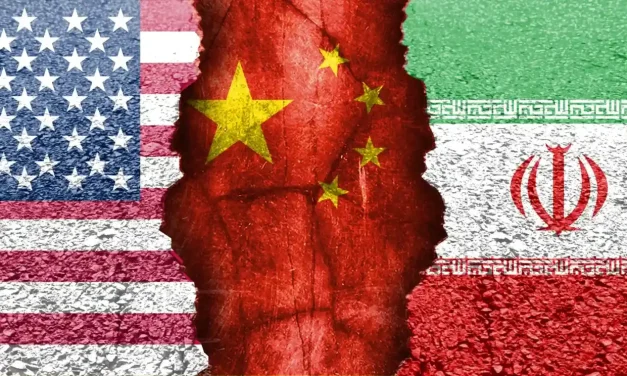
Many countries rely heavily on submarine cables for economic survival and security control. Although governments rarely own the cable-related infrastructure, in most cases, they control the routes indirectly through state-owned telecommunications operators and tend to maintain their supervision and influence, which has led to geopolitical competition among governments and the emergence of transnational technology companies as new geopolitical actors. In this context, the geopolitical competition primarily revolves around two leading players, the United States of America and China, because both countries consider submarine cables a security issue. China strives to free itself from the constraints of Western containment, and the United States seeks to preserve its hegemony; therefore, each desires to bring broader geographical spaces under its influence to protect cyber ecosystems from competitors and control the global digital order.
China’s Strategy Towards the Emergence of New Actors
Through heavy investments in the digital infrastructure of some countries, China is trying to distance the United States from its traditional commanding role, particularly in the Indo-Pacific region and parts of Africa. The most important countries Beijing intends to use as landing stations—i.e., points where submarine cables connect to terrestrial networks—are Pakistan, Djibouti, and Egypt. The strategic position of these three countries as links connecting Central Asia, West Asia, and North Africa, South Asia, and Southern Europe, which play a vital role in trade and transportation between Eurasia and Africa, has placed them in the position of emerging actors in the global submarine cable network and the future digital hub of the world.
Thus, the ports of Gwadar and Karachi, as two strategic regional centers and submarine cable network hubs, have gained special importance for China’s digital infrastructure ambitions. Currently, the “Peace” cable, which connects Pakistan and East Africa to Europe, along with other Pakistani projects within the larger framework of the “China-Pakistan Economic Corridor,” plays a fundamental role in advancing Beijing’s interests; an issue that could directly challenge US supervision and influence in those regions.
American Deterrence
The United States considers China’s presence and investments in developing the submarine cable network a physical and digital threat to its military and economic interests. From Washington’s perspective, China’s influence in these regions could initiate a new competition stage in geo-economics and geo-strategy. In response to this trend, America seeks to prevent the expansion of China’s influence by creating alternative communication ecosystems in parallel networks and investing in new technologies, which could lead to geopolitical and security disputes between the two countries.
The fear of espionage and hacking of sensitive data from submarine cables and concerns about China’s dominance over regional internet management have intensified the underwater geopolitical competition between Washington and Beijing. From the West’s viewpoint, targeting submarine cables is part of China’s strategic activities to pressure countries and international organizations.
Since submarine cables are as important to the US as oil pipelines and trade routes and are considered an “information gold mine,” Washington strives to maintain its influence by controlling China’s digital power at critical geopolitical points such as the Suez Canal, the Strait of Hormuz, and the Bab-el-Mandeb. In this regard, partnerships with Indian Ocean coastal states, the Indo-Pacific Oceans Initiative, and alliances such as the “Quad,” with an emphasis on developing high-quality submarine cable networks, strengthening cybersecurity, and keeping regional initiatives free from Chinese influence, are among the main pillars of the US strategy.
Furthermore, the United States will use coercive and incentive tools in its extraterritorial domains to influence the decisions of allies; a trend that will directly impact the construction of future submarine cables. These policies could lead to the formation of a shared security structure between the US and its allies, in which naval military tactics gain even greater importance. Consequently, the geographical expansion of internet submarine cable networks and internal connections to reduce vulnerability to digital disruptions from China has created growing concern about the possibility of war on the seabed. This trend could lead to the bipolarization of the global geopolitical system. In other words, the “underwater geopolitical storm” arising from the tense relations between China, the US, and their allies affects the global digital economy and the legal-political guarantees related to the free flow of data, and expands coercive diplomacy.
Although China will strive to develop satellite passages in the coming years, its main priority remains establishing systemic foundations for expanding maritime communications within the “Digital Silk Road” framework to impose its governance standards on partner countries and increase its economic competitiveness. In contrast, the United States prefers to control China’s actions, which seek to achieve geo-economic and geopolitical goals, by enacting laws and creating new capacities for the security of submarine infrastructure. Thus, in the future outlook, the concepts of “strategic space” and “security alliances” will be redefined.



0 Comments