Persian Gulf Countries’ Doubts Regarding America’s Security Umbrella

SCFR Online – Opinion: Iran's display of power in the recent imposed war and Washington's turning away from its traditional allies have pushed Persian Gulf countries toward new partners in the East.

Hossein Mohammadnia – Expert on International Affairs

For years, it was assumed that the security of countries along the southern coast of the Persian Gulf was guaranteed through arms contracts and the presence of US military bases. However, the recent war with Iran demonstrated that this umbrella holds little credibility. Despite expressing repeated concerns from Riyadh and Abu Dhabi, Washington launched its attack against Iran without coordinating with them.

A report from the Stimson Institute indicates that the war has caused $200 billion in damages to the economies of Persian Gulf Cooperation Council countries. More than eighty energy facilities in Saudi Arabia, the UAE, Qatar, Kuwait, Bahrain, and Oman have been targeted in attacks, with reconstruction costs estimated at $58 billion.

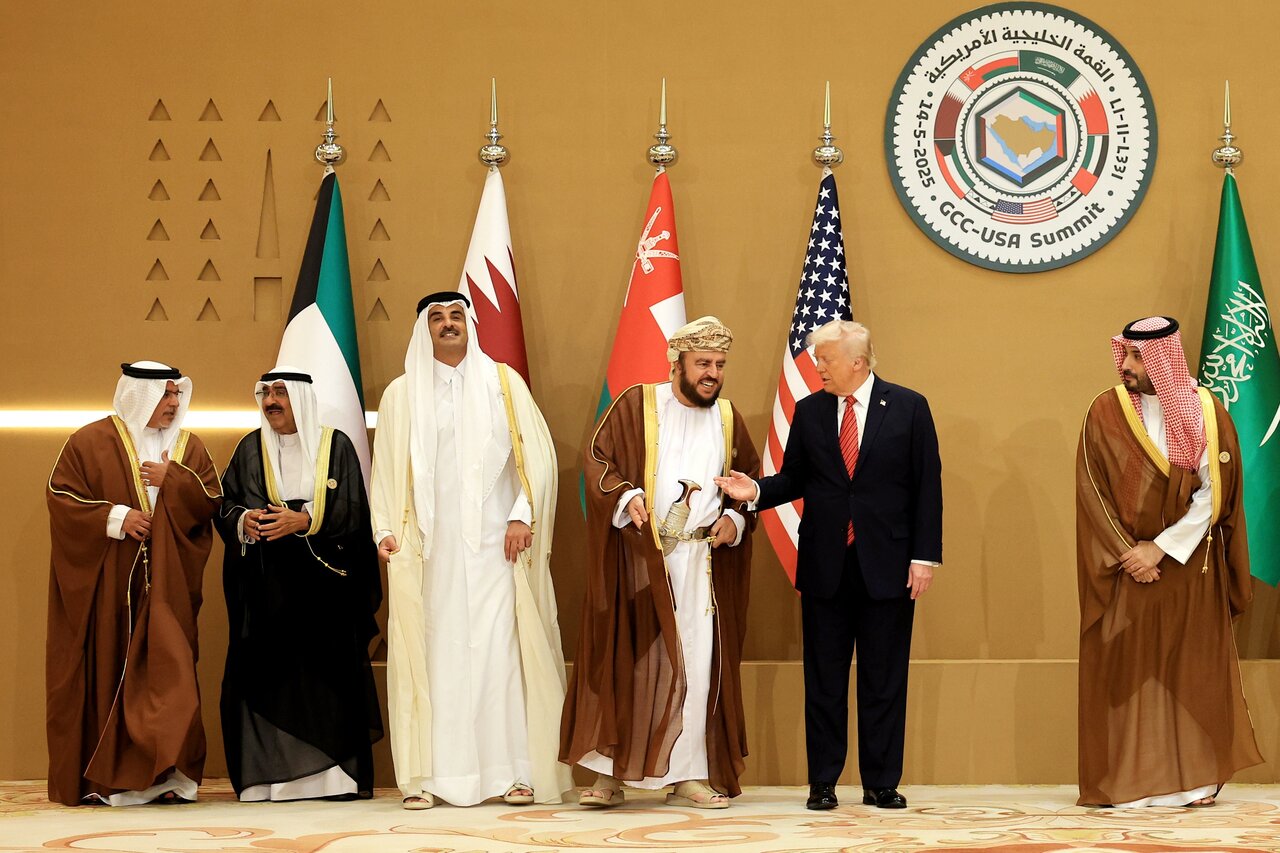
The UAE, which for years was a strategic ally of Washington, is now seeking cooperation with the Zionist regime, China, and Russia. Saudi Arabia, too, has embarked on a new path through Mohammed bin Salman’s visit to Moscow and his dialogues with certain regional countries. Qatar and Oman have also always maintained their intelligent distance from the United States. This diversification of partners represents a clear sign of the end of America’s unilateral dominance in the region’s security architecture.

Iran; A Powerful and Undeniable Neighbor

In this strategic rearrangement, Iran has emerged as an irremovable actor. Persian Gulf countries have come to realize that the Strait of Hormuz, energy pipelines, and the region’s skies are all directly influenced by Iran’s military and geographical power. Attempts to eliminate or weaken Iran not only fail to lead to sustainable peace but also entail staggering costs.

These costs are now clearly observable. The International Monetary Fund has projected severely negative economic growth for regional countries in 2026: Qatar at -14.7 percent, Kuwait at -4.2 percent, Bahrain at -3.8 percent, the UAE at -1.9 percent, and Saudi Arabia at -1.4 percent. These figures are released at a time when, prior to the war, these countries were pursuing ambitious long-term development programs.

A report from the Atlantic Council think tank in mid-May 2026 warns that the illusion of “middle powers” should not deceive countries. Neither does Europe have the capacity to replace America, nor has China shown any inclination to accept the role of regional security guarantor; therefore, the only remaining path is de-escalation with Iran and the establishment of a regional mechanism for managing differences.

A recent report from The Guardian also reveals that even during the talks between Chinese and American leaders in Beijing, the issue of Iran and the Strait of Hormuz was raised as one of the three main axes of discussion. This means the world has concluded that without Iran, the lock on energy security and regional stability will not be opened.

China and Russia: Complementary Partners, Not Definitive Replacements

In recent years, Persian Gulf countries have also expanded their relations with the East. China, as the region’s largest oil importer, constitutes a vital trade partner for these countries. Russia, too, has consolidated its position in the region through the sale of missile defense systems and cooperation in the energy market. However, neither of these two powers possesses the inclination or capacity to completely replace America’s security umbrella.

Analysis from the Atlantic Council think tank indicates that even at the height of the Ukraine war and the West Asian crisis, China has maintained a cautious and non-interventionist posture. Beijing has consistently avoided accepting direct responsibility for other countries’ security and has preferred to define its relations on the basis of economics and trade. Russia, too, is entangled in a war of attrition in Europe and has focused its efforts on halting NATO’s advance.

Therefore, rather than making a unilateral choice, regional countries have adopted a risk-hedging strategy. They negotiate with the United States, trade with China, import weapons from Russia, and hold confidential dialogues with Iran—all simultaneously. This multi-layered approach represents a realistic response to a world in which there is no longer a reliable, stability-providing hegemon.

A Guardian report also notes that China cannot and does not wish to play America’s role in guaranteeing its allies’ security. The experience of the Taiwan crisis and China’s pressures on South Korea and Japan has demonstrated that Beijing, in sensitive moments, uses economic levers to exert pressure rather than to create stability. This is precisely the behavior that Persian Gulf countries have also well understood.

A Future Named “Self-Provided Security” on the Distant Horizon

The ultimate outcome of these developments is the gradual transition from the model of “renting security from America” to the model of “producing security within the region.” Persian Gulf Cooperation Council countries have now realized that the heavy costs of war and sanctions, along with growing distrust of Western partners, compel them to invest in domestic capabilities and regional cooperation.

A report from Germany’s SWP institute cites the UAE’s efforts to establish independent logistics corridors in Africa and its cooperation with the Zionist regime in Somalia as an example of this endeavor to achieve strategic depth without reliance on the West. The UAE’s exit from OPEC is also assessed within this framework—an action to gain greater control over its own resources and oil policies. Although these developments by no means signify a complete severance of relations with the United States, they indicate that unilateral and unconditional dependence no longer exists. Saudi Arabia, which was once America’s closest ally in the region, has now elevated its relations with China to the level of strategic partnership and coordinates with Russia within OPEC+. Qatar, too, has always utilized its diplomatic capacities to play a mediating role between Iran and the West.

In the new security architecture of the Persian Gulf, Iran is a neighbor with whom one must engage. China is a partner from whom one must benefit. Russia is a supplier whom one must manage. America is a traditional ally upon whose stability and commitment one can no longer rely. This multi-layered and volatile order, although more complex and costly than the era of American hegemony, possesses at least one undeniable advantage: this new order is based on reality, not illusion. Regional countries have finally understood that no extra-regional power will guarantee their security freely and permanently.


0 Comments

LATEST CONTENT

The Inseparability of the Lebanese Front from the Axis of Resistance

SCFR Online–Opinion: By providing an extensive network of social, healthcare, educational, and post-war reconstruction services, Hezbollah has established a strong social base for itself among Lebanon’s Shiites and Sunnis, and even beyond that, among other segments of Lebanese society, including Christians. Hezbollah has never been an external actor imposed upon Lebanon; rather, it is a phenomenon fundamentally born out of the occupation and crimes of the Zionist regime and itself influenced by popular resistance.

The Increasing Efforts of the Zionist Regime to Redefine Borders and the Regional Order and Its Consequences

SCFR Online– Opinion: Security and military developments in the region over recent months indicate that the ongoing crises and wars in Gaza, southern Lebanon, and parts of Syrian territory encompass broader dimensions of geopolitical and geostrategic transformations. In this context, the increased military presence and control of the Zionist regime over parts of the territories of these areas, along with proposals regarding the creation of buffer zones or even the expansion of security borders, have raised serious questions about the future of the regional order and its consequences for the countries of West Asia.

The Components of Iran’s Deterrence Power

SCFR Online – Opinion: At a time when regional security equations have reached a sensitive stage under the influence of Iran’s strategic confrontation with the United States and the Zionist regime, the question of the nature of Tehran’s defensive power has gained greater significance than ever before. While Washington and Tel Aviv rely on their technological superiority, the Islamic Republic of Iran has presented a model of deterrence that extends beyond the material calculations of the world’s classical militaries. This power, rooted in the connection between “the field” and “the people,” has not only altered the balance of power in recent conflicts but has also disrupted adversaries’ calculations when confronting Iran’s strategic depth.

Loading

Últimas publicaciones

The Inseparability of the Lebanese Front from the Axis of Resistance

SCFR Online–Opinion: By providing an extensive network of social, healthcare, educational, and post-war reconstruction services, Hezbollah has established a strong social base for itself among Lebanon’s Shiites and Sunnis, and even beyond that, among other segments of Lebanese society, including Christians. Hezbollah has never been an external actor imposed upon Lebanon; rather, it is a phenomenon fundamentally born out of the occupation and crimes of the Zionist regime and itself influenced by popular resistance.

The Increasing Efforts of the Zionist Regime to Redefine Borders and the Regional Order and Its Consequences

SCFR Online– Opinion: Security and military developments in the region over recent months indicate that the ongoing crises and wars in Gaza, southern Lebanon, and parts of Syrian territory encompass broader dimensions of geopolitical and geostrategic transformations. In this context, the increased military presence and control of the Zionist regime over parts of the territories of these areas, along with proposals regarding the creation of buffer zones or even the expansion of security borders, have raised serious questions about the future of the regional order and its consequences for the countries of West Asia.

The Components of Iran’s Deterrence Power

SCFR Online – Opinion: At a time when regional security equations have reached a sensitive stage under the influence of Iran’s strategic confrontation with the United States and the Zionist regime, the question of the nature of Tehran’s defensive power has gained greater significance than ever before. While Washington and Tel Aviv rely on their technological superiority, the Islamic Republic of Iran has presented a model of deterrence that extends beyond the material calculations of the world’s classical militaries. This power, rooted in the connection between “the field” and “the people,” has not only altered the balance of power in recent conflicts but has also disrupted adversaries’ calculations when confronting Iran’s strategic depth.

Loading

DERNIER CONTENU

The Inseparability of the Lebanese Front from the Axis of Resistance

SCFR Online–Opinion: By providing an extensive network of social, healthcare, educational, and post-war reconstruction services, Hezbollah has established a strong social base for itself among Lebanon’s Shiites and Sunnis, and even beyond that, among other segments of Lebanese society, including Christians. Hezbollah has never been an external actor imposed upon Lebanon; rather, it is a phenomenon fundamentally born out of the occupation and crimes of the Zionist regime and itself influenced by popular resistance.

The Increasing Efforts of the Zionist Regime to Redefine Borders and the Regional Order and Its Consequences

SCFR Online– Opinion: Security and military developments in the region over recent months indicate that the ongoing crises and wars in Gaza, southern Lebanon, and parts of Syrian territory encompass broader dimensions of geopolitical and geostrategic transformations. In this context, the increased military presence and control of the Zionist regime over parts of the territories of these areas, along with proposals regarding the creation of buffer zones or even the expansion of security borders, have raised serious questions about the future of the regional order and its consequences for the countries of West Asia.

The Components of Iran’s Deterrence Power

SCFR Online – Opinion: At a time when regional security equations have reached a sensitive stage under the influence of Iran’s strategic confrontation with the United States and the Zionist regime, the question of the nature of Tehran’s defensive power has gained greater significance than ever before. While Washington and Tel Aviv rely on their technological superiority, the Islamic Republic of Iran has presented a model of deterrence that extends beyond the material calculations of the world’s classical militaries. This power, rooted in the connection between “the field” and “the people,” has not only altered the balance of power in recent conflicts but has also disrupted adversaries’ calculations when confronting Iran’s strategic depth.

Loading

DERNIER CONTENU

The Inseparability of the Lebanese Front from the Axis of Resistance

SCFR Online–Opinion: By providing an extensive network of social, healthcare, educational, and post-war reconstruction services, Hezbollah has established a strong social base for itself among Lebanon’s Shiites and Sunnis, and even beyond that, among other segments of Lebanese society, including Christians. Hezbollah has never been an external actor imposed upon Lebanon; rather, it is a phenomenon fundamentally born out of the occupation and crimes of the Zionist regime and itself influenced by popular resistance.

The Increasing Efforts of the Zionist Regime to Redefine Borders and the Regional Order and Its Consequences

SCFR Online– Opinion: Security and military developments in the region over recent months indicate that the ongoing crises and wars in Gaza, southern Lebanon, and parts of Syrian territory encompass broader dimensions of geopolitical and geostrategic transformations. In this context, the increased military presence and control of the Zionist regime over parts of the territories of these areas, along with proposals regarding the creation of buffer zones or even the expansion of security borders, have raised serious questions about the future of the regional order and its consequences for the countries of West Asia.

The Components of Iran’s Deterrence Power

SCFR Online – Opinion: At a time when regional security equations have reached a sensitive stage under the influence of Iran’s strategic confrontation with the United States and the Zionist regime, the question of the nature of Tehran’s defensive power has gained greater significance than ever before. While Washington and Tel Aviv rely on their technological superiority, the Islamic Republic of Iran has presented a model of deterrence that extends beyond the material calculations of the world’s classical militaries. This power, rooted in the connection between “the field” and “the people,” has not only altered the balance of power in recent conflicts but has also disrupted adversaries’ calculations when confronting Iran’s strategic depth.

Loading

DERNIER CONTENU

The Inseparability of the Lebanese Front from the Axis of Resistance

SCFR Online–Opinion: By providing an extensive network of social, healthcare, educational, and post-war reconstruction services, Hezbollah has established a strong social base for itself among Lebanon’s Shiites and Sunnis, and even beyond that, among other segments of Lebanese society, including Christians. Hezbollah has never been an external actor imposed upon Lebanon; rather, it is a phenomenon fundamentally born out of the occupation and crimes of the Zionist regime and itself influenced by popular resistance.

The Increasing Efforts of the Zionist Regime to Redefine Borders and the Regional Order and Its Consequences

SCFR Online– Opinion: Security and military developments in the region over recent months indicate that the ongoing crises and wars in Gaza, southern Lebanon, and parts of Syrian territory encompass broader dimensions of geopolitical and geostrategic transformations. In this context, the increased military presence and control of the Zionist regime over parts of the territories of these areas, along with proposals regarding the creation of buffer zones or even the expansion of security borders, have raised serious questions about the future of the regional order and its consequences for the countries of West Asia.

The Components of Iran’s Deterrence Power

SCFR Online – Opinion: At a time when regional security equations have reached a sensitive stage under the influence of Iran’s strategic confrontation with the United States and the Zionist regime, the question of the nature of Tehran’s defensive power has gained greater significance than ever before. While Washington and Tel Aviv rely on their technological superiority, the Islamic Republic of Iran has presented a model of deterrence that extends beyond the material calculations of the world’s classical militaries. This power, rooted in the connection between “the field” and “the people,” has not only altered the balance of power in recent conflicts but has also disrupted adversaries’ calculations when confronting Iran’s strategic depth.

Loading