
Omid Motahharian – International economics expert
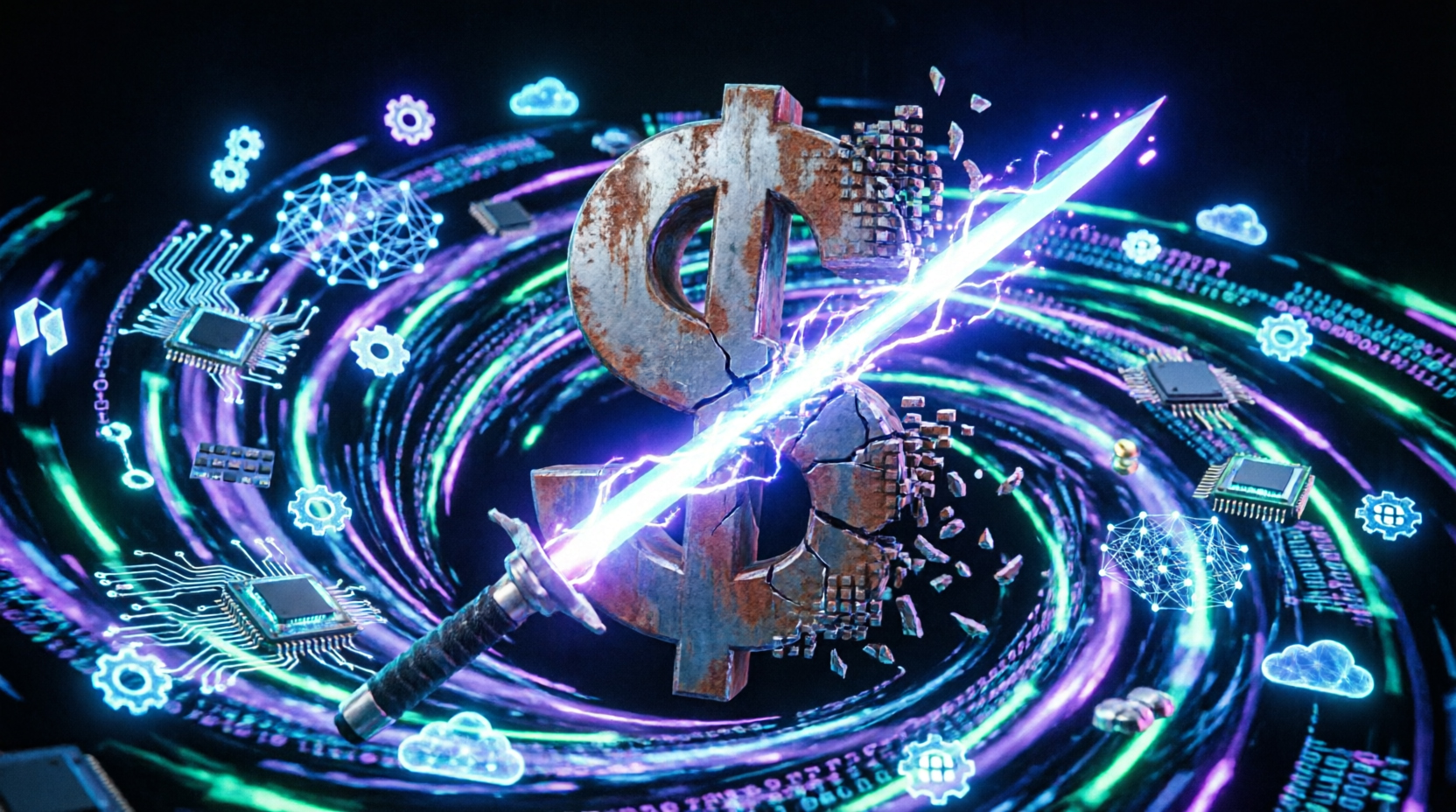
In past decades, sanctions were primarily known as instruments of economic pressure used by states against one another; tools employed to restrict trade, cut off access to financial resources, and impose economic costs to alter political behavior. However, developments in the international system in recent years indicate that the nature of sanctions is undergoing a fundamental change. Today, the objective of sanctions is no longer merely to restrict the flow of goods and money, but rather to control the flow of technology, data, knowledge, and even innovation capacities lies at the center of the sanctions strategy.
This transformation shows that sanctions have evolved from a classical economic instrument into a multidimensional mechanism in the geopolitical competition of great powers. In this framework, sanctions are no longer just a part of foreign policy, but are considered a part of the national security architecture and technological competition among states.
The Transition from Economy to Technology; the Heart of the Transformation of Sanctions
One of the most important characteristics of new sanctions is their increasing focus on the field of technology. In the past, restrictions were mainly concentrated on the export of oil, gas, industrial goods, or access to the international financial system. But today, advanced technologies such as semiconductors, artificial intelligence, big data, dual-use technologies, and advanced industrial equipment have become the main axis of sanctions.
This change indicates that major powers have concluded that controlling technology equals controlling future power. In such circumstances, restricting rivals’ access to sensitive technologies has become as important as financial sanctions. For this reason, export control policies, investment restrictions in the technology sector, and the creation of alternative supply chains have become the main instruments of geopolitical competition.
In fact, technological sanctions not only hinder the economic growth of countries but also affect their long-term development path. Unlike traditional sanctions, these types of sanctions have structural and long-term effects and can exacerbate the technological gap between countries.
Financial Sanctions; From the Dollar Monopoly to the Gradual Fragmentation of the Monetary System
Despite the transformation in the technology domain, financial sanctions remain one of the most important instruments of international pressure. The dollar-based financial system has enabled the United States to use banking networks, international settlements, and access to capital markets as instruments of foreign policy.
However, in recent years, signs of a gradual change in this structure have been observed. The increased use of national currencies in bilateral trade, the development of alternative payment mechanisms, and the efforts of some major powers to reduce dependence on the dollar indicate a movement toward a more multipolar financial system.
In this framework, although financial sanctions still appear effective, they have lost their absolute past efficiency. As the global economy becomes more diverse and polycentric, the possibility of circumventing or neutralizing financial sanctions also increases. This trend has gradually led to a redefinition of the concept of “financial power” in international politics.
Supply Chains; the New Arena of Sanctions Competition
One of the most important developments in the nature of sanctions is the focus on global supply chains. In today’s global economy, the production of a good depends on a complex network of countries, companies, and technologies. This same interdependence enables states to use sensitive points in the supply chain as leverage.
Rare earth minerals, advanced technologies, industrial equipment, and even digital data have all become parts of this chain that can be targeted by restrictive policies. Consequently, sanctions are no longer merely about cutting direct trade, but also include indirect control over production and technology flows.
This transformation has led countries to seek a rearrangement of their supply chains. Policies such as “diversification,” “reshoring,” and “supply chain security” have been formulated in this direction. The main goal of these policies is to reduce vulnerability to sanctions and increase strategic autonomy.
Circumventing sSanctions; From Tactical Response to Structural Strategy
In the face of increasing sanctions, countries have also adopted more complex strategies to circumvent or reduce their effects. These strategies are no longer merely short-term tactics, but have become part of countries’ economic and foreign policy.
The use of informal trade networks, the development of cooperation with non-Western countries, the creation of alternative financial pathways, and the utilization of new technologies are among the tools employed to reduce the impact of sanctions. In some cases, even new economic structures have been formed that operate entirely outside the orbit of the Western financial system.
This trend indicates that sanctions and counter-sanctions have become a dynamic and permanent arena. As sanctions tools become more complex, the ways to neutralize them also become more diverse. This continuous competition has transformed the nature of sanctions from a unilateral instrument into an interactive process.
Sanctions as an Instrument of Geopolitical Containment
Ultimately, it must be acknowledged that sanctions are no longer merely an instrument of economic pressure, but are considered part of the geopolitical competition among major powers. Their main goal is not only to change a country’s behavior but also to shape the behavior of the international system.
In this framework, sanctions have become an instrument for managing access to technology, controlling economic development pathways, and regulating the balance of power. This transformation indicates that sanctions are transcending their traditional function and are becoming part of the new architecture of global power.
Sanctions are undergoing a fundamental transformation. From classical financial and trade instruments, they have become complex mechanisms for technological containment, supply chain control, and the management of knowledge flows. This transformation indicates that the competition among major powers has entered a stage in which economy, technology, and security are completely intertwined.
In the new order, sanctions are no longer merely an instrument of pressure, but are part of the architecture of geopolitical competition. In response, countries are also trying to reduce the effectiveness of this instrument by developing circumvention strategies, diversification, and creating alternative networks. The result of this trend is the formation of a more complex, multi-layered, and competitive world in which sanctions are not the end of the game, but part of the game itself.







0 Comments