
Hamid Khoshayand – Expert on regional affairs
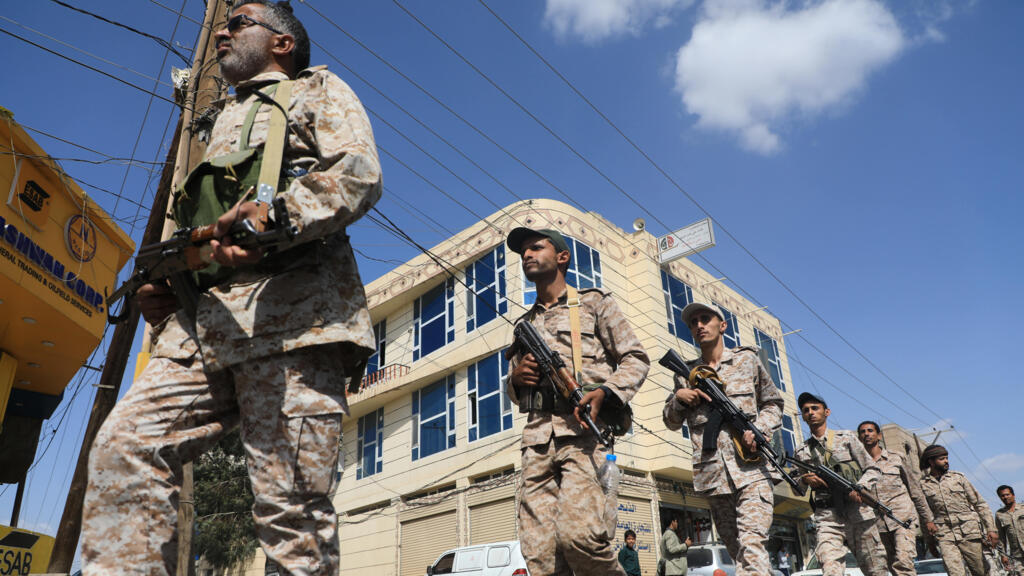
In recent weeks, Yemen’s Ansarullah forces, with rapid advances, seized control of the Mokha port and Mayyun Island, effectively dominating the Bab el-Mandeb Strait. According to published reports, the Saudi Crown Prince contacted the White House twice; first to inform about the fall of Mokha and then to pressure for US airstrikes, but Trump rejected it.
The question that arises is why America, which claims to have the world’s most powerful military, avoids direct confrontation with Yemen’s resistance. The answer must be sought in the overlap of several strategic, political, military, economic, and regional factors. Field conditions, highly complex regional developments, America’s domestic economic considerations, and the reduction of weapons stockpiles, and numerous other factors, currently do not allow Washington to enter into direct conflict with Yemen’s resistance.
Problems of Engagement on Two Fronts
The first and perhaps most important reason is the limitation of US military resources as a result of the war with Iran. In September 2026, the US-Iran conflict entered its seventh month, and the Strait of Hormuz, the vital artery for about one-fifth of the world’s oil, remains blocked or severely insecure. Washington has concentrated a large portion of its air and naval military capability in the Persian Gulf.
In such circumstances, opening a second front in the Red Sea means that America must simultaneously monitor two of the world’s energy chokepoints; a task that is practically beyond its operational and logistical capacity. Trump has explicitly declared his priority to be preserving capability to contain Iran and has not been willing to employ his limited assets in Yemen.
Domestic Political Deadlock
The second factor is the November 2026 midterm elections. Ansarullah, by controlling Bab el-Mandeb and dominating shipping in the Red Sea, has pushed global oil prices above 100 dollars per barrel, and this issue has caused a renewed increase in gasoline prices in America. This situation has created a dangerous trend for Republicans on the eve of the elections.
On one hand, if America enters the war directly, the risk of military casualties strengthens the anti-war wave domestically. On the other hand, if Ansarullah completely closes Bab el-Mandeb, about 7 percent of oil and 12 percent of global trade would be disrupted, and prices would rise further.
Trump wants to manage the situation before the elections, not reduce Republicans’ chances with a new war. He has even said he expects the war with Iran to end after the midterm elections; therefore, his political logic is based on preventing any escalation of tension before the vote. Additionally, inflation, budget deficit, public fatigue from prolonged wars, and concern about another surge in energy prices limit America’s political space for a new military adventure.
Ansarullah’s Asymmetric Superiority
The third reason is the unsuccessful experience of previous airstrikes against Ansarullah. The bombings of 2024 showed that containing Ansarullah is practically impossible. Without ground forces, whose deployment is also accompanied by great cost, consequences, and complexities, airstrikes only impose costs and do not retake lost territory.
Ansarullah has also repeatedly fired anti-ship missiles at American vessels and has been able to occupy part of the attention and resources of the US Navy. Yemen’s resistance over years of war has become an efficient asymmetric force that can engage the enemy at low cost.
The Complexity of Iran’s Support for Yemen’s Resistance
The fourth factor is the complexity of the relationship between Iran and Yemen’s resistance. Although support and backing for Ansarullah and Yemen’s resistance is among the constant strategies of the Islamic Republic of Iran, Ansarullah has its own independent objectives, priorities, and decision-making; therefore, Ansarullah cannot be considered a controlled instrument of Iran, nor can it be expected that pressure on Tehran would automatically eliminate the Ansarullah threat.
Similarly, striking Ansarullah does not necessarily change Tehran’s calculations. This asymmetry makes the equation ambiguous and high-risk for all parties. On one hand, the attention and resources of regional and international actors are dispersed at two sensitive energy chokepoints, namely Hormuz and Bab el-Mandeb, and on the other hand, no party can be certain that a military action will remain confined to that same front.
In such circumstances, America’s direct entry into conflict with Ansarullah could lead to the expansion of instability, increased global economic costs, and the opening of a new front amid Washington’s weapons and economic limitations; therefore, avoiding direct conflict reflects the field and regional complexity and the absence of guarantees for controlling its consequences.
In any case, the reality is that the overlap of asymmetric field conditions, highly complex regional developments, America’s domestic economic considerations, and the reduction of weapons stockpiles currently do not allow America to undertake direct conflict with Yemen’s resistance; therefore, Washington’s most likely path will be to continue managing the crisis through indirect means, avoiding the opening of a second front, and attempting to prevent the expansion of tension to the two vital energy straits.






0 Comments