جدیدترین مطالب

Implications of the US-Saudi Nuclear Agreement

SCFR Online – Opinion: The new US-Saudi nuclear agreement, despite legal and political ambiguities, could alter previous non-proliferation standards in West Asia and intensify nuclear competition, ushering it into a new phase.

An Analysis of Recent Turkey-Israeli Regime Tensions

SCFR Online – Opinion: Recent developments in Syria indicate an intensification of strategic rivalry between Turkey and the Israeli regime, but mutual considerations and the role of the United States have limited the likelihood of direct war.

Increasing criticism of the extensive Zionist lobby network

SCFR Online – Opinion: An examination of the mechanisms of the Israeli regime’s influence in the United States depicts a complex picture of shared interests, strategic dependencies, and the limitations of this relationship.

Realities of the Tripartite Makkah Pact

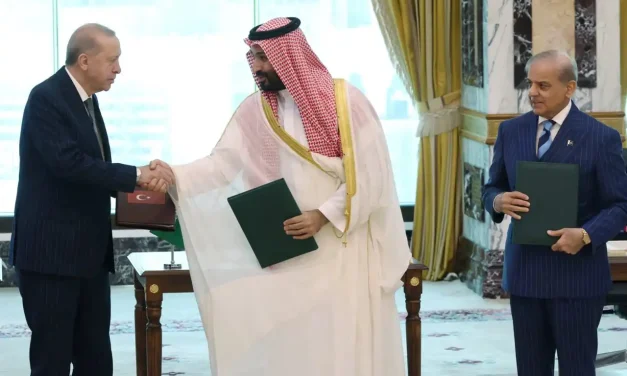
SCFR Online – Interview: The signing of the Makkah agreement between Saudi Arabia, Pakistan, and Turkey has raised questions about the future of the region’s security structure and the position of these countries in West Asian equations. Can this agreement become a genuine collective defense mechanism, or does it have more of a political and deterrent function than creating new military capacity?

Strategic Implications of the Reduction of US Weapons Stockpiles

SCFR Online – Opinion: The continuation of the US war against Iran, in addition to increasing operational costs, has called into question the actual capacity of the American arsenal to simultaneously fulfill security commitments on multiple fronts; an issue that affects deterrence, defense production capacity, and Washington’s resource prioritization.

The Formation of a New Order in Relations Between Powers

SCFR Online – Opinion: The Russia-Ukraine war and the war of the United States and the Israeli regime against Iran have been formed with different objectives and actors, but field and political developments indicate that they are not entirely separate from one another.

An Analysis of the Makkah Defense Pact

SCFR Online – Opinion: On Friday, August 7, the heads of state of three countries – Saudi Arabia, Turkey, and Pakistan – signed a text under the title “Makkah Joint Defense Agreement.”

Loading

Top News

Statement from the Strategic Council on Foreign Relations on the Martyrdom of Seyyed Hashem Safieddine

Statement from the Strategic Council on Foreign Relations on the Martyrdom of Seyyed Hashem Safieddine

Strategic Council Online – The Strategic Council on Foreign Relations has issued a statement following the martyrdom of Seyyed Hashem Safieddine, the tireless fighter and head of the executive board of Hezbollah in Lebanon. The Council extends its deepest condolences to his family, the people of Lebanon, and the broader Islamic community, emphasizing that “the nature of the true liberation movements, grounded in the unwavering will of the oppressed, ensures that the loss of their leaders does not halt them”

America’s Strategy in the First Year of the Gaza War

America’s Strategy in the First Year of the Gaza War

Strategic Council Online: An American issues expert said: The American strategy after one year of the Gaza war is to eradicate West Asia’s resistance groups, but this should be done in such a way that the United States would lose control of the situation because its interests are not in starting a full-scale war in the region.

An Analysis of America’s Approach towards Lebanon

An Analysis of America’s Approach towards Lebanon

Strategic Council Online – Opinion: Washington claims to be trying to manage tension and establish a ceasefire, especially in Lebanon, which has practically become the “driving engine” of the war. The fact that Americans talk about the reduction of tension in the official platforms and invite the parties to exercise restraint with what they do in the field and do not hesitate to provide any military, security, economic, political, and diplomatic assistance to the Israeli regime to continue the war is in the open “contradiction.”

Israeli Regime’s Goal in Committing War Crimes in South Lebanon by Attacking UNIFIL

Israeli Regime’s Goal in Committing War Crimes in South Lebanon by Attacking UNIFIL

Strategic Council Online – Interview: An international law expert said: In case of escalation of conflicts between the Israeli regime and Lebanon’s Hezbollah, there is a high probability that the countries whose nationals are among the peacekeeping forces (UNIFIL) will pressure the United Nations to remove them from the region.

Statement by Dr. Kamal Kharazi on the Motives Behind the European Union’s Support of the UAE’s Claim

Statement by Dr. Kamal Kharazi on the Motives Behind the European Union’s Support of the UAE’s Claim

Strategic Council Online: In a statement addressing the European Union’s motives for supporting the United Arab Emirates (UAE) claim over the three Iranian islands, Dr. Kamal Kharazi, President of the Strategic Council on Foreign Relations, cautioned UAE authorities to abandon their hostility towards Iran’s territorial integrity. He emphasized that they should return to dialogue instead of relying on external forces who support the UAE’s claim with economic motives. Such dialogue, based on historical facts and documented evidence, can lead to a peaceful resolution and foster stability in the region. Pursuing a path dictated by outsiders, however, will only lead to war and destruction.

Statement of the Strategic Council on Foreign Relations on the Martyrdom of Yahya Sinwar

Statement of the Strategic Council on Foreign Relations on the Martyrdom of Yahya Sinwar

Strategic Council Online: In response to the martyrdom of Yahya al-Sinwar, head of the political bureau and tireless commander of Hamas, the Strategic Council on Foreign Relations reaffirms that the axis of resistance cannot be silenced by the assassination of its leaders. Just as these leaders rose from the oppressed people of Palestine and Lebanon, others would inevitably take their place, and this popular movement endures.

Analysis of the Expansionist or Ambitious Ideas of the Zionist Regime in the Region

Analysis of the Expansionist or Ambitious Ideas of the Zionist Regime in the Region

Strategic Council Online – Interview: An expert on West Asian issues said: Bezalel Smotrich, the Minister of Finance of the Zionist regime, has repeated one old claim of the Zionists to create a land from the Nile to the Euphrates as the future plan of the Israeli regime and said: “I clearly state that we want a Jewish state that includes Jordan, Saudi Arabia, Egypt, Iraq, Syria, and Lebanon!

أحدث الوظائف

Implications of the US-Saudi Nuclear Agreement

SCFR Online – Opinion: The new US-Saudi nuclear agreement, despite legal and political ambiguities, could alter previous non-proliferation standards in West Asia and intensify nuclear competition, ushering it into a new phase.

An Analysis of Recent Turkey-Israeli Regime Tensions

SCFR Online – Opinion: Recent developments in Syria indicate an intensification of strategic rivalry between Turkey and the Israeli regime, but mutual considerations and the role of the United States have limited the likelihood of direct war.

Increasing criticism of the extensive Zionist lobby network

SCFR Online – Opinion: An examination of the mechanisms of the Israeli regime’s influence in the United States depicts a complex picture of shared interests, strategic dependencies, and the limitations of this relationship.

Realities of the Tripartite Makkah Pact

SCFR Online – Interview: The signing of the Makkah agreement between Saudi Arabia, Pakistan, and Turkey has raised questions about the future of the region’s security structure and the position of these countries in West Asian equations. Can this agreement become a genuine collective defense mechanism, or does it have more of a political and deterrent function than creating new military capacity?

Strategic Implications of the Reduction of US Weapons Stockpiles

SCFR Online – Opinion: The continuation of the US war against Iran, in addition to increasing operational costs, has called into question the actual capacity of the American arsenal to simultaneously fulfill security commitments on multiple fronts; an issue that affects deterrence, defense production capacity, and Washington’s resource prioritization.

The Formation of a New Order in Relations Between Powers

SCFR Online – Opinion: The Russia-Ukraine war and the war of the United States and the Israeli regime against Iran have been formed with different objectives and actors, but field and political developments indicate that they are not entirely separate from one another.

An Analysis of the Makkah Defense Pact

SCFR Online – Opinion: On Friday, August 7, the heads of state of three countries – Saudi Arabia, Turkey, and Pakistan – signed a text under the title “Makkah Joint Defense Agreement.”

Loading

Top News

Statement from the Strategic Council on Foreign Relations on the Martyrdom of Seyyed Hashem Safieddine

Statement from the Strategic Council on Foreign Relations on the Martyrdom of Seyyed Hashem Safieddine

Strategic Council Online – The Strategic Council on Foreign Relations has issued a statement following the martyrdom of Seyyed Hashem Safieddine, the tireless fighter and head of the executive board of Hezbollah in Lebanon. The Council extends its deepest condolences to his family, the people of Lebanon, and the broader Islamic community, emphasizing that “the nature of the true liberation movements, grounded in the unwavering will of the oppressed, ensures that the loss of their leaders does not halt them”

America’s Strategy in the First Year of the Gaza War

America’s Strategy in the First Year of the Gaza War

Strategic Council Online: An American issues expert said: The American strategy after one year of the Gaza war is to eradicate West Asia’s resistance groups, but this should be done in such a way that the United States would lose control of the situation because its interests are not in starting a full-scale war in the region.

An Analysis of America’s Approach towards Lebanon

An Analysis of America’s Approach towards Lebanon

Strategic Council Online – Opinion: Washington claims to be trying to manage tension and establish a ceasefire, especially in Lebanon, which has practically become the “driving engine” of the war. The fact that Americans talk about the reduction of tension in the official platforms and invite the parties to exercise restraint with what they do in the field and do not hesitate to provide any military, security, economic, political, and diplomatic assistance to the Israeli regime to continue the war is in the open “contradiction.”

Israeli Regime’s Goal in Committing War Crimes in South Lebanon by Attacking UNIFIL

Israeli Regime’s Goal in Committing War Crimes in South Lebanon by Attacking UNIFIL

Strategic Council Online – Interview: An international law expert said: In case of escalation of conflicts between the Israeli regime and Lebanon’s Hezbollah, there is a high probability that the countries whose nationals are among the peacekeeping forces (UNIFIL) will pressure the United Nations to remove them from the region.

Statement by Dr. Kamal Kharazi on the Motives Behind the European Union’s Support of the UAE’s Claim

Statement by Dr. Kamal Kharazi on the Motives Behind the European Union’s Support of the UAE’s Claim

Strategic Council Online: In a statement addressing the European Union’s motives for supporting the United Arab Emirates (UAE) claim over the three Iranian islands, Dr. Kamal Kharazi, President of the Strategic Council on Foreign Relations, cautioned UAE authorities to abandon their hostility towards Iran’s territorial integrity. He emphasized that they should return to dialogue instead of relying on external forces who support the UAE’s claim with economic motives. Such dialogue, based on historical facts and documented evidence, can lead to a peaceful resolution and foster stability in the region. Pursuing a path dictated by outsiders, however, will only lead to war and destruction.

Statement of the Strategic Council on Foreign Relations on the Martyrdom of Yahya Sinwar

Statement of the Strategic Council on Foreign Relations on the Martyrdom of Yahya Sinwar

Strategic Council Online: In response to the martyrdom of Yahya al-Sinwar, head of the political bureau and tireless commander of Hamas, the Strategic Council on Foreign Relations reaffirms that the axis of resistance cannot be silenced by the assassination of its leaders. Just as these leaders rose from the oppressed people of Palestine and Lebanon, others would inevitably take their place, and this popular movement endures.

Analysis of the Expansionist or Ambitious Ideas of the Zionist Regime in the Region

Analysis of the Expansionist or Ambitious Ideas of the Zionist Regime in the Region

Strategic Council Online – Interview: An expert on West Asian issues said: Bezalel Smotrich, the Minister of Finance of the Zionist regime, has repeated one old claim of the Zionists to create a land from the Nile to the Euphrates as the future plan of the Israeli regime and said: “I clearly state that we want a Jewish state that includes Jordan, Saudi Arabia, Egypt, Iraq, Syria, and Lebanon!

Top News

Statement from the Strategic Council on Foreign Relations on the Martyrdom of Seyyed Hashem Safieddine

Statement from the Strategic Council on Foreign Relations on the Martyrdom of Seyyed Hashem Safieddine

Strategic Council Online – The Strategic Council on Foreign Relations has issued a statement following the martyrdom of Seyyed Hashem Safieddine, the tireless fighter and head of the executive board of Hezbollah in Lebanon. The Council extends its deepest condolences to his family, the people of Lebanon, and the broader Islamic community, emphasizing that “the nature of the true liberation movements, grounded in the unwavering will of the oppressed, ensures that the loss of their leaders does not halt them”

America’s Strategy in the First Year of the Gaza War

America’s Strategy in the First Year of the Gaza War

Strategic Council Online: An American issues expert said: The American strategy after one year of the Gaza war is to eradicate West Asia’s resistance groups, but this should be done in such a way that the United States would lose control of the situation because its interests are not in starting a full-scale war in the region.

An Analysis of America’s Approach towards Lebanon

An Analysis of America’s Approach towards Lebanon

Strategic Council Online – Opinion: Washington claims to be trying to manage tension and establish a ceasefire, especially in Lebanon, which has practically become the “driving engine” of the war. The fact that Americans talk about the reduction of tension in the official platforms and invite the parties to exercise restraint with what they do in the field and do not hesitate to provide any military, security, economic, political, and diplomatic assistance to the Israeli regime to continue the war is in the open “contradiction.”

Israeli Regime’s Goal in Committing War Crimes in South Lebanon by Attacking UNIFIL

Israeli Regime’s Goal in Committing War Crimes in South Lebanon by Attacking UNIFIL

Strategic Council Online – Interview: An international law expert said: In case of escalation of conflicts between the Israeli regime and Lebanon’s Hezbollah, there is a high probability that the countries whose nationals are among the peacekeeping forces (UNIFIL) will pressure the United Nations to remove them from the region.

Statement by Dr. Kamal Kharazi on the Motives Behind the European Union’s Support of the UAE’s Claim

Statement by Dr. Kamal Kharazi on the Motives Behind the European Union’s Support of the UAE’s Claim

Strategic Council Online: In a statement addressing the European Union’s motives for supporting the United Arab Emirates (UAE) claim over the three Iranian islands, Dr. Kamal Kharazi, President of the Strategic Council on Foreign Relations, cautioned UAE authorities to abandon their hostility towards Iran’s territorial integrity. He emphasized that they should return to dialogue instead of relying on external forces who support the UAE’s claim with economic motives. Such dialogue, based on historical facts and documented evidence, can lead to a peaceful resolution and foster stability in the region. Pursuing a path dictated by outsiders, however, will only lead to war and destruction.

Statement of the Strategic Council on Foreign Relations on the Martyrdom of Yahya Sinwar

Statement of the Strategic Council on Foreign Relations on the Martyrdom of Yahya Sinwar

Strategic Council Online: In response to the martyrdom of Yahya al-Sinwar, head of the political bureau and tireless commander of Hamas, the Strategic Council on Foreign Relations reaffirms that the axis of resistance cannot be silenced by the assassination of its leaders. Just as these leaders rose from the oppressed people of Palestine and Lebanon, others would inevitably take their place, and this popular movement endures.

Analysis of the Expansionist or Ambitious Ideas of the Zionist Regime in the Region

Analysis of the Expansionist or Ambitious Ideas of the Zionist Regime in the Region

Strategic Council Online – Interview: An expert on West Asian issues said: Bezalel Smotrich, the Minister of Finance of the Zionist regime, has repeated one old claim of the Zionists to create a land from the Nile to the Euphrates as the future plan of the Israeli regime and said: “I clearly state that we want a Jewish state that includes Jordan, Saudi Arabia, Egypt, Iraq, Syria, and Lebanon!

LATEST CONTENT

Implications of the US-Saudi Nuclear Agreement

SCFR Online – Opinion: The new US-Saudi nuclear agreement, despite legal and political ambiguities, could alter previous non-proliferation standards in West Asia and intensify nuclear competition, ushering it into a new phase.

An Analysis of Recent Turkey-Israeli Regime Tensions

SCFR Online – Opinion: Recent developments in Syria indicate an intensification of strategic rivalry between Turkey and the Israeli regime, but mutual considerations and the role of the United States have limited the likelihood of direct war.

Increasing criticism of the extensive Zionist lobby network

SCFR Online – Opinion: An examination of the mechanisms of the Israeli regime’s influence in the United States depicts a complex picture of shared interests, strategic dependencies, and the limitations of this relationship.

Realities of the Tripartite Makkah Pact

SCFR Online – Interview: The signing of the Makkah agreement between Saudi Arabia, Pakistan, and Turkey has raised questions about the future of the region’s security structure and the position of these countries in West Asian equations. Can this agreement become a genuine collective defense mechanism, or does it have more of a political and deterrent function than creating new military capacity?

Strategic Implications of the Reduction of US Weapons Stockpiles

SCFR Online – Opinion: The continuation of the US war against Iran, in addition to increasing operational costs, has called into question the actual capacity of the American arsenal to simultaneously fulfill security commitments on multiple fronts; an issue that affects deterrence, defense production capacity, and Washington’s resource prioritization.

The Formation of a New Order in Relations Between Powers

SCFR Online – Opinion: The Russia-Ukraine war and the war of the United States and the Israeli regime against Iran have been formed with different objectives and actors, but field and political developments indicate that they are not entirely separate from one another.

An Analysis of the Makkah Defense Pact

SCFR Online – Opinion: On Friday, August 7, the heads of state of three countries – Saudi Arabia, Turkey, and Pakistan – signed a text under the title “Makkah Joint Defense Agreement.”

Loading

Top News

Statement from the Strategic Council on Foreign Relations on the Martyrdom of Seyyed Hashem Safieddine

Statement from the Strategic Council on Foreign Relations on the Martyrdom of Seyyed Hashem Safieddine

Strategic Council Online – The Strategic Council on Foreign Relations has issued a statement following the martyrdom of Seyyed Hashem Safieddine, the tireless fighter and head of the executive board of Hezbollah in Lebanon. The Council extends its deepest condolences to his family, the people of Lebanon, and the broader Islamic community, emphasizing that “the nature of the true liberation movements, grounded in the unwavering will of the oppressed, ensures that the loss of their leaders does not halt them”

America’s Strategy in the First Year of the Gaza War

America’s Strategy in the First Year of the Gaza War

Strategic Council Online: An American issues expert said: The American strategy after one year of the Gaza war is to eradicate West Asia’s resistance groups, but this should be done in such a way that the United States would lose control of the situation because its interests are not in starting a full-scale war in the region.

An Analysis of America’s Approach towards Lebanon

An Analysis of America’s Approach towards Lebanon

Strategic Council Online – Opinion: Washington claims to be trying to manage tension and establish a ceasefire, especially in Lebanon, which has practically become the “driving engine” of the war. The fact that Americans talk about the reduction of tension in the official platforms and invite the parties to exercise restraint with what they do in the field and do not hesitate to provide any military, security, economic, political, and diplomatic assistance to the Israeli regime to continue the war is in the open “contradiction.”

Israeli Regime’s Goal in Committing War Crimes in South Lebanon by Attacking UNIFIL

Israeli Regime’s Goal in Committing War Crimes in South Lebanon by Attacking UNIFIL

Strategic Council Online – Interview: An international law expert said: In case of escalation of conflicts between the Israeli regime and Lebanon’s Hezbollah, there is a high probability that the countries whose nationals are among the peacekeeping forces (UNIFIL) will pressure the United Nations to remove them from the region.

Statement by Dr. Kamal Kharazi on the Motives Behind the European Union’s Support of the UAE’s Claim

Statement by Dr. Kamal Kharazi on the Motives Behind the European Union’s Support of the UAE’s Claim

Strategic Council Online: In a statement addressing the European Union’s motives for supporting the United Arab Emirates (UAE) claim over the three Iranian islands, Dr. Kamal Kharazi, President of the Strategic Council on Foreign Relations, cautioned UAE authorities to abandon their hostility towards Iran’s territorial integrity. He emphasized that they should return to dialogue instead of relying on external forces who support the UAE’s claim with economic motives. Such dialogue, based on historical facts and documented evidence, can lead to a peaceful resolution and foster stability in the region. Pursuing a path dictated by outsiders, however, will only lead to war and destruction.

Statement of the Strategic Council on Foreign Relations on the Martyrdom of Yahya Sinwar

Statement of the Strategic Council on Foreign Relations on the Martyrdom of Yahya Sinwar

Strategic Council Online: In response to the martyrdom of Yahya al-Sinwar, head of the political bureau and tireless commander of Hamas, the Strategic Council on Foreign Relations reaffirms that the axis of resistance cannot be silenced by the assassination of its leaders. Just as these leaders rose from the oppressed people of Palestine and Lebanon, others would inevitably take their place, and this popular movement endures.

Analysis of the Expansionist or Ambitious Ideas of the Zionist Regime in the Region

Analysis of the Expansionist or Ambitious Ideas of the Zionist Regime in the Region

Strategic Council Online – Interview: An expert on West Asian issues said: Bezalel Smotrich, the Minister of Finance of the Zionist regime, has repeated one old claim of the Zionists to create a land from the Nile to the Euphrates as the future plan of the Israeli regime and said: “I clearly state that we want a Jewish state that includes Jordan, Saudi Arabia, Egypt, Iraq, Syria, and Lebanon!

ÚLTIMAS PUBLICACIONES

Implications of the US-Saudi Nuclear Agreement

SCFR Online – Opinion: The new US-Saudi nuclear agreement, despite legal and political ambiguities, could alter previous non-proliferation standards in West Asia and intensify nuclear competition, ushering it into a new phase.

An Analysis of Recent Turkey-Israeli Regime Tensions

SCFR Online – Opinion: Recent developments in Syria indicate an intensification of strategic rivalry between Turkey and the Israeli regime, but mutual considerations and the role of the United States have limited the likelihood of direct war.

Increasing criticism of the extensive Zionist lobby network

SCFR Online – Opinion: An examination of the mechanisms of the Israeli regime’s influence in the United States depicts a complex picture of shared interests, strategic dependencies, and the limitations of this relationship.

Realities of the Tripartite Makkah Pact

SCFR Online – Interview: The signing of the Makkah agreement between Saudi Arabia, Pakistan, and Turkey has raised questions about the future of the region’s security structure and the position of these countries in West Asian equations. Can this agreement become a genuine collective defense mechanism, or does it have more of a political and deterrent function than creating new military capacity?

Strategic Implications of the Reduction of US Weapons Stockpiles

SCFR Online – Opinion: The continuation of the US war against Iran, in addition to increasing operational costs, has called into question the actual capacity of the American arsenal to simultaneously fulfill security commitments on multiple fronts; an issue that affects deterrence, defense production capacity, and Washington’s resource prioritization.

The Formation of a New Order in Relations Between Powers

SCFR Online – Opinion: The Russia-Ukraine war and the war of the United States and the Israeli regime against Iran have been formed with different objectives and actors, but field and political developments indicate that they are not entirely separate from one another.

An Analysis of the Makkah Defense Pact

SCFR Online – Opinion: On Friday, August 7, the heads of state of three countries – Saudi Arabia, Turkey, and Pakistan – signed a text under the title “Makkah Joint Defense Agreement.”

Loading

Top News

Statement from the Strategic Council on Foreign Relations on the Martyrdom of Seyyed Hashem Safieddine

Statement from the Strategic Council on Foreign Relations on the Martyrdom of Seyyed Hashem Safieddine

Strategic Council Online – The Strategic Council on Foreign Relations has issued a statement following the martyrdom of Seyyed Hashem Safieddine, the tireless fighter and head of the executive board of Hezbollah in Lebanon. The Council extends its deepest condolences to his family, the people of Lebanon, and the broader Islamic community, emphasizing that “the nature of the true liberation movements, grounded in the unwavering will of the oppressed, ensures that the loss of their leaders does not halt them”

America’s Strategy in the First Year of the Gaza War

America’s Strategy in the First Year of the Gaza War

Strategic Council Online: An American issues expert said: The American strategy after one year of the Gaza war is to eradicate West Asia’s resistance groups, but this should be done in such a way that the United States would lose control of the situation because its interests are not in starting a full-scale war in the region.

An Analysis of America’s Approach towards Lebanon

An Analysis of America’s Approach towards Lebanon

Strategic Council Online – Opinion: Washington claims to be trying to manage tension and establish a ceasefire, especially in Lebanon, which has practically become the “driving engine” of the war. The fact that Americans talk about the reduction of tension in the official platforms and invite the parties to exercise restraint with what they do in the field and do not hesitate to provide any military, security, economic, political, and diplomatic assistance to the Israeli regime to continue the war is in the open “contradiction.”

Israeli Regime’s Goal in Committing War Crimes in South Lebanon by Attacking UNIFIL

Israeli Regime’s Goal in Committing War Crimes in South Lebanon by Attacking UNIFIL

Strategic Council Online – Interview: An international law expert said: In case of escalation of conflicts between the Israeli regime and Lebanon’s Hezbollah, there is a high probability that the countries whose nationals are among the peacekeeping forces (UNIFIL) will pressure the United Nations to remove them from the region.

Statement by Dr. Kamal Kharazi on the Motives Behind the European Union’s Support of the UAE’s Claim

Statement by Dr. Kamal Kharazi on the Motives Behind the European Union’s Support of the UAE’s Claim

Strategic Council Online: In a statement addressing the European Union’s motives for supporting the United Arab Emirates (UAE) claim over the three Iranian islands, Dr. Kamal Kharazi, President of the Strategic Council on Foreign Relations, cautioned UAE authorities to abandon their hostility towards Iran’s territorial integrity. He emphasized that they should return to dialogue instead of relying on external forces who support the UAE’s claim with economic motives. Such dialogue, based on historical facts and documented evidence, can lead to a peaceful resolution and foster stability in the region. Pursuing a path dictated by outsiders, however, will only lead to war and destruction.

Statement of the Strategic Council on Foreign Relations on the Martyrdom of Yahya Sinwar

Statement of the Strategic Council on Foreign Relations on the Martyrdom of Yahya Sinwar

Strategic Council Online: In response to the martyrdom of Yahya al-Sinwar, head of the political bureau and tireless commander of Hamas, the Strategic Council on Foreign Relations reaffirms that the axis of resistance cannot be silenced by the assassination of its leaders. Just as these leaders rose from the oppressed people of Palestine and Lebanon, others would inevitably take their place, and this popular movement endures.

Analysis of the Expansionist or Ambitious Ideas of the Zionist Regime in the Region

Analysis of the Expansionist or Ambitious Ideas of the Zionist Regime in the Region

Strategic Council Online – Interview: An expert on West Asian issues said: Bezalel Smotrich, the Minister of Finance of the Zionist regime, has repeated one old claim of the Zionists to create a land from the Nile to the Euphrates as the future plan of the Israeli regime and said: “I clearly state that we want a Jewish state that includes Jordan, Saudi Arabia, Egypt, Iraq, Syria, and Lebanon!

ÚLTIMAS PUBLICACIONES

Implications of the US-Saudi Nuclear Agreement

SCFR Online – Opinion: The new US-Saudi nuclear agreement, despite legal and political ambiguities, could alter previous non-proliferation standards in West Asia and intensify nuclear competition, ushering it into a new phase.

An Analysis of Recent Turkey-Israeli Regime Tensions

SCFR Online – Opinion: Recent developments in Syria indicate an intensification of strategic rivalry between Turkey and the Israeli regime, but mutual considerations and the role of the United States have limited the likelihood of direct war.

Increasing criticism of the extensive Zionist lobby network

SCFR Online – Opinion: An examination of the mechanisms of the Israeli regime’s influence in the United States depicts a complex picture of shared interests, strategic dependencies, and the limitations of this relationship.

Realities of the Tripartite Makkah Pact

SCFR Online – Interview: The signing of the Makkah agreement between Saudi Arabia, Pakistan, and Turkey has raised questions about the future of the region’s security structure and the position of these countries in West Asian equations. Can this agreement become a genuine collective defense mechanism, or does it have more of a political and deterrent function than creating new military capacity?

Strategic Implications of the Reduction of US Weapons Stockpiles

SCFR Online – Opinion: The continuation of the US war against Iran, in addition to increasing operational costs, has called into question the actual capacity of the American arsenal to simultaneously fulfill security commitments on multiple fronts; an issue that affects deterrence, defense production capacity, and Washington’s resource prioritization.

The Formation of a New Order in Relations Between Powers

SCFR Online – Opinion: The Russia-Ukraine war and the war of the United States and the Israeli regime against Iran have been formed with different objectives and actors, but field and political developments indicate that they are not entirely separate from one another.

An Analysis of the Makkah Defense Pact

SCFR Online – Opinion: On Friday, August 7, the heads of state of three countries – Saudi Arabia, Turkey, and Pakistan – signed a text under the title “Makkah Joint Defense Agreement.”

Loading

Top News

Statement from the Strategic Council on Foreign Relations on the Martyrdom of Seyyed Hashem Safieddine

Statement from the Strategic Council on Foreign Relations on the Martyrdom of Seyyed Hashem Safieddine

Strategic Council Online – The Strategic Council on Foreign Relations has issued a statement following the martyrdom of Seyyed Hashem Safieddine, the tireless fighter and head of the executive board of Hezbollah in Lebanon. The Council extends its deepest condolences to his family, the people of Lebanon, and the broader Islamic community, emphasizing that “the nature of the true liberation movements, grounded in the unwavering will of the oppressed, ensures that the loss of their leaders does not halt them”

America’s Strategy in the First Year of the Gaza War

America’s Strategy in the First Year of the Gaza War

Strategic Council Online: An American issues expert said: The American strategy after one year of the Gaza war is to eradicate West Asia’s resistance groups, but this should be done in such a way that the United States would lose control of the situation because its interests are not in starting a full-scale war in the region.

An Analysis of America’s Approach towards Lebanon

An Analysis of America’s Approach towards Lebanon

Strategic Council Online – Opinion: Washington claims to be trying to manage tension and establish a ceasefire, especially in Lebanon, which has practically become the “driving engine” of the war. The fact that Americans talk about the reduction of tension in the official platforms and invite the parties to exercise restraint with what they do in the field and do not hesitate to provide any military, security, economic, political, and diplomatic assistance to the Israeli regime to continue the war is in the open “contradiction.”

Israeli Regime’s Goal in Committing War Crimes in South Lebanon by Attacking UNIFIL

Israeli Regime’s Goal in Committing War Crimes in South Lebanon by Attacking UNIFIL

Strategic Council Online – Interview: An international law expert said: In case of escalation of conflicts between the Israeli regime and Lebanon’s Hezbollah, there is a high probability that the countries whose nationals are among the peacekeeping forces (UNIFIL) will pressure the United Nations to remove them from the region.

Statement by Dr. Kamal Kharazi on the Motives Behind the European Union’s Support of the UAE’s Claim

Statement by Dr. Kamal Kharazi on the Motives Behind the European Union’s Support of the UAE’s Claim

Strategic Council Online: In a statement addressing the European Union’s motives for supporting the United Arab Emirates (UAE) claim over the three Iranian islands, Dr. Kamal Kharazi, President of the Strategic Council on Foreign Relations, cautioned UAE authorities to abandon their hostility towards Iran’s territorial integrity. He emphasized that they should return to dialogue instead of relying on external forces who support the UAE’s claim with economic motives. Such dialogue, based on historical facts and documented evidence, can lead to a peaceful resolution and foster stability in the region. Pursuing a path dictated by outsiders, however, will only lead to war and destruction.

Statement of the Strategic Council on Foreign Relations on the Martyrdom of Yahya Sinwar

Statement of the Strategic Council on Foreign Relations on the Martyrdom of Yahya Sinwar

Strategic Council Online: In response to the martyrdom of Yahya al-Sinwar, head of the political bureau and tireless commander of Hamas, the Strategic Council on Foreign Relations reaffirms that the axis of resistance cannot be silenced by the assassination of its leaders. Just as these leaders rose from the oppressed people of Palestine and Lebanon, others would inevitably take their place, and this popular movement endures.

Analysis of the Expansionist or Ambitious Ideas of the Zionist Regime in the Region

Analysis of the Expansionist or Ambitious Ideas of the Zionist Regime in the Region

Strategic Council Online – Interview: An expert on West Asian issues said: Bezalel Smotrich, the Minister of Finance of the Zionist regime, has repeated one old claim of the Zionists to create a land from the Nile to the Euphrates as the future plan of the Israeli regime and said: “I clearly state that we want a Jewish state that includes Jordan, Saudi Arabia, Egypt, Iraq, Syria, and Lebanon!

ÚLTIMAS PUBLICACIONES

Implications of the US-Saudi Nuclear Agreement

SCFR Online – Opinion: The new US-Saudi nuclear agreement, despite legal and political ambiguities, could alter previous non-proliferation standards in West Asia and intensify nuclear competition, ushering it into a new phase.

An Analysis of Recent Turkey-Israeli Regime Tensions

SCFR Online – Opinion: Recent developments in Syria indicate an intensification of strategic rivalry between Turkey and the Israeli regime, but mutual considerations and the role of the United States have limited the likelihood of direct war.

Increasing criticism of the extensive Zionist lobby network

SCFR Online – Opinion: An examination of the mechanisms of the Israeli regime’s influence in the United States depicts a complex picture of shared interests, strategic dependencies, and the limitations of this relationship.

Realities of the Tripartite Makkah Pact

SCFR Online – Interview: The signing of the Makkah agreement between Saudi Arabia, Pakistan, and Turkey has raised questions about the future of the region’s security structure and the position of these countries in West Asian equations. Can this agreement become a genuine collective defense mechanism, or does it have more of a political and deterrent function than creating new military capacity?

Strategic Implications of the Reduction of US Weapons Stockpiles

SCFR Online – Opinion: The continuation of the US war against Iran, in addition to increasing operational costs, has called into question the actual capacity of the American arsenal to simultaneously fulfill security commitments on multiple fronts; an issue that affects deterrence, defense production capacity, and Washington’s resource prioritization.

The Formation of a New Order in Relations Between Powers

SCFR Online – Opinion: The Russia-Ukraine war and the war of the United States and the Israeli regime against Iran have been formed with different objectives and actors, but field and political developments indicate that they are not entirely separate from one another.

An Analysis of the Makkah Defense Pact

SCFR Online – Opinion: On Friday, August 7, the heads of state of three countries – Saudi Arabia, Turkey, and Pakistan – signed a text under the title “Makkah Joint Defense Agreement.”

Loading

Top News

Statement from the Strategic Council on Foreign Relations on the Martyrdom of Seyyed Hashem Safieddine

Statement from the Strategic Council on Foreign Relations on the Martyrdom of Seyyed Hashem Safieddine

Strategic Council Online – The Strategic Council on Foreign Relations has issued a statement following the martyrdom of Seyyed Hashem Safieddine, the tireless fighter and head of the executive board of Hezbollah in Lebanon. The Council extends its deepest condolences to his family, the people of Lebanon, and the broader Islamic community, emphasizing that “the nature of the true liberation movements, grounded in the unwavering will of the oppressed, ensures that the loss of their leaders does not halt them”

America’s Strategy in the First Year of the Gaza War

America’s Strategy in the First Year of the Gaza War

Strategic Council Online: An American issues expert said: The American strategy after one year of the Gaza war is to eradicate West Asia’s resistance groups, but this should be done in such a way that the United States would lose control of the situation because its interests are not in starting a full-scale war in the region.

An Analysis of America’s Approach towards Lebanon

An Analysis of America’s Approach towards Lebanon

Strategic Council Online – Opinion: Washington claims to be trying to manage tension and establish a ceasefire, especially in Lebanon, which has practically become the “driving engine” of the war. The fact that Americans talk about the reduction of tension in the official platforms and invite the parties to exercise restraint with what they do in the field and do not hesitate to provide any military, security, economic, political, and diplomatic assistance to the Israeli regime to continue the war is in the open “contradiction.”

Israeli Regime’s Goal in Committing War Crimes in South Lebanon by Attacking UNIFIL

Israeli Regime’s Goal in Committing War Crimes in South Lebanon by Attacking UNIFIL

Strategic Council Online – Interview: An international law expert said: In case of escalation of conflicts between the Israeli regime and Lebanon’s Hezbollah, there is a high probability that the countries whose nationals are among the peacekeeping forces (UNIFIL) will pressure the United Nations to remove them from the region.

Statement by Dr. Kamal Kharazi on the Motives Behind the European Union’s Support of the UAE’s Claim

Statement by Dr. Kamal Kharazi on the Motives Behind the European Union’s Support of the UAE’s Claim

Strategic Council Online: In a statement addressing the European Union’s motives for supporting the United Arab Emirates (UAE) claim over the three Iranian islands, Dr. Kamal Kharazi, President of the Strategic Council on Foreign Relations, cautioned UAE authorities to abandon their hostility towards Iran’s territorial integrity. He emphasized that they should return to dialogue instead of relying on external forces who support the UAE’s claim with economic motives. Such dialogue, based on historical facts and documented evidence, can lead to a peaceful resolution and foster stability in the region. Pursuing a path dictated by outsiders, however, will only lead to war and destruction.

Statement of the Strategic Council on Foreign Relations on the Martyrdom of Yahya Sinwar

Statement of the Strategic Council on Foreign Relations on the Martyrdom of Yahya Sinwar

Strategic Council Online: In response to the martyrdom of Yahya al-Sinwar, head of the political bureau and tireless commander of Hamas, the Strategic Council on Foreign Relations reaffirms that the axis of resistance cannot be silenced by the assassination of its leaders. Just as these leaders rose from the oppressed people of Palestine and Lebanon, others would inevitably take their place, and this popular movement endures.

Analysis of the Expansionist or Ambitious Ideas of the Zionist Regime in the Region

Analysis of the Expansionist or Ambitious Ideas of the Zionist Regime in the Region

Strategic Council Online – Interview: An expert on West Asian issues said: Bezalel Smotrich, the Minister of Finance of the Zionist regime, has repeated one old claim of the Zionists to create a land from the Nile to the Euphrates as the future plan of the Israeli regime and said: “I clearly state that we want a Jewish state that includes Jordan, Saudi Arabia, Egypt, Iraq, Syria, and Lebanon!

ÚLTIMAS PUBLICACIONES

Implications of the US-Saudi Nuclear Agreement

SCFR Online – Opinion: The new US-Saudi nuclear agreement, despite legal and political ambiguities, could alter previous non-proliferation standards in West Asia and intensify nuclear competition, ushering it into a new phase.

An Analysis of Recent Turkey-Israeli Regime Tensions

SCFR Online – Opinion: Recent developments in Syria indicate an intensification of strategic rivalry between Turkey and the Israeli regime, but mutual considerations and the role of the United States have limited the likelihood of direct war.

Increasing criticism of the extensive Zionist lobby network

SCFR Online – Opinion: An examination of the mechanisms of the Israeli regime’s influence in the United States depicts a complex picture of shared interests, strategic dependencies, and the limitations of this relationship.

Realities of the Tripartite Makkah Pact

SCFR Online – Interview: The signing of the Makkah agreement between Saudi Arabia, Pakistan, and Turkey has raised questions about the future of the region’s security structure and the position of these countries in West Asian equations. Can this agreement become a genuine collective defense mechanism, or does it have more of a political and deterrent function than creating new military capacity?

Strategic Implications of the Reduction of US Weapons Stockpiles

SCFR Online – Opinion: The continuation of the US war against Iran, in addition to increasing operational costs, has called into question the actual capacity of the American arsenal to simultaneously fulfill security commitments on multiple fronts; an issue that affects deterrence, defense production capacity, and Washington’s resource prioritization.

The Formation of a New Order in Relations Between Powers

SCFR Online – Opinion: The Russia-Ukraine war and the war of the United States and the Israeli regime against Iran have been formed with different objectives and actors, but field and political developments indicate that they are not entirely separate from one another.

An Analysis of the Makkah Defense Pact

SCFR Online – Opinion: On Friday, August 7, the heads of state of three countries – Saudi Arabia, Turkey, and Pakistan – signed a text under the title “Makkah Joint Defense Agreement.”

Loading