جدیدترین مطالب

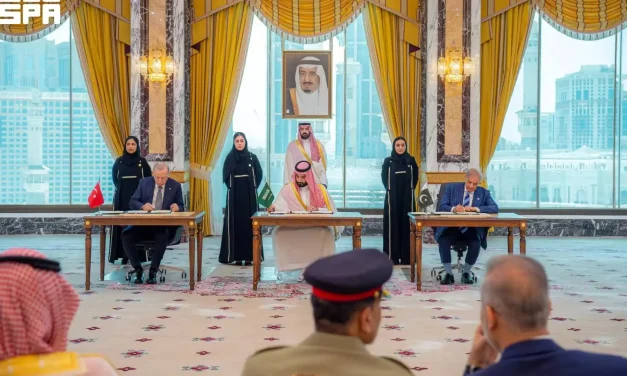
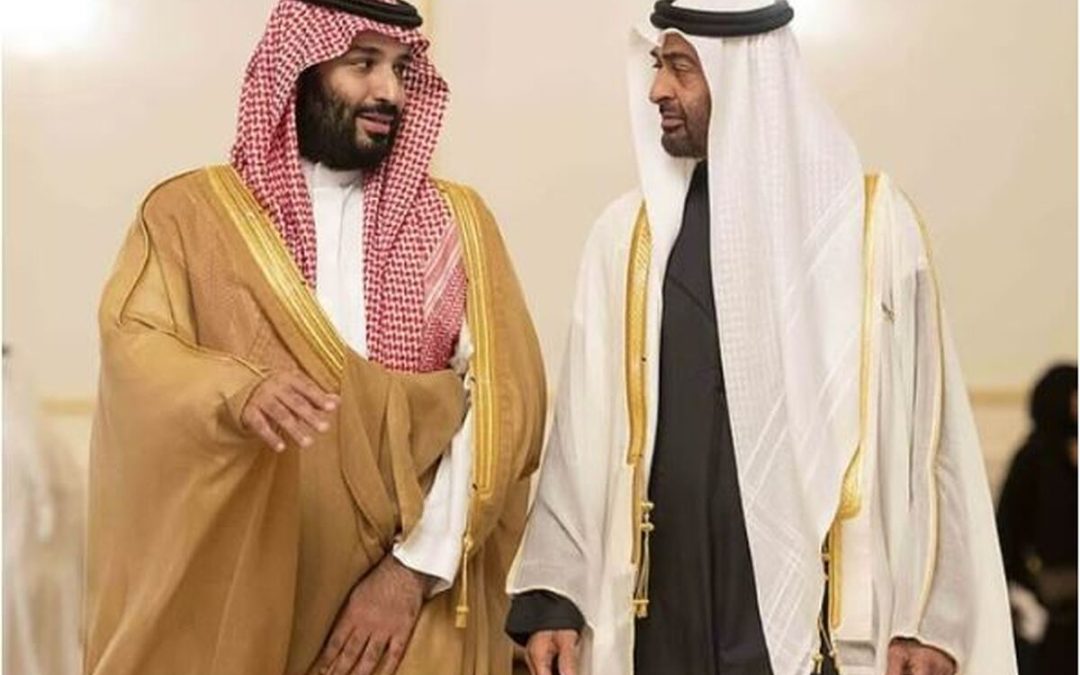
The Makkah Pact; Reasons for its Formation and Challenges Ahead

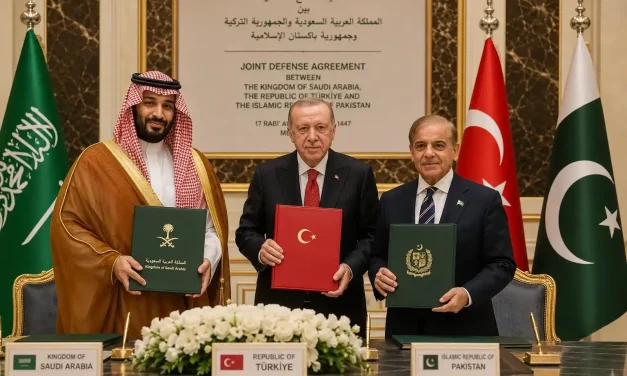
SCFR Online – Opinion: The Makkah Pact, signed between Saudi Arabia, Pakistan, and Turkey under the motto “an attack on one is an attack on all,” is viewed by some analysts less as a full-fledged military coalition and more as an attempt to reduce security dependence on an external power and to establish a regional security mechanism.

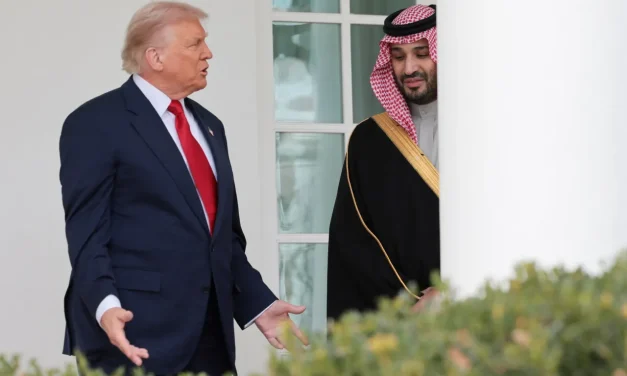
Implications of the US-Saudi Nuclear Agreement

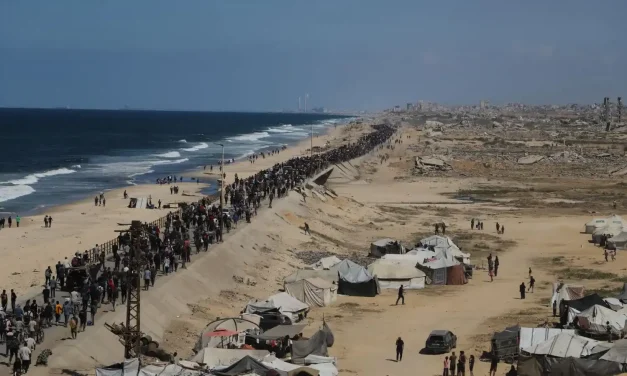
SCFR Online – Opinion: The new US-Saudi nuclear agreement, despite legal and political ambiguities, could alter previous non-proliferation standards in West Asia and intensify nuclear competition, ushering it into a new phase.

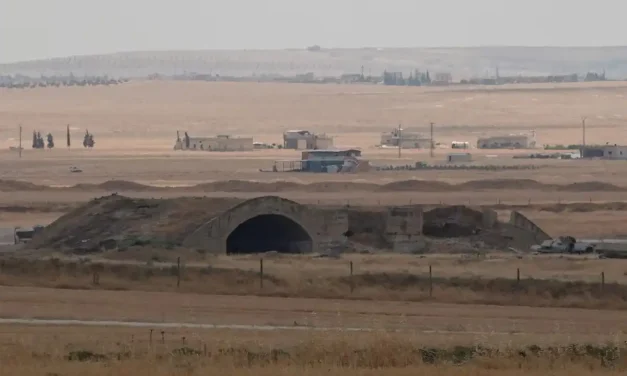
An Analysis of Recent Turkey-Israeli Regime Tensions

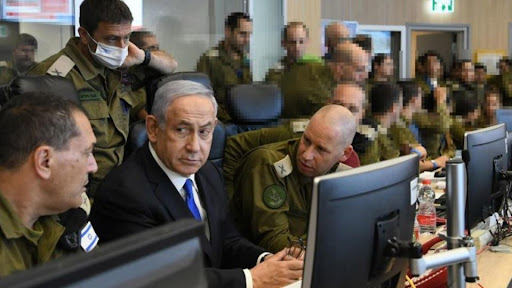
SCFR Online – Opinion: Recent developments in Syria indicate an intensification of strategic rivalry between Turkey and the Israeli regime, but mutual considerations and the role of the United States have limited the likelihood of direct war.

Increasing criticism of the extensive Zionist lobby network

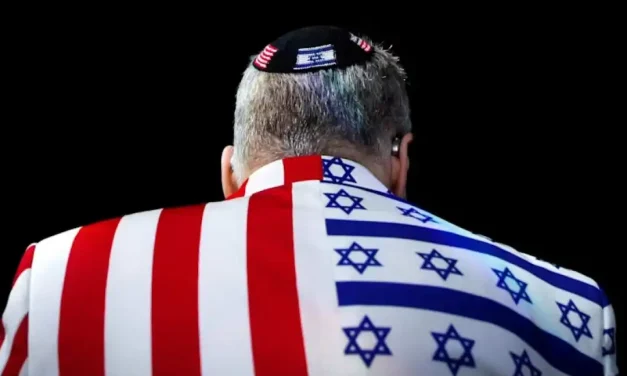
SCFR Online – Opinion: An examination of the mechanisms of the Israeli regime’s influence in the United States depicts a complex picture of shared interests, strategic dependencies, and the limitations of this relationship.

Realities of the Tripartite Makkah Pact

SCFR Online – Interview: The signing of the Makkah agreement between Saudi Arabia, Pakistan, and Turkey has raised questions about the future of the region’s security structure and the position of these countries in West Asian equations. Can this agreement become a genuine collective defense mechanism, or does it have more of a political and deterrent function than creating new military capacity?

Loading

Politics

Upcoming UNGA Session: A Test of International Will for Practical Action on Palestine

Upcoming UNGA Session: A Test of International Will for Practical Action on Palestine

Strategic Council Online – Interview: A senior analyst in West Asia affairs stated that while a wave of readiness for the official recognition of the State of Palestine by some countries is forming, the upcoming UN General Assembly session has become a decisive stage for the future of the Palestinian issue. At first glance, these moves are considered an essential step towards the potential advancement of the two-state solution and pressuring the Israeli regime to halt illegal settlements and accept the political reality of Palestinian sovereignty. Belgium’s decision to impose 12 firm sanctions against the Israeli regime and recognize the State of Palestine reflects this same perspective, which seeks to open a new political path in the face of the Gaza humanitarian crisis. However, there is another view that considers this diplomatic wave merely a symbolic reaction to public opinion pressure after nearly two years of slaughter and siege in Gaza, believing that as long as the United States stands alongside the Israeli regime, these movements will not lead to the establishment of a real Palestinian state. This viewpoint holds that the expansionist policies of Tel Aviv, the idea of Greater Israel, and the support of Western powers remain the main obstacles to any real change on the ground. Therefore, the September session of the UN General Assembly is considered an important test to gauge the seriousness of the international community in moving beyond symbolism towards practical action.

Failure of the Israeli Regime’s Assassination Policy in Containing the Resistance Front

Failure of the Israeli Regime’s Assassination Policy in Containing the Resistance Front

Strategic Council Online – Interview: A senior West Asia affairs analyst stated: By assassinating Yemeni executive officials, the Israeli regime has not only failed to achieve its military objectives, but its position has also been weakened in the diplomatic arena. In contrast, Yemen and the Resistance Front are continuing their path with greater cohesion, and the future outlook indicates that not only will their military capabilities not diminish, but their political standing will also be enhanced at the regional and global levels.

An Analysis of Baku’s Mediation between Syria and the Israeli Regime

An Analysis of Baku’s Mediation between Syria and the Israeli Regime

Strategic Council Online – Interview: An international affairs expert stated that recently, Ilham Aliyev, the President of Azerbaijan, by announcing his country’s mediating role between the Israeli regime and Syria, attempted to turn Baku into one of the active regional players. In an interview, Aliyev emphasized that the primary goal of this action is to strengthen peace and stability in the Middle East. Furthermore, Aliyev spoke of Azerbaijan’s readiness to support the restoration of relations between Turkey and the Israeli regime and elaborated on his country’s humanitarian and energy assistance to Syria, including the export of gas to Syria based on a quadrilateral agreement with Turkey and Qatar, which began on August 2nd and may increase in the future. However, regional analysts view this mediation with skepticism, seeing it as being in line with Tel Aviv’s interests and the improvement of Baku’s geopolitical standing.

An Analysis of the Recognition of the Armenian Genocide by the Zionist Regime

An Analysis of the Recognition of the Armenian Genocide by the Zionist Regime

Strategic Council Online Opinion: Despite past cooperation and extensive interactions between Ankara and Tel Aviv in various economic, commercial, political, and other domains, Benjamin Netanyahu, the Prime Minister of the Zionist regime, recently took an unprecedented step by recognizing the Armenian Genocide perpetrated by the Ottoman Empire on April 24, 1915, during World War I.

France’s Mediterranean Policy in Geopolitical Competition with Turkey

France’s Mediterranean Policy in Geopolitical Competition with Turkey

Strategic Council Online – Opinion: France’s Mediterranean policy, which clarifies the country’s genuine political orientation in the Euro-Mediterranean region, can be summarized in three primary strategies: strengthening France’s position in the European Union, maintaining its strategic position in Africa, and enhancing France’s political and military role in the Eastern Mediterranean. However, Ukraine and Armenia are also now gaining increasing importance in France’s Mediterranean policies.

Objectives and Consequences of the South Caucasus Trilateral Agreement

Objectives and Consequences of the South Caucasus Trilateral Agreement

Strategic Council Online – Interview: A senior Eurasian affairs analyst stated that the trilateral agreement between Armenia, the Republic of Azerbaijan, and the United States on August 8, 2025, known as the “Trump Route,” is a turning point in the geopolitical equations of the South Caucasus. This agreement, ostensibly signed for peace and the establishment of a transit corridor between Baku and Nakhchivan, carries serious concerns. From the perspective of analysts, this plan is not merely an economic project but part of the U.S. strategy to enhance its influence in the region and contain regional powers such as Iran and Russia.

Venezuela Crisis and US Interventionist Strategy in Latin America

Venezuela Crisis and US Interventionist Strategy in Latin America

Strategic Council Online – Interview: A senior Latin American affairs analyst stated that the Trump administration’s view of South America is fundamentally defined by ideological pessimism and hostility towards socialist systems. Just as the United States pursued a policy of regime change in Cuba, Nicaragua, and Chile over the past decades, it is following the same approach in Venezuela.

The Necessity of Utilizing the Security-Creating Capacity of the Persian Gulf Countries

The Necessity of Utilizing the Security-Creating Capacity of the Persian Gulf Countries

Strategic Council Online: Before the illegitimate attack by the Israeli and American regimes on our country’s nuclear and military centers, Iran’s diplomatic apparatus had adopted an active and multilateral regional policy. This policy aimed to gain and maintain the trust and cooperation of important and influential regional countries, including Saudi Arabia, by keeping them informed about the progress and process of nuclear negotiations with the United States. This policy has proven to be effective. Unlike in previous instances when it was highly likely that these countries would remain silent or even cooperate with attacks on our nuclear facilities, we recently observed a unanimous condemnation of the Israeli regime’s attack on our nation by the Persian Gulf Cooperation Council.

Dr. Kharrazi in a Meeting with the Secretary of the National Security Council of Armenia: Details of the Agreement Concerning the Azerbaijan-Armenia Communication Route Must Be Clarified to Precisely Determine the Conditions Governing the Route

Dr. Kharrazi in a Meeting with the Secretary of the National Security Council of Armenia: Details of the Agreement Concerning the Azerbaijan-Armenia Communication Route Must Be Clarified to Precisely Determine the Conditions Governing the Route

Mr. Armen Grigoryan, Secretary of the National Security Council of Armenia, met today with Dr. Seyed Kamal Kharrazi, President of the Strategic Council on Foreign Relations (SCFR), and discussed bilateral, regional, and international relations.

Trump and the Humiliation of Europe in the Ukraine Crisis

Trump and the Humiliation of Europe in the Ukraine Crisis

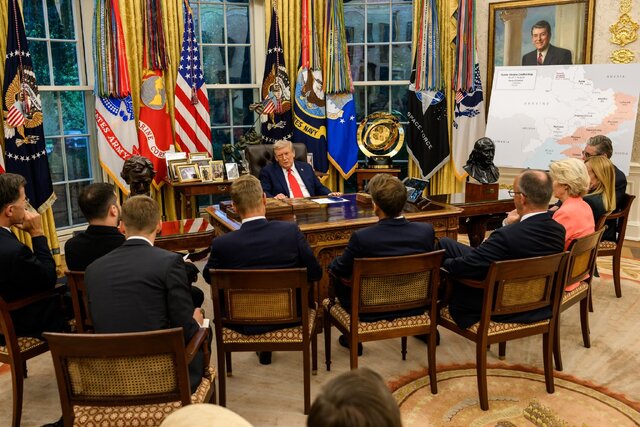
Strategic Council Online – Interview: A senior international affairs analyst stated that Trump’s deal-oriented and authoritarian diplomacy, disregarding the complexities of a multipolar world, is doomed to failure. Lasting peace in Ukraine will only be possible through cooperation with Europe and respect for international law. Donald Trump, the President of the United States, with a deal-oriented approach aimed at quickly ending the war in Ukraine, has increased pressure on Europe to accept primary responsibility for that country’s security guarantees. According to a Politico report, senior Pentagon officials, in meetings with European defense ministers, emphasized that the U.S. would play a minimal role in this regard, with the main burden falling on Europe. This approach, evident at the August 18 meeting in Washington with European leaders and Volodymyr Zelenskyy, highlights a deep rift in transatlantic relations. Europe, concerned about the diminishing U.S. commitments to NATO and the fragility of the peace, is seeking security independence and strengthening its own diplomacy.

أحدث الوظائف

The Makkah Pact; Reasons for its Formation and Challenges Ahead

SCFR Online – Opinion: The Makkah Pact, signed between Saudi Arabia, Pakistan, and Turkey under the motto “an attack on one is an attack on all,” is viewed by some analysts less as a full-fledged military coalition and more as an attempt to reduce security dependence on an external power and to establish a regional security mechanism.

Implications of the US-Saudi Nuclear Agreement

SCFR Online – Opinion: The new US-Saudi nuclear agreement, despite legal and political ambiguities, could alter previous non-proliferation standards in West Asia and intensify nuclear competition, ushering it into a new phase.

An Analysis of Recent Turkey-Israeli Regime Tensions

SCFR Online – Opinion: Recent developments in Syria indicate an intensification of strategic rivalry between Turkey and the Israeli regime, but mutual considerations and the role of the United States have limited the likelihood of direct war.

Increasing criticism of the extensive Zionist lobby network

SCFR Online – Opinion: An examination of the mechanisms of the Israeli regime’s influence in the United States depicts a complex picture of shared interests, strategic dependencies, and the limitations of this relationship.

Realities of the Tripartite Makkah Pact

SCFR Online – Interview: The signing of the Makkah agreement between Saudi Arabia, Pakistan, and Turkey has raised questions about the future of the region’s security structure and the position of these countries in West Asian equations. Can this agreement become a genuine collective defense mechanism, or does it have more of a political and deterrent function than creating new military capacity?

Loading

Politics

Upcoming UNGA Session: A Test of International Will for Practical Action on Palestine

Upcoming UNGA Session: A Test of International Will for Practical Action on Palestine

Strategic Council Online – Interview: A senior analyst in West Asia affairs stated that while a wave of readiness for the official recognition of the State of Palestine by some countries is forming, the upcoming UN General Assembly session has become a decisive stage for the future of the Palestinian issue. At first glance, these moves are considered an essential step towards the potential advancement of the two-state solution and pressuring the Israeli regime to halt illegal settlements and accept the political reality of Palestinian sovereignty. Belgium’s decision to impose 12 firm sanctions against the Israeli regime and recognize the State of Palestine reflects this same perspective, which seeks to open a new political path in the face of the Gaza humanitarian crisis. However, there is another view that considers this diplomatic wave merely a symbolic reaction to public opinion pressure after nearly two years of slaughter and siege in Gaza, believing that as long as the United States stands alongside the Israeli regime, these movements will not lead to the establishment of a real Palestinian state. This viewpoint holds that the expansionist policies of Tel Aviv, the idea of Greater Israel, and the support of Western powers remain the main obstacles to any real change on the ground. Therefore, the September session of the UN General Assembly is considered an important test to gauge the seriousness of the international community in moving beyond symbolism towards practical action.

Failure of the Israeli Regime’s Assassination Policy in Containing the Resistance Front

Failure of the Israeli Regime’s Assassination Policy in Containing the Resistance Front

Strategic Council Online – Interview: A senior West Asia affairs analyst stated: By assassinating Yemeni executive officials, the Israeli regime has not only failed to achieve its military objectives, but its position has also been weakened in the diplomatic arena. In contrast, Yemen and the Resistance Front are continuing their path with greater cohesion, and the future outlook indicates that not only will their military capabilities not diminish, but their political standing will also be enhanced at the regional and global levels.

An Analysis of Baku’s Mediation between Syria and the Israeli Regime

An Analysis of Baku’s Mediation between Syria and the Israeli Regime

Strategic Council Online – Interview: An international affairs expert stated that recently, Ilham Aliyev, the President of Azerbaijan, by announcing his country’s mediating role between the Israeli regime and Syria, attempted to turn Baku into one of the active regional players. In an interview, Aliyev emphasized that the primary goal of this action is to strengthen peace and stability in the Middle East. Furthermore, Aliyev spoke of Azerbaijan’s readiness to support the restoration of relations between Turkey and the Israeli regime and elaborated on his country’s humanitarian and energy assistance to Syria, including the export of gas to Syria based on a quadrilateral agreement with Turkey and Qatar, which began on August 2nd and may increase in the future. However, regional analysts view this mediation with skepticism, seeing it as being in line with Tel Aviv’s interests and the improvement of Baku’s geopolitical standing.

An Analysis of the Recognition of the Armenian Genocide by the Zionist Regime

An Analysis of the Recognition of the Armenian Genocide by the Zionist Regime

Strategic Council Online Opinion: Despite past cooperation and extensive interactions between Ankara and Tel Aviv in various economic, commercial, political, and other domains, Benjamin Netanyahu, the Prime Minister of the Zionist regime, recently took an unprecedented step by recognizing the Armenian Genocide perpetrated by the Ottoman Empire on April 24, 1915, during World War I.

France’s Mediterranean Policy in Geopolitical Competition with Turkey

France’s Mediterranean Policy in Geopolitical Competition with Turkey

Strategic Council Online – Opinion: France’s Mediterranean policy, which clarifies the country’s genuine political orientation in the Euro-Mediterranean region, can be summarized in three primary strategies: strengthening France’s position in the European Union, maintaining its strategic position in Africa, and enhancing France’s political and military role in the Eastern Mediterranean. However, Ukraine and Armenia are also now gaining increasing importance in France’s Mediterranean policies.

Objectives and Consequences of the South Caucasus Trilateral Agreement

Objectives and Consequences of the South Caucasus Trilateral Agreement

Strategic Council Online – Interview: A senior Eurasian affairs analyst stated that the trilateral agreement between Armenia, the Republic of Azerbaijan, and the United States on August 8, 2025, known as the “Trump Route,” is a turning point in the geopolitical equations of the South Caucasus. This agreement, ostensibly signed for peace and the establishment of a transit corridor between Baku and Nakhchivan, carries serious concerns. From the perspective of analysts, this plan is not merely an economic project but part of the U.S. strategy to enhance its influence in the region and contain regional powers such as Iran and Russia.

Venezuela Crisis and US Interventionist Strategy in Latin America

Venezuela Crisis and US Interventionist Strategy in Latin America

Strategic Council Online – Interview: A senior Latin American affairs analyst stated that the Trump administration’s view of South America is fundamentally defined by ideological pessimism and hostility towards socialist systems. Just as the United States pursued a policy of regime change in Cuba, Nicaragua, and Chile over the past decades, it is following the same approach in Venezuela.

The Necessity of Utilizing the Security-Creating Capacity of the Persian Gulf Countries

The Necessity of Utilizing the Security-Creating Capacity of the Persian Gulf Countries

Strategic Council Online: Before the illegitimate attack by the Israeli and American regimes on our country’s nuclear and military centers, Iran’s diplomatic apparatus had adopted an active and multilateral regional policy. This policy aimed to gain and maintain the trust and cooperation of important and influential regional countries, including Saudi Arabia, by keeping them informed about the progress and process of nuclear negotiations with the United States. This policy has proven to be effective. Unlike in previous instances when it was highly likely that these countries would remain silent or even cooperate with attacks on our nuclear facilities, we recently observed a unanimous condemnation of the Israeli regime’s attack on our nation by the Persian Gulf Cooperation Council.

Dr. Kharrazi in a Meeting with the Secretary of the National Security Council of Armenia: Details of the Agreement Concerning the Azerbaijan-Armenia Communication Route Must Be Clarified to Precisely Determine the Conditions Governing the Route

Dr. Kharrazi in a Meeting with the Secretary of the National Security Council of Armenia: Details of the Agreement Concerning the Azerbaijan-Armenia Communication Route Must Be Clarified to Precisely Determine the Conditions Governing the Route

Mr. Armen Grigoryan, Secretary of the National Security Council of Armenia, met today with Dr. Seyed Kamal Kharrazi, President of the Strategic Council on Foreign Relations (SCFR), and discussed bilateral, regional, and international relations.

Trump and the Humiliation of Europe in the Ukraine Crisis

Trump and the Humiliation of Europe in the Ukraine Crisis

Strategic Council Online – Interview: A senior international affairs analyst stated that Trump’s deal-oriented and authoritarian diplomacy, disregarding the complexities of a multipolar world, is doomed to failure. Lasting peace in Ukraine will only be possible through cooperation with Europe and respect for international law. Donald Trump, the President of the United States, with a deal-oriented approach aimed at quickly ending the war in Ukraine, has increased pressure on Europe to accept primary responsibility for that country’s security guarantees. According to a Politico report, senior Pentagon officials, in meetings with European defense ministers, emphasized that the U.S. would play a minimal role in this regard, with the main burden falling on Europe. This approach, evident at the August 18 meeting in Washington with European leaders and Volodymyr Zelenskyy, highlights a deep rift in transatlantic relations. Europe, concerned about the diminishing U.S. commitments to NATO and the fragility of the peace, is seeking security independence and strengthening its own diplomacy.

Politics

Upcoming UNGA Session: A Test of International Will for Practical Action on Palestine

Upcoming UNGA Session: A Test of International Will for Practical Action on Palestine

Strategic Council Online – Interview: A senior analyst in West Asia affairs stated that while a wave of readiness for the official recognition of the State of Palestine by some countries is forming, the upcoming UN General Assembly session has become a decisive stage for the future of the Palestinian issue. At first glance, these moves are considered an essential step towards the potential advancement of the two-state solution and pressuring the Israeli regime to halt illegal settlements and accept the political reality of Palestinian sovereignty. Belgium’s decision to impose 12 firm sanctions against the Israeli regime and recognize the State of Palestine reflects this same perspective, which seeks to open a new political path in the face of the Gaza humanitarian crisis. However, there is another view that considers this diplomatic wave merely a symbolic reaction to public opinion pressure after nearly two years of slaughter and siege in Gaza, believing that as long as the United States stands alongside the Israeli regime, these movements will not lead to the establishment of a real Palestinian state. This viewpoint holds that the expansionist policies of Tel Aviv, the idea of Greater Israel, and the support of Western powers remain the main obstacles to any real change on the ground. Therefore, the September session of the UN General Assembly is considered an important test to gauge the seriousness of the international community in moving beyond symbolism towards practical action.

Failure of the Israeli Regime’s Assassination Policy in Containing the Resistance Front

Failure of the Israeli Regime’s Assassination Policy in Containing the Resistance Front

Strategic Council Online – Interview: A senior West Asia affairs analyst stated: By assassinating Yemeni executive officials, the Israeli regime has not only failed to achieve its military objectives, but its position has also been weakened in the diplomatic arena. In contrast, Yemen and the Resistance Front are continuing their path with greater cohesion, and the future outlook indicates that not only will their military capabilities not diminish, but their political standing will also be enhanced at the regional and global levels.

An Analysis of Baku’s Mediation between Syria and the Israeli Regime

An Analysis of Baku’s Mediation between Syria and the Israeli Regime

Strategic Council Online – Interview: An international affairs expert stated that recently, Ilham Aliyev, the President of Azerbaijan, by announcing his country’s mediating role between the Israeli regime and Syria, attempted to turn Baku into one of the active regional players. In an interview, Aliyev emphasized that the primary goal of this action is to strengthen peace and stability in the Middle East. Furthermore, Aliyev spoke of Azerbaijan’s readiness to support the restoration of relations between Turkey and the Israeli regime and elaborated on his country’s humanitarian and energy assistance to Syria, including the export of gas to Syria based on a quadrilateral agreement with Turkey and Qatar, which began on August 2nd and may increase in the future. However, regional analysts view this mediation with skepticism, seeing it as being in line with Tel Aviv’s interests and the improvement of Baku’s geopolitical standing.

An Analysis of the Recognition of the Armenian Genocide by the Zionist Regime

An Analysis of the Recognition of the Armenian Genocide by the Zionist Regime

Strategic Council Online Opinion: Despite past cooperation and extensive interactions between Ankara and Tel Aviv in various economic, commercial, political, and other domains, Benjamin Netanyahu, the Prime Minister of the Zionist regime, recently took an unprecedented step by recognizing the Armenian Genocide perpetrated by the Ottoman Empire on April 24, 1915, during World War I.

France’s Mediterranean Policy in Geopolitical Competition with Turkey

France’s Mediterranean Policy in Geopolitical Competition with Turkey

Strategic Council Online – Opinion: France’s Mediterranean policy, which clarifies the country’s genuine political orientation in the Euro-Mediterranean region, can be summarized in three primary strategies: strengthening France’s position in the European Union, maintaining its strategic position in Africa, and enhancing France’s political and military role in the Eastern Mediterranean. However, Ukraine and Armenia are also now gaining increasing importance in France’s Mediterranean policies.

Objectives and Consequences of the South Caucasus Trilateral Agreement

Objectives and Consequences of the South Caucasus Trilateral Agreement

Strategic Council Online – Interview: A senior Eurasian affairs analyst stated that the trilateral agreement between Armenia, the Republic of Azerbaijan, and the United States on August 8, 2025, known as the “Trump Route,” is a turning point in the geopolitical equations of the South Caucasus. This agreement, ostensibly signed for peace and the establishment of a transit corridor between Baku and Nakhchivan, carries serious concerns. From the perspective of analysts, this plan is not merely an economic project but part of the U.S. strategy to enhance its influence in the region and contain regional powers such as Iran and Russia.

Venezuela Crisis and US Interventionist Strategy in Latin America

Venezuela Crisis and US Interventionist Strategy in Latin America

Strategic Council Online – Interview: A senior Latin American affairs analyst stated that the Trump administration’s view of South America is fundamentally defined by ideological pessimism and hostility towards socialist systems. Just as the United States pursued a policy of regime change in Cuba, Nicaragua, and Chile over the past decades, it is following the same approach in Venezuela.

The Necessity of Utilizing the Security-Creating Capacity of the Persian Gulf Countries

The Necessity of Utilizing the Security-Creating Capacity of the Persian Gulf Countries

Strategic Council Online: Before the illegitimate attack by the Israeli and American regimes on our country’s nuclear and military centers, Iran’s diplomatic apparatus had adopted an active and multilateral regional policy. This policy aimed to gain and maintain the trust and cooperation of important and influential regional countries, including Saudi Arabia, by keeping them informed about the progress and process of nuclear negotiations with the United States. This policy has proven to be effective. Unlike in previous instances when it was highly likely that these countries would remain silent or even cooperate with attacks on our nuclear facilities, we recently observed a unanimous condemnation of the Israeli regime’s attack on our nation by the Persian Gulf Cooperation Council.

Dr. Kharrazi in a Meeting with the Secretary of the National Security Council of Armenia: Details of the Agreement Concerning the Azerbaijan-Armenia Communication Route Must Be Clarified to Precisely Determine the Conditions Governing the Route

Dr. Kharrazi in a Meeting with the Secretary of the National Security Council of Armenia: Details of the Agreement Concerning the Azerbaijan-Armenia Communication Route Must Be Clarified to Precisely Determine the Conditions Governing the Route

Mr. Armen Grigoryan, Secretary of the National Security Council of Armenia, met today with Dr. Seyed Kamal Kharrazi, President of the Strategic Council on Foreign Relations (SCFR), and discussed bilateral, regional, and international relations.

Trump and the Humiliation of Europe in the Ukraine Crisis

Trump and the Humiliation of Europe in the Ukraine Crisis

Strategic Council Online – Interview: A senior international affairs analyst stated that Trump’s deal-oriented and authoritarian diplomacy, disregarding the complexities of a multipolar world, is doomed to failure. Lasting peace in Ukraine will only be possible through cooperation with Europe and respect for international law. Donald Trump, the President of the United States, with a deal-oriented approach aimed at quickly ending the war in Ukraine, has increased pressure on Europe to accept primary responsibility for that country’s security guarantees. According to a Politico report, senior Pentagon officials, in meetings with European defense ministers, emphasized that the U.S. would play a minimal role in this regard, with the main burden falling on Europe. This approach, evident at the August 18 meeting in Washington with European leaders and Volodymyr Zelenskyy, highlights a deep rift in transatlantic relations. Europe, concerned about the diminishing U.S. commitments to NATO and the fragility of the peace, is seeking security independence and strengthening its own diplomacy.

LATEST CONTENT

The Makkah Pact; Reasons for its Formation and Challenges Ahead

SCFR Online – Opinion: The Makkah Pact, signed between Saudi Arabia, Pakistan, and Turkey under the motto “an attack on one is an attack on all,” is viewed by some analysts less as a full-fledged military coalition and more as an attempt to reduce security dependence on an external power and to establish a regional security mechanism.

Implications of the US-Saudi Nuclear Agreement

SCFR Online – Opinion: The new US-Saudi nuclear agreement, despite legal and political ambiguities, could alter previous non-proliferation standards in West Asia and intensify nuclear competition, ushering it into a new phase.

An Analysis of Recent Turkey-Israeli Regime Tensions

SCFR Online – Opinion: Recent developments in Syria indicate an intensification of strategic rivalry between Turkey and the Israeli regime, but mutual considerations and the role of the United States have limited the likelihood of direct war.

Increasing criticism of the extensive Zionist lobby network

SCFR Online – Opinion: An examination of the mechanisms of the Israeli regime’s influence in the United States depicts a complex picture of shared interests, strategic dependencies, and the limitations of this relationship.

Realities of the Tripartite Makkah Pact

SCFR Online – Interview: The signing of the Makkah agreement between Saudi Arabia, Pakistan, and Turkey has raised questions about the future of the region’s security structure and the position of these countries in West Asian equations. Can this agreement become a genuine collective defense mechanism, or does it have more of a political and deterrent function than creating new military capacity?

Loading

Politics

Upcoming UNGA Session: A Test of International Will for Practical Action on Palestine

Upcoming UNGA Session: A Test of International Will for Practical Action on Palestine

Strategic Council Online – Interview: A senior analyst in West Asia affairs stated that while a wave of readiness for the official recognition of the State of Palestine by some countries is forming, the upcoming UN General Assembly session has become a decisive stage for the future of the Palestinian issue. At first glance, these moves are considered an essential step towards the potential advancement of the two-state solution and pressuring the Israeli regime to halt illegal settlements and accept the political reality of Palestinian sovereignty. Belgium’s decision to impose 12 firm sanctions against the Israeli regime and recognize the State of Palestine reflects this same perspective, which seeks to open a new political path in the face of the Gaza humanitarian crisis. However, there is another view that considers this diplomatic wave merely a symbolic reaction to public opinion pressure after nearly two years of slaughter and siege in Gaza, believing that as long as the United States stands alongside the Israeli regime, these movements will not lead to the establishment of a real Palestinian state. This viewpoint holds that the expansionist policies of Tel Aviv, the idea of Greater Israel, and the support of Western powers remain the main obstacles to any real change on the ground. Therefore, the September session of the UN General Assembly is considered an important test to gauge the seriousness of the international community in moving beyond symbolism towards practical action.

Failure of the Israeli Regime’s Assassination Policy in Containing the Resistance Front

Failure of the Israeli Regime’s Assassination Policy in Containing the Resistance Front

Strategic Council Online – Interview: A senior West Asia affairs analyst stated: By assassinating Yemeni executive officials, the Israeli regime has not only failed to achieve its military objectives, but its position has also been weakened in the diplomatic arena. In contrast, Yemen and the Resistance Front are continuing their path with greater cohesion, and the future outlook indicates that not only will their military capabilities not diminish, but their political standing will also be enhanced at the regional and global levels.

An Analysis of Baku’s Mediation between Syria and the Israeli Regime

An Analysis of Baku’s Mediation between Syria and the Israeli Regime

Strategic Council Online – Interview: An international affairs expert stated that recently, Ilham Aliyev, the President of Azerbaijan, by announcing his country’s mediating role between the Israeli regime and Syria, attempted to turn Baku into one of the active regional players. In an interview, Aliyev emphasized that the primary goal of this action is to strengthen peace and stability in the Middle East. Furthermore, Aliyev spoke of Azerbaijan’s readiness to support the restoration of relations between Turkey and the Israeli regime and elaborated on his country’s humanitarian and energy assistance to Syria, including the export of gas to Syria based on a quadrilateral agreement with Turkey and Qatar, which began on August 2nd and may increase in the future. However, regional analysts view this mediation with skepticism, seeing it as being in line with Tel Aviv’s interests and the improvement of Baku’s geopolitical standing.

An Analysis of the Recognition of the Armenian Genocide by the Zionist Regime

An Analysis of the Recognition of the Armenian Genocide by the Zionist Regime

Strategic Council Online Opinion: Despite past cooperation and extensive interactions between Ankara and Tel Aviv in various economic, commercial, political, and other domains, Benjamin Netanyahu, the Prime Minister of the Zionist regime, recently took an unprecedented step by recognizing the Armenian Genocide perpetrated by the Ottoman Empire on April 24, 1915, during World War I.

France’s Mediterranean Policy in Geopolitical Competition with Turkey

France’s Mediterranean Policy in Geopolitical Competition with Turkey

Strategic Council Online – Opinion: France’s Mediterranean policy, which clarifies the country’s genuine political orientation in the Euro-Mediterranean region, can be summarized in three primary strategies: strengthening France’s position in the European Union, maintaining its strategic position in Africa, and enhancing France’s political and military role in the Eastern Mediterranean. However, Ukraine and Armenia are also now gaining increasing importance in France’s Mediterranean policies.

Objectives and Consequences of the South Caucasus Trilateral Agreement

Objectives and Consequences of the South Caucasus Trilateral Agreement

Strategic Council Online – Interview: A senior Eurasian affairs analyst stated that the trilateral agreement between Armenia, the Republic of Azerbaijan, and the United States on August 8, 2025, known as the “Trump Route,” is a turning point in the geopolitical equations of the South Caucasus. This agreement, ostensibly signed for peace and the establishment of a transit corridor between Baku and Nakhchivan, carries serious concerns. From the perspective of analysts, this plan is not merely an economic project but part of the U.S. strategy to enhance its influence in the region and contain regional powers such as Iran and Russia.

Venezuela Crisis and US Interventionist Strategy in Latin America

Venezuela Crisis and US Interventionist Strategy in Latin America

Strategic Council Online – Interview: A senior Latin American affairs analyst stated that the Trump administration’s view of South America is fundamentally defined by ideological pessimism and hostility towards socialist systems. Just as the United States pursued a policy of regime change in Cuba, Nicaragua, and Chile over the past decades, it is following the same approach in Venezuela.

The Necessity of Utilizing the Security-Creating Capacity of the Persian Gulf Countries

The Necessity of Utilizing the Security-Creating Capacity of the Persian Gulf Countries

Strategic Council Online: Before the illegitimate attack by the Israeli and American regimes on our country’s nuclear and military centers, Iran’s diplomatic apparatus had adopted an active and multilateral regional policy. This policy aimed to gain and maintain the trust and cooperation of important and influential regional countries, including Saudi Arabia, by keeping them informed about the progress and process of nuclear negotiations with the United States. This policy has proven to be effective. Unlike in previous instances when it was highly likely that these countries would remain silent or even cooperate with attacks on our nuclear facilities, we recently observed a unanimous condemnation of the Israeli regime’s attack on our nation by the Persian Gulf Cooperation Council.

Dr. Kharrazi in a Meeting with the Secretary of the National Security Council of Armenia: Details of the Agreement Concerning the Azerbaijan-Armenia Communication Route Must Be Clarified to Precisely Determine the Conditions Governing the Route

Dr. Kharrazi in a Meeting with the Secretary of the National Security Council of Armenia: Details of the Agreement Concerning the Azerbaijan-Armenia Communication Route Must Be Clarified to Precisely Determine the Conditions Governing the Route

Mr. Armen Grigoryan, Secretary of the National Security Council of Armenia, met today with Dr. Seyed Kamal Kharrazi, President of the Strategic Council on Foreign Relations (SCFR), and discussed bilateral, regional, and international relations.

Trump and the Humiliation of Europe in the Ukraine Crisis

Trump and the Humiliation of Europe in the Ukraine Crisis

Strategic Council Online – Interview: A senior international affairs analyst stated that Trump’s deal-oriented and authoritarian diplomacy, disregarding the complexities of a multipolar world, is doomed to failure. Lasting peace in Ukraine will only be possible through cooperation with Europe and respect for international law. Donald Trump, the President of the United States, with a deal-oriented approach aimed at quickly ending the war in Ukraine, has increased pressure on Europe to accept primary responsibility for that country’s security guarantees. According to a Politico report, senior Pentagon officials, in meetings with European defense ministers, emphasized that the U.S. would play a minimal role in this regard, with the main burden falling on Europe. This approach, evident at the August 18 meeting in Washington with European leaders and Volodymyr Zelenskyy, highlights a deep rift in transatlantic relations. Europe, concerned about the diminishing U.S. commitments to NATO and the fragility of the peace, is seeking security independence and strengthening its own diplomacy.

ÚLTIMAS PUBLICACIONES

The Makkah Pact; Reasons for its Formation and Challenges Ahead

SCFR Online – Opinion: The Makkah Pact, signed between Saudi Arabia, Pakistan, and Turkey under the motto “an attack on one is an attack on all,” is viewed by some analysts less as a full-fledged military coalition and more as an attempt to reduce security dependence on an external power and to establish a regional security mechanism.

Implications of the US-Saudi Nuclear Agreement

SCFR Online – Opinion: The new US-Saudi nuclear agreement, despite legal and political ambiguities, could alter previous non-proliferation standards in West Asia and intensify nuclear competition, ushering it into a new phase.

An Analysis of Recent Turkey-Israeli Regime Tensions

SCFR Online – Opinion: Recent developments in Syria indicate an intensification of strategic rivalry between Turkey and the Israeli regime, but mutual considerations and the role of the United States have limited the likelihood of direct war.

Increasing criticism of the extensive Zionist lobby network

SCFR Online – Opinion: An examination of the mechanisms of the Israeli regime’s influence in the United States depicts a complex picture of shared interests, strategic dependencies, and the limitations of this relationship.

Realities of the Tripartite Makkah Pact

SCFR Online – Interview: The signing of the Makkah agreement between Saudi Arabia, Pakistan, and Turkey has raised questions about the future of the region’s security structure and the position of these countries in West Asian equations. Can this agreement become a genuine collective defense mechanism, or does it have more of a political and deterrent function than creating new military capacity?

Loading

Politics

Upcoming UNGA Session: A Test of International Will for Practical Action on Palestine

Upcoming UNGA Session: A Test of International Will for Practical Action on Palestine

Strategic Council Online – Interview: A senior analyst in West Asia affairs stated that while a wave of readiness for the official recognition of the State of Palestine by some countries is forming, the upcoming UN General Assembly session has become a decisive stage for the future of the Palestinian issue. At first glance, these moves are considered an essential step towards the potential advancement of the two-state solution and pressuring the Israeli regime to halt illegal settlements and accept the political reality of Palestinian sovereignty. Belgium’s decision to impose 12 firm sanctions against the Israeli regime and recognize the State of Palestine reflects this same perspective, which seeks to open a new political path in the face of the Gaza humanitarian crisis. However, there is another view that considers this diplomatic wave merely a symbolic reaction to public opinion pressure after nearly two years of slaughter and siege in Gaza, believing that as long as the United States stands alongside the Israeli regime, these movements will not lead to the establishment of a real Palestinian state. This viewpoint holds that the expansionist policies of Tel Aviv, the idea of Greater Israel, and the support of Western powers remain the main obstacles to any real change on the ground. Therefore, the September session of the UN General Assembly is considered an important test to gauge the seriousness of the international community in moving beyond symbolism towards practical action.

Failure of the Israeli Regime’s Assassination Policy in Containing the Resistance Front

Failure of the Israeli Regime’s Assassination Policy in Containing the Resistance Front

Strategic Council Online – Interview: A senior West Asia affairs analyst stated: By assassinating Yemeni executive officials, the Israeli regime has not only failed to achieve its military objectives, but its position has also been weakened in the diplomatic arena. In contrast, Yemen and the Resistance Front are continuing their path with greater cohesion, and the future outlook indicates that not only will their military capabilities not diminish, but their political standing will also be enhanced at the regional and global levels.

An Analysis of Baku’s Mediation between Syria and the Israeli Regime

An Analysis of Baku’s Mediation between Syria and the Israeli Regime

Strategic Council Online – Interview: An international affairs expert stated that recently, Ilham Aliyev, the President of Azerbaijan, by announcing his country’s mediating role between the Israeli regime and Syria, attempted to turn Baku into one of the active regional players. In an interview, Aliyev emphasized that the primary goal of this action is to strengthen peace and stability in the Middle East. Furthermore, Aliyev spoke of Azerbaijan’s readiness to support the restoration of relations between Turkey and the Israeli regime and elaborated on his country’s humanitarian and energy assistance to Syria, including the export of gas to Syria based on a quadrilateral agreement with Turkey and Qatar, which began on August 2nd and may increase in the future. However, regional analysts view this mediation with skepticism, seeing it as being in line with Tel Aviv’s interests and the improvement of Baku’s geopolitical standing.

An Analysis of the Recognition of the Armenian Genocide by the Zionist Regime

An Analysis of the Recognition of the Armenian Genocide by the Zionist Regime

Strategic Council Online Opinion: Despite past cooperation and extensive interactions between Ankara and Tel Aviv in various economic, commercial, political, and other domains, Benjamin Netanyahu, the Prime Minister of the Zionist regime, recently took an unprecedented step by recognizing the Armenian Genocide perpetrated by the Ottoman Empire on April 24, 1915, during World War I.

France’s Mediterranean Policy in Geopolitical Competition with Turkey

France’s Mediterranean Policy in Geopolitical Competition with Turkey

Strategic Council Online – Opinion: France’s Mediterranean policy, which clarifies the country’s genuine political orientation in the Euro-Mediterranean region, can be summarized in three primary strategies: strengthening France’s position in the European Union, maintaining its strategic position in Africa, and enhancing France’s political and military role in the Eastern Mediterranean. However, Ukraine and Armenia are also now gaining increasing importance in France’s Mediterranean policies.

Objectives and Consequences of the South Caucasus Trilateral Agreement

Objectives and Consequences of the South Caucasus Trilateral Agreement

Strategic Council Online – Interview: A senior Eurasian affairs analyst stated that the trilateral agreement between Armenia, the Republic of Azerbaijan, and the United States on August 8, 2025, known as the “Trump Route,” is a turning point in the geopolitical equations of the South Caucasus. This agreement, ostensibly signed for peace and the establishment of a transit corridor between Baku and Nakhchivan, carries serious concerns. From the perspective of analysts, this plan is not merely an economic project but part of the U.S. strategy to enhance its influence in the region and contain regional powers such as Iran and Russia.

Venezuela Crisis and US Interventionist Strategy in Latin America

Venezuela Crisis and US Interventionist Strategy in Latin America

Strategic Council Online – Interview: A senior Latin American affairs analyst stated that the Trump administration’s view of South America is fundamentally defined by ideological pessimism and hostility towards socialist systems. Just as the United States pursued a policy of regime change in Cuba, Nicaragua, and Chile over the past decades, it is following the same approach in Venezuela.

The Necessity of Utilizing the Security-Creating Capacity of the Persian Gulf Countries

The Necessity of Utilizing the Security-Creating Capacity of the Persian Gulf Countries

Strategic Council Online: Before the illegitimate attack by the Israeli and American regimes on our country’s nuclear and military centers, Iran’s diplomatic apparatus had adopted an active and multilateral regional policy. This policy aimed to gain and maintain the trust and cooperation of important and influential regional countries, including Saudi Arabia, by keeping them informed about the progress and process of nuclear negotiations with the United States. This policy has proven to be effective. Unlike in previous instances when it was highly likely that these countries would remain silent or even cooperate with attacks on our nuclear facilities, we recently observed a unanimous condemnation of the Israeli regime’s attack on our nation by the Persian Gulf Cooperation Council.

Dr. Kharrazi in a Meeting with the Secretary of the National Security Council of Armenia: Details of the Agreement Concerning the Azerbaijan-Armenia Communication Route Must Be Clarified to Precisely Determine the Conditions Governing the Route

Dr. Kharrazi in a Meeting with the Secretary of the National Security Council of Armenia: Details of the Agreement Concerning the Azerbaijan-Armenia Communication Route Must Be Clarified to Precisely Determine the Conditions Governing the Route

Mr. Armen Grigoryan, Secretary of the National Security Council of Armenia, met today with Dr. Seyed Kamal Kharrazi, President of the Strategic Council on Foreign Relations (SCFR), and discussed bilateral, regional, and international relations.

Trump and the Humiliation of Europe in the Ukraine Crisis

Trump and the Humiliation of Europe in the Ukraine Crisis

Strategic Council Online – Interview: A senior international affairs analyst stated that Trump’s deal-oriented and authoritarian diplomacy, disregarding the complexities of a multipolar world, is doomed to failure. Lasting peace in Ukraine will only be possible through cooperation with Europe and respect for international law. Donald Trump, the President of the United States, with a deal-oriented approach aimed at quickly ending the war in Ukraine, has increased pressure on Europe to accept primary responsibility for that country’s security guarantees. According to a Politico report, senior Pentagon officials, in meetings with European defense ministers, emphasized that the U.S. would play a minimal role in this regard, with the main burden falling on Europe. This approach, evident at the August 18 meeting in Washington with European leaders and Volodymyr Zelenskyy, highlights a deep rift in transatlantic relations. Europe, concerned about the diminishing U.S. commitments to NATO and the fragility of the peace, is seeking security independence and strengthening its own diplomacy.

ÚLTIMAS PUBLICACIONES

The Makkah Pact; Reasons for its Formation and Challenges Ahead

SCFR Online – Opinion: The Makkah Pact, signed between Saudi Arabia, Pakistan, and Turkey under the motto “an attack on one is an attack on all,” is viewed by some analysts less as a full-fledged military coalition and more as an attempt to reduce security dependence on an external power and to establish a regional security mechanism.

Implications of the US-Saudi Nuclear Agreement

SCFR Online – Opinion: The new US-Saudi nuclear agreement, despite legal and political ambiguities, could alter previous non-proliferation standards in West Asia and intensify nuclear competition, ushering it into a new phase.

An Analysis of Recent Turkey-Israeli Regime Tensions

SCFR Online – Opinion: Recent developments in Syria indicate an intensification of strategic rivalry between Turkey and the Israeli regime, but mutual considerations and the role of the United States have limited the likelihood of direct war.

Increasing criticism of the extensive Zionist lobby network

SCFR Online – Opinion: An examination of the mechanisms of the Israeli regime’s influence in the United States depicts a complex picture of shared interests, strategic dependencies, and the limitations of this relationship.

Realities of the Tripartite Makkah Pact

SCFR Online – Interview: The signing of the Makkah agreement between Saudi Arabia, Pakistan, and Turkey has raised questions about the future of the region’s security structure and the position of these countries in West Asian equations. Can this agreement become a genuine collective defense mechanism, or does it have more of a political and deterrent function than creating new military capacity?

Loading

Politics

Upcoming UNGA Session: A Test of International Will for Practical Action on Palestine

Upcoming UNGA Session: A Test of International Will for Practical Action on Palestine

Strategic Council Online – Interview: A senior analyst in West Asia affairs stated that while a wave of readiness for the official recognition of the State of Palestine by some countries is forming, the upcoming UN General Assembly session has become a decisive stage for the future of the Palestinian issue. At first glance, these moves are considered an essential step towards the potential advancement of the two-state solution and pressuring the Israeli regime to halt illegal settlements and accept the political reality of Palestinian sovereignty. Belgium’s decision to impose 12 firm sanctions against the Israeli regime and recognize the State of Palestine reflects this same perspective, which seeks to open a new political path in the face of the Gaza humanitarian crisis. However, there is another view that considers this diplomatic wave merely a symbolic reaction to public opinion pressure after nearly two years of slaughter and siege in Gaza, believing that as long as the United States stands alongside the Israeli regime, these movements will not lead to the establishment of a real Palestinian state. This viewpoint holds that the expansionist policies of Tel Aviv, the idea of Greater Israel, and the support of Western powers remain the main obstacles to any real change on the ground. Therefore, the September session of the UN General Assembly is considered an important test to gauge the seriousness of the international community in moving beyond symbolism towards practical action.

Failure of the Israeli Regime’s Assassination Policy in Containing the Resistance Front

Failure of the Israeli Regime’s Assassination Policy in Containing the Resistance Front

Strategic Council Online – Interview: A senior West Asia affairs analyst stated: By assassinating Yemeni executive officials, the Israeli regime has not only failed to achieve its military objectives, but its position has also been weakened in the diplomatic arena. In contrast, Yemen and the Resistance Front are continuing their path with greater cohesion, and the future outlook indicates that not only will their military capabilities not diminish, but their political standing will also be enhanced at the regional and global levels.

An Analysis of Baku’s Mediation between Syria and the Israeli Regime

An Analysis of Baku’s Mediation between Syria and the Israeli Regime

Strategic Council Online – Interview: An international affairs expert stated that recently, Ilham Aliyev, the President of Azerbaijan, by announcing his country’s mediating role between the Israeli regime and Syria, attempted to turn Baku into one of the active regional players. In an interview, Aliyev emphasized that the primary goal of this action is to strengthen peace and stability in the Middle East. Furthermore, Aliyev spoke of Azerbaijan’s readiness to support the restoration of relations between Turkey and the Israeli regime and elaborated on his country’s humanitarian and energy assistance to Syria, including the export of gas to Syria based on a quadrilateral agreement with Turkey and Qatar, which began on August 2nd and may increase in the future. However, regional analysts view this mediation with skepticism, seeing it as being in line with Tel Aviv’s interests and the improvement of Baku’s geopolitical standing.

An Analysis of the Recognition of the Armenian Genocide by the Zionist Regime

An Analysis of the Recognition of the Armenian Genocide by the Zionist Regime

Strategic Council Online Opinion: Despite past cooperation and extensive interactions between Ankara and Tel Aviv in various economic, commercial, political, and other domains, Benjamin Netanyahu, the Prime Minister of the Zionist regime, recently took an unprecedented step by recognizing the Armenian Genocide perpetrated by the Ottoman Empire on April 24, 1915, during World War I.

France’s Mediterranean Policy in Geopolitical Competition with Turkey

France’s Mediterranean Policy in Geopolitical Competition with Turkey

Strategic Council Online – Opinion: France’s Mediterranean policy, which clarifies the country’s genuine political orientation in the Euro-Mediterranean region, can be summarized in three primary strategies: strengthening France’s position in the European Union, maintaining its strategic position in Africa, and enhancing France’s political and military role in the Eastern Mediterranean. However, Ukraine and Armenia are also now gaining increasing importance in France’s Mediterranean policies.

Objectives and Consequences of the South Caucasus Trilateral Agreement

Objectives and Consequences of the South Caucasus Trilateral Agreement

Strategic Council Online – Interview: A senior Eurasian affairs analyst stated that the trilateral agreement between Armenia, the Republic of Azerbaijan, and the United States on August 8, 2025, known as the “Trump Route,” is a turning point in the geopolitical equations of the South Caucasus. This agreement, ostensibly signed for peace and the establishment of a transit corridor between Baku and Nakhchivan, carries serious concerns. From the perspective of analysts, this plan is not merely an economic project but part of the U.S. strategy to enhance its influence in the region and contain regional powers such as Iran and Russia.

Venezuela Crisis and US Interventionist Strategy in Latin America

Venezuela Crisis and US Interventionist Strategy in Latin America

Strategic Council Online – Interview: A senior Latin American affairs analyst stated that the Trump administration’s view of South America is fundamentally defined by ideological pessimism and hostility towards socialist systems. Just as the United States pursued a policy of regime change in Cuba, Nicaragua, and Chile over the past decades, it is following the same approach in Venezuela.

The Necessity of Utilizing the Security-Creating Capacity of the Persian Gulf Countries

The Necessity of Utilizing the Security-Creating Capacity of the Persian Gulf Countries

Strategic Council Online: Before the illegitimate attack by the Israeli and American regimes on our country’s nuclear and military centers, Iran’s diplomatic apparatus had adopted an active and multilateral regional policy. This policy aimed to gain and maintain the trust and cooperation of important and influential regional countries, including Saudi Arabia, by keeping them informed about the progress and process of nuclear negotiations with the United States. This policy has proven to be effective. Unlike in previous instances when it was highly likely that these countries would remain silent or even cooperate with attacks on our nuclear facilities, we recently observed a unanimous condemnation of the Israeli regime’s attack on our nation by the Persian Gulf Cooperation Council.

Dr. Kharrazi in a Meeting with the Secretary of the National Security Council of Armenia: Details of the Agreement Concerning the Azerbaijan-Armenia Communication Route Must Be Clarified to Precisely Determine the Conditions Governing the Route

Dr. Kharrazi in a Meeting with the Secretary of the National Security Council of Armenia: Details of the Agreement Concerning the Azerbaijan-Armenia Communication Route Must Be Clarified to Precisely Determine the Conditions Governing the Route

Mr. Armen Grigoryan, Secretary of the National Security Council of Armenia, met today with Dr. Seyed Kamal Kharrazi, President of the Strategic Council on Foreign Relations (SCFR), and discussed bilateral, regional, and international relations.

Trump and the Humiliation of Europe in the Ukraine Crisis

Trump and the Humiliation of Europe in the Ukraine Crisis

Strategic Council Online – Interview: A senior international affairs analyst stated that Trump’s deal-oriented and authoritarian diplomacy, disregarding the complexities of a multipolar world, is doomed to failure. Lasting peace in Ukraine will only be possible through cooperation with Europe and respect for international law. Donald Trump, the President of the United States, with a deal-oriented approach aimed at quickly ending the war in Ukraine, has increased pressure on Europe to accept primary responsibility for that country’s security guarantees. According to a Politico report, senior Pentagon officials, in meetings with European defense ministers, emphasized that the U.S. would play a minimal role in this regard, with the main burden falling on Europe. This approach, evident at the August 18 meeting in Washington with European leaders and Volodymyr Zelenskyy, highlights a deep rift in transatlantic relations. Europe, concerned about the diminishing U.S. commitments to NATO and the fragility of the peace, is seeking security independence and strengthening its own diplomacy.

ÚLTIMAS PUBLICACIONES

The Makkah Pact; Reasons for its Formation and Challenges Ahead

SCFR Online – Opinion: The Makkah Pact, signed between Saudi Arabia, Pakistan, and Turkey under the motto “an attack on one is an attack on all,” is viewed by some analysts less as a full-fledged military coalition and more as an attempt to reduce security dependence on an external power and to establish a regional security mechanism.

Implications of the US-Saudi Nuclear Agreement

SCFR Online – Opinion: The new US-Saudi nuclear agreement, despite legal and political ambiguities, could alter previous non-proliferation standards in West Asia and intensify nuclear competition, ushering it into a new phase.

An Analysis of Recent Turkey-Israeli Regime Tensions

SCFR Online – Opinion: Recent developments in Syria indicate an intensification of strategic rivalry between Turkey and the Israeli regime, but mutual considerations and the role of the United States have limited the likelihood of direct war.

Increasing criticism of the extensive Zionist lobby network

SCFR Online – Opinion: An examination of the mechanisms of the Israeli regime’s influence in the United States depicts a complex picture of shared interests, strategic dependencies, and the limitations of this relationship.

Realities of the Tripartite Makkah Pact

SCFR Online – Interview: The signing of the Makkah agreement between Saudi Arabia, Pakistan, and Turkey has raised questions about the future of the region’s security structure and the position of these countries in West Asian equations. Can this agreement become a genuine collective defense mechanism, or does it have more of a political and deterrent function than creating new military capacity?

Loading

Politics

Upcoming UNGA Session: A Test of International Will for Practical Action on Palestine

Upcoming UNGA Session: A Test of International Will for Practical Action on Palestine

Strategic Council Online – Interview: A senior analyst in West Asia affairs stated that while a wave of readiness for the official recognition of the State of Palestine by some countries is forming, the upcoming UN General Assembly session has become a decisive stage for the future of the Palestinian issue. At first glance, these moves are considered an essential step towards the potential advancement of the two-state solution and pressuring the Israeli regime to halt illegal settlements and accept the political reality of Palestinian sovereignty. Belgium’s decision to impose 12 firm sanctions against the Israeli regime and recognize the State of Palestine reflects this same perspective, which seeks to open a new political path in the face of the Gaza humanitarian crisis. However, there is another view that considers this diplomatic wave merely a symbolic reaction to public opinion pressure after nearly two years of slaughter and siege in Gaza, believing that as long as the United States stands alongside the Israeli regime, these movements will not lead to the establishment of a real Palestinian state. This viewpoint holds that the expansionist policies of Tel Aviv, the idea of Greater Israel, and the support of Western powers remain the main obstacles to any real change on the ground. Therefore, the September session of the UN General Assembly is considered an important test to gauge the seriousness of the international community in moving beyond symbolism towards practical action.

Failure of the Israeli Regime’s Assassination Policy in Containing the Resistance Front

Failure of the Israeli Regime’s Assassination Policy in Containing the Resistance Front

Strategic Council Online – Interview: A senior West Asia affairs analyst stated: By assassinating Yemeni executive officials, the Israeli regime has not only failed to achieve its military objectives, but its position has also been weakened in the diplomatic arena. In contrast, Yemen and the Resistance Front are continuing their path with greater cohesion, and the future outlook indicates that not only will their military capabilities not diminish, but their political standing will also be enhanced at the regional and global levels.

An Analysis of Baku’s Mediation between Syria and the Israeli Regime

An Analysis of Baku’s Mediation between Syria and the Israeli Regime

Strategic Council Online – Interview: An international affairs expert stated that recently, Ilham Aliyev, the President of Azerbaijan, by announcing his country’s mediating role between the Israeli regime and Syria, attempted to turn Baku into one of the active regional players. In an interview, Aliyev emphasized that the primary goal of this action is to strengthen peace and stability in the Middle East. Furthermore, Aliyev spoke of Azerbaijan’s readiness to support the restoration of relations between Turkey and the Israeli regime and elaborated on his country’s humanitarian and energy assistance to Syria, including the export of gas to Syria based on a quadrilateral agreement with Turkey and Qatar, which began on August 2nd and may increase in the future. However, regional analysts view this mediation with skepticism, seeing it as being in line with Tel Aviv’s interests and the improvement of Baku’s geopolitical standing.

An Analysis of the Recognition of the Armenian Genocide by the Zionist Regime

An Analysis of the Recognition of the Armenian Genocide by the Zionist Regime

Strategic Council Online Opinion: Despite past cooperation and extensive interactions between Ankara and Tel Aviv in various economic, commercial, political, and other domains, Benjamin Netanyahu, the Prime Minister of the Zionist regime, recently took an unprecedented step by recognizing the Armenian Genocide perpetrated by the Ottoman Empire on April 24, 1915, during World War I.

France’s Mediterranean Policy in Geopolitical Competition with Turkey

France’s Mediterranean Policy in Geopolitical Competition with Turkey

Strategic Council Online – Opinion: France’s Mediterranean policy, which clarifies the country’s genuine political orientation in the Euro-Mediterranean region, can be summarized in three primary strategies: strengthening France’s position in the European Union, maintaining its strategic position in Africa, and enhancing France’s political and military role in the Eastern Mediterranean. However, Ukraine and Armenia are also now gaining increasing importance in France’s Mediterranean policies.

Objectives and Consequences of the South Caucasus Trilateral Agreement

Objectives and Consequences of the South Caucasus Trilateral Agreement

Strategic Council Online – Interview: A senior Eurasian affairs analyst stated that the trilateral agreement between Armenia, the Republic of Azerbaijan, and the United States on August 8, 2025, known as the “Trump Route,” is a turning point in the geopolitical equations of the South Caucasus. This agreement, ostensibly signed for peace and the establishment of a transit corridor between Baku and Nakhchivan, carries serious concerns. From the perspective of analysts, this plan is not merely an economic project but part of the U.S. strategy to enhance its influence in the region and contain regional powers such as Iran and Russia.

Venezuela Crisis and US Interventionist Strategy in Latin America

Venezuela Crisis and US Interventionist Strategy in Latin America

Strategic Council Online – Interview: A senior Latin American affairs analyst stated that the Trump administration’s view of South America is fundamentally defined by ideological pessimism and hostility towards socialist systems. Just as the United States pursued a policy of regime change in Cuba, Nicaragua, and Chile over the past decades, it is following the same approach in Venezuela.

The Necessity of Utilizing the Security-Creating Capacity of the Persian Gulf Countries

The Necessity of Utilizing the Security-Creating Capacity of the Persian Gulf Countries

Strategic Council Online: Before the illegitimate attack by the Israeli and American regimes on our country’s nuclear and military centers, Iran’s diplomatic apparatus had adopted an active and multilateral regional policy. This policy aimed to gain and maintain the trust and cooperation of important and influential regional countries, including Saudi Arabia, by keeping them informed about the progress and process of nuclear negotiations with the United States. This policy has proven to be effective. Unlike in previous instances when it was highly likely that these countries would remain silent or even cooperate with attacks on our nuclear facilities, we recently observed a unanimous condemnation of the Israeli regime’s attack on our nation by the Persian Gulf Cooperation Council.

Dr. Kharrazi in a Meeting with the Secretary of the National Security Council of Armenia: Details of the Agreement Concerning the Azerbaijan-Armenia Communication Route Must Be Clarified to Precisely Determine the Conditions Governing the Route

Dr. Kharrazi in a Meeting with the Secretary of the National Security Council of Armenia: Details of the Agreement Concerning the Azerbaijan-Armenia Communication Route Must Be Clarified to Precisely Determine the Conditions Governing the Route

Mr. Armen Grigoryan, Secretary of the National Security Council of Armenia, met today with Dr. Seyed Kamal Kharrazi, President of the Strategic Council on Foreign Relations (SCFR), and discussed bilateral, regional, and international relations.

Trump and the Humiliation of Europe in the Ukraine Crisis

Trump and the Humiliation of Europe in the Ukraine Crisis

Strategic Council Online – Interview: A senior international affairs analyst stated that Trump’s deal-oriented and authoritarian diplomacy, disregarding the complexities of a multipolar world, is doomed to failure. Lasting peace in Ukraine will only be possible through cooperation with Europe and respect for international law. Donald Trump, the President of the United States, with a deal-oriented approach aimed at quickly ending the war in Ukraine, has increased pressure on Europe to accept primary responsibility for that country’s security guarantees. According to a Politico report, senior Pentagon officials, in meetings with European defense ministers, emphasized that the U.S. would play a minimal role in this regard, with the main burden falling on Europe. This approach, evident at the August 18 meeting in Washington with European leaders and Volodymyr Zelenskyy, highlights a deep rift in transatlantic relations. Europe, concerned about the diminishing U.S. commitments to NATO and the fragility of the peace, is seeking security independence and strengthening its own diplomacy.

ÚLTIMAS PUBLICACIONES

The Makkah Pact; Reasons for its Formation and Challenges Ahead

SCFR Online – Opinion: The Makkah Pact, signed between Saudi Arabia, Pakistan, and Turkey under the motto “an attack on one is an attack on all,” is viewed by some analysts less as a full-fledged military coalition and more as an attempt to reduce security dependence on an external power and to establish a regional security mechanism.

Implications of the US-Saudi Nuclear Agreement

SCFR Online – Opinion: The new US-Saudi nuclear agreement, despite legal and political ambiguities, could alter previous non-proliferation standards in West Asia and intensify nuclear competition, ushering it into a new phase.

An Analysis of Recent Turkey-Israeli Regime Tensions

SCFR Online – Opinion: Recent developments in Syria indicate an intensification of strategic rivalry between Turkey and the Israeli regime, but mutual considerations and the role of the United States have limited the likelihood of direct war.

Increasing criticism of the extensive Zionist lobby network

SCFR Online – Opinion: An examination of the mechanisms of the Israeli regime’s influence in the United States depicts a complex picture of shared interests, strategic dependencies, and the limitations of this relationship.

Realities of the Tripartite Makkah Pact

SCFR Online – Interview: The signing of the Makkah agreement between Saudi Arabia, Pakistan, and Turkey has raised questions about the future of the region’s security structure and the position of these countries in West Asian equations. Can this agreement become a genuine collective defense mechanism, or does it have more of a political and deterrent function than creating new military capacity?

Loading