Outcome of Excluding Ukraine from Russian Gas Pipeline Project to Europe

2021/10/16 | Economy, interview, Top News

Strategic Council Online - Interview: A faculty member of Allameh Tabatabaei University, stating that the nature of Russia’s executive plans to transfer energy to Europe is in the direction of eliminating Ukraine, said: Elimination of Ukraine, in addition to undermining the integrity of Europe’s position vis-a-vis Moscow, is a major blow to its transit position and reduces its bargaining power before Europe and Russia.

Dr. Reza Abdollahi, in an interview with the website of the Strategic Council on Foreign Relations, referred to Russia’s efforts to bypass Ukraine in the gas transfer project to Europe, adding: Prior to the construction of Nord Stream 2, Russia’s natural gas pipeline to Europe passed through Ukraine by land, generating about 3 billion dollars a year. In the current situation, the removal of Ukraine from this transit has been finalized, and the Russian president and government have cleverly carried out this plan for years.

He described the flow of northern gas as well as the transfer of southern gas (Turkish flow) as two wings of Russia’s strategic plan to remove Ukraine from gas transit to Europe, adding: The signing of a 15-year agreement between Russia and Hungary with the aim of bypassing Ukraine from the gas pipeline has important consequences and will bring great geopolitical gains for Russia.

The university professor said: The general policy of the European Union and the United States has always been that Russian gas should be transited from Ukraine to Europe; because, in addition to economic benefits for Ukraine, this transit was considered a guarantee of its security; but after the US lifted sanctions on the Nord Stream 2 project, it became clear that Washington preferred its relationship with Berlin rather than with its allies in Eastern Europe.

Stating that the project is also a political success for Germany and Russia, Abdollahi said that weakening the unity of Europe’s position towards Russia is one of the consequences of removing Ukraine from the Russian-European gas pipeline project and noted: With this measure, Germany will have the upper hand to distribute fuel to other countries. While Russia has formed an alliance with Germany and then Austria, the Netherlands and Belgium against Eastern Europe, this is in fact a step towards creating a rift in the NATO alliance.

Recalling Hungary’s different approaches in its relations with Russia compared to other EU member states, including the import of the “Sputnik V” vaccine, he said: Bypassing Ukraine would be a major blow to the country’s transit position and it reduces the possibility of bargaining against Europe and Russia.

The analyst of Russia affairs referred to Russia’s long-term efforts to reduce its dependence on Ukraine in order in line with advancing the Kremlin’s policies on disputes, including its presence in Crimea, and stressed: Russia has sought to discard Ukraine’s bargaining chip, and now, as Europe becomes increasingly dependent on its gas, it has stepped up its bargaining chip with Europe in a number of areas.

Abdollahi, referring to Ukraine’s ongoing consultations to attract European and US support for Kiev’s involvement in the Nord Stream 2 gas project and its support for Russian threats, said: Europeans continue to emphasize that Russia must provide a strong guarantee for Ukraine’s participation in energy transfer projects. Germany has also pledged to pressure Moscow to extend agreements for transit charges with Ukraine before their 2024 deadline. But it is not yet clear how this promise will be fulfilled.

He added: Before the agreement was signed with Hungary, the Europeans, especially Ms. Merkel, had emphasized that the pipelines being built by the Russians were purely economic and should not be given geopolitical capacity. During her meeting with Mr. Trump, Ms. Merkel stated that Russia should provide a legal guarantee that does not exclude Ukraine, but the Russian president, in a meeting with Ms. Merkel, rejected this commitment!

The university professor, stressing that the nature of Russia’s executive plans is in line with eliminating Ukraine, said: In the current situation, Ukraine is not in a good situation, on the one hand, it is facing a reduction in benefits from the removal of transit and can no longer import gas from Hungary. However, Ukraine has been importing gas from Hungary since 2015 so as not to buy gas directly from Russia. On the other hand, there is no possibility of engaging with neighboring countries and creating diplomatic disputes.

Abdollahi, while referring to the statements of American officials that if Russia tries to extort money from Ukraine, sanctions will be imposed on it, said: Given that European countries are heavily dependent on Russian gas, they must prepare themselves for scenarios in which Russia does not guarantee that its gas will pass through Ukraine.

He also expressed concern among some analysts about the possibility of Russian military action against Ukraine, saying: Russia has achieved the great goal of a joint economic project with Europe and in order to stabilize this situation no action will be taken to destroy this situation. At the same time, Russia seeks to create a buffer zone between itself and the Ukrainian border and does not seek a complete solution to the problem.

Abdollahi explained: Russia only wants to create areas that are not legally dependent on Russia, but at the same time can have an unofficial presence there. By eliminating Ukraine and abolishing its bargaining chip, Russia has gained a foothold in this regard that it can use in its negotiations; because until now it needed a lot of Ukrainian infrastructure, but this is not the case now.

According to the analyst of Russia affairs in this situation, Ukraine does not have many options to put pressure on Russia, and they cannot hope for such pressure on the European Union. Thus, the balance of power in the Russia-Ukraine conflict has shifted in Russia’s favor. At the same time, the United States has insisted on its previous positions, stating that Ukraine should modernize its defense sectors and accelerate reforms in the law to join NATO in order to meet the organization’s standards, and that no timetable has been created for that country joining NATO.

0 Comments

Submit a Comment

Your email address will not be published. Required fields are marked *

LATEST CONTENT

Increasing criticism of the extensive Zionist lobby network

SCFR Online – Opinion: An examination of the mechanisms of the Israeli regime’s influence in the United States depicts a complex picture of shared interests, strategic dependencies, and the limitations of this relationship.

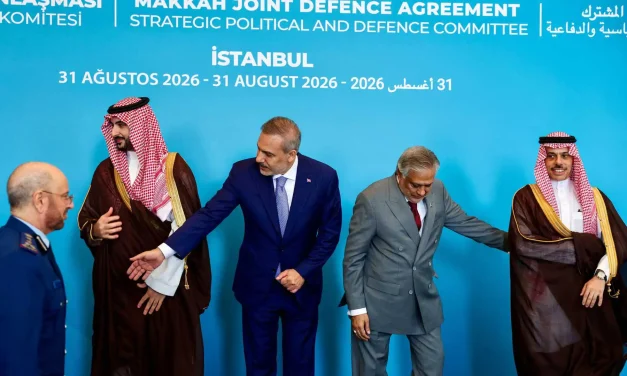
Realities of the Tripartite Makkah Pact

SCFR Online – Interview: The signing of the Makkah agreement between Saudi Arabia, Pakistan, and Turkey has raised questions about the future of the region’s security structure and the position of these countries in West Asian equations. Can this agreement become a genuine collective defense mechanism, or does it have more of a political and deterrent function than creating new military capacity?

Strategic Implications of the Reduction of US Weapons Stockpiles

SCFR Online – Opinion: The continuation of the US war against Iran, in addition to increasing operational costs, has called into question the actual capacity of the American arsenal to simultaneously fulfill security commitments on multiple fronts; an issue that affects deterrence, defense production capacity, and Washington’s resource prioritization.

The Formation of a New Order in Relations Between Powers

SCFR Online – Opinion: The Russia-Ukraine war and the war of the United States and the Israeli regime against Iran have been formed with different objectives and actors, but field and political developments indicate that they are not entirely separate from one another.

An Analysis of the Makkah Defense Pact

SCFR Online – Opinion: On Friday, August 7, the heads of state of three countries – Saudi Arabia, Turkey, and Pakistan – signed a text under the title “Makkah Joint Defense Agreement.”

Dimensions and challenges of the initiative to revive the Hejaz Railway

Strategic Council Online – Note: The initiative to revive the Hejaz Railway, beyond being a transportation project, constitutes an attempt to redefine geopolitics, the economy, and Turkey’s regional position; however, its realization appears to face significant financial, security, and institutional challenges.

Loading

Últimas publicaciones

Increasing criticism of the extensive Zionist lobby network

SCFR Online – Opinion: An examination of the mechanisms of the Israeli regime’s influence in the United States depicts a complex picture of shared interests, strategic dependencies, and the limitations of this relationship.

Realities of the Tripartite Makkah Pact

SCFR Online – Interview: The signing of the Makkah agreement between Saudi Arabia, Pakistan, and Turkey has raised questions about the future of the region’s security structure and the position of these countries in West Asian equations. Can this agreement become a genuine collective defense mechanism, or does it have more of a political and deterrent function than creating new military capacity?

Strategic Implications of the Reduction of US Weapons Stockpiles

SCFR Online – Opinion: The continuation of the US war against Iran, in addition to increasing operational costs, has called into question the actual capacity of the American arsenal to simultaneously fulfill security commitments on multiple fronts; an issue that affects deterrence, defense production capacity, and Washington’s resource prioritization.

The Formation of a New Order in Relations Between Powers

SCFR Online – Opinion: The Russia-Ukraine war and the war of the United States and the Israeli regime against Iran have been formed with different objectives and actors, but field and political developments indicate that they are not entirely separate from one another.

An Analysis of the Makkah Defense Pact

SCFR Online – Opinion: On Friday, August 7, the heads of state of three countries – Saudi Arabia, Turkey, and Pakistan – signed a text under the title “Makkah Joint Defense Agreement.”

Dimensions and challenges of the initiative to revive the Hejaz Railway

Strategic Council Online – Note: The initiative to revive the Hejaz Railway, beyond being a transportation project, constitutes an attempt to redefine geopolitics, the economy, and Turkey’s regional position; however, its realization appears to face significant financial, security, and institutional challenges.

Loading

DERNIER CONTENU

Increasing criticism of the extensive Zionist lobby network

SCFR Online – Opinion: An examination of the mechanisms of the Israeli regime’s influence in the United States depicts a complex picture of shared interests, strategic dependencies, and the limitations of this relationship.

Realities of the Tripartite Makkah Pact

SCFR Online – Interview: The signing of the Makkah agreement between Saudi Arabia, Pakistan, and Turkey has raised questions about the future of the region’s security structure and the position of these countries in West Asian equations. Can this agreement become a genuine collective defense mechanism, or does it have more of a political and deterrent function than creating new military capacity?

Strategic Implications of the Reduction of US Weapons Stockpiles

SCFR Online – Opinion: The continuation of the US war against Iran, in addition to increasing operational costs, has called into question the actual capacity of the American arsenal to simultaneously fulfill security commitments on multiple fronts; an issue that affects deterrence, defense production capacity, and Washington’s resource prioritization.

The Formation of a New Order in Relations Between Powers

SCFR Online – Opinion: The Russia-Ukraine war and the war of the United States and the Israeli regime against Iran have been formed with different objectives and actors, but field and political developments indicate that they are not entirely separate from one another.

An Analysis of the Makkah Defense Pact

SCFR Online – Opinion: On Friday, August 7, the heads of state of three countries – Saudi Arabia, Turkey, and Pakistan – signed a text under the title “Makkah Joint Defense Agreement.”

Dimensions and challenges of the initiative to revive the Hejaz Railway

Strategic Council Online – Note: The initiative to revive the Hejaz Railway, beyond being a transportation project, constitutes an attempt to redefine geopolitics, the economy, and Turkey’s regional position; however, its realization appears to face significant financial, security, and institutional challenges.

Loading

DERNIER CONTENU

Increasing criticism of the extensive Zionist lobby network

SCFR Online – Opinion: An examination of the mechanisms of the Israeli regime’s influence in the United States depicts a complex picture of shared interests, strategic dependencies, and the limitations of this relationship.

Realities of the Tripartite Makkah Pact

SCFR Online – Interview: The signing of the Makkah agreement between Saudi Arabia, Pakistan, and Turkey has raised questions about the future of the region’s security structure and the position of these countries in West Asian equations. Can this agreement become a genuine collective defense mechanism, or does it have more of a political and deterrent function than creating new military capacity?

Strategic Implications of the Reduction of US Weapons Stockpiles

SCFR Online – Opinion: The continuation of the US war against Iran, in addition to increasing operational costs, has called into question the actual capacity of the American arsenal to simultaneously fulfill security commitments on multiple fronts; an issue that affects deterrence, defense production capacity, and Washington’s resource prioritization.

The Formation of a New Order in Relations Between Powers

SCFR Online – Opinion: The Russia-Ukraine war and the war of the United States and the Israeli regime against Iran have been formed with different objectives and actors, but field and political developments indicate that they are not entirely separate from one another.

An Analysis of the Makkah Defense Pact

SCFR Online – Opinion: On Friday, August 7, the heads of state of three countries – Saudi Arabia, Turkey, and Pakistan – signed a text under the title “Makkah Joint Defense Agreement.”

Dimensions and challenges of the initiative to revive the Hejaz Railway

Strategic Council Online – Note: The initiative to revive the Hejaz Railway, beyond being a transportation project, constitutes an attempt to redefine geopolitics, the economy, and Turkey’s regional position; however, its realization appears to face significant financial, security, and institutional challenges.

Loading

DERNIER CONTENU

Increasing criticism of the extensive Zionist lobby network

SCFR Online – Opinion: An examination of the mechanisms of the Israeli regime’s influence in the United States depicts a complex picture of shared interests, strategic dependencies, and the limitations of this relationship.

Realities of the Tripartite Makkah Pact

SCFR Online – Interview: The signing of the Makkah agreement between Saudi Arabia, Pakistan, and Turkey has raised questions about the future of the region’s security structure and the position of these countries in West Asian equations. Can this agreement become a genuine collective defense mechanism, or does it have more of a political and deterrent function than creating new military capacity?

Strategic Implications of the Reduction of US Weapons Stockpiles

SCFR Online – Opinion: The continuation of the US war against Iran, in addition to increasing operational costs, has called into question the actual capacity of the American arsenal to simultaneously fulfill security commitments on multiple fronts; an issue that affects deterrence, defense production capacity, and Washington’s resource prioritization.

The Formation of a New Order in Relations Between Powers

SCFR Online – Opinion: The Russia-Ukraine war and the war of the United States and the Israeli regime against Iran have been formed with different objectives and actors, but field and political developments indicate that they are not entirely separate from one another.

An Analysis of the Makkah Defense Pact

SCFR Online – Opinion: On Friday, August 7, the heads of state of three countries – Saudi Arabia, Turkey, and Pakistan – signed a text under the title “Makkah Joint Defense Agreement.”

Dimensions and challenges of the initiative to revive the Hejaz Railway

Strategic Council Online – Note: The initiative to revive the Hejaz Railway, beyond being a transportation project, constitutes an attempt to redefine geopolitics, the economy, and Turkey’s regional position; however, its realization appears to face significant financial, security, and institutional challenges.

Loading