Intense competition between US and China without entering the cold war phase

2023/07/04 | Economy, interview, Top News

Strategic Council Online—Interview: An expert on international issues considered the economic entanglement of China and the United States as an obstacle to returning to an era similar to the Cold War and said that although the two sides are rivals, they do not want to confront each other. The US believes that its competition with China will be defined as cooperation, and in this frame, it will pursue the containment of the Chinese.

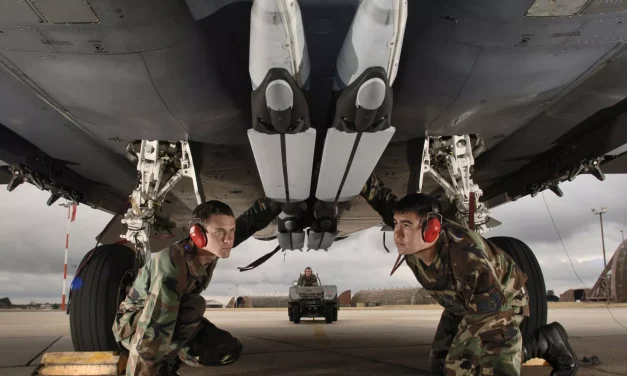
Speaking to the Strategic Council on Foreign Relations, Ali Safari referred to the statements of the US Secretary of State that his country is trying to avoid a cold war with China, adding that the US considers China a severe threat to its upstream documents. In the economic field, China has aroused Washington’s concern with the massive growth of indicators and influence, even among America’s allies, and in the military aspect, Beijing has announced that it has decided to increase its military budget from 60 billion dollars to 300 billion dollars. In addition, the presence of the Chinese Navy in East Asia is increasing daily.

He pointed to the rhetoric of the US and China against each other and said that China has decided to increase the number of its nuclear warheads from about 500 to about 3000 warheads. This figure equals the number of nuclear warheads of Russia and the US. American satellite images also show China’s serious preparation in the military field.

This international affairs expert, reminding that China is entering mediations and arenas unprecedented in the diplomatic field, adds that China’s new face is a severe threat to the US. This issue in technology and cyber conflicts is also very serious, and its dimensions are worrying. Especially the Chinese, considering their special capabilities in the cyber field, can impact the target country. In its security documents, the United States has explicitly threatened China’s electromagnetic wars and accused China of possibly penetrating electronic systems and disrupting or destroying them by exploding huge pulses in the environment.

Safari pointed out that despite all these threats that the US feels from China, the very important issue is that China, unlike what was seen about the former Soviet Union, has a serious connection with the US economy. Although, during the Trump era, the US limited this presence with the tariff war, and the trade balance changed in favor of the Chinese, still, China constitutes an important part of the US economy, and even parts of the US economy were damaged by the tariff war. On the other hand, about 80% of China’s transactions are still done with dollars and euros.

He reminded that no matter how much China is on the path of growth, it is still far from the United States in reaching the position of the first power. He added that despite all rivalries and threats, there are two views towards China in the US: creating obstacles for China and the necessity of competition based on cooperation.

“In any case, the Chinese have not been able to take over America’s position in many fields, such as new technologies, despite the strange and stunning growth. The US believes that its competition with China will be defined as a kind of cooperation under which it can restrain the Chinese,” Safari said.

Emphasizing the importance of cooperation with China for the US economy, especially in the field of labor and the preference of large American companies to assemble goods in China, this expert on international issues added that this level of economic entanglement prevents the emergence of Cold War-era conditions. The two sides seek to compete with each other, but at the same time, they do not want to face each other. This is while we witnessed confrontation and competition during the Cold War.

Saying that the war in Ukraine is considered a blessing for the Chinese, Safari said that views and attention were directed towards Russia and the focus on China was reduced to a great extent. They even admit that it is customary for America to set traps for its competitors in this direction, and considering Russia’s recent experience, China’s most important priority should be not to fall into these security traps. China is trying not to fall into this security trap with its foresight regarding Taiwan.

He emphasized that the US and China will use conventional tools in their competition to manage this rivalry. Even the return of the United States to the UNESCO after five years was cited as the reason for not falling behind China. Although UNESCO is a cultural organization, China’s threat has been evaluated to become more serious in the long run, and the US should not ignore any tool in this competition.

This international affairs analyst further pointed to the US’s attempt to create extensive restrictions in the field of technology against China and expand numerous networks to exclude China from the new technology markets. He added that despite such competition and threats, the US felt compelled to cooperate with Chinese companies and believes that for China’s technological developments not to become a tool in the hands of Beijing, Washington should enter into some cooperation, interaction, and exchange this field. However, since 2020, the momentum of sanctions in Washington has increased, and semiconductors have become the arena of serious geopolitical competition.

Emphasizing that US sanctions against China’s growing technology industry have intensified since Biden came to power in early 2021, Safari stated that these sanctions include export bans to limit almost all aspects of China’s chip development, and the sanctions have been partly successful. Although the growth of China’s chip-making equipment sector has been impressive in the past three years, it is still far from self-sufficiency, and it seems unlikely that it will be able to build a complete production line that can efficiently operate without the help of foreign suppliers. According to figures, if the restrictions against Chinese companies remain, Chinese domestic manufacturers will only be able to supply 33% of the total domestic demand by 2030, instead of the previous forecast of 52%.

At the same time, he pointed to the recent visit of two important American investors in the field of technology to China and the meetings held with high-ranking Chinese officials while emphasizing that the current competition should not be considered a Cold War and that the former Soviet Union has many differences with China. He said that the Cold War has the concept of confrontation.  Still, the US and China are now experiencing a period of fierce competition without direct or proxy confrontation, and China is not entering into a tough confrontation with the US and its allies.
0 Comments

Submit a Comment

Your email address will not be published. Required fields are marked *

LATEST CONTENT

The Makkah Pact; Reasons for its Formation and Challenges Ahead

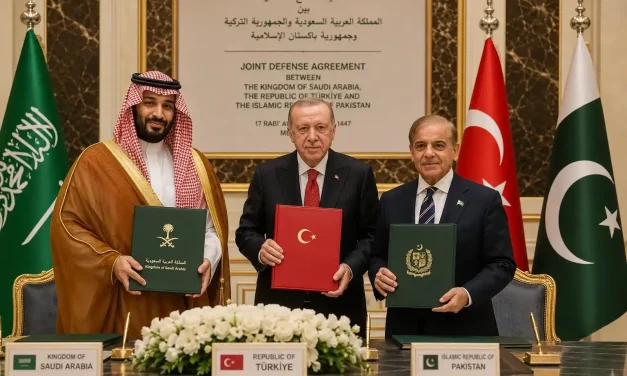
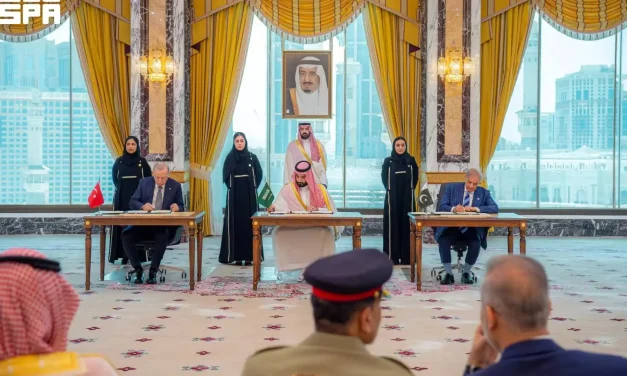
SCFR Online – Opinion: The Makkah Pact, signed between Saudi Arabia, Pakistan, and Turkey under the motto “an attack on one is an attack on all,” is viewed by some analysts less as a full-fledged military coalition and more as an attempt to reduce security dependence on an external power and to establish a regional security mechanism.

Implications of the US-Saudi Nuclear Agreement

SCFR Online – Opinion: The new US-Saudi nuclear agreement, despite legal and political ambiguities, could alter previous non-proliferation standards in West Asia and intensify nuclear competition, ushering it into a new phase.

An Analysis of Recent Turkey-Israeli Regime Tensions

SCFR Online – Opinion: Recent developments in Syria indicate an intensification of strategic rivalry between Turkey and the Israeli regime, but mutual considerations and the role of the United States have limited the likelihood of direct war.

Increasing criticism of the extensive Zionist lobby network

SCFR Online – Opinion: An examination of the mechanisms of the Israeli regime’s influence in the United States depicts a complex picture of shared interests, strategic dependencies, and the limitations of this relationship.

Realities of the Tripartite Makkah Pact

SCFR Online – Interview: The signing of the Makkah agreement between Saudi Arabia, Pakistan, and Turkey has raised questions about the future of the region’s security structure and the position of these countries in West Asian equations. Can this agreement become a genuine collective defense mechanism, or does it have more of a political and deterrent function than creating new military capacity?

Strategic Implications of the Reduction of US Weapons Stockpiles

SCFR Online – Opinion: The continuation of the US war against Iran, in addition to increasing operational costs, has called into question the actual capacity of the American arsenal to simultaneously fulfill security commitments on multiple fronts; an issue that affects deterrence, defense production capacity, and Washington’s resource prioritization.

The Formation of a New Order in Relations Between Powers

SCFR Online – Opinion: The Russia-Ukraine war and the war of the United States and the Israeli regime against Iran have been formed with different objectives and actors, but field and political developments indicate that they are not entirely separate from one another.

Loading

Últimas publicaciones

The Makkah Pact; Reasons for its Formation and Challenges Ahead

SCFR Online – Opinion: The Makkah Pact, signed between Saudi Arabia, Pakistan, and Turkey under the motto “an attack on one is an attack on all,” is viewed by some analysts less as a full-fledged military coalition and more as an attempt to reduce security dependence on an external power and to establish a regional security mechanism.

Implications of the US-Saudi Nuclear Agreement

SCFR Online – Opinion: The new US-Saudi nuclear agreement, despite legal and political ambiguities, could alter previous non-proliferation standards in West Asia and intensify nuclear competition, ushering it into a new phase.

An Analysis of Recent Turkey-Israeli Regime Tensions

SCFR Online – Opinion: Recent developments in Syria indicate an intensification of strategic rivalry between Turkey and the Israeli regime, but mutual considerations and the role of the United States have limited the likelihood of direct war.

Increasing criticism of the extensive Zionist lobby network

SCFR Online – Opinion: An examination of the mechanisms of the Israeli regime’s influence in the United States depicts a complex picture of shared interests, strategic dependencies, and the limitations of this relationship.

Realities of the Tripartite Makkah Pact

SCFR Online – Interview: The signing of the Makkah agreement between Saudi Arabia, Pakistan, and Turkey has raised questions about the future of the region’s security structure and the position of these countries in West Asian equations. Can this agreement become a genuine collective defense mechanism, or does it have more of a political and deterrent function than creating new military capacity?

Strategic Implications of the Reduction of US Weapons Stockpiles

SCFR Online – Opinion: The continuation of the US war against Iran, in addition to increasing operational costs, has called into question the actual capacity of the American arsenal to simultaneously fulfill security commitments on multiple fronts; an issue that affects deterrence, defense production capacity, and Washington’s resource prioritization.

The Formation of a New Order in Relations Between Powers

SCFR Online – Opinion: The Russia-Ukraine war and the war of the United States and the Israeli regime against Iran have been formed with different objectives and actors, but field and political developments indicate that they are not entirely separate from one another.

Loading

DERNIER CONTENU

The Makkah Pact; Reasons for its Formation and Challenges Ahead

SCFR Online – Opinion: The Makkah Pact, signed between Saudi Arabia, Pakistan, and Turkey under the motto “an attack on one is an attack on all,” is viewed by some analysts less as a full-fledged military coalition and more as an attempt to reduce security dependence on an external power and to establish a regional security mechanism.

Implications of the US-Saudi Nuclear Agreement

SCFR Online – Opinion: The new US-Saudi nuclear agreement, despite legal and political ambiguities, could alter previous non-proliferation standards in West Asia and intensify nuclear competition, ushering it into a new phase.

An Analysis of Recent Turkey-Israeli Regime Tensions

SCFR Online – Opinion: Recent developments in Syria indicate an intensification of strategic rivalry between Turkey and the Israeli regime, but mutual considerations and the role of the United States have limited the likelihood of direct war.

Increasing criticism of the extensive Zionist lobby network

SCFR Online – Opinion: An examination of the mechanisms of the Israeli regime’s influence in the United States depicts a complex picture of shared interests, strategic dependencies, and the limitations of this relationship.

Realities of the Tripartite Makkah Pact

SCFR Online – Interview: The signing of the Makkah agreement between Saudi Arabia, Pakistan, and Turkey has raised questions about the future of the region’s security structure and the position of these countries in West Asian equations. Can this agreement become a genuine collective defense mechanism, or does it have more of a political and deterrent function than creating new military capacity?

Strategic Implications of the Reduction of US Weapons Stockpiles

SCFR Online – Opinion: The continuation of the US war against Iran, in addition to increasing operational costs, has called into question the actual capacity of the American arsenal to simultaneously fulfill security commitments on multiple fronts; an issue that affects deterrence, defense production capacity, and Washington’s resource prioritization.

The Formation of a New Order in Relations Between Powers

SCFR Online – Opinion: The Russia-Ukraine war and the war of the United States and the Israeli regime against Iran have been formed with different objectives and actors, but field and political developments indicate that they are not entirely separate from one another.

Loading

DERNIER CONTENU

The Makkah Pact; Reasons for its Formation and Challenges Ahead

SCFR Online – Opinion: The Makkah Pact, signed between Saudi Arabia, Pakistan, and Turkey under the motto “an attack on one is an attack on all,” is viewed by some analysts less as a full-fledged military coalition and more as an attempt to reduce security dependence on an external power and to establish a regional security mechanism.

Implications of the US-Saudi Nuclear Agreement

SCFR Online – Opinion: The new US-Saudi nuclear agreement, despite legal and political ambiguities, could alter previous non-proliferation standards in West Asia and intensify nuclear competition, ushering it into a new phase.

An Analysis of Recent Turkey-Israeli Regime Tensions

SCFR Online – Opinion: Recent developments in Syria indicate an intensification of strategic rivalry between Turkey and the Israeli regime, but mutual considerations and the role of the United States have limited the likelihood of direct war.

Increasing criticism of the extensive Zionist lobby network

SCFR Online – Opinion: An examination of the mechanisms of the Israeli regime’s influence in the United States depicts a complex picture of shared interests, strategic dependencies, and the limitations of this relationship.

Realities of the Tripartite Makkah Pact

SCFR Online – Interview: The signing of the Makkah agreement between Saudi Arabia, Pakistan, and Turkey has raised questions about the future of the region’s security structure and the position of these countries in West Asian equations. Can this agreement become a genuine collective defense mechanism, or does it have more of a political and deterrent function than creating new military capacity?

Strategic Implications of the Reduction of US Weapons Stockpiles

SCFR Online – Opinion: The continuation of the US war against Iran, in addition to increasing operational costs, has called into question the actual capacity of the American arsenal to simultaneously fulfill security commitments on multiple fronts; an issue that affects deterrence, defense production capacity, and Washington’s resource prioritization.

The Formation of a New Order in Relations Between Powers

SCFR Online – Opinion: The Russia-Ukraine war and the war of the United States and the Israeli regime against Iran have been formed with different objectives and actors, but field and political developments indicate that they are not entirely separate from one another.

Loading

DERNIER CONTENU

The Makkah Pact; Reasons for its Formation and Challenges Ahead

SCFR Online – Opinion: The Makkah Pact, signed between Saudi Arabia, Pakistan, and Turkey under the motto “an attack on one is an attack on all,” is viewed by some analysts less as a full-fledged military coalition and more as an attempt to reduce security dependence on an external power and to establish a regional security mechanism.

Implications of the US-Saudi Nuclear Agreement

SCFR Online – Opinion: The new US-Saudi nuclear agreement, despite legal and political ambiguities, could alter previous non-proliferation standards in West Asia and intensify nuclear competition, ushering it into a new phase.

An Analysis of Recent Turkey-Israeli Regime Tensions

SCFR Online – Opinion: Recent developments in Syria indicate an intensification of strategic rivalry between Turkey and the Israeli regime, but mutual considerations and the role of the United States have limited the likelihood of direct war.

Increasing criticism of the extensive Zionist lobby network

SCFR Online – Opinion: An examination of the mechanisms of the Israeli regime’s influence in the United States depicts a complex picture of shared interests, strategic dependencies, and the limitations of this relationship.

Realities of the Tripartite Makkah Pact

SCFR Online – Interview: The signing of the Makkah agreement between Saudi Arabia, Pakistan, and Turkey has raised questions about the future of the region’s security structure and the position of these countries in West Asian equations. Can this agreement become a genuine collective defense mechanism, or does it have more of a political and deterrent function than creating new military capacity?

Strategic Implications of the Reduction of US Weapons Stockpiles

SCFR Online – Opinion: The continuation of the US war against Iran, in addition to increasing operational costs, has called into question the actual capacity of the American arsenal to simultaneously fulfill security commitments on multiple fronts; an issue that affects deterrence, defense production capacity, and Washington’s resource prioritization.

The Formation of a New Order in Relations Between Powers

SCFR Online – Opinion: The Russia-Ukraine war and the war of the United States and the Israeli regime against Iran have been formed with different objectives and actors, but field and political developments indicate that they are not entirely separate from one another.

Loading