Brexit: An Island Caught by Ebb & Flow!

Strategic Council Online: British Prime Minister Theresa May's Brexit deal has been rejected by 230 votes - the largest defeat for a sitting government in history.

[vc_row][vc_column][vc_column_text]

MPs voted by 432 votes to 202 last Tuesday to reject the deal, which sets out the terms of Britain’s exit from the EU on 29 March.

Now that forecasts that the Brexit deal would not receive the positive vote of the MPs have been realized, there are several options raised such as efforts to renew the voting, delaying the Brexit process and holding another referendum. The vote was taken about two and a half years after the British people voted to leave the European Union on June 23, 2016.

The term “Brexit” is an abbreviation for British exit” the EU. In fact, the Brexit process is the departure of Britain (England, Scotland, Wales and Northern Ireland) from a union that outlines the trade, political, and judicial rules of the member states. Britain is the first country in the EU that intends to exit the union and the process is faced with complications and has numerous components.


[/vc_column_text][/vc_column][/vc_row][vc_row][vc_column width=”2/3″][vc_column_text]

A Hard Brexit

Before the recent parliamentary vote, the British prime minister announced if the parliament votes against the UK withdrawal deal from the European Union it would be forced to leave without signing a separation agreement – a trend that is described as hard Brexit.

Hard exit or hard Brexit generally means the UK’s final agreement with the European Union that Britain would not benefit from the single European market in terms of services and goods. Hence, the “hard exit” would most probably lead to a fast, but minimal, free trade agreement with the European Union, based on the principles of the World Trade Organization: Principles that would be restricted to reduction of basic tariffs and trade in goods and therefore would potentially not include trade in the service sector. Hard Brexiteers believe that this type of exit is the best way to gain control over budgeting, lawmaking and most importantly the management of immigrant arrival.


Soft Brexit

In contrast, soft exit or soft Brexit, means maintaining a kind of unrestricted access to the single European market. This type of British exit from the European Union is more often defined within the framework of the Norwegian and Swiss models of communication with the Union. Norway is a non-EU state that has extensive access to the European Union market. Switzerland too has limited access to the EU single market and is also a member of the Schengen zone. The main advantages of selecting a soft exit are the availability of a single market and the ability to use its extensive commercial and service capacities, as well as the freedom of action in the field of agriculture and fisheries; foreign policy and common security policies of the Customs Union and trade policies.


[/vc_column_text][/vc_column][vc_column width=”1/3″][vc_wp_rss items=”2″ title=”Latest on European Parliament” url=”http://www.europarl.europa.eu/rss/doc/mixed-54681/committee/mixed-54681/en.xml”][/vc_column][/vc_row][vc_row][vc_column][vc_column_text]

External and Internal Consequences of Brexit

The continued state of ambiguity and unresolved issues of major differences between the UK and the European Union on Brexit have caused that serious warnings be issued about the continuation of this situation and the grave dangers posed thereby. British Foreign Secretary Jeremy Hunt has said a no-deal withdrawal from the EU will endanger the unity and solidarity of Europe for one generation. According to Hunt, hard Brexit is, in fact, a geostrategic blunder for Europe in a very vulnerable juncture in European history.

Experts maintain that London’s hard exit from the European Union will be coupled by serious consequences to the point where there will be many uncertainties in bilateral relations and major losses for both the British and the Europeans. According to published reports, UK will incur an extra loss of about 2.5 billion pounds annually for European customs tariffs within the World Trade Organization agreement. This tariff increase will also affect major manufacturing sectors such as automotive industry, and will cause increased production costs, including reduced exports, and these costs will be passed on to consumers in the UK.

Jobs related to construction, agriculture, hoteling, restaurant keeping and food processing, which are dependent on immigrants, including European settlers, and the British do not have much interest to work in these businesses, will be subject to considerable losses. Also, trade barriers will lead to a cut in foreign investment and a weakening of the business environment, resulting in rising poverty and unemployment. This is so serious that the British Prime Minister has warned that preparations must be made to deal with the hard Brexit because a huge shock is expected to be inflicted on the economy.


How Brexit Can Harm EU?

A hard exit of Britain will, of course, have wide-ranging economic, social and security implications for the European Union. Among the economic outcomes of a hard exit will be the 13 billion pound cost of European companies for the British customs tariffs in the form of a global trade agreement. A recent report by the Brussels Bruegel Institute has revealed that an irregular exit will impose a cost of about 4.2 billion euros on Germany by the end of 2020.

The head of the German Chamber of Commerce has warned of the economic harms of a hard exit by Britain, saying that such an exit will reduce the German economic return by 0.2 or 0.3 percent.


A Threat against EU Existence

Some also believe that the UK’s hard exit from the European Union will increase the centrifugal force inclinations in the European Union. For example, the victory of Donald Trump in the US presidential election showed that the British people’s vote to exit the European Union was not a rare populist outburst, but a much wider current in the West.

Some European officials believe that accepting easy criteria for the exit of Britain would be a threat to the existence of the European Union because it could encourage other EU states with nationalistic anti-European movements to exit under the same criteria.

The position of Marine Le Pen, president of the far right “National Front” party about Brexit can be considered one of these examples. With increasing nationalist tendencies, European leaders have no choice but to address their citizens’ demands for immigration and identity.

It seems that many options are not feasible for the continuation of the Brexit but the most likely one is an extension of the deadline for the exit from the EU and the other one is holding another Brexit referendum. Although Philip Hammond, the UK’s Finance Minister, has talked about the possibility of extending the deadline for British withdrawal from the European Union, however this option would also depend on the approval of the EU which is unlikely at least under the present conditions.

Jean-Claude Juncker, European Commission President, who has been monitoring the negotiations between London and Brussels for almost two years, regretted the recent vote in the British Parliament on the Brexit and urged London to clarify its intentions as soon as possible because time has almost arrived for implementation of the Brexit deal. Juncker warned that the possibility of no-deal British withdrawal has increased.

Austrian Chancellor Sebastian Kurz also reminded London that the Brexit agreement would not be re-negotiated under any circumstances.

It seems that the EU leaders, two years into the referendum, would not welcome the possibility of Britain’s comeback. Some EU member states have implemented the no-deal scheme in their countries to counter the harms of London’s sudden withdrawal from the Union.

The option to hold another Brexit referendum is difficult due to the lengthy legal preparations and the unpredictability of its consequences.

Less than three months into the UK’s official exit from the European Union, the country is experiencing one of its most critical junctures in its history. The date specified for the departure of Britain will arrive in about 70 days, and London is keeping more aloof instead of getting closer to the exit process. It seems that British Prime Minister Theresa May is the only passenger on this train, and she has little time to say how she wants to continue the course!

[/vc_column_text][/vc_column][/vc_row]

0 Comments

Submit a Comment

Your email address will not be published. Required fields are marked *

LATEST CONTENT

Al-Zaydi’s Selection as Prime Minister, The Beginning of a New Chapter in Iraq

SCFR Online – Note: After approximately five months of political deadlock and institutional confusion, Ali al-Zaydi has finally been selected as Iraq’s Prime Minister. Al-Zaydi’s selection as Prime Minister represents a positive sign of the completion of the government formation process and the beginning of a new phase in Iraqi politics and governance. The emergence of a young, technocratic figure from the third generation of politicians—in a context where the country has been administered by traditional figures for decades—revives hope that Iraq may perhaps distance itself from the repetitive cycle of crises and experience a new path of stability, efficiency, and regional convergence.

Intensifying Intra-Party Divisions in the United States Regarding the Zionist Regime

SCFR Online – Note: Over recent decades, support for the Zionist regime has been one of the few issues commanding bipartisan consensus in US foreign policy. Since the Cold War era, Republicans and Democrats have generally agreed on the necessity of preserving the security and survival of the Zionist regime as Washington’s most strategic ally in West Asia—and indeed, globally. However, developments in recent years—particularly the Gaza war, escalating regional conflicts, the expansion of tensions into Lebanon, and this regime’s recent warmongering against Iran—have caused this traditional consensus, especially within the Democratic Party, to face significant fractures.

Public Opinion Disappointment of the Zionist Regime Regarding Success in War with Iran

SCFR Online – Opinion: The internal situation of the Israeli regime during the 40-day war can be analyzed from several perspectives. The popularity levels of Benjamin Netanyahu, the Likud Party, and the ruling coalition led by Netanyahu until February 28, 2026, remained approximately the same as during the preceding year. The most recent factor that had somewhat increased Netanyahu’s popularity was the advancement of the 2024 war with Hezbollah Lebanon. Subsequently, his popularity temporarily increased during the 12-day war with Iran, but after the war, it returned to its previous state.

The United States Strategy toward the Strait of Hormuz in Confrontation with China’s Interests

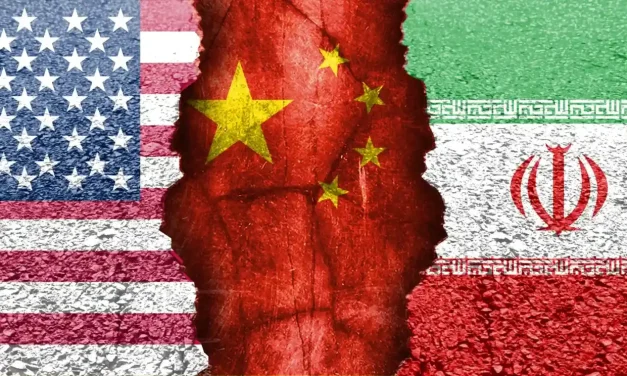
Strategic Council Online – Opinion: In the strategic geography of the global economy, certain regions attain such significance that they effectively become determining factors of the international order. The Strait of Hormuz is among these points; a narrow yet vital passage through which a considerable portion of the world’s energy transits, and whose stability is directly intertwined with the interests and economic security of many countries. However, the importance of the Strait of Hormuz is not limited solely to the volume of energy passing through it. This strait is also a stage upon which the limitations and challenges of great power politics are revealed. From China’s perspective, the policy of the United States regarding the security of this strategic chokepoint, rather than reflecting a stable order, demonstrates a set of contradictions and strategic difficulties that Washington faces in managing the regional order.

Loading

Últimas publicaciones

Al-Zaydi’s Selection as Prime Minister, The Beginning of a New Chapter in Iraq

SCFR Online – Note: After approximately five months of political deadlock and institutional confusion, Ali al-Zaydi has finally been selected as Iraq’s Prime Minister. Al-Zaydi’s selection as Prime Minister represents a positive sign of the completion of the government formation process and the beginning of a new phase in Iraqi politics and governance. The emergence of a young, technocratic figure from the third generation of politicians—in a context where the country has been administered by traditional figures for decades—revives hope that Iraq may perhaps distance itself from the repetitive cycle of crises and experience a new path of stability, efficiency, and regional convergence.

Intensifying Intra-Party Divisions in the United States Regarding the Zionist Regime

SCFR Online – Note: Over recent decades, support for the Zionist regime has been one of the few issues commanding bipartisan consensus in US foreign policy. Since the Cold War era, Republicans and Democrats have generally agreed on the necessity of preserving the security and survival of the Zionist regime as Washington’s most strategic ally in West Asia—and indeed, globally. However, developments in recent years—particularly the Gaza war, escalating regional conflicts, the expansion of tensions into Lebanon, and this regime’s recent warmongering against Iran—have caused this traditional consensus, especially within the Democratic Party, to face significant fractures.

Public Opinion Disappointment of the Zionist Regime Regarding Success in War with Iran

SCFR Online – Opinion: The internal situation of the Israeli regime during the 40-day war can be analyzed from several perspectives. The popularity levels of Benjamin Netanyahu, the Likud Party, and the ruling coalition led by Netanyahu until February 28, 2026, remained approximately the same as during the preceding year. The most recent factor that had somewhat increased Netanyahu’s popularity was the advancement of the 2024 war with Hezbollah Lebanon. Subsequently, his popularity temporarily increased during the 12-day war with Iran, but after the war, it returned to its previous state.

The United States Strategy toward the Strait of Hormuz in Confrontation with China’s Interests

Strategic Council Online – Opinion: In the strategic geography of the global economy, certain regions attain such significance that they effectively become determining factors of the international order. The Strait of Hormuz is among these points; a narrow yet vital passage through which a considerable portion of the world’s energy transits, and whose stability is directly intertwined with the interests and economic security of many countries. However, the importance of the Strait of Hormuz is not limited solely to the volume of energy passing through it. This strait is also a stage upon which the limitations and challenges of great power politics are revealed. From China’s perspective, the policy of the United States regarding the security of this strategic chokepoint, rather than reflecting a stable order, demonstrates a set of contradictions and strategic difficulties that Washington faces in managing the regional order.

Loading

DERNIER CONTENU

Al-Zaydi’s Selection as Prime Minister, The Beginning of a New Chapter in Iraq

SCFR Online – Note: After approximately five months of political deadlock and institutional confusion, Ali al-Zaydi has finally been selected as Iraq’s Prime Minister. Al-Zaydi’s selection as Prime Minister represents a positive sign of the completion of the government formation process and the beginning of a new phase in Iraqi politics and governance. The emergence of a young, technocratic figure from the third generation of politicians—in a context where the country has been administered by traditional figures for decades—revives hope that Iraq may perhaps distance itself from the repetitive cycle of crises and experience a new path of stability, efficiency, and regional convergence.

Intensifying Intra-Party Divisions in the United States Regarding the Zionist Regime

SCFR Online – Note: Over recent decades, support for the Zionist regime has been one of the few issues commanding bipartisan consensus in US foreign policy. Since the Cold War era, Republicans and Democrats have generally agreed on the necessity of preserving the security and survival of the Zionist regime as Washington’s most strategic ally in West Asia—and indeed, globally. However, developments in recent years—particularly the Gaza war, escalating regional conflicts, the expansion of tensions into Lebanon, and this regime’s recent warmongering against Iran—have caused this traditional consensus, especially within the Democratic Party, to face significant fractures.

Public Opinion Disappointment of the Zionist Regime Regarding Success in War with Iran

SCFR Online – Opinion: The internal situation of the Israeli regime during the 40-day war can be analyzed from several perspectives. The popularity levels of Benjamin Netanyahu, the Likud Party, and the ruling coalition led by Netanyahu until February 28, 2026, remained approximately the same as during the preceding year. The most recent factor that had somewhat increased Netanyahu’s popularity was the advancement of the 2024 war with Hezbollah Lebanon. Subsequently, his popularity temporarily increased during the 12-day war with Iran, but after the war, it returned to its previous state.

The United States Strategy toward the Strait of Hormuz in Confrontation with China’s Interests

Strategic Council Online – Opinion: In the strategic geography of the global economy, certain regions attain such significance that they effectively become determining factors of the international order. The Strait of Hormuz is among these points; a narrow yet vital passage through which a considerable portion of the world’s energy transits, and whose stability is directly intertwined with the interests and economic security of many countries. However, the importance of the Strait of Hormuz is not limited solely to the volume of energy passing through it. This strait is also a stage upon which the limitations and challenges of great power politics are revealed. From China’s perspective, the policy of the United States regarding the security of this strategic chokepoint, rather than reflecting a stable order, demonstrates a set of contradictions and strategic difficulties that Washington faces in managing the regional order.

Loading

DERNIER CONTENU

Al-Zaydi’s Selection as Prime Minister, The Beginning of a New Chapter in Iraq

SCFR Online – Note: After approximately five months of political deadlock and institutional confusion, Ali al-Zaydi has finally been selected as Iraq’s Prime Minister. Al-Zaydi’s selection as Prime Minister represents a positive sign of the completion of the government formation process and the beginning of a new phase in Iraqi politics and governance. The emergence of a young, technocratic figure from the third generation of politicians—in a context where the country has been administered by traditional figures for decades—revives hope that Iraq may perhaps distance itself from the repetitive cycle of crises and experience a new path of stability, efficiency, and regional convergence.

Intensifying Intra-Party Divisions in the United States Regarding the Zionist Regime

SCFR Online – Note: Over recent decades, support for the Zionist regime has been one of the few issues commanding bipartisan consensus in US foreign policy. Since the Cold War era, Republicans and Democrats have generally agreed on the necessity of preserving the security and survival of the Zionist regime as Washington’s most strategic ally in West Asia—and indeed, globally. However, developments in recent years—particularly the Gaza war, escalating regional conflicts, the expansion of tensions into Lebanon, and this regime’s recent warmongering against Iran—have caused this traditional consensus, especially within the Democratic Party, to face significant fractures.

Public Opinion Disappointment of the Zionist Regime Regarding Success in War with Iran

SCFR Online – Opinion: The internal situation of the Israeli regime during the 40-day war can be analyzed from several perspectives. The popularity levels of Benjamin Netanyahu, the Likud Party, and the ruling coalition led by Netanyahu until February 28, 2026, remained approximately the same as during the preceding year. The most recent factor that had somewhat increased Netanyahu’s popularity was the advancement of the 2024 war with Hezbollah Lebanon. Subsequently, his popularity temporarily increased during the 12-day war with Iran, but after the war, it returned to its previous state.

The United States Strategy toward the Strait of Hormuz in Confrontation with China’s Interests

Strategic Council Online – Opinion: In the strategic geography of the global economy, certain regions attain such significance that they effectively become determining factors of the international order. The Strait of Hormuz is among these points; a narrow yet vital passage through which a considerable portion of the world’s energy transits, and whose stability is directly intertwined with the interests and economic security of many countries. However, the importance of the Strait of Hormuz is not limited solely to the volume of energy passing through it. This strait is also a stage upon which the limitations and challenges of great power politics are revealed. From China’s perspective, the policy of the United States regarding the security of this strategic chokepoint, rather than reflecting a stable order, demonstrates a set of contradictions and strategic difficulties that Washington faces in managing the regional order.

Loading

DERNIER CONTENU

Al-Zaydi’s Selection as Prime Minister, The Beginning of a New Chapter in Iraq

SCFR Online – Note: After approximately five months of political deadlock and institutional confusion, Ali al-Zaydi has finally been selected as Iraq’s Prime Minister. Al-Zaydi’s selection as Prime Minister represents a positive sign of the completion of the government formation process and the beginning of a new phase in Iraqi politics and governance. The emergence of a young, technocratic figure from the third generation of politicians—in a context where the country has been administered by traditional figures for decades—revives hope that Iraq may perhaps distance itself from the repetitive cycle of crises and experience a new path of stability, efficiency, and regional convergence.

Intensifying Intra-Party Divisions in the United States Regarding the Zionist Regime

SCFR Online – Note: Over recent decades, support for the Zionist regime has been one of the few issues commanding bipartisan consensus in US foreign policy. Since the Cold War era, Republicans and Democrats have generally agreed on the necessity of preserving the security and survival of the Zionist regime as Washington’s most strategic ally in West Asia—and indeed, globally. However, developments in recent years—particularly the Gaza war, escalating regional conflicts, the expansion of tensions into Lebanon, and this regime’s recent warmongering against Iran—have caused this traditional consensus, especially within the Democratic Party, to face significant fractures.

Public Opinion Disappointment of the Zionist Regime Regarding Success in War with Iran

SCFR Online – Opinion: The internal situation of the Israeli regime during the 40-day war can be analyzed from several perspectives. The popularity levels of Benjamin Netanyahu, the Likud Party, and the ruling coalition led by Netanyahu until February 28, 2026, remained approximately the same as during the preceding year. The most recent factor that had somewhat increased Netanyahu’s popularity was the advancement of the 2024 war with Hezbollah Lebanon. Subsequently, his popularity temporarily increased during the 12-day war with Iran, but after the war, it returned to its previous state.

The United States Strategy toward the Strait of Hormuz in Confrontation with China’s Interests

Strategic Council Online – Opinion: In the strategic geography of the global economy, certain regions attain such significance that they effectively become determining factors of the international order. The Strait of Hormuz is among these points; a narrow yet vital passage through which a considerable portion of the world’s energy transits, and whose stability is directly intertwined with the interests and economic security of many countries. However, the importance of the Strait of Hormuz is not limited solely to the volume of energy passing through it. This strait is also a stage upon which the limitations and challenges of great power politics are revealed. From China’s perspective, the policy of the United States regarding the security of this strategic chokepoint, rather than reflecting a stable order, demonstrates a set of contradictions and strategic difficulties that Washington faces in managing the regional order.

Loading