Root Causes of China-India Border Tension

2020/06/15 | Note, Politics, top news

Strategic Council Online: Apart from what is happening in China-India-Pakistan relations, changing the equation of global power, i.e. India's proximity to the United States and that of Pakistan to China, will not be ineffective in exacerbating the China-India border crisis. Pir Mohammad Molazehi - Expert on Subcontinent Affairs

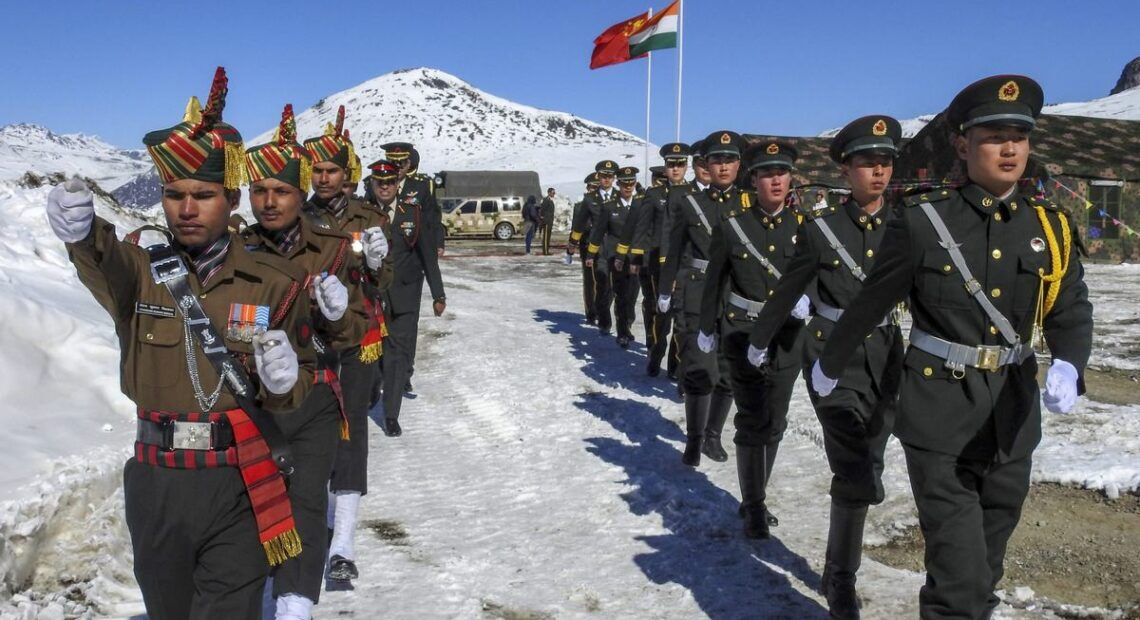
For almost a month now, severe border tensions between India and China have erupted in the Ladakh region of the Himalayas in the northern state of Jammu and Kashmir. Indian media reported, citing Indian officials that thousands of Chinese troops have entered the Galwan Valley in Ladakh. According to these reports the Chinese forces reportedly pitched tents in the area, dug trenches, and deployed heavy military equipment a few kilometers deep in what India regards its territory. China, on the other hand, says it is India that has actually changed the border equations. India has recently built a multi-hundred-kilometer road in the Ladakh region that connects land with a high-altitude air base. The base reopened in 2008.

To look at recent tensions between Beijing and Delhi, let’s take a look at the history of differences between the two countries. In 1962, a war broke out between India and China over border issues under the pretext of border disputes over the Aksai region of the Himalayas; but other factors played a role. Eventually, the Indians withdrew from the North Indian region of Kashmir and the border with Pakistan-controlled Kashmir. During the 1962 war, a portion of Kashmir was captured by China, which was later formally ceded to China under an agreement with Pakistan, but India rejected the agreement.

Border disputes between China and India have escalated after “one road, one belt” and the transfer of the port of Gwadar in Balouchistan province and in Iran’s proximity to China; The reason for this is that the Qaraqorum Road, which connects China to Gwadar, passes through the Kashmir Mountains and the disputed territory of India and Pakistan. In response to the same project, India is building an air base north of Ladakh and intends to build a military road as well. This has led to opposition from China and Pakistan, and border clashes are the result of such military moves by both sides. Because the area is mountainous and uninhabited and is for military use only, China and Pakistan are concerned about maintaining the security of the Kashgar Highway to Gwadar and are monitoring India’s military operations. India is also watching China and Pakistan. Of course, it should be noted that this state of military readiness in Kargil in 1998 was close to a full-blown war. At that time, General Pervez Musharraf threatened India with the use of nuclear weapons.

On the other hand, there are still two unresolved issues between China and India; First, the Indians claimed that Tibet belonged to India because of the Buddhist religion. China also claims about 90,000 square kilometers of border areas. This difference has remained unresolved ever since. In fact, since Rajiv Gandhi, India’s prime minister, went to China and acknowledged that Tibet belonged to China, relations between the two countries have gradually improved and reached a stage where serious negotiations have begun to resolve border issues. Following these talks, a military delegation was appointed by the Indians and a military delegation by the Chinese, and the parties began direct talks on border disputes.

As long as the National Congress Party in India was in power, this process was at least progressing well, but things have changed since the BJP came to power; Because the party had very close relations with Israel and the United States, the Chinese were skeptical of India’s position. It was later revealed that in connection with the Indian Subcontinent, the choice of the Americans was India; The choice was to the detriment of Pakistan and China. Gradually, Beijing became increasingly sensitive to the issues that India was pursuing with the United States and Israel; Therefore, apart from what is happening in China-India-Pakistan relations, changing the equation of global power, i.e. India’s proximity to the United States and that of Pakistan to China, will not be ineffective in exacerbating the border crisis between China and India.

Accordingly, two lines of thinking emerged; The first is the idea of ​​Asia-Pacific, followed by the Chinese, and the second is the idea of ​​an India Pacific, followed by the United States and India. According to this view, India has moved towards countries such as Vietnam, Thailand and countries that are considered to be in the security zone of China; So the Chinese skepticism that India has reached an agreement with the Americans, and that this understanding is to the detriment of Beijing, has caused these tensions to form now.


Especially after the United States revealed its desire for India, Pakistan also leaned toward China and distanced itself from the United States.

The combination of these developments, both at the international level and at the regional level, is an important factor in exacerbating the crisis in India-China relations.

As for the future developments, it does not seem that tensions will continue because both India and China need each other in the current situation and do not want tensions to escalate; Because some Chinese companies are involved in some of the investments made in India by multinational companies, it is not in the interest of either side to get involved.


0 Comments

Submit a Comment

Your email address will not be published. Required fields are marked *

LATEST CONTENT

Temporary China–U.S. Trade Truce in the Shadow of Fundamental Distrust

SCFR Online – Opinion: The recent visit of the President of the United States to China is significant from various aspects; because China is recognized as the world’s second-largest economic power and a growing economy. The Chinese are also advancing in various fields, including the space sector, artificial intelligence, and military industries; to the extent that in the military sector, whereas they previously lacked an aircraft carrier, they now possess their third aircraft carrier. On the other hand, the United States, as a superpower, has always regarded China as its rival and continues to view it as such today.

Iran’s Success in the Narrative Battle in Cyberspace

SCFR Online – Opinion: In the war between Iran and the United States, the main battlefield was not defined solely in the military domain; rather, the battle of narratives in cyberspace—particularly through memes—reached a decisive level.

The Global Energy Shock Situation and Future Scenarios

SCFR Online – Opinion: Only one month after the beginning of the Ramadan War, maritime traffic in the Strait of Hormuz decreased dramatically, with Bloomberg announcing a reduction of 103 vessels; Brent oil prices rose by more than 50 percent, and gasoline prices in the United States increased by 31.4 percent. Additionally, benchmark gas prices in Europe showed a 73.4 percent increase.

Al-Zaydi’s Selection as Prime Minister, The Beginning of a New Chapter in Iraq

SCFR Online – Note: After approximately five months of political deadlock and institutional confusion, Ali al-Zaydi has finally been selected as Iraq’s Prime Minister. Al-Zaydi’s selection as Prime Minister represents a positive sign of the completion of the government formation process and the beginning of a new phase in Iraqi politics and governance. The emergence of a young, technocratic figure from the third generation of politicians—in a context where the country has been administered by traditional figures for decades—revives hope that Iraq may perhaps distance itself from the repetitive cycle of crises and experience a new path of stability, efficiency, and regional convergence.

Loading

Últimas publicaciones

Temporary China–U.S. Trade Truce in the Shadow of Fundamental Distrust

SCFR Online – Opinion: The recent visit of the President of the United States to China is significant from various aspects; because China is recognized as the world’s second-largest economic power and a growing economy. The Chinese are also advancing in various fields, including the space sector, artificial intelligence, and military industries; to the extent that in the military sector, whereas they previously lacked an aircraft carrier, they now possess their third aircraft carrier. On the other hand, the United States, as a superpower, has always regarded China as its rival and continues to view it as such today.

Iran’s Success in the Narrative Battle in Cyberspace

SCFR Online – Opinion: In the war between Iran and the United States, the main battlefield was not defined solely in the military domain; rather, the battle of narratives in cyberspace—particularly through memes—reached a decisive level.

The Global Energy Shock Situation and Future Scenarios

SCFR Online – Opinion: Only one month after the beginning of the Ramadan War, maritime traffic in the Strait of Hormuz decreased dramatically, with Bloomberg announcing a reduction of 103 vessels; Brent oil prices rose by more than 50 percent, and gasoline prices in the United States increased by 31.4 percent. Additionally, benchmark gas prices in Europe showed a 73.4 percent increase.

Al-Zaydi’s Selection as Prime Minister, The Beginning of a New Chapter in Iraq

SCFR Online – Note: After approximately five months of political deadlock and institutional confusion, Ali al-Zaydi has finally been selected as Iraq’s Prime Minister. Al-Zaydi’s selection as Prime Minister represents a positive sign of the completion of the government formation process and the beginning of a new phase in Iraqi politics and governance. The emergence of a young, technocratic figure from the third generation of politicians—in a context where the country has been administered by traditional figures for decades—revives hope that Iraq may perhaps distance itself from the repetitive cycle of crises and experience a new path of stability, efficiency, and regional convergence.

Loading

DERNIER CONTENU

Temporary China–U.S. Trade Truce in the Shadow of Fundamental Distrust

SCFR Online – Opinion: The recent visit of the President of the United States to China is significant from various aspects; because China is recognized as the world’s second-largest economic power and a growing economy. The Chinese are also advancing in various fields, including the space sector, artificial intelligence, and military industries; to the extent that in the military sector, whereas they previously lacked an aircraft carrier, they now possess their third aircraft carrier. On the other hand, the United States, as a superpower, has always regarded China as its rival and continues to view it as such today.

Iran’s Success in the Narrative Battle in Cyberspace

SCFR Online – Opinion: In the war between Iran and the United States, the main battlefield was not defined solely in the military domain; rather, the battle of narratives in cyberspace—particularly through memes—reached a decisive level.

The Global Energy Shock Situation and Future Scenarios

SCFR Online – Opinion: Only one month after the beginning of the Ramadan War, maritime traffic in the Strait of Hormuz decreased dramatically, with Bloomberg announcing a reduction of 103 vessels; Brent oil prices rose by more than 50 percent, and gasoline prices in the United States increased by 31.4 percent. Additionally, benchmark gas prices in Europe showed a 73.4 percent increase.

Al-Zaydi’s Selection as Prime Minister, The Beginning of a New Chapter in Iraq

SCFR Online – Note: After approximately five months of political deadlock and institutional confusion, Ali al-Zaydi has finally been selected as Iraq’s Prime Minister. Al-Zaydi’s selection as Prime Minister represents a positive sign of the completion of the government formation process and the beginning of a new phase in Iraqi politics and governance. The emergence of a young, technocratic figure from the third generation of politicians—in a context where the country has been administered by traditional figures for decades—revives hope that Iraq may perhaps distance itself from the repetitive cycle of crises and experience a new path of stability, efficiency, and regional convergence.

Loading

DERNIER CONTENU

Temporary China–U.S. Trade Truce in the Shadow of Fundamental Distrust

SCFR Online – Opinion: The recent visit of the President of the United States to China is significant from various aspects; because China is recognized as the world’s second-largest economic power and a growing economy. The Chinese are also advancing in various fields, including the space sector, artificial intelligence, and military industries; to the extent that in the military sector, whereas they previously lacked an aircraft carrier, they now possess their third aircraft carrier. On the other hand, the United States, as a superpower, has always regarded China as its rival and continues to view it as such today.

Iran’s Success in the Narrative Battle in Cyberspace

SCFR Online – Opinion: In the war between Iran and the United States, the main battlefield was not defined solely in the military domain; rather, the battle of narratives in cyberspace—particularly through memes—reached a decisive level.

The Global Energy Shock Situation and Future Scenarios

SCFR Online – Opinion: Only one month after the beginning of the Ramadan War, maritime traffic in the Strait of Hormuz decreased dramatically, with Bloomberg announcing a reduction of 103 vessels; Brent oil prices rose by more than 50 percent, and gasoline prices in the United States increased by 31.4 percent. Additionally, benchmark gas prices in Europe showed a 73.4 percent increase.

Al-Zaydi’s Selection as Prime Minister, The Beginning of a New Chapter in Iraq

SCFR Online – Note: After approximately five months of political deadlock and institutional confusion, Ali al-Zaydi has finally been selected as Iraq’s Prime Minister. Al-Zaydi’s selection as Prime Minister represents a positive sign of the completion of the government formation process and the beginning of a new phase in Iraqi politics and governance. The emergence of a young, technocratic figure from the third generation of politicians—in a context where the country has been administered by traditional figures for decades—revives hope that Iraq may perhaps distance itself from the repetitive cycle of crises and experience a new path of stability, efficiency, and regional convergence.

Loading

DERNIER CONTENU

Temporary China–U.S. Trade Truce in the Shadow of Fundamental Distrust

SCFR Online – Opinion: The recent visit of the President of the United States to China is significant from various aspects; because China is recognized as the world’s second-largest economic power and a growing economy. The Chinese are also advancing in various fields, including the space sector, artificial intelligence, and military industries; to the extent that in the military sector, whereas they previously lacked an aircraft carrier, they now possess their third aircraft carrier. On the other hand, the United States, as a superpower, has always regarded China as its rival and continues to view it as such today.

Iran’s Success in the Narrative Battle in Cyberspace

SCFR Online – Opinion: In the war between Iran and the United States, the main battlefield was not defined solely in the military domain; rather, the battle of narratives in cyberspace—particularly through memes—reached a decisive level.

The Global Energy Shock Situation and Future Scenarios

SCFR Online – Opinion: Only one month after the beginning of the Ramadan War, maritime traffic in the Strait of Hormuz decreased dramatically, with Bloomberg announcing a reduction of 103 vessels; Brent oil prices rose by more than 50 percent, and gasoline prices in the United States increased by 31.4 percent. Additionally, benchmark gas prices in Europe showed a 73.4 percent increase.

Al-Zaydi’s Selection as Prime Minister, The Beginning of a New Chapter in Iraq

SCFR Online – Note: After approximately five months of political deadlock and institutional confusion, Ali al-Zaydi has finally been selected as Iraq’s Prime Minister. Al-Zaydi’s selection as Prime Minister represents a positive sign of the completion of the government formation process and the beginning of a new phase in Iraqi politics and governance. The emergence of a young, technocratic figure from the third generation of politicians—in a context where the country has been administered by traditional figures for decades—revives hope that Iraq may perhaps distance itself from the repetitive cycle of crises and experience a new path of stability, efficiency, and regional convergence.

Loading



