An Analysis of South Africa’s Complaint Process Regarding the Zionist Regime’s Genocide

2024/01/24 | interview, Politics, Top News

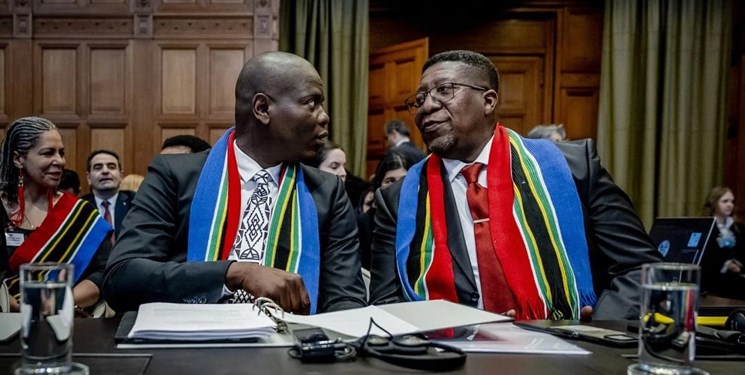
Strategic Council Online - Interview: An expert on West Asian issues said: The hearing of South Africa's complaint against the Zionist regime was held at the International Court of Justice while the genocide and war crimes committed by the occupying regime of Jerusalem are still continuing in the Gaza Strip and every day the number of Palestinian Martyrs is increasing.

In an interview with the website of the Strategic Council of Foreign Relations, Jafar Qanadbashi said: “The government of South Africa got involved in this matter following the public demonstrations of the people who urged the government to take action on the crimes of the Zionist regime. After the parliament’s greenlight and the severance of relations with the Zionist regime, the government prepared a petition to present a fully documented and substantiated report to the court.

He added: “All the presented documents are taken from various UN institutions, and they have tried to include what happened in Gaza in this case impartially.”

According to Qanadbashi, initially, doubts were raised by the supporters of the Zionist regime that this complaint might not be completed. Still, the upright and legal move of South Africa and the support of some other countries caused the court’s jurisdiction to be emphasized and the formation of the court to provide conditions for South Africa to file a complaint. It was also a necessary opportunity for the Zionist regime to defend itself in this court.

Pointing to the importance of the court’s ruling and that it may take several years to issue a verdict ruling according to the Hague court procedure, this expert emphasized: “This is why South Africa has requested temporary measures against Israel; because the lives of the people of Gaza are in danger. “This issue has been approved, and the temporary measures will probably be issued earlier than the general court order.”

Regarding the classification of countries in this lawsuit, he said: “In this scene, many countries have adopted a conservative approach and have not publicly supported any side. Even America, England, and France, who have helped the Zionist regime in the political and military arena, have remained silent, and the countries of the Middle East also reacted with a conservative approach.

About the reasons for this conservative approach of certain countries, Qandabashi said: “One reason may be concern about the costs of any kind of partiality, and another reason is that their support does not play a role in the decision-making process.”

He added: “What is obvious is that in the propaganda field, they have tried to describe South Africa’s actions as fruitless, but legal experts believe that, contrary to popular belief, this court is very serious and its process is based on sound principles, and the course of the court is based on evidence. Which South Africa has presented, and considering the weak defense of the Zionist regime, it will probably end up in condemnation of the Zionist regime.”

The expert on African issues emphasized that if the Zionist regime is convicted of genocide at The Hague, many measures can be foreseen in the Security Council, and sanctions will probably be imposed against Tel Aviv. In the next stage, the court can lead to the formation of a second court, which may lead to the conviction of the Israeli officials.

Qanadbashi continued: “Most legal and political experts believe that if the court gives a contrary verdict, the existence of the United Nations and the International Court will be questioned; Therefore, the supporters of the Zionist regime cannot do much against it in the event of a court ruling against this regime, because the documents that South Africa has presented to the International Court of Justice are very well-founded.”

Pointing out that this court also voted against the Zionist regime in the case of the barrier wall in the West Bank, but they defied it and built the wall, he explained: “Today, without doubt, the Zionist regime will not pay attention to The Hague ruling in its condemnation, but the problem here is that if the genocide is proven, the countries that are friendly to the Zionist regime will not be able to have political and economic relations with Tel Aviv easily, and the ground will be laid for the application of international sanctions more than in the past. At the same time, in such a situation, the US cannot easily veto Security Council resolutions.”

Finally, he pointed out that today, the credibility of the United Nations and its other organs has been questioned and said: “But this court became a tribune for the positions of the opponents of the Zionist regime to be explained and the lies of this regime to be exposed.”

0 Comments

LATEST CONTENT

Consequences of Declining Trust in the Judiciary in Europe

SCFRonline – Opinion: The increase in public distrust of the French judicial system, which in recent surveys has reached approximately two-thirds of citizens, should be analyzed within a framework broader than temporary dissatisfaction or an emotional reaction to a particular criminal case.

Iran’s Potential Levers of Power

SCFRonline– Opinion: Iran’s geopolitical power is not limited solely to oil and the Strait of Hormuz; the unintended emergence of disruptions in the future global food and energy security chains can also demonstrate Iran’s strategic importance.

The Inseparability of the Lebanese Front from the Axis of Resistance

SCFR Online–Opinion: By providing an extensive network of social, healthcare, educational, and post-war reconstruction services, Hezbollah has established a strong social base for itself among Lebanon’s Shiites and Sunnis, and even beyond that, among other segments of Lebanese society, including Christians. Hezbollah has never been an external actor imposed upon Lebanon; rather, it is a phenomenon fundamentally born out of the occupation and crimes of the Zionist regime and itself influenced by popular resistance.

The Increasing Efforts of the Zionist Regime to Redefine Borders and the Regional Order and Its Consequences

SCFR Online– Opinion: Security and military developments in the region over recent months indicate that the ongoing crises and wars in Gaza, southern Lebanon, and parts of Syrian territory encompass broader dimensions of geopolitical and geostrategic transformations. In this context, the increased military presence and control of the Zionist regime over parts of the territories of these areas, along with proposals regarding the creation of buffer zones or even the expansion of security borders, have raised serious questions about the future of the regional order and its consequences for the countries of West Asia.

Loading

Últimas publicaciones

Consequences of Declining Trust in the Judiciary in Europe

SCFRonline – Opinion: The increase in public distrust of the French judicial system, which in recent surveys has reached approximately two-thirds of citizens, should be analyzed within a framework broader than temporary dissatisfaction or an emotional reaction to a particular criminal case.

Iran’s Potential Levers of Power

SCFRonline– Opinion: Iran’s geopolitical power is not limited solely to oil and the Strait of Hormuz; the unintended emergence of disruptions in the future global food and energy security chains can also demonstrate Iran’s strategic importance.

The Inseparability of the Lebanese Front from the Axis of Resistance

SCFR Online–Opinion: By providing an extensive network of social, healthcare, educational, and post-war reconstruction services, Hezbollah has established a strong social base for itself among Lebanon’s Shiites and Sunnis, and even beyond that, among other segments of Lebanese society, including Christians. Hezbollah has never been an external actor imposed upon Lebanon; rather, it is a phenomenon fundamentally born out of the occupation and crimes of the Zionist regime and itself influenced by popular resistance.

The Increasing Efforts of the Zionist Regime to Redefine Borders and the Regional Order and Its Consequences

SCFR Online– Opinion: Security and military developments in the region over recent months indicate that the ongoing crises and wars in Gaza, southern Lebanon, and parts of Syrian territory encompass broader dimensions of geopolitical and geostrategic transformations. In this context, the increased military presence and control of the Zionist regime over parts of the territories of these areas, along with proposals regarding the creation of buffer zones or even the expansion of security borders, have raised serious questions about the future of the regional order and its consequences for the countries of West Asia.

Loading

DERNIER CONTENU

Consequences of Declining Trust in the Judiciary in Europe

SCFRonline – Opinion: The increase in public distrust of the French judicial system, which in recent surveys has reached approximately two-thirds of citizens, should be analyzed within a framework broader than temporary dissatisfaction or an emotional reaction to a particular criminal case.

Iran’s Potential Levers of Power

SCFRonline– Opinion: Iran’s geopolitical power is not limited solely to oil and the Strait of Hormuz; the unintended emergence of disruptions in the future global food and energy security chains can also demonstrate Iran’s strategic importance.

The Inseparability of the Lebanese Front from the Axis of Resistance

SCFR Online–Opinion: By providing an extensive network of social, healthcare, educational, and post-war reconstruction services, Hezbollah has established a strong social base for itself among Lebanon’s Shiites and Sunnis, and even beyond that, among other segments of Lebanese society, including Christians. Hezbollah has never been an external actor imposed upon Lebanon; rather, it is a phenomenon fundamentally born out of the occupation and crimes of the Zionist regime and itself influenced by popular resistance.

The Increasing Efforts of the Zionist Regime to Redefine Borders and the Regional Order and Its Consequences

SCFR Online– Opinion: Security and military developments in the region over recent months indicate that the ongoing crises and wars in Gaza, southern Lebanon, and parts of Syrian territory encompass broader dimensions of geopolitical and geostrategic transformations. In this context, the increased military presence and control of the Zionist regime over parts of the territories of these areas, along with proposals regarding the creation of buffer zones or even the expansion of security borders, have raised serious questions about the future of the regional order and its consequences for the countries of West Asia.

Loading

DERNIER CONTENU

Consequences of Declining Trust in the Judiciary in Europe

SCFRonline – Opinion: The increase in public distrust of the French judicial system, which in recent surveys has reached approximately two-thirds of citizens, should be analyzed within a framework broader than temporary dissatisfaction or an emotional reaction to a particular criminal case.

Iran’s Potential Levers of Power

SCFRonline– Opinion: Iran’s geopolitical power is not limited solely to oil and the Strait of Hormuz; the unintended emergence of disruptions in the future global food and energy security chains can also demonstrate Iran’s strategic importance.

The Inseparability of the Lebanese Front from the Axis of Resistance

SCFR Online–Opinion: By providing an extensive network of social, healthcare, educational, and post-war reconstruction services, Hezbollah has established a strong social base for itself among Lebanon’s Shiites and Sunnis, and even beyond that, among other segments of Lebanese society, including Christians. Hezbollah has never been an external actor imposed upon Lebanon; rather, it is a phenomenon fundamentally born out of the occupation and crimes of the Zionist regime and itself influenced by popular resistance.

The Increasing Efforts of the Zionist Regime to Redefine Borders and the Regional Order and Its Consequences

SCFR Online– Opinion: Security and military developments in the region over recent months indicate that the ongoing crises and wars in Gaza, southern Lebanon, and parts of Syrian territory encompass broader dimensions of geopolitical and geostrategic transformations. In this context, the increased military presence and control of the Zionist regime over parts of the territories of these areas, along with proposals regarding the creation of buffer zones or even the expansion of security borders, have raised serious questions about the future of the regional order and its consequences for the countries of West Asia.

Loading

DERNIER CONTENU

Consequences of Declining Trust in the Judiciary in Europe

SCFRonline – Opinion: The increase in public distrust of the French judicial system, which in recent surveys has reached approximately two-thirds of citizens, should be analyzed within a framework broader than temporary dissatisfaction or an emotional reaction to a particular criminal case.

Iran’s Potential Levers of Power

SCFRonline– Opinion: Iran’s geopolitical power is not limited solely to oil and the Strait of Hormuz; the unintended emergence of disruptions in the future global food and energy security chains can also demonstrate Iran’s strategic importance.

The Inseparability of the Lebanese Front from the Axis of Resistance

SCFR Online–Opinion: By providing an extensive network of social, healthcare, educational, and post-war reconstruction services, Hezbollah has established a strong social base for itself among Lebanon’s Shiites and Sunnis, and even beyond that, among other segments of Lebanese society, including Christians. Hezbollah has never been an external actor imposed upon Lebanon; rather, it is a phenomenon fundamentally born out of the occupation and crimes of the Zionist regime and itself influenced by popular resistance.

The Increasing Efforts of the Zionist Regime to Redefine Borders and the Regional Order and Its Consequences

SCFR Online– Opinion: Security and military developments in the region over recent months indicate that the ongoing crises and wars in Gaza, southern Lebanon, and parts of Syrian territory encompass broader dimensions of geopolitical and geostrategic transformations. In this context, the increased military presence and control of the Zionist regime over parts of the territories of these areas, along with proposals regarding the creation of buffer zones or even the expansion of security borders, have raised serious questions about the future of the regional order and its consequences for the countries of West Asia.

Loading




