Ambiguous Prospects of the Zionist Regime’s Strategy for the Occupation of Gaza

2025/08/23 | Note, Politics, Top News

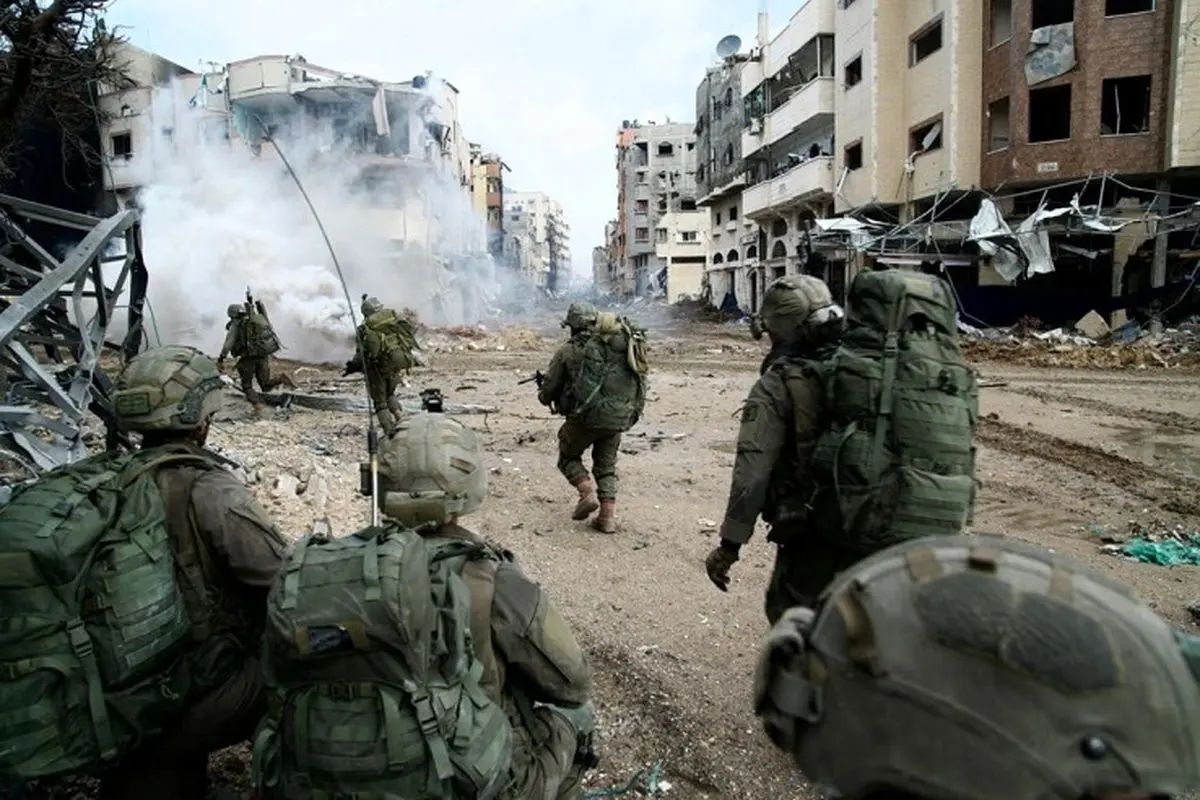
Strategic Council Online – Opinion: Despite widespread disagreements between Netanyahu and the Chief of the General Staff of the Zionist regime's army, Eyal Zamir, the main framework of the plan to occupy Gaza City was finally signed after the war cabinet agreed to seize Gaza City; a decision that could have extensive consequences in the Occupied Territories and the region.

Hamid Khoshayand – Regional Affairs Expert
This move takes place amidst escalating tensions and ongoing conflicts and indicates an intensification of the Zionist regime’s warlike approach towards Gaza. The precise details of this plan and its execution timeline have not yet been fully disclosed. Still, this resolution has increased regional and international concerns regarding the escalation of the human and political crisis in Gaza.
Furthermore, the Zionist regime is seeking to initiate the operation to occupy Gaza. At the same time, diplomatic efforts to find a potential sustainable solution in the region continue, but this new resolution further increases the existing complexities.
Gaza has today become a fundamental and unprecedented stalemate in the military, security, political, and other strategies of the Zionist regime. After nearly two years of all-out war, and in a brutal manner that has violated all international regulations, the Zionist regime has still not been able to achieve its objectives in this strip.
Netanyahu’s five conditions for a ceasefire with Hamas, which were recently announced, clearly show that the Zionist regime has practically failed to achieve the goals of the war. By approving the operation to occupy Gaza, it has returned to the starting point of the war, which began after October 7, 2023, and which has brought it no strategic gains.
In the following, considering the imminent onset of the Zionist regime’s invasion to occupy Gaza, some of the challenges and obstacles facing the Gaza occupation operation and its potential consequences are pointed out:

Hamas’s resistance is the first and most important challenge to the occupation of Gaza by the Zionist regime. Contrary to what the Zionists believe, after 22 months of war, Hamas, despite increased pressures, has adapted to the new conditions and continues to resist and fight. This can be clearly seen in the deadly operations that Hamas fighters recently started in Gaza, each time inflicting heavy casualties on the Zionist regime’s army. This is precisely the important point that the Chief of Staff of the Zionist regime’s army, aware of it, had previously opposed the operation to occupy Gaza.
As can be seen in the previous positions and statements of the Chief of Staff, expanding military operations in an urban environment like Gaza, where Hamas still holds the initiative, is very dangerous and costly. This is because Hamas, by recovering its capabilities, can still use its extensive tunnel network for surprise attacks on Zionist soldiers and planting explosive traps in buildings. Thus, Netanyahu’s plan will inevitably lead to more casualties among Zionist forces, without achieving the declared objectives of its new round of aggression.
Therefore, although Hamas has suffered significant damage during the war, it still remains an important and influential force in terms of field, military, and political presence in Gaza and is capable of governing and resisting the Zionist regime’s army. This stems from Hamas’s deep roots in Gazan society and its preserved military and political capabilities.

The second challenge is the exhaustion of the Zionist regime’s army. Nearly two years of war in Gaza, for which there is no end in sight, has placed the Zionist regime’s army in a situation where it suffers from many internal problems today. The area faces several significant challenges, including manpower shortages, psychological problems unprecedented since 1973, inadequate technical readiness levels for tanks and armored personnel carriers, and a shortage of army ammunition and weapons, particularly for ground combat.
Therefore, the Zionist army is significantly worn out in terms of equipment and manpower and needs to mobilize reserve forces to occupy the remaining 25% of Gaza, where 80% of the strip’s population is gathered. Currently, there are about four military divisions in the Gaza Strip; whereas for a complete occupation of the Gaza Strip, at least six divisions are needed.

The third challenge is regional and international opposition at both the level of nations and governments, even among the Western partners of the Zionist regime. This opposition, which has intensified in recent weeks due to the painful human situation and the famine and starvation of the people of Gaza by the Zionist regime, and which has brought world public opinion to a boiling point, is mainly due to anger and concern over the human consequences, as well as violations of international law and regional instability.

The fourth challenge is internal opposition within the Zionist regime, which is intensifying daily, particularly due to concerns over the lives of the hostages. Although the Zionist regime’s army has announced that it will not attack areas where there is information about the presence of captives, there is still no precise information about the location of the hostages. This issue, meaning Tel Aviv’s lack of knowledge about the exact location of the captives, is in fact one of the most important obstacles facing the advancement of the Zionist regime’s army in Gaza especially since Hamas has threatened that this criminal adventure will come at a heavy price for them, which could endanger the lives of the captives.

Consequently, the plan for the occupation of Gaza by the Zionist regime, despite being approved by the war cabinet, faces fundamental challenges and numerous obstacles that cast a shadow of ambiguity over the realization of the Zionist regime’s declared objectives.
If the Zionist regime still insists on executing the operation to occupy Gaza, it will undoubtedly enter a dark phase in the war with extensive regional and international consequences. This move will further isolate Tel Aviv internationally and may even convince countries that are hesitant to recognize the State of Palestine to set aside their hesitation.

0 Comments

LATEST CONTENT

The Makkah Pact; Reasons for its Formation and Challenges Ahead

SCFR Online – Opinion: The Makkah Pact, signed between Saudi Arabia, Pakistan, and Turkey under the motto “an attack on one is an attack on all,” is viewed by some analysts less as a full-fledged military coalition and more as an attempt to reduce security dependence on an external power and to establish a regional security mechanism.

Implications of the US-Saudi Nuclear Agreement

SCFR Online – Opinion: The new US-Saudi nuclear agreement, despite legal and political ambiguities, could alter previous non-proliferation standards in West Asia and intensify nuclear competition, ushering it into a new phase.

An Analysis of Recent Turkey-Israeli Regime Tensions

SCFR Online – Opinion: Recent developments in Syria indicate an intensification of strategic rivalry between Turkey and the Israeli regime, but mutual considerations and the role of the United States have limited the likelihood of direct war.

Increasing criticism of the extensive Zionist lobby network

SCFR Online – Opinion: An examination of the mechanisms of the Israeli regime’s influence in the United States depicts a complex picture of shared interests, strategic dependencies, and the limitations of this relationship.

Realities of the Tripartite Makkah Pact

SCFR Online – Interview: The signing of the Makkah agreement between Saudi Arabia, Pakistan, and Turkey has raised questions about the future of the region’s security structure and the position of these countries in West Asian equations. Can this agreement become a genuine collective defense mechanism, or does it have more of a political and deterrent function than creating new military capacity?

Strategic Implications of the Reduction of US Weapons Stockpiles

SCFR Online – Opinion: The continuation of the US war against Iran, in addition to increasing operational costs, has called into question the actual capacity of the American arsenal to simultaneously fulfill security commitments on multiple fronts; an issue that affects deterrence, defense production capacity, and Washington’s resource prioritization.

The Formation of a New Order in Relations Between Powers

SCFR Online – Opinion: The Russia-Ukraine war and the war of the United States and the Israeli regime against Iran have been formed with different objectives and actors, but field and political developments indicate that they are not entirely separate from one another.

Loading

Últimas publicaciones

The Makkah Pact; Reasons for its Formation and Challenges Ahead

SCFR Online – Opinion: The Makkah Pact, signed between Saudi Arabia, Pakistan, and Turkey under the motto “an attack on one is an attack on all,” is viewed by some analysts less as a full-fledged military coalition and more as an attempt to reduce security dependence on an external power and to establish a regional security mechanism.

Implications of the US-Saudi Nuclear Agreement

SCFR Online – Opinion: The new US-Saudi nuclear agreement, despite legal and political ambiguities, could alter previous non-proliferation standards in West Asia and intensify nuclear competition, ushering it into a new phase.

An Analysis of Recent Turkey-Israeli Regime Tensions

SCFR Online – Opinion: Recent developments in Syria indicate an intensification of strategic rivalry between Turkey and the Israeli regime, but mutual considerations and the role of the United States have limited the likelihood of direct war.

Increasing criticism of the extensive Zionist lobby network

SCFR Online – Opinion: An examination of the mechanisms of the Israeli regime’s influence in the United States depicts a complex picture of shared interests, strategic dependencies, and the limitations of this relationship.

Realities of the Tripartite Makkah Pact

SCFR Online – Interview: The signing of the Makkah agreement between Saudi Arabia, Pakistan, and Turkey has raised questions about the future of the region’s security structure and the position of these countries in West Asian equations. Can this agreement become a genuine collective defense mechanism, or does it have more of a political and deterrent function than creating new military capacity?

Strategic Implications of the Reduction of US Weapons Stockpiles

SCFR Online – Opinion: The continuation of the US war against Iran, in addition to increasing operational costs, has called into question the actual capacity of the American arsenal to simultaneously fulfill security commitments on multiple fronts; an issue that affects deterrence, defense production capacity, and Washington’s resource prioritization.

The Formation of a New Order in Relations Between Powers

SCFR Online – Opinion: The Russia-Ukraine war and the war of the United States and the Israeli regime against Iran have been formed with different objectives and actors, but field and political developments indicate that they are not entirely separate from one another.

Loading

DERNIER CONTENU

The Makkah Pact; Reasons for its Formation and Challenges Ahead

SCFR Online – Opinion: The Makkah Pact, signed between Saudi Arabia, Pakistan, and Turkey under the motto “an attack on one is an attack on all,” is viewed by some analysts less as a full-fledged military coalition and more as an attempt to reduce security dependence on an external power and to establish a regional security mechanism.

Implications of the US-Saudi Nuclear Agreement

SCFR Online – Opinion: The new US-Saudi nuclear agreement, despite legal and political ambiguities, could alter previous non-proliferation standards in West Asia and intensify nuclear competition, ushering it into a new phase.

An Analysis of Recent Turkey-Israeli Regime Tensions

SCFR Online – Opinion: Recent developments in Syria indicate an intensification of strategic rivalry between Turkey and the Israeli regime, but mutual considerations and the role of the United States have limited the likelihood of direct war.

Increasing criticism of the extensive Zionist lobby network

SCFR Online – Opinion: An examination of the mechanisms of the Israeli regime’s influence in the United States depicts a complex picture of shared interests, strategic dependencies, and the limitations of this relationship.

Realities of the Tripartite Makkah Pact

SCFR Online – Interview: The signing of the Makkah agreement between Saudi Arabia, Pakistan, and Turkey has raised questions about the future of the region’s security structure and the position of these countries in West Asian equations. Can this agreement become a genuine collective defense mechanism, or does it have more of a political and deterrent function than creating new military capacity?

Strategic Implications of the Reduction of US Weapons Stockpiles

SCFR Online – Opinion: The continuation of the US war against Iran, in addition to increasing operational costs, has called into question the actual capacity of the American arsenal to simultaneously fulfill security commitments on multiple fronts; an issue that affects deterrence, defense production capacity, and Washington’s resource prioritization.

The Formation of a New Order in Relations Between Powers

SCFR Online – Opinion: The Russia-Ukraine war and the war of the United States and the Israeli regime against Iran have been formed with different objectives and actors, but field and political developments indicate that they are not entirely separate from one another.

Loading

DERNIER CONTENU

The Makkah Pact; Reasons for its Formation and Challenges Ahead

SCFR Online – Opinion: The Makkah Pact, signed between Saudi Arabia, Pakistan, and Turkey under the motto “an attack on one is an attack on all,” is viewed by some analysts less as a full-fledged military coalition and more as an attempt to reduce security dependence on an external power and to establish a regional security mechanism.

Implications of the US-Saudi Nuclear Agreement

SCFR Online – Opinion: The new US-Saudi nuclear agreement, despite legal and political ambiguities, could alter previous non-proliferation standards in West Asia and intensify nuclear competition, ushering it into a new phase.

An Analysis of Recent Turkey-Israeli Regime Tensions

SCFR Online – Opinion: Recent developments in Syria indicate an intensification of strategic rivalry between Turkey and the Israeli regime, but mutual considerations and the role of the United States have limited the likelihood of direct war.

Increasing criticism of the extensive Zionist lobby network

SCFR Online – Opinion: An examination of the mechanisms of the Israeli regime’s influence in the United States depicts a complex picture of shared interests, strategic dependencies, and the limitations of this relationship.

Realities of the Tripartite Makkah Pact

SCFR Online – Interview: The signing of the Makkah agreement between Saudi Arabia, Pakistan, and Turkey has raised questions about the future of the region’s security structure and the position of these countries in West Asian equations. Can this agreement become a genuine collective defense mechanism, or does it have more of a political and deterrent function than creating new military capacity?

Strategic Implications of the Reduction of US Weapons Stockpiles

SCFR Online – Opinion: The continuation of the US war against Iran, in addition to increasing operational costs, has called into question the actual capacity of the American arsenal to simultaneously fulfill security commitments on multiple fronts; an issue that affects deterrence, defense production capacity, and Washington’s resource prioritization.

The Formation of a New Order in Relations Between Powers

SCFR Online – Opinion: The Russia-Ukraine war and the war of the United States and the Israeli regime against Iran have been formed with different objectives and actors, but field and political developments indicate that they are not entirely separate from one another.

Loading

DERNIER CONTENU

The Makkah Pact; Reasons for its Formation and Challenges Ahead

SCFR Online – Opinion: The Makkah Pact, signed between Saudi Arabia, Pakistan, and Turkey under the motto “an attack on one is an attack on all,” is viewed by some analysts less as a full-fledged military coalition and more as an attempt to reduce security dependence on an external power and to establish a regional security mechanism.

Implications of the US-Saudi Nuclear Agreement

SCFR Online – Opinion: The new US-Saudi nuclear agreement, despite legal and political ambiguities, could alter previous non-proliferation standards in West Asia and intensify nuclear competition, ushering it into a new phase.

An Analysis of Recent Turkey-Israeli Regime Tensions

SCFR Online – Opinion: Recent developments in Syria indicate an intensification of strategic rivalry between Turkey and the Israeli regime, but mutual considerations and the role of the United States have limited the likelihood of direct war.

Increasing criticism of the extensive Zionist lobby network

SCFR Online – Opinion: An examination of the mechanisms of the Israeli regime’s influence in the United States depicts a complex picture of shared interests, strategic dependencies, and the limitations of this relationship.

Realities of the Tripartite Makkah Pact

SCFR Online – Interview: The signing of the Makkah agreement between Saudi Arabia, Pakistan, and Turkey has raised questions about the future of the region’s security structure and the position of these countries in West Asian equations. Can this agreement become a genuine collective defense mechanism, or does it have more of a political and deterrent function than creating new military capacity?

Strategic Implications of the Reduction of US Weapons Stockpiles

SCFR Online – Opinion: The continuation of the US war against Iran, in addition to increasing operational costs, has called into question the actual capacity of the American arsenal to simultaneously fulfill security commitments on multiple fronts; an issue that affects deterrence, defense production capacity, and Washington’s resource prioritization.

The Formation of a New Order in Relations Between Powers

SCFR Online – Opinion: The Russia-Ukraine war and the war of the United States and the Israeli regime against Iran have been formed with different objectives and actors, but field and political developments indicate that they are not entirely separate from one another.

Loading





