An Analysis of Syria’s Parliamentary Elections

2025/10/09 | interview, Politics, Top News

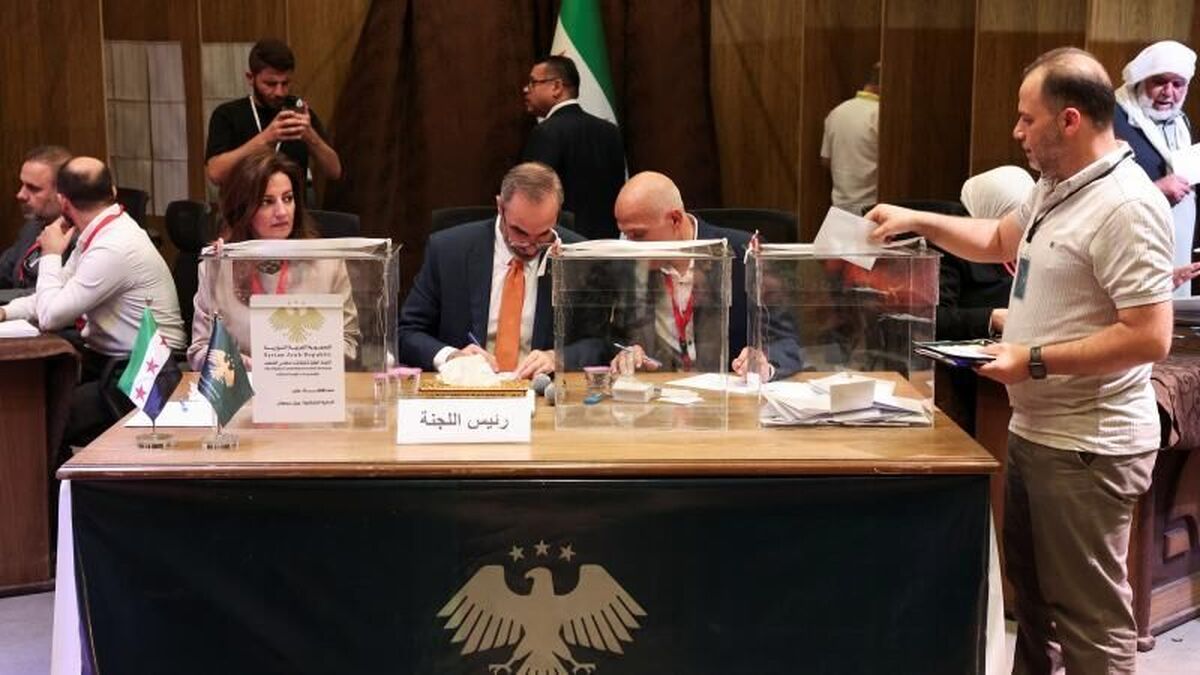
Online Strategic Council - Interview: A West Asia affairs expert stated that the first parliamentary elections in Syria during the interim government's tenure, led by Ahmad al-Shar, were held while the appointed composition of seats, the absence of a national census, and the influence of foreign actors challenge the real legitimacy and freedom of these elections.

Ibrahim Farahani, in an interview with the Strategic Council on Foreign Relations’ website, stated: Syria’s parliamentary elections were held on Sunday, October 5, at a time when the country’s political and security structure remains unstable. While the interim government of Ahmad al-Shar had promised that these elections would mark the beginning of a new process for drafting a new constitution and rebuilding state institutions, many analysts consider these elections not a return to democracy, but a preliminary step towards consolidating the power of the interim government.

According to Farahani, “During the era of Bashar al-Assad, Syria never had a cohesive and capable government in the classical sense, and especially since the beginning of the internal crisis in 2011 and the weakening of the country’s sovereignty, the Syrian government turned into a fragile state; a state that practically controlled only a part of the country’s territory.”

He believed: “After the fall of the Assad government, this situation not only did not improve but worsened. To the extent that today, the interim government lacks the political legitimacy and sufficient military power to govern the country and provide security for it.”

The West Asia affairs expert described the structure of Syria’s new elections as more of a mechanism for legitimizing the interim government than an effort for public participation in the country’s political sphere. Pointing out that no accurate census has been conducted in Syria, he said: “The electoral system based on electoral colleges practically negates public participation. The committees that are supposed to select two-thirds of the representatives are themselves appointed by Ahmad al-Shar, and the remaining one-third is also directly appointed by him.”

In Farahani’s belief, such a process is fundamentally not an election, but an organized appointment to form a parliament whose primary mission will be to draft a constitution favorable to the interim government. He emphasized: “The future parliament is not a symbol of democracy, but a political tool for consolidating the power structure of Ahmad al-Shar and his allies. Its main goal is to prepare the legal groundwork for the continuation of the current rule.”

Farahani also stressed that “the field conditions in Syria fundamentally preclude the possibility of holding free elections; there is no reliable demographic data, nor has the possibility of transferring ballot boxes to conflict areas been provided. Even determining who is eligible to vote is not possible. Under such conditions, holding elections resembles a political show more than a democratic process.”

The Fragile Balance of Foreign Actors: A Constant Threat to Damascus

Farahani, referring to the prominent role of foreign actors in Syria’s political future, stated: “Currently, Syria has become an arena of competition between Turkey and the Israeli regime. In the north, the Kurds have gained power with Turkey’s support, and in the south, Druze groups have taken control of the field with the backing of the Israeli regime. Therefore, the Syrian interim government, amidst these multi-faceted pressures, practically only governs the central parts of the country.”

Farahani warned that “the Israeli regime, exploiting the power vacuum in Damascus, has increased its attacks against Syria’s military infrastructure.” He explained that “in recent months, Syria’s airports, ammunition depots, and even air units have been repeatedly targeted by airstrikes from this regime. These attacks have not only reduced Damascus’s military capability but also sent a clear message from Tel Aviv to the Damascus government that the new government should not cross the Israeli regime’s security red lines.”

According to this expert, “Although Russia has officially withdrawn from Syria, it has still maintained its influence in the country through diplomatic and security tools. Moscow still has options at its disposal to use them to pressure Damascus if necessary. Although returning Assad to power is highly unlikely, Russia can keep the al-Shar government in a state of passivity by raising such an option.”

Farahani emphasized that “Syria’s elections, although symbolically considered the first political experience after the fall of Bashar al-Assad’s government, structurally, are more of a tool for reproducing power within a limited framework.” This expert said: “As long as Syria does not emerge from the status of a failed state, elections cannot regain their true meaning. This voting is merely a step to begin a new political order in which no sign of democracy is yet visible.” In this expert’s opinion, “Syria’s future depends on the balance of power among foreign actors, the rebuilding of security institutions, and agreement among internal forces.” He clarified: “The interim government of Ahmad al-Shar will face the risk of collapse if it fails to create national cohesion. What is happening in Damascus today is not the end of the Syrian crisis, but the beginning of a new chapter of it.”


0 Comments

LATEST CONTENT

Consequences of Declining Trust in the Judiciary in Europe

SCFRonline – Opinion: The increase in public distrust of the French judicial system, which in recent surveys has reached approximately two-thirds of citizens, should be analyzed within a framework broader than temporary dissatisfaction or an emotional reaction to a particular criminal case.

Iran’s Potential Levers of Power

SCFRonline– Opinion: Iran’s geopolitical power is not limited solely to oil and the Strait of Hormuz; the unintended emergence of disruptions in the future global food and energy security chains can also demonstrate Iran’s strategic importance.

The Inseparability of the Lebanese Front from the Axis of Resistance

SCFR Online–Opinion: By providing an extensive network of social, healthcare, educational, and post-war reconstruction services, Hezbollah has established a strong social base for itself among Lebanon’s Shiites and Sunnis, and even beyond that, among other segments of Lebanese society, including Christians. Hezbollah has never been an external actor imposed upon Lebanon; rather, it is a phenomenon fundamentally born out of the occupation and crimes of the Zionist regime and itself influenced by popular resistance.

The Increasing Efforts of the Zionist Regime to Redefine Borders and the Regional Order and Its Consequences

SCFR Online– Opinion: Security and military developments in the region over recent months indicate that the ongoing crises and wars in Gaza, southern Lebanon, and parts of Syrian territory encompass broader dimensions of geopolitical and geostrategic transformations. In this context, the increased military presence and control of the Zionist regime over parts of the territories of these areas, along with proposals regarding the creation of buffer zones or even the expansion of security borders, have raised serious questions about the future of the regional order and its consequences for the countries of West Asia.

Loading

Últimas publicaciones

Consequences of Declining Trust in the Judiciary in Europe

SCFRonline – Opinion: The increase in public distrust of the French judicial system, which in recent surveys has reached approximately two-thirds of citizens, should be analyzed within a framework broader than temporary dissatisfaction or an emotional reaction to a particular criminal case.

Iran’s Potential Levers of Power

SCFRonline– Opinion: Iran’s geopolitical power is not limited solely to oil and the Strait of Hormuz; the unintended emergence of disruptions in the future global food and energy security chains can also demonstrate Iran’s strategic importance.

The Inseparability of the Lebanese Front from the Axis of Resistance

SCFR Online–Opinion: By providing an extensive network of social, healthcare, educational, and post-war reconstruction services, Hezbollah has established a strong social base for itself among Lebanon’s Shiites and Sunnis, and even beyond that, among other segments of Lebanese society, including Christians. Hezbollah has never been an external actor imposed upon Lebanon; rather, it is a phenomenon fundamentally born out of the occupation and crimes of the Zionist regime and itself influenced by popular resistance.

The Increasing Efforts of the Zionist Regime to Redefine Borders and the Regional Order and Its Consequences

SCFR Online– Opinion: Security and military developments in the region over recent months indicate that the ongoing crises and wars in Gaza, southern Lebanon, and parts of Syrian territory encompass broader dimensions of geopolitical and geostrategic transformations. In this context, the increased military presence and control of the Zionist regime over parts of the territories of these areas, along with proposals regarding the creation of buffer zones or even the expansion of security borders, have raised serious questions about the future of the regional order and its consequences for the countries of West Asia.

Loading

DERNIER CONTENU

Consequences of Declining Trust in the Judiciary in Europe

SCFRonline – Opinion: The increase in public distrust of the French judicial system, which in recent surveys has reached approximately two-thirds of citizens, should be analyzed within a framework broader than temporary dissatisfaction or an emotional reaction to a particular criminal case.

Iran’s Potential Levers of Power

SCFRonline– Opinion: Iran’s geopolitical power is not limited solely to oil and the Strait of Hormuz; the unintended emergence of disruptions in the future global food and energy security chains can also demonstrate Iran’s strategic importance.

The Inseparability of the Lebanese Front from the Axis of Resistance

SCFR Online–Opinion: By providing an extensive network of social, healthcare, educational, and post-war reconstruction services, Hezbollah has established a strong social base for itself among Lebanon’s Shiites and Sunnis, and even beyond that, among other segments of Lebanese society, including Christians. Hezbollah has never been an external actor imposed upon Lebanon; rather, it is a phenomenon fundamentally born out of the occupation and crimes of the Zionist regime and itself influenced by popular resistance.

The Increasing Efforts of the Zionist Regime to Redefine Borders and the Regional Order and Its Consequences

SCFR Online– Opinion: Security and military developments in the region over recent months indicate that the ongoing crises and wars in Gaza, southern Lebanon, and parts of Syrian territory encompass broader dimensions of geopolitical and geostrategic transformations. In this context, the increased military presence and control of the Zionist regime over parts of the territories of these areas, along with proposals regarding the creation of buffer zones or even the expansion of security borders, have raised serious questions about the future of the regional order and its consequences for the countries of West Asia.

Loading

DERNIER CONTENU

Consequences of Declining Trust in the Judiciary in Europe

SCFRonline – Opinion: The increase in public distrust of the French judicial system, which in recent surveys has reached approximately two-thirds of citizens, should be analyzed within a framework broader than temporary dissatisfaction or an emotional reaction to a particular criminal case.

Iran’s Potential Levers of Power

SCFRonline– Opinion: Iran’s geopolitical power is not limited solely to oil and the Strait of Hormuz; the unintended emergence of disruptions in the future global food and energy security chains can also demonstrate Iran’s strategic importance.

The Inseparability of the Lebanese Front from the Axis of Resistance

SCFR Online–Opinion: By providing an extensive network of social, healthcare, educational, and post-war reconstruction services, Hezbollah has established a strong social base for itself among Lebanon’s Shiites and Sunnis, and even beyond that, among other segments of Lebanese society, including Christians. Hezbollah has never been an external actor imposed upon Lebanon; rather, it is a phenomenon fundamentally born out of the occupation and crimes of the Zionist regime and itself influenced by popular resistance.

The Increasing Efforts of the Zionist Regime to Redefine Borders and the Regional Order and Its Consequences

SCFR Online– Opinion: Security and military developments in the region over recent months indicate that the ongoing crises and wars in Gaza, southern Lebanon, and parts of Syrian territory encompass broader dimensions of geopolitical and geostrategic transformations. In this context, the increased military presence and control of the Zionist regime over parts of the territories of these areas, along with proposals regarding the creation of buffer zones or even the expansion of security borders, have raised serious questions about the future of the regional order and its consequences for the countries of West Asia.

Loading

DERNIER CONTENU

Consequences of Declining Trust in the Judiciary in Europe

SCFRonline – Opinion: The increase in public distrust of the French judicial system, which in recent surveys has reached approximately two-thirds of citizens, should be analyzed within a framework broader than temporary dissatisfaction or an emotional reaction to a particular criminal case.

Iran’s Potential Levers of Power

SCFRonline– Opinion: Iran’s geopolitical power is not limited solely to oil and the Strait of Hormuz; the unintended emergence of disruptions in the future global food and energy security chains can also demonstrate Iran’s strategic importance.

The Inseparability of the Lebanese Front from the Axis of Resistance

SCFR Online–Opinion: By providing an extensive network of social, healthcare, educational, and post-war reconstruction services, Hezbollah has established a strong social base for itself among Lebanon’s Shiites and Sunnis, and even beyond that, among other segments of Lebanese society, including Christians. Hezbollah has never been an external actor imposed upon Lebanon; rather, it is a phenomenon fundamentally born out of the occupation and crimes of the Zionist regime and itself influenced by popular resistance.

The Increasing Efforts of the Zionist Regime to Redefine Borders and the Regional Order and Its Consequences

SCFR Online– Opinion: Security and military developments in the region over recent months indicate that the ongoing crises and wars in Gaza, southern Lebanon, and parts of Syrian territory encompass broader dimensions of geopolitical and geostrategic transformations. In this context, the increased military presence and control of the Zionist regime over parts of the territories of these areas, along with proposals regarding the creation of buffer zones or even the expansion of security borders, have raised serious questions about the future of the regional order and its consequences for the countries of West Asia.

Loading




