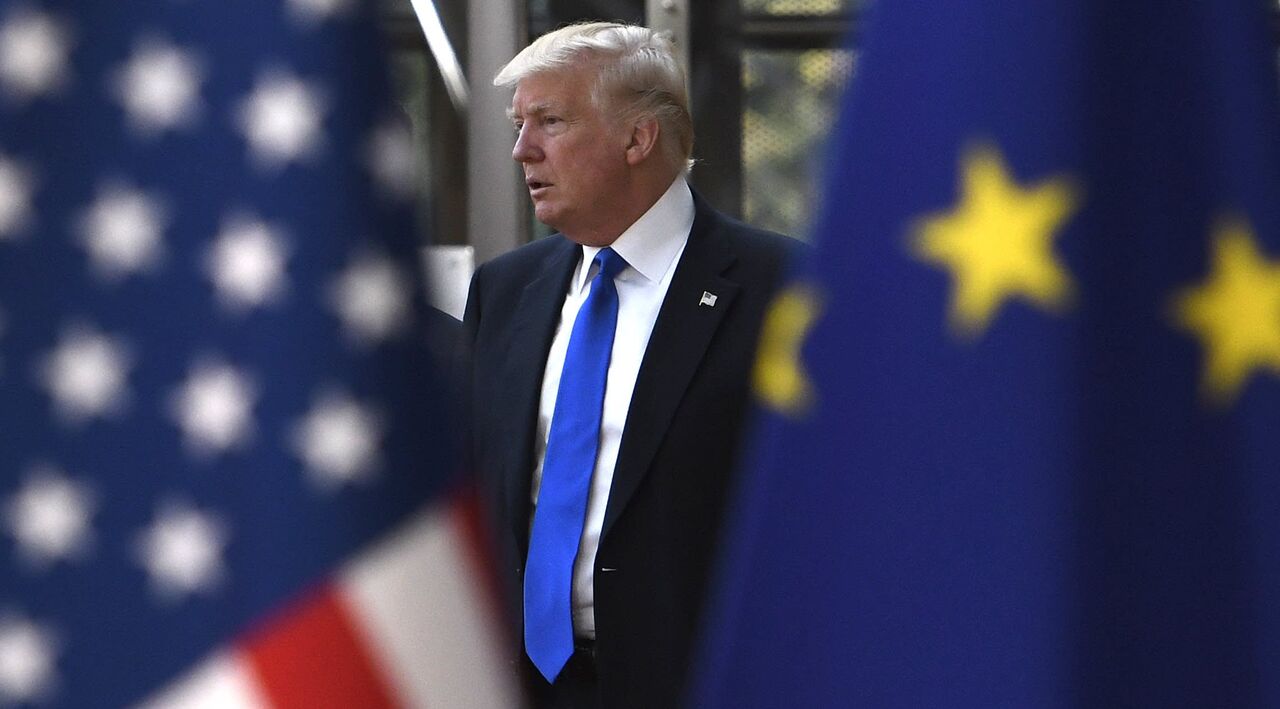
Changing the Course of U.S. Foreign Policy During the Trump Era

2026/01/02 | interview, Politics, Top News

Strategic Council Online – Interview: An international affairs expert stated that in recent years, the U.S. approach has shifted from a value-centered approach to security deal-making. This change means that, instead of emphasizing values such as democracy and human rights, the United States has adjusted its foreign policy to prioritize security interests, political bargaining, and expediency.

In an interview with the Strategic Council on Foreign Relations website, Kourosh Ahmadi stated: “This change began during Donald Trump’s first presidential term.” In fact, Trump became known as someone who is deal-oriented, with his focus mainly on economic issues.

According to Ahmadi, when the idea of “America First” was introduced, it meant that U.S. economic interests were the priority. This meant that American capital should not leave the country and go abroad. In addition, capital that had already left should return to the United States, creating jobs. The expert continued: “Under ‘America First,’ emphasis is placed on limiting immigration, because immigrants consume U.S. resources.”

Ahmadi described the symbol of these policies as distancing from a series of liberal, liberal-democratic, and human rights values.

The expert continued: “This is while U.S. presidents in the past, both Republican and Democrat, were ostensibly committed to these values. But Trump distanced himself from them and retreated from areas such as international economic liberalism, the free market, and free trade.”

He explained: In fact, Trump has tried to behave in a highly pragmatic manner and is pursuing pragmatism without focusing on ideas, thoughts, values, and beliefs.

Ahmadi added that Trump began this policy during his first presidential term, and in the second term, this approach has intensified.

Referring to the fact that the concept of the free world, helping to defend the free world, and assisting the security of the free world are ideas that have been raised for Americans since the Second World War, the international affairs expert said: This is while Trump has distanced himself from these values both in idea and in practice.

He explained in this regard: “For example, disregard for and sidelining NATO’s priority falls within this framework. Of course, it is not clear what results this approach has achieved in practice, or whether the U.S. economy has improved. Although the unemployment rate announced last month, 6.4 percent, was higher than the previous month. Therefore, it must be assessed whether the set of Trump’s policies in all areas and in the direction of strengthening the ‘America First’ approach is proceeding correctly or not.”

In response to the question of whether such a policy is the result of Trump’s own ideas and outlook or whether structural transformations in the world have also influenced it, Ahmadi emphasized that developments in the international system have certainly affected Trump’s approach. For example, globalization has been an essential factor in intensifying specific trends, such as the outflow of capital from the United States and the increase in immigration to the United States and Western Europe. He continued: “The issue of globalization and the relocation of traditional industries and workers from old traditional industrial countries to places such as China has caused politics in the United States to be affected, public opinion to become dissatisfied, and workers who previously worked in these industries, due to these problems, to develop right-wing tendencies and, in opposition to capital flight from their country, support far-right populist groups.”

According to the international affairs expert, these developments at the international level have, in this manner, intensified political dissatisfaction within the United States and helped a far-right current, led by Trump, to win elections. Pointing out that developments in the international structure have thus influenced developments in the United States, he explained that a similar transformation can be observed in Europe, and far-right parties in Europe have also been significantly strengthened since last year.

Finally, in response to the question of whether these policies would change if a Democrat came to power, the expert said: “When Joe Biden came to power after the end of Trump’s first presidential term, trends changed to some extent. If a Democratic individual comes to power again, there is a possibility that the U.S. security deal-making policy will be moderated.” He continued: “So-called voters who are dissatisfied with increased immigration and the migration of human capital to the United States and the outflow of capital from the country have their influence, and Democrats must also take the views of these groups into account. Of course, even if a Democrat comes to power, they cannot distance themselves 180 degrees from policies such as Trump’s policies and are compelled to pay attention to this transformation that has taken shape in the structure and public opinion.”

0 Comments

LATEST CONTENT

Consequences of Declining Trust in the Judiciary in Europe

SCFRonline – Opinion: The increase in public distrust of the French judicial system, which in recent surveys has reached approximately two-thirds of citizens, should be analyzed within a framework broader than temporary dissatisfaction or an emotional reaction to a particular criminal case.

Iran’s Potential Levers of Power

SCFRonline– Opinion: Iran’s geopolitical power is not limited solely to oil and the Strait of Hormuz; the unintended emergence of disruptions in the future global food and energy security chains can also demonstrate Iran’s strategic importance.

The Inseparability of the Lebanese Front from the Axis of Resistance

SCFR Online–Opinion: By providing an extensive network of social, healthcare, educational, and post-war reconstruction services, Hezbollah has established a strong social base for itself among Lebanon’s Shiites and Sunnis, and even beyond that, among other segments of Lebanese society, including Christians. Hezbollah has never been an external actor imposed upon Lebanon; rather, it is a phenomenon fundamentally born out of the occupation and crimes of the Zionist regime and itself influenced by popular resistance.

The Increasing Efforts of the Zionist Regime to Redefine Borders and the Regional Order and Its Consequences

SCFR Online– Opinion: Security and military developments in the region over recent months indicate that the ongoing crises and wars in Gaza, southern Lebanon, and parts of Syrian territory encompass broader dimensions of geopolitical and geostrategic transformations. In this context, the increased military presence and control of the Zionist regime over parts of the territories of these areas, along with proposals regarding the creation of buffer zones or even the expansion of security borders, have raised serious questions about the future of the regional order and its consequences for the countries of West Asia.

Loading

Últimas publicaciones

Consequences of Declining Trust in the Judiciary in Europe

SCFRonline – Opinion: The increase in public distrust of the French judicial system, which in recent surveys has reached approximately two-thirds of citizens, should be analyzed within a framework broader than temporary dissatisfaction or an emotional reaction to a particular criminal case.

Iran’s Potential Levers of Power

SCFRonline– Opinion: Iran’s geopolitical power is not limited solely to oil and the Strait of Hormuz; the unintended emergence of disruptions in the future global food and energy security chains can also demonstrate Iran’s strategic importance.

The Inseparability of the Lebanese Front from the Axis of Resistance

SCFR Online–Opinion: By providing an extensive network of social, healthcare, educational, and post-war reconstruction services, Hezbollah has established a strong social base for itself among Lebanon’s Shiites and Sunnis, and even beyond that, among other segments of Lebanese society, including Christians. Hezbollah has never been an external actor imposed upon Lebanon; rather, it is a phenomenon fundamentally born out of the occupation and crimes of the Zionist regime and itself influenced by popular resistance.

The Increasing Efforts of the Zionist Regime to Redefine Borders and the Regional Order and Its Consequences

SCFR Online– Opinion: Security and military developments in the region over recent months indicate that the ongoing crises and wars in Gaza, southern Lebanon, and parts of Syrian territory encompass broader dimensions of geopolitical and geostrategic transformations. In this context, the increased military presence and control of the Zionist regime over parts of the territories of these areas, along with proposals regarding the creation of buffer zones or even the expansion of security borders, have raised serious questions about the future of the regional order and its consequences for the countries of West Asia.

Loading

DERNIER CONTENU

Consequences of Declining Trust in the Judiciary in Europe

SCFRonline – Opinion: The increase in public distrust of the French judicial system, which in recent surveys has reached approximately two-thirds of citizens, should be analyzed within a framework broader than temporary dissatisfaction or an emotional reaction to a particular criminal case.

Iran’s Potential Levers of Power

SCFRonline– Opinion: Iran’s geopolitical power is not limited solely to oil and the Strait of Hormuz; the unintended emergence of disruptions in the future global food and energy security chains can also demonstrate Iran’s strategic importance.

The Inseparability of the Lebanese Front from the Axis of Resistance

SCFR Online–Opinion: By providing an extensive network of social, healthcare, educational, and post-war reconstruction services, Hezbollah has established a strong social base for itself among Lebanon’s Shiites and Sunnis, and even beyond that, among other segments of Lebanese society, including Christians. Hezbollah has never been an external actor imposed upon Lebanon; rather, it is a phenomenon fundamentally born out of the occupation and crimes of the Zionist regime and itself influenced by popular resistance.

The Increasing Efforts of the Zionist Regime to Redefine Borders and the Regional Order and Its Consequences

SCFR Online– Opinion: Security and military developments in the region over recent months indicate that the ongoing crises and wars in Gaza, southern Lebanon, and parts of Syrian territory encompass broader dimensions of geopolitical and geostrategic transformations. In this context, the increased military presence and control of the Zionist regime over parts of the territories of these areas, along with proposals regarding the creation of buffer zones or even the expansion of security borders, have raised serious questions about the future of the regional order and its consequences for the countries of West Asia.

Loading

DERNIER CONTENU

Consequences of Declining Trust in the Judiciary in Europe

SCFRonline – Opinion: The increase in public distrust of the French judicial system, which in recent surveys has reached approximately two-thirds of citizens, should be analyzed within a framework broader than temporary dissatisfaction or an emotional reaction to a particular criminal case.

Iran’s Potential Levers of Power

SCFRonline– Opinion: Iran’s geopolitical power is not limited solely to oil and the Strait of Hormuz; the unintended emergence of disruptions in the future global food and energy security chains can also demonstrate Iran’s strategic importance.

The Inseparability of the Lebanese Front from the Axis of Resistance

SCFR Online–Opinion: By providing an extensive network of social, healthcare, educational, and post-war reconstruction services, Hezbollah has established a strong social base for itself among Lebanon’s Shiites and Sunnis, and even beyond that, among other segments of Lebanese society, including Christians. Hezbollah has never been an external actor imposed upon Lebanon; rather, it is a phenomenon fundamentally born out of the occupation and crimes of the Zionist regime and itself influenced by popular resistance.

The Increasing Efforts of the Zionist Regime to Redefine Borders and the Regional Order and Its Consequences

SCFR Online– Opinion: Security and military developments in the region over recent months indicate that the ongoing crises and wars in Gaza, southern Lebanon, and parts of Syrian territory encompass broader dimensions of geopolitical and geostrategic transformations. In this context, the increased military presence and control of the Zionist regime over parts of the territories of these areas, along with proposals regarding the creation of buffer zones or even the expansion of security borders, have raised serious questions about the future of the regional order and its consequences for the countries of West Asia.

Loading

DERNIER CONTENU

Consequences of Declining Trust in the Judiciary in Europe

SCFRonline – Opinion: The increase in public distrust of the French judicial system, which in recent surveys has reached approximately two-thirds of citizens, should be analyzed within a framework broader than temporary dissatisfaction or an emotional reaction to a particular criminal case.

Iran’s Potential Levers of Power

SCFRonline– Opinion: Iran’s geopolitical power is not limited solely to oil and the Strait of Hormuz; the unintended emergence of disruptions in the future global food and energy security chains can also demonstrate Iran’s strategic importance.

The Inseparability of the Lebanese Front from the Axis of Resistance

SCFR Online–Opinion: By providing an extensive network of social, healthcare, educational, and post-war reconstruction services, Hezbollah has established a strong social base for itself among Lebanon’s Shiites and Sunnis, and even beyond that, among other segments of Lebanese society, including Christians. Hezbollah has never been an external actor imposed upon Lebanon; rather, it is a phenomenon fundamentally born out of the occupation and crimes of the Zionist regime and itself influenced by popular resistance.

The Increasing Efforts of the Zionist Regime to Redefine Borders and the Regional Order and Its Consequences

SCFR Online– Opinion: Security and military developments in the region over recent months indicate that the ongoing crises and wars in Gaza, southern Lebanon, and parts of Syrian territory encompass broader dimensions of geopolitical and geostrategic transformations. In this context, the increased military presence and control of the Zionist regime over parts of the territories of these areas, along with proposals regarding the creation of buffer zones or even the expansion of security borders, have raised serious questions about the future of the regional order and its consequences for the countries of West Asia.

Loading





