$16 Billion Agreement Guarantees Turkey’s Long-Term Interests in Libya

2020/09/01 | interview, Politics, Top News

Strategic Council Online - Explaining Turkey's military and economic actions in Libya, an international affairs expert said that by abandoning diplomacy in Libya, Turkey and Qatar were following the "courage is the fastest way to victory" theory. The two countries have relied on the skeptics of the warring parties and their fear of the human and material consequences and costs of the war.

Mahmoud Fazeli, in an interview with the website of the Strategic Council on Foreign Relations, referred to the $16 billion agreement reached by the Libyan National Unity Government with Turkey with the aim of completing massive construction projects that had been suspended due to the war. He said:”Following its recent movements, Turkey signed an agreement with the Libyan National Unity Government which will allow Ankara to open the doors of the Libyan market to Turkish contractors.

He added that the agreement would allow the resumption of operations of about 100 companies in Libya and that compensation for their losses would be paid from 2011, which is estimated at billions of dollars. This cooperation is an important opportunity Libya has provided to Ankara to improve its fluctuating economy. In particular, given the depreciation of the Turkish lira against foreign currencies, Ankara undoubtedly sees the deal as an opportunity to work with Tripoli and increase its influence in the Libyan capital.


Ankara Hopes Libya Deal Will Positively Affect Turkish Economy

The international affairs expert stressed that the Turkish president insists on consolidating his political and economic influence from the Mediterranean to the West, the Arab world, the depths of Africa and the acquisition of the region’s wealth. He added that Ankara hopes the agreement will leave a positive impact on the state of the economy.

Referring to Erdogan’s report at the meeting of the Central Management and Decision Making Council of Justice & Development Party on the country’s economic situation, Fazeli added: “Erdogan claimed that Turkey’s gold reserves are very high and one of the few countries in the world with the highest reserves. According to Erdogan, Turkey is growing and improving, but some people do not want to see this!

Erdogan announced the volume of Turkish foreign exchange reserves at $105 billion and claimed in his assessment of appreciation of the US dollar against the Turkish lira and the price of gold, that the value of the Turkish lira, currency and gold would reach its proper level.

Turkey Seeks to Establish Demilitarized Zone in Libya

“Apart from its economic activities in Libya, Turkey claims that it has reached a certain stage in order to ensure the proper implementation of the ceasefire process in Libya with Egypt,” Fazeli said. Turkey has said it has held positive talks with European officials to establish a demilitarized zone between Sirte-Jeffre, and has backed a proposal to establish a demilitarized zone in the region if a fair and transparent plan is prepared and accepted by the Unity Government. Nationally, this move could be a window for a political solution in Libya.

Turkish, Qatari Military Plans in Libya

Fazeli said that Turkey was concerned about the protection of the region and who would protect it. “Turkey also has a military agreement between the Turkish Defense Minister and his Qatari counterpart in Libya to establish a joint naval base in Masrata,” he said. It has signed up to establish military facilities to train troops and send senior advisers to Libya.

The international affairs expert said that Turkey is training 192 students of the Libyan Military Academy in its soil, adding that all military equipment, weapons and ammunition needed at the beginning of the establishment of the Libyan army will be provided by Turkey. Under the agreement, Turkey and Qatar will send military advisers to Libya, and government troops will train the Libyan National Unity army in military academies.

Increased Turkish Military Activity in Libya Exacerbates Tensions

Referring to the consequences of Turkey’s actions in Libya, he said: “Recent military movements in Qatar and Turkey have had many regional repercussions and with increasing levels of tension, the possibility of a military confrontation, especially after the tripartite agreement between Libya, Turkey and Qatar to establish two Turkish naval bases in the city of Misrata and the city of Medina al-Khams in western Libya has increased. The base will be built next to Al-Watiyah base in the southwest of the capital.

Transfer of Turkish-Qatari Cooperation from Syria to Libya

Regarding the messages of these Turkish actions in Libya, Fazeli said: “The Turkish-Qatari scenario, which has always been influential in the Syrian crisis, is now being transferred to the Libyan crisis as part of a wider military alliance in the region, and perhaps other crises that have already arisen or on the threshold of outbreak .It is clear that Turkey and Qatar have abandoned diplomacy and are pursuing the theory that “courage is the fastest way to victory.” This hypocrisy of the warring parties relies on their fear of the human and material consequences and costs of war.

Referring to Turkey’s repeated warnings to Khalifa Haftar, the former diplomat said: “From Turkey’s point of view, Khalifa Haftar, the leader of the illegitimate armed forces in eastern Libya, who has suffered huge losses, is in a tight spot.” Following these moves, Haftar, who had blocked oil production in the region for 214 days, backed down.

Referring to Turkey’s political tensions with some countries in the region, especially Egypt, he said: “The statements of Erdogan and his spokesman and adviser in the last few days show that Erdogan’s team is seeking to reduce tensions.” While advancing economic and military plans in Libya, they emphasize that they do not seek to confront any country in Libya and do not prefer a military solution in any part of its territory.”
0 Comments

Submit a Comment

Your email address will not be published. Required fields are marked *

LATEST CONTENT

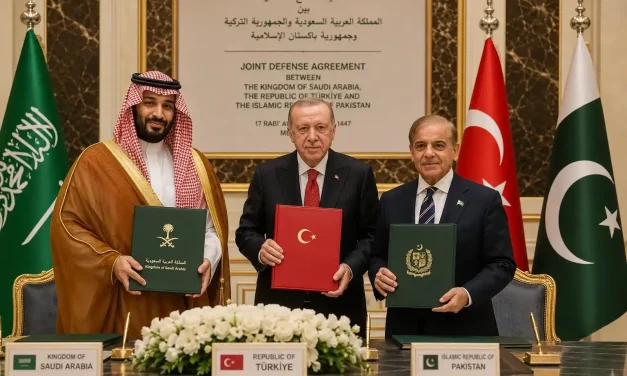
The Makkah Pact; Reasons for its Formation and Challenges Ahead

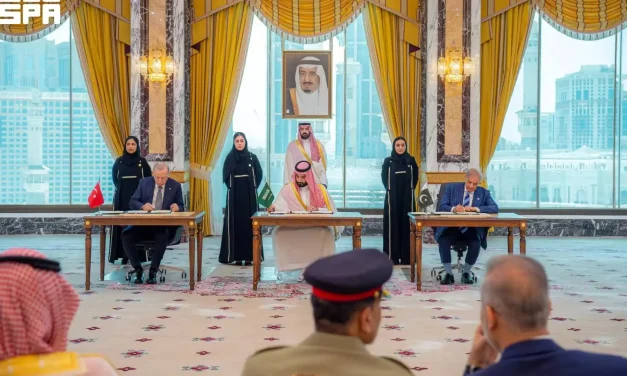
SCFR Online – Opinion: The Makkah Pact, signed between Saudi Arabia, Pakistan, and Turkey under the motto “an attack on one is an attack on all,” is viewed by some analysts less as a full-fledged military coalition and more as an attempt to reduce security dependence on an external power and to establish a regional security mechanism.

Implications of the US-Saudi Nuclear Agreement

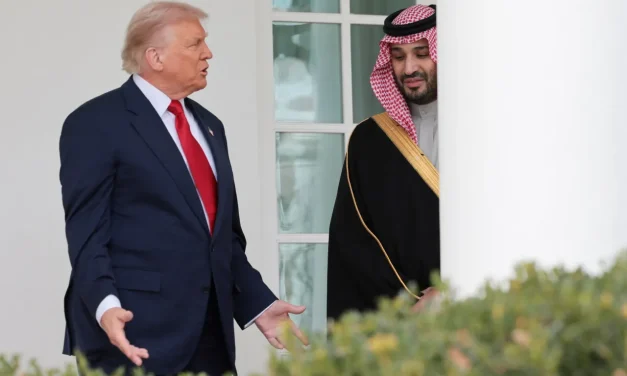
SCFR Online – Opinion: The new US-Saudi nuclear agreement, despite legal and political ambiguities, could alter previous non-proliferation standards in West Asia and intensify nuclear competition, ushering it into a new phase.

An Analysis of Recent Turkey-Israeli Regime Tensions

SCFR Online – Opinion: Recent developments in Syria indicate an intensification of strategic rivalry between Turkey and the Israeli regime, but mutual considerations and the role of the United States have limited the likelihood of direct war.

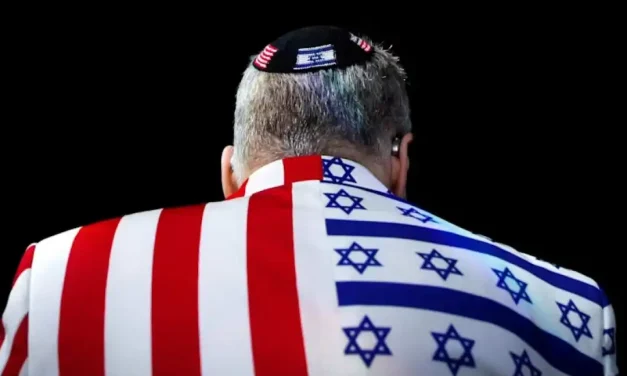
Increasing criticism of the extensive Zionist lobby network

SCFR Online – Opinion: An examination of the mechanisms of the Israeli regime’s influence in the United States depicts a complex picture of shared interests, strategic dependencies, and the limitations of this relationship.

Realities of the Tripartite Makkah Pact

SCFR Online – Interview: The signing of the Makkah agreement between Saudi Arabia, Pakistan, and Turkey has raised questions about the future of the region’s security structure and the position of these countries in West Asian equations. Can this agreement become a genuine collective defense mechanism, or does it have more of a political and deterrent function than creating new military capacity?

Strategic Implications of the Reduction of US Weapons Stockpiles

SCFR Online – Opinion: The continuation of the US war against Iran, in addition to increasing operational costs, has called into question the actual capacity of the American arsenal to simultaneously fulfill security commitments on multiple fronts; an issue that affects deterrence, defense production capacity, and Washington’s resource prioritization.

The Formation of a New Order in Relations Between Powers

SCFR Online – Opinion: The Russia-Ukraine war and the war of the United States and the Israeli regime against Iran have been formed with different objectives and actors, but field and political developments indicate that they are not entirely separate from one another.

Loading

Últimas publicaciones

The Makkah Pact; Reasons for its Formation and Challenges Ahead

SCFR Online – Opinion: The Makkah Pact, signed between Saudi Arabia, Pakistan, and Turkey under the motto “an attack on one is an attack on all,” is viewed by some analysts less as a full-fledged military coalition and more as an attempt to reduce security dependence on an external power and to establish a regional security mechanism.

Implications of the US-Saudi Nuclear Agreement

SCFR Online – Opinion: The new US-Saudi nuclear agreement, despite legal and political ambiguities, could alter previous non-proliferation standards in West Asia and intensify nuclear competition, ushering it into a new phase.

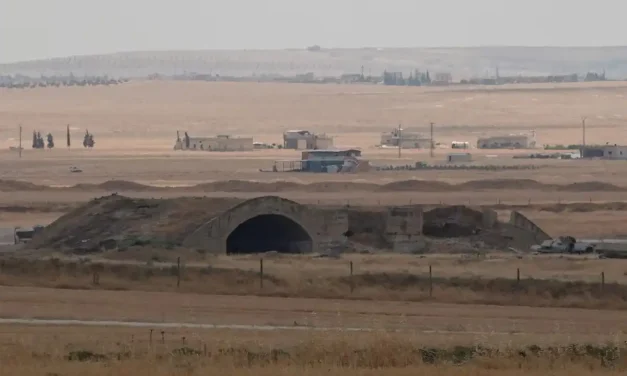
An Analysis of Recent Turkey-Israeli Regime Tensions

SCFR Online – Opinion: Recent developments in Syria indicate an intensification of strategic rivalry between Turkey and the Israeli regime, but mutual considerations and the role of the United States have limited the likelihood of direct war.

Increasing criticism of the extensive Zionist lobby network

SCFR Online – Opinion: An examination of the mechanisms of the Israeli regime’s influence in the United States depicts a complex picture of shared interests, strategic dependencies, and the limitations of this relationship.

Realities of the Tripartite Makkah Pact

SCFR Online – Interview: The signing of the Makkah agreement between Saudi Arabia, Pakistan, and Turkey has raised questions about the future of the region’s security structure and the position of these countries in West Asian equations. Can this agreement become a genuine collective defense mechanism, or does it have more of a political and deterrent function than creating new military capacity?

Strategic Implications of the Reduction of US Weapons Stockpiles

SCFR Online – Opinion: The continuation of the US war against Iran, in addition to increasing operational costs, has called into question the actual capacity of the American arsenal to simultaneously fulfill security commitments on multiple fronts; an issue that affects deterrence, defense production capacity, and Washington’s resource prioritization.

The Formation of a New Order in Relations Between Powers

SCFR Online – Opinion: The Russia-Ukraine war and the war of the United States and the Israeli regime against Iran have been formed with different objectives and actors, but field and political developments indicate that they are not entirely separate from one another.

Loading

DERNIER CONTENU

The Makkah Pact; Reasons for its Formation and Challenges Ahead

SCFR Online – Opinion: The Makkah Pact, signed between Saudi Arabia, Pakistan, and Turkey under the motto “an attack on one is an attack on all,” is viewed by some analysts less as a full-fledged military coalition and more as an attempt to reduce security dependence on an external power and to establish a regional security mechanism.

Implications of the US-Saudi Nuclear Agreement

SCFR Online – Opinion: The new US-Saudi nuclear agreement, despite legal and political ambiguities, could alter previous non-proliferation standards in West Asia and intensify nuclear competition, ushering it into a new phase.

An Analysis of Recent Turkey-Israeli Regime Tensions

SCFR Online – Opinion: Recent developments in Syria indicate an intensification of strategic rivalry between Turkey and the Israeli regime, but mutual considerations and the role of the United States have limited the likelihood of direct war.

Increasing criticism of the extensive Zionist lobby network

SCFR Online – Opinion: An examination of the mechanisms of the Israeli regime’s influence in the United States depicts a complex picture of shared interests, strategic dependencies, and the limitations of this relationship.

Realities of the Tripartite Makkah Pact

SCFR Online – Interview: The signing of the Makkah agreement between Saudi Arabia, Pakistan, and Turkey has raised questions about the future of the region’s security structure and the position of these countries in West Asian equations. Can this agreement become a genuine collective defense mechanism, or does it have more of a political and deterrent function than creating new military capacity?

Strategic Implications of the Reduction of US Weapons Stockpiles

SCFR Online – Opinion: The continuation of the US war against Iran, in addition to increasing operational costs, has called into question the actual capacity of the American arsenal to simultaneously fulfill security commitments on multiple fronts; an issue that affects deterrence, defense production capacity, and Washington’s resource prioritization.

The Formation of a New Order in Relations Between Powers

SCFR Online – Opinion: The Russia-Ukraine war and the war of the United States and the Israeli regime against Iran have been formed with different objectives and actors, but field and political developments indicate that they are not entirely separate from one another.

Loading

DERNIER CONTENU

The Makkah Pact; Reasons for its Formation and Challenges Ahead

SCFR Online – Opinion: The Makkah Pact, signed between Saudi Arabia, Pakistan, and Turkey under the motto “an attack on one is an attack on all,” is viewed by some analysts less as a full-fledged military coalition and more as an attempt to reduce security dependence on an external power and to establish a regional security mechanism.

Implications of the US-Saudi Nuclear Agreement

SCFR Online – Opinion: The new US-Saudi nuclear agreement, despite legal and political ambiguities, could alter previous non-proliferation standards in West Asia and intensify nuclear competition, ushering it into a new phase.

An Analysis of Recent Turkey-Israeli Regime Tensions

SCFR Online – Opinion: Recent developments in Syria indicate an intensification of strategic rivalry between Turkey and the Israeli regime, but mutual considerations and the role of the United States have limited the likelihood of direct war.

Increasing criticism of the extensive Zionist lobby network

SCFR Online – Opinion: An examination of the mechanisms of the Israeli regime’s influence in the United States depicts a complex picture of shared interests, strategic dependencies, and the limitations of this relationship.

Realities of the Tripartite Makkah Pact

SCFR Online – Interview: The signing of the Makkah agreement between Saudi Arabia, Pakistan, and Turkey has raised questions about the future of the region’s security structure and the position of these countries in West Asian equations. Can this agreement become a genuine collective defense mechanism, or does it have more of a political and deterrent function than creating new military capacity?

Strategic Implications of the Reduction of US Weapons Stockpiles

SCFR Online – Opinion: The continuation of the US war against Iran, in addition to increasing operational costs, has called into question the actual capacity of the American arsenal to simultaneously fulfill security commitments on multiple fronts; an issue that affects deterrence, defense production capacity, and Washington’s resource prioritization.

The Formation of a New Order in Relations Between Powers

SCFR Online – Opinion: The Russia-Ukraine war and the war of the United States and the Israeli regime against Iran have been formed with different objectives and actors, but field and political developments indicate that they are not entirely separate from one another.

Loading

DERNIER CONTENU

The Makkah Pact; Reasons for its Formation and Challenges Ahead

SCFR Online – Opinion: The Makkah Pact, signed between Saudi Arabia, Pakistan, and Turkey under the motto “an attack on one is an attack on all,” is viewed by some analysts less as a full-fledged military coalition and more as an attempt to reduce security dependence on an external power and to establish a regional security mechanism.

Implications of the US-Saudi Nuclear Agreement

SCFR Online – Opinion: The new US-Saudi nuclear agreement, despite legal and political ambiguities, could alter previous non-proliferation standards in West Asia and intensify nuclear competition, ushering it into a new phase.

An Analysis of Recent Turkey-Israeli Regime Tensions

SCFR Online – Opinion: Recent developments in Syria indicate an intensification of strategic rivalry between Turkey and the Israeli regime, but mutual considerations and the role of the United States have limited the likelihood of direct war.

Increasing criticism of the extensive Zionist lobby network

SCFR Online – Opinion: An examination of the mechanisms of the Israeli regime’s influence in the United States depicts a complex picture of shared interests, strategic dependencies, and the limitations of this relationship.

Realities of the Tripartite Makkah Pact

SCFR Online – Interview: The signing of the Makkah agreement between Saudi Arabia, Pakistan, and Turkey has raised questions about the future of the region’s security structure and the position of these countries in West Asian equations. Can this agreement become a genuine collective defense mechanism, or does it have more of a political and deterrent function than creating new military capacity?

Strategic Implications of the Reduction of US Weapons Stockpiles

SCFR Online – Opinion: The continuation of the US war against Iran, in addition to increasing operational costs, has called into question the actual capacity of the American arsenal to simultaneously fulfill security commitments on multiple fronts; an issue that affects deterrence, defense production capacity, and Washington’s resource prioritization.

The Formation of a New Order in Relations Between Powers

SCFR Online – Opinion: The Russia-Ukraine war and the war of the United States and the Israeli regime against Iran have been formed with different objectives and actors, but field and political developments indicate that they are not entirely separate from one another.

Loading