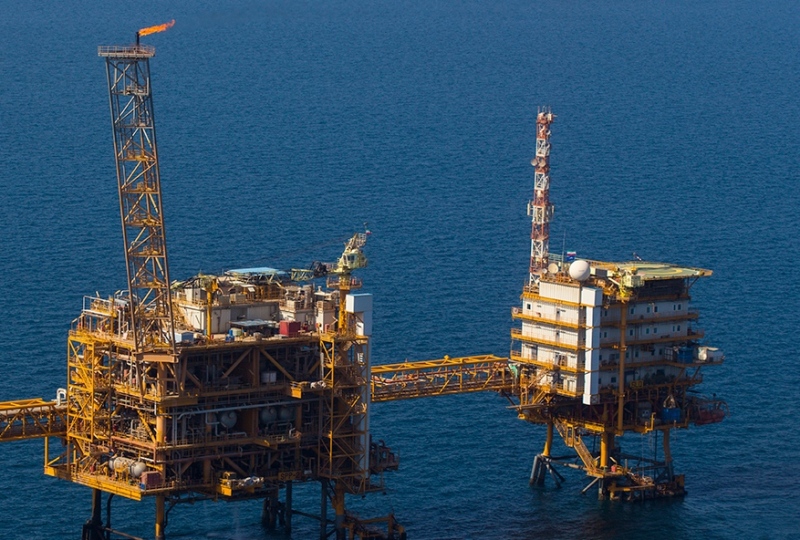
Europe’s Enduring Dependence on Persian Gulf Energy

SCFR Online – Opinion: The dominant discourse in the field of European energy security over the past two decades has revolved around diversification of supply sources and the gradual reduction of dependence on fossil fuels. This narrative, which gained particular momentum after the Ukraine gas crisis in 2006 and its intensification in 2014 and 2022, was based on the assumption that Europe could free itself from the geopolitical vulnerabilities arising from dependence on specific suppliers through investment in renewable energy, imports of liquefied natural gas from diversified sources, and the establishment of new infrastructure. However, a closer analysis of energy trade data and the structure of the global oil and gas supply chain presents a different picture. Europe has not only failed to meaningfully reduce its dependence on the Persian Gulf, but in some sectors — particularly in liquefied natural gas imports — this dependence has deepened. This reality, which is often overlooked in public discourse, raises fundamental questions about the sustainability of Europe’s energy security strategies and their impact on regional power equations.

Abed Akbari – International Affairs Expert

The Strait of Hormuz, with a width of only 33 kilometers at its narrowest point, is recognized as the world’s most vital energy chokepoint. According to statistics from the International Energy Agency, around 21 million barrels of crude oil and petroleum products pass through this strait daily, equivalent to one-fifth of global oil consumption. In addition, a significant portion of Qatar’s liquefied natural gas exports, as the world’s largest LNG exporter, transit through this route. The strategic importance of this strait is not limited to the volume of energy passing through it; rather, it lies in the absence of sustainable and economical alternative routes. Existing pipelines in the region, including Saudi Arabia’s East-West Pipeline, which extends from eastern oil fields to the port of Yanbu on the Red Sea, have a maximum capacity of 5 million barrels per day and can replace only a small portion of the volume passing through Hormuz. The UAE-Oman pipeline, with its limited capacity of 1.5 million barrels per day, also does not provide a comprehensive solution for bypassing the strait. These structural limitations mean that any serious disruption in passage through the Strait of Hormuz — whether caused by military conflict, security threats, or deterrent actions — could quickly turn into a global energy crisis.

In this context, Europe’s dependence on Persian Gulf energy can be examined in two dimensions: crude oil and natural gas. In the oil sector, European countries, particularly after the extensive sanctions against Russia in 2022, have increasingly turned to oil imports from Saudi Arabia, the United Arab Emirates, and Iraq. Eurostat statistics show that the Persian Gulf’s share of Europe’s crude oil imports increased from around 15 percent in 2021 to more than 25 percent in 2023. This increase not only reflects the replacement of Russian oil, but also demonstrates the structural limitations in diversifying supply sources. In the natural gas sector, the situation is more complex. Europe, which before the Ukraine crisis imported more than 40 percent of its gas from Russia, is now heavily dependent on LNG imports from Qatar, the UAE, and Oman. Qatar, which is advancing the largest expansion projects of its gas fields with the aim of increasing LNG production capacity from 77 million tons per year to 126 million tons by 2027, is increasingly becoming a key supplier of gas to Europe. This growing dependence on Persian Gulf LNG, all of which must pass through the Strait of Hormuz, has created a new structural vulnerability for Europe’s energy security.

Under such circumstances, Iran’s deterrence leverage in the Strait of Hormuz rests on three main pillars: first, Iran’s strategic geographical position, which grants it direct control over the northernmost shore of the strait and its key islands, including Abu Musa, Greater Tunb, and Lesser Tunb. This position enables Iran to closely monitor all maritime traffic and exercise control when necessary. Second, Iran’s military capabilities in the naval and missile domains, which have significantly advanced over the past two decades. The Islamic Revolutionary Guard Corps, utilizing fast attack boats, small submarines, anti-ship missiles, and naval drones, is capable of creating serious symmetric and asymmetric threats to transiting naval fleets. The experience of tanker seizures in 2019 and 2023, and subsequently the developments of recent days following the beginning of the Ramadan War, demonstrated that Iran can quickly and at relatively low cost conduct limited but effective operations in the strait. Third, and perhaps most importantly, is the absence of sustainable and economical alternative routes, as previously mentioned. The fact that no alternative infrastructure with sufficient capacity exists to bypass the Strait of Hormuz strengthens Iran’s deterrence leverage and dramatically increases the cost of any military action against Iran for the West.

Some analysts believe that Europe’s energy transition toward renewable sources could reduce dependence on the Persian Gulf in the medium term. Although significant progress has been achieved in solar energy, wind power, and energy storage, this view faces serious limitations from several aspects: first, renewable energies are mainly applicable in electricity generation, while in heavy transportation, aviation, shipping, petrochemical industries, and the production of industrial raw materials, oil and gas still play an irreplaceable role. Estimates by the International Energy Agency indicate that even in the most optimistic energy transition scenarios, the share of oil and gas in the global energy mix will remain above 40 percent until 2050. Second, Europe’s energy infrastructure, including transmission networks, refineries, chemical industries, and transportation fleets, has for decades been designed and built on the basis of fossil fuels, and the fundamental transformation of this infrastructure is a costly process that will take several decades. Third, the energy crisis demonstrated that under critical conditions, Europe is compelled to return to fossil fuel sources and even increase the use of coal. This reality shows that energy transition is not a linear and predictable process and that in the face of geopolitical shocks, the security of fossil fuel supply remains the primary priority.

The potential impact of disruption in the Strait of Hormuz on the global economy can be examined through modeling different scenarios. Econometric studies show that the complete closure of the Strait of Hormuz even for two months could raise crude oil prices to more than 200 dollars per barrel. Such a price increase, given the role of oil in all economic sectors, could lead to a 3 to 5 percent increase in global inflation and a 2 to 3 percent reduction in global economic growth. For Europe, whose economy is heavily dependent on energy imports, these impacts could be even more severe. Historical experience also confirms these estimates. During the Iran-Iraq War in the 1980s, attacks on oil tankers in the Persian Gulf led to significant increases in oil prices and maritime insurance costs. In 2019, the attack on Saudi Aramco oil facilities in Saudi Arabia, which halted the production of 5.7 million barrels of oil per day, caused the largest single-day jump in oil prices in history. These precedents show that even temporary and limited disruptions in Persian Gulf energy supplies can have extensive and lasting impacts on the global economy.

As a result, Europe’s structural dependence on Persian Gulf energy and the vital role of the Strait of Hormuz in the global energy supply chain constitute a geopolitical reality that fundamentally shapes Western foreign policy. This dependence explains why Europe and the United States are willing to make massive military investments in the region, maintain complex relations with authoritarian Persian Gulf regimes, and accept the political and ethical costs of these relationships. It also explains why any tension with Iran, regardless of its nature, quickly turns into an energy security crisis. As long as real and sustainable alternatives to Persian Gulf energy and the Strait of Hormuz route are not established, Iran’s deterrence leverage and the strategic importance of this region will not only remain intact, but will likely be strengthened given rising global energy demand and the structural limitations in diversifying supply sources. This reality requires policymakers and energy security analysts, instead of relying on optimistic narratives about a rapid transition to renewable energy, to pay attention to current realities and structural limitations and formulate realistic strategies for managing this enduring dependence.


0 Comments

LATEST CONTENT

Europe’s Enduring Dependence on Persian Gulf Energy

SCFR Online – Opinion: The dominant discourse in the field of European energy security over the past two decades has revolved around diversification of supply sources and the gradual reduction of dependence on fossil fuels. This narrative, which gained particular momentum after the Ukraine gas crisis in 2006 and its intensification in 2014 and 2022, was based on the assumption that Europe could free itself from the geopolitical vulnerabilities arising from dependence on specific suppliers through investment in renewable energy, imports of liquefied natural gas from diversified sources, and the establishment of new infrastructure. However, a closer analysis of energy trade data and the structure of the global oil and gas supply chain presents a different picture. Europe has not only failed to meaningfully reduce its dependence on the Persian Gulf, but in some sectors — particularly in liquefied natural gas imports — this dependence has deepened. This reality, which is often overlooked in public discourse, raises fundamental questions about the sustainability of Europe’s energy security strategies and their impact on regional power equations.

The Challenge of Hezbollah’s Low-Cost “FPV” Drones for the Zionist Regime

SCFR Online – Opinion: In modern warfare, it has always been assumed that the more expensive, and advanced the weapon—particularly from well-known companies—the more certain the victory will be. However, developments on the northern front of occupied Palestine in recent months have challenged this long-held belief. Here, the Zionist regime’s military, despite possessing the most advanced defense systems such as Iron Dome, David’s Sling, and Arrow, as well as fifth-generation F-35 fighter jets, Merkava tanks, and other modern equipment found in few countries worldwide, has effectively been rendered helpless against Hezbollah Lebanon’s few-hundred-dollar drones. Benjamin Netanyahu’s bitter admission regarding the inability to counter this threat, and his order to allocate an unlimited budget to find a solution, underscores the reality that the era of pure superiority through expensive technologies has come to an end.

The Impact of West Asian Developments on the Ukraine War

SCFR Online – Note: Vladimir Putin, President of Russia, recently announced—more than four years after the commencement of military aggression against Ukraine—that he believes the conflict between Russia and Ukraine is drawing to a close.

Temporary China–U.S. Trade Truce in the Shadow of Fundamental Distrust

SCFR Online – Opinion: The recent visit of the President of the United States to China is significant from various aspects; because China is recognized as the world’s second-largest economic power and a growing economy. The Chinese are also advancing in various fields, including the space sector, artificial intelligence, and military industries; to the extent that in the military sector, whereas they previously lacked an aircraft carrier, they now possess their third aircraft carrier. On the other hand, the United States, as a superpower, has always regarded China as its rival and continues to view it as such today.

Loading

Últimas publicaciones

Europe’s Enduring Dependence on Persian Gulf Energy

SCFR Online – Opinion: The dominant discourse in the field of European energy security over the past two decades has revolved around diversification of supply sources and the gradual reduction of dependence on fossil fuels. This narrative, which gained particular momentum after the Ukraine gas crisis in 2006 and its intensification in 2014 and 2022, was based on the assumption that Europe could free itself from the geopolitical vulnerabilities arising from dependence on specific suppliers through investment in renewable energy, imports of liquefied natural gas from diversified sources, and the establishment of new infrastructure. However, a closer analysis of energy trade data and the structure of the global oil and gas supply chain presents a different picture. Europe has not only failed to meaningfully reduce its dependence on the Persian Gulf, but in some sectors — particularly in liquefied natural gas imports — this dependence has deepened. This reality, which is often overlooked in public discourse, raises fundamental questions about the sustainability of Europe’s energy security strategies and their impact on regional power equations.

The Challenge of Hezbollah’s Low-Cost “FPV” Drones for the Zionist Regime

SCFR Online – Opinion: In modern warfare, it has always been assumed that the more expensive, and advanced the weapon—particularly from well-known companies—the more certain the victory will be. However, developments on the northern front of occupied Palestine in recent months have challenged this long-held belief. Here, the Zionist regime’s military, despite possessing the most advanced defense systems such as Iron Dome, David’s Sling, and Arrow, as well as fifth-generation F-35 fighter jets, Merkava tanks, and other modern equipment found in few countries worldwide, has effectively been rendered helpless against Hezbollah Lebanon’s few-hundred-dollar drones. Benjamin Netanyahu’s bitter admission regarding the inability to counter this threat, and his order to allocate an unlimited budget to find a solution, underscores the reality that the era of pure superiority through expensive technologies has come to an end.

The Impact of West Asian Developments on the Ukraine War

SCFR Online – Note: Vladimir Putin, President of Russia, recently announced—more than four years after the commencement of military aggression against Ukraine—that he believes the conflict between Russia and Ukraine is drawing to a close.

Temporary China–U.S. Trade Truce in the Shadow of Fundamental Distrust

SCFR Online – Opinion: The recent visit of the President of the United States to China is significant from various aspects; because China is recognized as the world’s second-largest economic power and a growing economy. The Chinese are also advancing in various fields, including the space sector, artificial intelligence, and military industries; to the extent that in the military sector, whereas they previously lacked an aircraft carrier, they now possess their third aircraft carrier. On the other hand, the United States, as a superpower, has always regarded China as its rival and continues to view it as such today.

Loading

DERNIER CONTENU

Europe’s Enduring Dependence on Persian Gulf Energy

SCFR Online – Opinion: The dominant discourse in the field of European energy security over the past two decades has revolved around diversification of supply sources and the gradual reduction of dependence on fossil fuels. This narrative, which gained particular momentum after the Ukraine gas crisis in 2006 and its intensification in 2014 and 2022, was based on the assumption that Europe could free itself from the geopolitical vulnerabilities arising from dependence on specific suppliers through investment in renewable energy, imports of liquefied natural gas from diversified sources, and the establishment of new infrastructure. However, a closer analysis of energy trade data and the structure of the global oil and gas supply chain presents a different picture. Europe has not only failed to meaningfully reduce its dependence on the Persian Gulf, but in some sectors — particularly in liquefied natural gas imports — this dependence has deepened. This reality, which is often overlooked in public discourse, raises fundamental questions about the sustainability of Europe’s energy security strategies and their impact on regional power equations.

The Challenge of Hezbollah’s Low-Cost “FPV” Drones for the Zionist Regime

SCFR Online – Opinion: In modern warfare, it has always been assumed that the more expensive, and advanced the weapon—particularly from well-known companies—the more certain the victory will be. However, developments on the northern front of occupied Palestine in recent months have challenged this long-held belief. Here, the Zionist regime’s military, despite possessing the most advanced defense systems such as Iron Dome, David’s Sling, and Arrow, as well as fifth-generation F-35 fighter jets, Merkava tanks, and other modern equipment found in few countries worldwide, has effectively been rendered helpless against Hezbollah Lebanon’s few-hundred-dollar drones. Benjamin Netanyahu’s bitter admission regarding the inability to counter this threat, and his order to allocate an unlimited budget to find a solution, underscores the reality that the era of pure superiority through expensive technologies has come to an end.

The Impact of West Asian Developments on the Ukraine War

SCFR Online – Note: Vladimir Putin, President of Russia, recently announced—more than four years after the commencement of military aggression against Ukraine—that he believes the conflict between Russia and Ukraine is drawing to a close.

Temporary China–U.S. Trade Truce in the Shadow of Fundamental Distrust

SCFR Online – Opinion: The recent visit of the President of the United States to China is significant from various aspects; because China is recognized as the world’s second-largest economic power and a growing economy. The Chinese are also advancing in various fields, including the space sector, artificial intelligence, and military industries; to the extent that in the military sector, whereas they previously lacked an aircraft carrier, they now possess their third aircraft carrier. On the other hand, the United States, as a superpower, has always regarded China as its rival and continues to view it as such today.

Loading

DERNIER CONTENU

Europe’s Enduring Dependence on Persian Gulf Energy

SCFR Online – Opinion: The dominant discourse in the field of European energy security over the past two decades has revolved around diversification of supply sources and the gradual reduction of dependence on fossil fuels. This narrative, which gained particular momentum after the Ukraine gas crisis in 2006 and its intensification in 2014 and 2022, was based on the assumption that Europe could free itself from the geopolitical vulnerabilities arising from dependence on specific suppliers through investment in renewable energy, imports of liquefied natural gas from diversified sources, and the establishment of new infrastructure. However, a closer analysis of energy trade data and the structure of the global oil and gas supply chain presents a different picture. Europe has not only failed to meaningfully reduce its dependence on the Persian Gulf, but in some sectors — particularly in liquefied natural gas imports — this dependence has deepened. This reality, which is often overlooked in public discourse, raises fundamental questions about the sustainability of Europe’s energy security strategies and their impact on regional power equations.

The Challenge of Hezbollah’s Low-Cost “FPV” Drones for the Zionist Regime

SCFR Online – Opinion: In modern warfare, it has always been assumed that the more expensive, and advanced the weapon—particularly from well-known companies—the more certain the victory will be. However, developments on the northern front of occupied Palestine in recent months have challenged this long-held belief. Here, the Zionist regime’s military, despite possessing the most advanced defense systems such as Iron Dome, David’s Sling, and Arrow, as well as fifth-generation F-35 fighter jets, Merkava tanks, and other modern equipment found in few countries worldwide, has effectively been rendered helpless against Hezbollah Lebanon’s few-hundred-dollar drones. Benjamin Netanyahu’s bitter admission regarding the inability to counter this threat, and his order to allocate an unlimited budget to find a solution, underscores the reality that the era of pure superiority through expensive technologies has come to an end.

The Impact of West Asian Developments on the Ukraine War

SCFR Online – Note: Vladimir Putin, President of Russia, recently announced—more than four years after the commencement of military aggression against Ukraine—that he believes the conflict between Russia and Ukraine is drawing to a close.

Temporary China–U.S. Trade Truce in the Shadow of Fundamental Distrust

SCFR Online – Opinion: The recent visit of the President of the United States to China is significant from various aspects; because China is recognized as the world’s second-largest economic power and a growing economy. The Chinese are also advancing in various fields, including the space sector, artificial intelligence, and military industries; to the extent that in the military sector, whereas they previously lacked an aircraft carrier, they now possess their third aircraft carrier. On the other hand, the United States, as a superpower, has always regarded China as its rival and continues to view it as such today.

Loading

DERNIER CONTENU

Europe’s Enduring Dependence on Persian Gulf Energy

SCFR Online – Opinion: The dominant discourse in the field of European energy security over the past two decades has revolved around diversification of supply sources and the gradual reduction of dependence on fossil fuels. This narrative, which gained particular momentum after the Ukraine gas crisis in 2006 and its intensification in 2014 and 2022, was based on the assumption that Europe could free itself from the geopolitical vulnerabilities arising from dependence on specific suppliers through investment in renewable energy, imports of liquefied natural gas from diversified sources, and the establishment of new infrastructure. However, a closer analysis of energy trade data and the structure of the global oil and gas supply chain presents a different picture. Europe has not only failed to meaningfully reduce its dependence on the Persian Gulf, but in some sectors — particularly in liquefied natural gas imports — this dependence has deepened. This reality, which is often overlooked in public discourse, raises fundamental questions about the sustainability of Europe’s energy security strategies and their impact on regional power equations.

The Challenge of Hezbollah’s Low-Cost “FPV” Drones for the Zionist Regime

SCFR Online – Opinion: In modern warfare, it has always been assumed that the more expensive, and advanced the weapon—particularly from well-known companies—the more certain the victory will be. However, developments on the northern front of occupied Palestine in recent months have challenged this long-held belief. Here, the Zionist regime’s military, despite possessing the most advanced defense systems such as Iron Dome, David’s Sling, and Arrow, as well as fifth-generation F-35 fighter jets, Merkava tanks, and other modern equipment found in few countries worldwide, has effectively been rendered helpless against Hezbollah Lebanon’s few-hundred-dollar drones. Benjamin Netanyahu’s bitter admission regarding the inability to counter this threat, and his order to allocate an unlimited budget to find a solution, underscores the reality that the era of pure superiority through expensive technologies has come to an end.

The Impact of West Asian Developments on the Ukraine War

SCFR Online – Note: Vladimir Putin, President of Russia, recently announced—more than four years after the commencement of military aggression against Ukraine—that he believes the conflict between Russia and Ukraine is drawing to a close.

Temporary China–U.S. Trade Truce in the Shadow of Fundamental Distrust

SCFR Online – Opinion: The recent visit of the President of the United States to China is significant from various aspects; because China is recognized as the world’s second-largest economic power and a growing economy. The Chinese are also advancing in various fields, including the space sector, artificial intelligence, and military industries; to the extent that in the military sector, whereas they previously lacked an aircraft carrier, they now possess their third aircraft carrier. On the other hand, the United States, as a superpower, has always regarded China as its rival and continues to view it as such today.

Loading




