
Abbas Mirafshar – China Affairs Expert
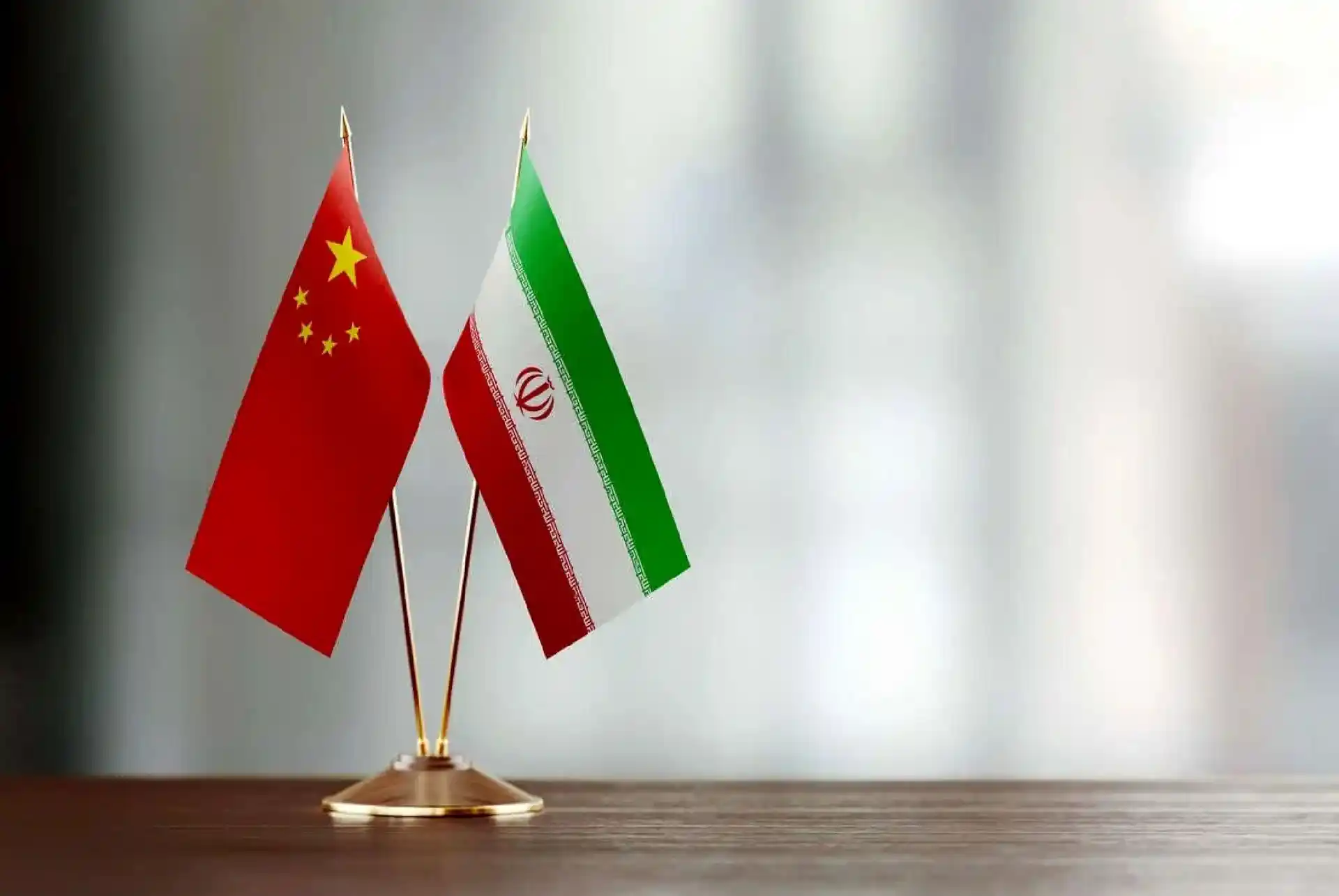
China occupies a distinctive position in Iran’s external economic structure, but this position has so far not amounted to a strategic commitment by Beijing to Tehran. Purchasing Iranian oil, expanding trade, and participating in infrastructure projects create advantages for China, but it should be borne in mind that Beijing also has extensive relations with Saudi Arabia, the United Arab Emirates, and other regional economies and does not want its relations with Washington or other trading partners to be put at risk in any way.
The Eurasia Review report on China’s “economic credibility” being put to the test vis-à-vis Iran indicates that the central issue is the extent of Beijing’s willingness to bear the economic and legal costs of maintaining trade with Tehran under sanctions. This gap between political promises and practical capacity depends on the risk exposure of Chinese banks, transport companies, insurers, and commercial intermediaries.
An important example is the first China–Central Asia–Iran freight train, which, according to the published report, entered Kazakhstan from Xinjiang on September 7 with 55 wagons and proceeded toward Iran via Kazakhstan, Uzbekistan, and Turkmenistan. This route is approximately 6,000 kilometers long and is intended to become a regular route for trade between China and Iran. Its importance lies in increasing the resilience of bilateral trade and reducing part of the vulnerability of maritime transportation in crisis conditions in the Persian Gulf, but this does not mean “circumventing sanctions,” because the shipments remain subject to financial, customs, insurance, and secondary-sanctions controls.
Central Asia; Trade Corridor or Sanctions Pressure Zone?
The increasing use of Iran as a “southern gateway” for Kazakhstan and Uzbekistan has also exposed Central Asia to the consequences of competition between Washington and Beijing. An analysis of the effects of Iran-related sanctions on Central Asia shows that an increase in secondary sanctions could raise the cost of using this route and even deter banks and transport companies from engaging in legitimate transactions with Iran-related parties.
The more transit routes become connected to the trade network of Central Asia and China, the greater the importance of the transit geography of this region for Iran becomes, but it should be borne in mind that under these circumstances, U.S. pressure on this network also increases. Therefore, the China–Central Asia–Iran route and the capacities of Bandar Abbas and Chabahar are not merely transportation projects and constitute part of the competition over “connectivity” in Eurasia.
In the long term, the North–South Corridor is important for connecting Iran to Russia and the Eurasian network, while East–West routes are important for linking China with Central Asia, Iran, and Western and Southern markets. Realizing these capacities also depends on investment, security stability, financing, customs standards, and reducing sanctions risks for the private sector.
China’s Structural Dependence on Energy Imports
Oil remains the most important point of convergence between Iranian and Chinese interests. China’s structural dependence on energy imports makes Iranian oil attractive, particularly when supplied at a discount to Chinese refineries. Nevertheless, China is not dependent on Iranian oil in this area, and its imports from Russia, Saudi Arabia, Iraq, and other producers must also be taken into consideration.
A report by the U.S.–China Economic and Security Review Commission shows that while Beijing maintains significant economic relations with Tehran, it has broader trade with the Persian Gulf states and purchases a large portion of Iran’s exported oil alongside oil from Saudi Arabia and Iraq. Therefore, China’s policy is based less on choosing between Iran and the United States and more on a “balance of benefit and risk.”
Even if Beijing wishes to preserve the flow of energy from Iran, it will likely seek to limit the cost of directly confronting U.S. sanctions. Barter trade and the use of intermediaries and indirect routes can also be understood within this framework, namely, creating a channel without direct confrontation with Washington.
Technology Competition; A More Difficult Boundary for Cooperation
An important future limitation on Iran–China relations may become more apparent in technology than in oil. U.S.–China competition has turned access to advanced chips, computing equipment, artificial intelligence, satellites, telecommunications, and dual-use goods into a security issue.
A The Wire China report on China’s move toward artificial general intelligence indicates that Beijing is pursuing the development of advanced models and a global position in this field, and that this competition is increasing sensitivity surrounding technology exports and supply-chain controls. Trivium China has also reported on U.S.–China dialogue on artificial intelligence safety ahead of the meeting between Xi Jinping and Donald Trump; this issue indicates that even amid intense competition, the two countries need dialogue to manage certain technological risks.
The closer technology gets to artificial intelligence, semiconductors, satellites, telecommunications, or military applications, the greater the likelihood of export restrictions or increased sanctions risks for Chinese companies supplying Iran. The experience of China’s space projects in Africa also shows that reliance on Chinese equipment and services can create technical and financial dependencies; therefore, technology transfer, localization, and the management of new dependencies should be addressed simultaneously.
China, Russia, and the Broader Geometry of Balancing
China’s behavior toward Iran should be viewed within the framework of Beijing’s relations with Russia and its competition with the United States. An analysis by the Mercator Institute for China Studies (MERICS) emphasizes that Russia’s value to China is not merely economic and that its energy resources, geographical position, role in Central Asia, and geopolitical weight in balancing Washington are important.
Iran, too, is not merely a trading partner for China; its position in the Persian Gulf, Central Asia, Eurasian transit routes, and energy market creates an independent geopolitical value. However, this value does not mean that China will side with Tehran in every crisis between Iran and the United States. The more likely pattern is to preserve economic channels, oppose unilateral pressure to the extent possible, and avoid costs that threaten China’s vital interests.
Therefore, in the Iran–U.S. equation, China is both a “vital economic partner” and a “cautious balancing actor.” Its importance to Iran derives from energy, trade, and transit connectivity, but the limits of Chinese support are determined by Beijing’s own interests. Under these circumstances, the simultaneous development of North–South and East–West corridors, diversification of export markets, independent financial mechanisms, and domestic technological capabilities can move Iran–China relations from “emergency dependence” toward “mutual partnership based on measurable interests.”






0 Comments