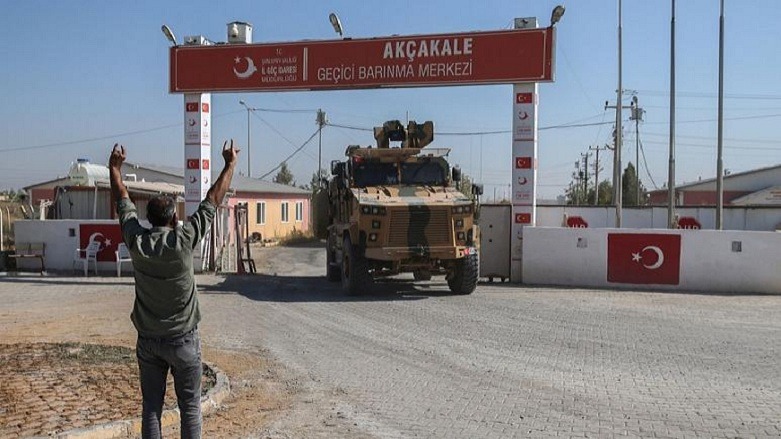
Objectives and factors influencing military movements of Turkey in Syria

Strategic Council Online—Interview: An expert of Turkish studies says Turkish activities in Syria are the continuation of the previous policies of the Turkish government that seems will not take new measures in Syria.

Ali Sadatazar, head of the Turkish Studies Group of the Encyclopedia of Contemporary Islam, told the Strategic Council on Foreign Relations that after the killing of Abubakr al-Baghdadi, the Daesh leader, Turkey has diverted its attention from Syria and is currently engaged in other scenarios such as what is transpiring in the Caucasus region.

Referring to a recent report of the construction of a new Turkish military base in the Jabal al-Akrad district near Latakia in northeast of Syria, Sadatazar said there is a deadlock in Turkey on how the Turkish army should continue its activities in Syria and that’s why Turkey is now moving to other scenarios such as what is now transpiring in the Caucasus region.

Sadatazar said Turkey will not spend more than what it did for the destruction of the groups in Syria listed as terrorist by the Turkish governments, adding that Turkey’s goal in Syria has been to create a security margin for itself.

He said Turkey should face Russia if Ankara wants to take new measures and activities in Syria in order to gain concessions in other areas, adding that no new strategic goal has been outlined by Ankara in Syria.

“As Turkey has been inflicted high costs during the past 10 years in Syria, entry into a new war of attritions in a region which has already been tested would not be logical in the pragmatic foreign policy of Turkey.”

He said the establishment of a military base by Turkey in Syria may be partly due to the reaction of Ankara to the election of a new administration in the United States as well as the foreign policy approaches of Joe Biden as he considers the Kurds as US allies and friends in Syria—something which has caused concerns in Turkey.

Referring to Ankara’s approaches towards the issue of migrants, he said Turkish President Erdogan is not that much interested in exploring the issue of migrants in its relations with Europe.

“During the time when Ahmet Davutoglu was Turkish prime minister, very good concessions were made by the Europe in the issue of migrants. However, it was forgotten later because Recep Tayyip Erdogan is not that much interested in misusing the issue of migrants against Europe and making it aggrieved. In fact, Erdogan is acting conservatively in this respect. The positions of Erdogan in Syria are more focused on the fight against groups designated as terrorist by Ankara. Such groups also include some Kurdish movements.”

Sadatazar said Turkey has begun new activities in the Caucasus and it seems that it will be mainly confronted by the Russians, adding that other Turkish activities in other parts of the world such as Libya and Syria are considered as bargaining chip in the Caucasus.

Turkey, in fact, is trying to benefit from its game cards in Libya and Syria for more significant goals such as the Caucasus, he said.

Sadatazar added that the Turkish foreign policy is mainly pragmatic and progressive.

“In a progressive foreign policy, development is a priority which takes place under international bargaining and trade-off. This means belief in both development and pragmatism would lead the country to resort to international bargaining. In this model of foreign policy, multidimensional games are usually played from the east to the west and vice versa.”

He added that the establishment of a military base by Turkey in Syria may be part of a greater deal between Turkey and Russia in the Caucasus.

“Turkey was unwelcomed in the Caucasus. In other words, only Russian troops were arranged to be present in the liberated areas of Karabakh; however, the Turks imposed themselves as per an agreement concluded with Russia three or four days after the ceasefire. This is while the quality of cooperation between Moscow and Ankara in Karabakh remains unclear.”

He said such measures constitute a set of separated role-playing currently orchestrated properly by Erdogan at the global stage, adding that the Turkish president is properly benefiting from the geopolitical positions of Turkey as he knows how to create opportunities.

“We should wait and see what will happen in the future. The strategic value of Syria has reduced in the eyes of Turkey after the deadlocks in the region about the Muslim Brotherhood. So no new targets have been defined by Ankara in Syria.”

Referring to the factors influential on the policies and approaches of Turkey, Sadatazar said “the presidential elections in the United States which led to the victory of Joe Biden, the approach of the European Union towards Turkey and the numerous bombardment by Israel in Syria all and all will be influential on the formation of the future chess of Ankara’s foreign policy.”


0 Comments

Submit a Comment

Your email address will not be published. Required fields are marked *

LATEST CONTENT

Consequences of Declining Trust in the Judiciary in Europe

SCFRonline – Opinion: The increase in public distrust of the French judicial system, which in recent surveys has reached approximately two-thirds of citizens, should be analyzed within a framework broader than temporary dissatisfaction or an emotional reaction to a particular criminal case.

Iran’s Potential Levers of Power

SCFRonline– Opinion: Iran’s geopolitical power is not limited solely to oil and the Strait of Hormuz; the unintended emergence of disruptions in the future global food and energy security chains can also demonstrate Iran’s strategic importance.

The Inseparability of the Lebanese Front from the Axis of Resistance

SCFR Online–Opinion: By providing an extensive network of social, healthcare, educational, and post-war reconstruction services, Hezbollah has established a strong social base for itself among Lebanon’s Shiites and Sunnis, and even beyond that, among other segments of Lebanese society, including Christians. Hezbollah has never been an external actor imposed upon Lebanon; rather, it is a phenomenon fundamentally born out of the occupation and crimes of the Zionist regime and itself influenced by popular resistance.

The Increasing Efforts of the Zionist Regime to Redefine Borders and the Regional Order and Its Consequences

SCFR Online– Opinion: Security and military developments in the region over recent months indicate that the ongoing crises and wars in Gaza, southern Lebanon, and parts of Syrian territory encompass broader dimensions of geopolitical and geostrategic transformations. In this context, the increased military presence and control of the Zionist regime over parts of the territories of these areas, along with proposals regarding the creation of buffer zones or even the expansion of security borders, have raised serious questions about the future of the regional order and its consequences for the countries of West Asia.

Loading

Últimas publicaciones

Consequences of Declining Trust in the Judiciary in Europe

SCFRonline – Opinion: The increase in public distrust of the French judicial system, which in recent surveys has reached approximately two-thirds of citizens, should be analyzed within a framework broader than temporary dissatisfaction or an emotional reaction to a particular criminal case.

Iran’s Potential Levers of Power

SCFRonline– Opinion: Iran’s geopolitical power is not limited solely to oil and the Strait of Hormuz; the unintended emergence of disruptions in the future global food and energy security chains can also demonstrate Iran’s strategic importance.

The Inseparability of the Lebanese Front from the Axis of Resistance

SCFR Online–Opinion: By providing an extensive network of social, healthcare, educational, and post-war reconstruction services, Hezbollah has established a strong social base for itself among Lebanon’s Shiites and Sunnis, and even beyond that, among other segments of Lebanese society, including Christians. Hezbollah has never been an external actor imposed upon Lebanon; rather, it is a phenomenon fundamentally born out of the occupation and crimes of the Zionist regime and itself influenced by popular resistance.

The Increasing Efforts of the Zionist Regime to Redefine Borders and the Regional Order and Its Consequences

SCFR Online– Opinion: Security and military developments in the region over recent months indicate that the ongoing crises and wars in Gaza, southern Lebanon, and parts of Syrian territory encompass broader dimensions of geopolitical and geostrategic transformations. In this context, the increased military presence and control of the Zionist regime over parts of the territories of these areas, along with proposals regarding the creation of buffer zones or even the expansion of security borders, have raised serious questions about the future of the regional order and its consequences for the countries of West Asia.

Loading

DERNIER CONTENU

Consequences of Declining Trust in the Judiciary in Europe

SCFRonline – Opinion: The increase in public distrust of the French judicial system, which in recent surveys has reached approximately two-thirds of citizens, should be analyzed within a framework broader than temporary dissatisfaction or an emotional reaction to a particular criminal case.

Iran’s Potential Levers of Power

SCFRonline– Opinion: Iran’s geopolitical power is not limited solely to oil and the Strait of Hormuz; the unintended emergence of disruptions in the future global food and energy security chains can also demonstrate Iran’s strategic importance.

The Inseparability of the Lebanese Front from the Axis of Resistance

SCFR Online–Opinion: By providing an extensive network of social, healthcare, educational, and post-war reconstruction services, Hezbollah has established a strong social base for itself among Lebanon’s Shiites and Sunnis, and even beyond that, among other segments of Lebanese society, including Christians. Hezbollah has never been an external actor imposed upon Lebanon; rather, it is a phenomenon fundamentally born out of the occupation and crimes of the Zionist regime and itself influenced by popular resistance.

The Increasing Efforts of the Zionist Regime to Redefine Borders and the Regional Order and Its Consequences

SCFR Online– Opinion: Security and military developments in the region over recent months indicate that the ongoing crises and wars in Gaza, southern Lebanon, and parts of Syrian territory encompass broader dimensions of geopolitical and geostrategic transformations. In this context, the increased military presence and control of the Zionist regime over parts of the territories of these areas, along with proposals regarding the creation of buffer zones or even the expansion of security borders, have raised serious questions about the future of the regional order and its consequences for the countries of West Asia.

Loading

DERNIER CONTENU

Consequences of Declining Trust in the Judiciary in Europe

SCFRonline – Opinion: The increase in public distrust of the French judicial system, which in recent surveys has reached approximately two-thirds of citizens, should be analyzed within a framework broader than temporary dissatisfaction or an emotional reaction to a particular criminal case.

Iran’s Potential Levers of Power

SCFRonline– Opinion: Iran’s geopolitical power is not limited solely to oil and the Strait of Hormuz; the unintended emergence of disruptions in the future global food and energy security chains can also demonstrate Iran’s strategic importance.

The Inseparability of the Lebanese Front from the Axis of Resistance

SCFR Online–Opinion: By providing an extensive network of social, healthcare, educational, and post-war reconstruction services, Hezbollah has established a strong social base for itself among Lebanon’s Shiites and Sunnis, and even beyond that, among other segments of Lebanese society, including Christians. Hezbollah has never been an external actor imposed upon Lebanon; rather, it is a phenomenon fundamentally born out of the occupation and crimes of the Zionist regime and itself influenced by popular resistance.

The Increasing Efforts of the Zionist Regime to Redefine Borders and the Regional Order and Its Consequences

SCFR Online– Opinion: Security and military developments in the region over recent months indicate that the ongoing crises and wars in Gaza, southern Lebanon, and parts of Syrian territory encompass broader dimensions of geopolitical and geostrategic transformations. In this context, the increased military presence and control of the Zionist regime over parts of the territories of these areas, along with proposals regarding the creation of buffer zones or even the expansion of security borders, have raised serious questions about the future of the regional order and its consequences for the countries of West Asia.

Loading

DERNIER CONTENU

Consequences of Declining Trust in the Judiciary in Europe

SCFRonline – Opinion: The increase in public distrust of the French judicial system, which in recent surveys has reached approximately two-thirds of citizens, should be analyzed within a framework broader than temporary dissatisfaction or an emotional reaction to a particular criminal case.

Iran’s Potential Levers of Power

SCFRonline– Opinion: Iran’s geopolitical power is not limited solely to oil and the Strait of Hormuz; the unintended emergence of disruptions in the future global food and energy security chains can also demonstrate Iran’s strategic importance.

The Inseparability of the Lebanese Front from the Axis of Resistance

SCFR Online–Opinion: By providing an extensive network of social, healthcare, educational, and post-war reconstruction services, Hezbollah has established a strong social base for itself among Lebanon’s Shiites and Sunnis, and even beyond that, among other segments of Lebanese society, including Christians. Hezbollah has never been an external actor imposed upon Lebanon; rather, it is a phenomenon fundamentally born out of the occupation and crimes of the Zionist regime and itself influenced by popular resistance.

The Increasing Efforts of the Zionist Regime to Redefine Borders and the Regional Order and Its Consequences

SCFR Online– Opinion: Security and military developments in the region over recent months indicate that the ongoing crises and wars in Gaza, southern Lebanon, and parts of Syrian territory encompass broader dimensions of geopolitical and geostrategic transformations. In this context, the increased military presence and control of the Zionist regime over parts of the territories of these areas, along with proposals regarding the creation of buffer zones or even the expansion of security borders, have raised serious questions about the future of the regional order and its consequences for the countries of West Asia.

Loading





