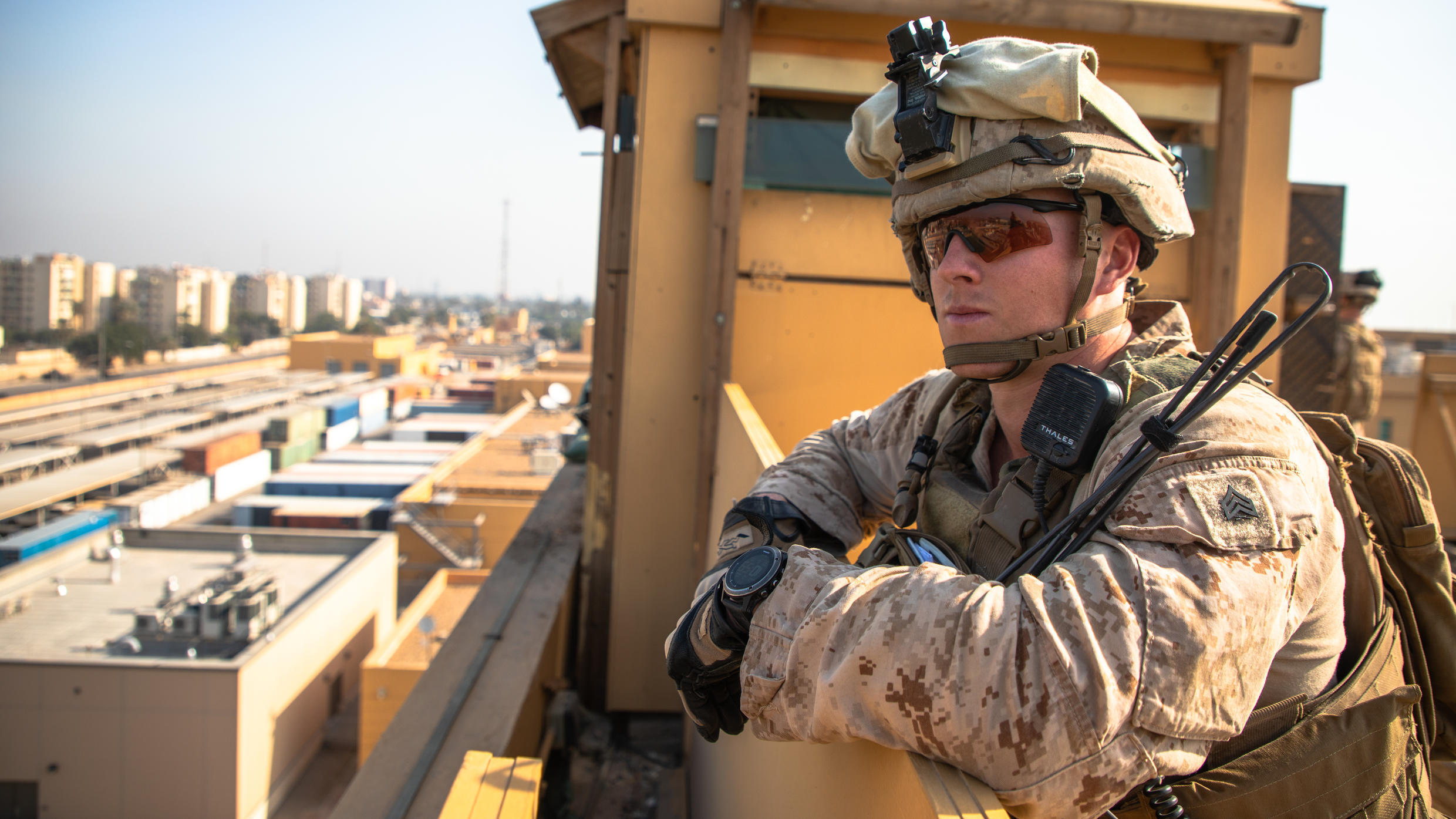
Falling Oil Prices & Decline of Militarism in the MENA

2020/05/16 | Economy, interview, Top News

Strategic Council Online: An expert on political economy said that until now the treasury of the Persian Gulf Arab states was the unofficial treasury of the Americans, adding that this type of funding will practically be cut with the falling oil prices because the Arab states themselves are faced with budget deficits and cannot afford supporting US terrorist schemes in the region.

In an interview with the website of the Strategic Council on Foreign Relations, Ata Bahrami said that in order to analyze the effects of falling oil prices on Arab states, Saudi Arabia’s situation should be examined separately from other small Persian Gulf states. He said the tiny states in the Persian Gulf do not have much expense due to their small population and with hundreds of billions of dollars in oil revenues, this decline in prices will not harm them much.

Regarding the situation in Saudi Arabia following the fall in oil prices, he said: “Saudi Arabia has a population of about 20 million people and is spending a lot of money to show its power in the region.” Saudi Arabia will have a severe budget deficit and its financial markets will be affected, as we see today. On the other hand, the main financial providers of proxy wars in the region are the Persian Gulf states, especially Saudi Arabia.

Possibility of Social Unrest in Saudi Arabia

Bahrami stressed that the Arab states, especially Saudi Arabia, will not be able to buy many weapons due to cuts in their budgets. Saudi Arabia’s budget deficit is approaching 20 per cent, he said, adding that there is also a possibility of social unrest in Saudi Arabia because Riyadh needs a lot of oil money. They have become accustomed to their own lifestyle and spending, and have undertaken many projects, all of which will be disrupted. Thus, the American connection with the Arab states will also be interrupted, and this rhetoric luxury show, which they have had for almost a few decades, will practically be disrupted.

The analyst said the decline in oil prices was important in the power array in the region, adding that Americans had not been able to clearly disclose the expenses of their proxy wars in recent decades and get the necessary funding from the Congress. In fact, the US domestic system does not allow hundreds of billions of dollars are spent in Syria, for example, and such expenses are not covered. That is why they secured the funding by intervening in Syria, North Africa and Libya. In fact, the unofficial treasury of the Americans was the treasury of the Arab countries in the Persian Gulf.

The weakening of American-Led Front in Global Politics and the Middle East

Bahrami went on to say that this method of financing would be practically cut off with low oil prices, adding that the Arab states themselves had budget deficits and could not afford such expenses, so the US could be less effective. At the same time, the finished cost of American shale oil production which is over $45 and makes up for half of the country’s oil, is not economical and is virtually out of the market under the present conditions. The rest of the US oil has a high extraction cost; Of course, not as much as shale oil. That is why they are under pressure, and the front that the Americans themselves led in world politics and the Middle East is practically weakening.

“The Americans, who imported 10 million barrels of oil a day in the last 15 years, had become exporters late last year,” he explained. But with these price fluctuations, they cannot have energy independence. Those who put pressure on Venezuela by cutting off oil purchases from the country are forced to change their stance now. At the same time, their dependence on Saudi Arabia will return and the US influence on Riyadh will decline. Saudi Arabia has doubled its losses due to output cut and attraction of US support, preferred to have US support and not let Washington think that Saud Arabia is needless.

Russia’s Energy Policy

The political economist added that oil prices are expected to remain at around $30 to $35 for the next two or three years, adding that this figure would not go down to $20 and would even go up but not much. Russia’s energy policy is to lower oil prices. They preferred this to happen when they saw that they would be harmed by declining oil prices, but they would do more harm to the United States. On the other hand, they see that Saudi Arabia can be less active in the Middle East and that the US industry will be severely damaged and become dependent on the world’s energy industry again. As a result, its losses to Russia are less than those of its rivals.

Arab, American Interference in Syria Less Likely

“They can no longer easily spend billions of dollars in Syria, send Stinger missiles, and protect hundreds of thousands of terrorists for seven years. These figures are not a joke! Ever since Syria liberated vast areas from under the occupation of the terrorists and pushed them back, everyone thought that the price of the US dollar in Syria will go down but it became more expensive! Everyone just found out what dollars Saudi Arabia and the Arab countries were spending on Syria, and now that they can no longer come to these areas, the dollar’s exchange rate has risen from 550 liras to 1200 liras.

Disruption in Funding Terrorism in the Region

Bahrami went on to say that these issues showed how huge the expenses are. “With the fall in oil prices, the financing of terrorism in these countries will be disrupted and it will not be easy to push these costs forward.” At the same time, the Saudis are spending money on the war in Yemen, and they can no longer drop dozens of expensive bombs at one point. Overall, more calm is forecast for the Middle East as oil prices fall.


0 Comments

Submit a Comment

Your email address will not be published. Required fields are marked *

LATEST CONTENT

Consequences of Declining Trust in the Judiciary in Europe

SCFRonline – Opinion: The increase in public distrust of the French judicial system, which in recent surveys has reached approximately two-thirds of citizens, should be analyzed within a framework broader than temporary dissatisfaction or an emotional reaction to a particular criminal case.

Iran’s Potential Levers of Power

SCFRonline– Opinion: Iran’s geopolitical power is not limited solely to oil and the Strait of Hormuz; the unintended emergence of disruptions in the future global food and energy security chains can also demonstrate Iran’s strategic importance.

The Inseparability of the Lebanese Front from the Axis of Resistance

SCFR Online–Opinion: By providing an extensive network of social, healthcare, educational, and post-war reconstruction services, Hezbollah has established a strong social base for itself among Lebanon’s Shiites and Sunnis, and even beyond that, among other segments of Lebanese society, including Christians. Hezbollah has never been an external actor imposed upon Lebanon; rather, it is a phenomenon fundamentally born out of the occupation and crimes of the Zionist regime and itself influenced by popular resistance.

The Increasing Efforts of the Zionist Regime to Redefine Borders and the Regional Order and Its Consequences

SCFR Online– Opinion: Security and military developments in the region over recent months indicate that the ongoing crises and wars in Gaza, southern Lebanon, and parts of Syrian territory encompass broader dimensions of geopolitical and geostrategic transformations. In this context, the increased military presence and control of the Zionist regime over parts of the territories of these areas, along with proposals regarding the creation of buffer zones or even the expansion of security borders, have raised serious questions about the future of the regional order and its consequences for the countries of West Asia.

Loading

Últimas publicaciones

Consequences of Declining Trust in the Judiciary in Europe

SCFRonline – Opinion: The increase in public distrust of the French judicial system, which in recent surveys has reached approximately two-thirds of citizens, should be analyzed within a framework broader than temporary dissatisfaction or an emotional reaction to a particular criminal case.

Iran’s Potential Levers of Power

SCFRonline– Opinion: Iran’s geopolitical power is not limited solely to oil and the Strait of Hormuz; the unintended emergence of disruptions in the future global food and energy security chains can also demonstrate Iran’s strategic importance.

The Inseparability of the Lebanese Front from the Axis of Resistance

SCFR Online–Opinion: By providing an extensive network of social, healthcare, educational, and post-war reconstruction services, Hezbollah has established a strong social base for itself among Lebanon’s Shiites and Sunnis, and even beyond that, among other segments of Lebanese society, including Christians. Hezbollah has never been an external actor imposed upon Lebanon; rather, it is a phenomenon fundamentally born out of the occupation and crimes of the Zionist regime and itself influenced by popular resistance.

The Increasing Efforts of the Zionist Regime to Redefine Borders and the Regional Order and Its Consequences

SCFR Online– Opinion: Security and military developments in the region over recent months indicate that the ongoing crises and wars in Gaza, southern Lebanon, and parts of Syrian territory encompass broader dimensions of geopolitical and geostrategic transformations. In this context, the increased military presence and control of the Zionist regime over parts of the territories of these areas, along with proposals regarding the creation of buffer zones or even the expansion of security borders, have raised serious questions about the future of the regional order and its consequences for the countries of West Asia.

Loading

DERNIER CONTENU

Consequences of Declining Trust in the Judiciary in Europe

SCFRonline – Opinion: The increase in public distrust of the French judicial system, which in recent surveys has reached approximately two-thirds of citizens, should be analyzed within a framework broader than temporary dissatisfaction or an emotional reaction to a particular criminal case.

Iran’s Potential Levers of Power

SCFRonline– Opinion: Iran’s geopolitical power is not limited solely to oil and the Strait of Hormuz; the unintended emergence of disruptions in the future global food and energy security chains can also demonstrate Iran’s strategic importance.

The Inseparability of the Lebanese Front from the Axis of Resistance

SCFR Online–Opinion: By providing an extensive network of social, healthcare, educational, and post-war reconstruction services, Hezbollah has established a strong social base for itself among Lebanon’s Shiites and Sunnis, and even beyond that, among other segments of Lebanese society, including Christians. Hezbollah has never been an external actor imposed upon Lebanon; rather, it is a phenomenon fundamentally born out of the occupation and crimes of the Zionist regime and itself influenced by popular resistance.

The Increasing Efforts of the Zionist Regime to Redefine Borders and the Regional Order and Its Consequences

SCFR Online– Opinion: Security and military developments in the region over recent months indicate that the ongoing crises and wars in Gaza, southern Lebanon, and parts of Syrian territory encompass broader dimensions of geopolitical and geostrategic transformations. In this context, the increased military presence and control of the Zionist regime over parts of the territories of these areas, along with proposals regarding the creation of buffer zones or even the expansion of security borders, have raised serious questions about the future of the regional order and its consequences for the countries of West Asia.

Loading

DERNIER CONTENU

Consequences of Declining Trust in the Judiciary in Europe

SCFRonline – Opinion: The increase in public distrust of the French judicial system, which in recent surveys has reached approximately two-thirds of citizens, should be analyzed within a framework broader than temporary dissatisfaction or an emotional reaction to a particular criminal case.

Iran’s Potential Levers of Power

SCFRonline– Opinion: Iran’s geopolitical power is not limited solely to oil and the Strait of Hormuz; the unintended emergence of disruptions in the future global food and energy security chains can also demonstrate Iran’s strategic importance.

The Inseparability of the Lebanese Front from the Axis of Resistance

SCFR Online–Opinion: By providing an extensive network of social, healthcare, educational, and post-war reconstruction services, Hezbollah has established a strong social base for itself among Lebanon’s Shiites and Sunnis, and even beyond that, among other segments of Lebanese society, including Christians. Hezbollah has never been an external actor imposed upon Lebanon; rather, it is a phenomenon fundamentally born out of the occupation and crimes of the Zionist regime and itself influenced by popular resistance.

The Increasing Efforts of the Zionist Regime to Redefine Borders and the Regional Order and Its Consequences

SCFR Online– Opinion: Security and military developments in the region over recent months indicate that the ongoing crises and wars in Gaza, southern Lebanon, and parts of Syrian territory encompass broader dimensions of geopolitical and geostrategic transformations. In this context, the increased military presence and control of the Zionist regime over parts of the territories of these areas, along with proposals regarding the creation of buffer zones or even the expansion of security borders, have raised serious questions about the future of the regional order and its consequences for the countries of West Asia.

Loading

DERNIER CONTENU

Consequences of Declining Trust in the Judiciary in Europe

SCFRonline – Opinion: The increase in public distrust of the French judicial system, which in recent surveys has reached approximately two-thirds of citizens, should be analyzed within a framework broader than temporary dissatisfaction or an emotional reaction to a particular criminal case.

Iran’s Potential Levers of Power

SCFRonline– Opinion: Iran’s geopolitical power is not limited solely to oil and the Strait of Hormuz; the unintended emergence of disruptions in the future global food and energy security chains can also demonstrate Iran’s strategic importance.

The Inseparability of the Lebanese Front from the Axis of Resistance

SCFR Online–Opinion: By providing an extensive network of social, healthcare, educational, and post-war reconstruction services, Hezbollah has established a strong social base for itself among Lebanon’s Shiites and Sunnis, and even beyond that, among other segments of Lebanese society, including Christians. Hezbollah has never been an external actor imposed upon Lebanon; rather, it is a phenomenon fundamentally born out of the occupation and crimes of the Zionist regime and itself influenced by popular resistance.

The Increasing Efforts of the Zionist Regime to Redefine Borders and the Regional Order and Its Consequences

SCFR Online– Opinion: Security and military developments in the region over recent months indicate that the ongoing crises and wars in Gaza, southern Lebanon, and parts of Syrian territory encompass broader dimensions of geopolitical and geostrategic transformations. In this context, the increased military presence and control of the Zionist regime over parts of the territories of these areas, along with proposals regarding the creation of buffer zones or even the expansion of security borders, have raised serious questions about the future of the regional order and its consequences for the countries of West Asia.

Loading



