China’s Sanctions against US; A Symbolic Move on Path of Increasing Tension

2021/08/07 | Economy, Note, Top News

Strategic Council Online - Since the US-China rivalry for supremacy in the structure of the international system is an inevitable fact, every small and large issue has the potential to intensify the path of rivalry and animosity between the two countries. Dr. Tahmoures Gholami - expert on US affairs

One of those issues is Hong Kong. Following its extradition to China in 1997 by the British, it was to be governed by the principle of “two states, one nation”; but Western and the US officials say the Hong Kong parliament’s security law, which was passed under pressure from China has violated this principle and as a result freedoms of Hong Kong citizens have been lost. In this regard, the protests of Hong Kong citizens against the parliamentary law and the increase of Chinese control over Hong Kong have led the US-led Western governments to conclude that their policy in Hong Kong is a legitimate policy. As a result, the United States imposed human rights sanctions on some Chinese officials in connection with Hong Kong. In response, the Chinese government on July 25, 2021 placed seven American individuals and institutions, the most important of which was Wilbur Ross, the former US Secretary of Commerce, on the sanctions list.

Recent reciprocal sanctions are due to the inevitability of competition. On the one hand, today, China, along with increasing its power, especially in the economic sphere, which has also led to the transformation of its military power, has made changes in its foreign policy, which has led Beijing to becoming more active in foreign policy. At present, it is not possible to find an area in which Beijing does not have an active presence. China has expanded its presence and influence from various geographical areas around the world to thematic areas such as space.

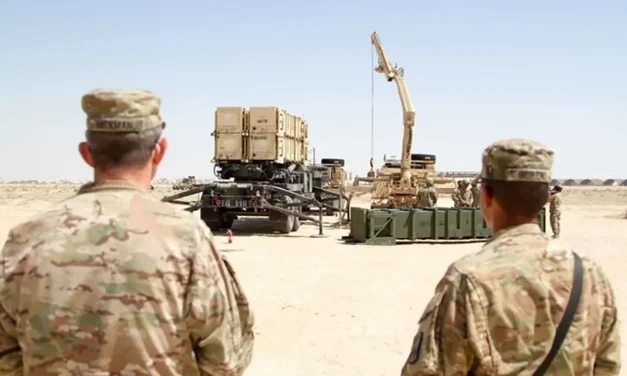
The United States, on the other hand, has been urging China to move quickly toward a phase of hostility and the start of a new Cold War by monitoring its movements. Washington has imposed human rights sanctions on China over China’s Xinjiang Muslims, with the United States and European countries accusing China of widespread cyberattacks against the West, and Biden recently said he thought they might have a war with a major power (possibly China and Russia) because of cyber-attacks; the United States is sending 25 F-22 fighter jets to the Pacific, and Britain is deploying two warships in the region. In addition, there is trade and economic competition between the two countries. It is clear that sanctions against personalities seem symbolic compared to other measures such as military movements.

What is important to address is that China-US relations are inevitably on the verge of escalating tensions. Of course, in addition to escalating tensions, the two countries are also considering cooperation in some common areas; this is because on the one hand the tensions are too intense and do not get out of control and on the other hand may lead to a reduction in existing tensions. Despite the option of cooperation by both countries, it is safe to say that China-US relations are experiencing their most challenging period. Ever since Donald Trump came to power in the United States, relations have begun to decline with the start of the trade war and have spread to other areas. It can be said that at present it is seldom possible to find an area of ​​bilateral relations that has not been affected by the escalation of tensions between the two countries. As Joe Biden came to power, although some expected adjustments in some areas, such as the removal of tariffs imposed on Chinese goods by Donald Trump, this hostile trend has continued in the new era.

In the end, it should be said that tensions in various areas such as space, technology, trade issues, etc. are ongoing between Beijing and Washington. Recent US and Chinese sanctions against each other reflect the fact that the field of human rights is also one of the areas of tension between the two countries. In fact, one of the most challenging issues between China and the United States during the Biden era was the criticism and pressure of US human rights on China on issues such as Xinjiang, Tibet, Hong Kong, and so on. The Biden administration has so far imposed sanctions on China in the field of human rights, and this issue seems to be one of the tools of the United States in putting pressure on China in the coming years. Naturally, this will provoke a reaction from China. China’s recent sanctions against American individuals and institutions can be explained in this regard. For example, Chinese Foreign Ministry spokesman Wang Wenbin recently criticized the extension of racism in the United States.

0 Comments

Submit a Comment

Your email address will not be published. Required fields are marked *

LATEST CONTENT

Consequences of Declining Trust in the Judiciary in Europe

SCFRonline – Opinion: The increase in public distrust of the French judicial system, which in recent surveys has reached approximately two-thirds of citizens, should be analyzed within a framework broader than temporary dissatisfaction or an emotional reaction to a particular criminal case.

Iran’s Potential Levers of Power

SCFRonline– Opinion: Iran’s geopolitical power is not limited solely to oil and the Strait of Hormuz; the unintended emergence of disruptions in the future global food and energy security chains can also demonstrate Iran’s strategic importance.

The Inseparability of the Lebanese Front from the Axis of Resistance

SCFR Online–Opinion: By providing an extensive network of social, healthcare, educational, and post-war reconstruction services, Hezbollah has established a strong social base for itself among Lebanon’s Shiites and Sunnis, and even beyond that, among other segments of Lebanese society, including Christians. Hezbollah has never been an external actor imposed upon Lebanon; rather, it is a phenomenon fundamentally born out of the occupation and crimes of the Zionist regime and itself influenced by popular resistance.

The Increasing Efforts of the Zionist Regime to Redefine Borders and the Regional Order and Its Consequences

SCFR Online– Opinion: Security and military developments in the region over recent months indicate that the ongoing crises and wars in Gaza, southern Lebanon, and parts of Syrian territory encompass broader dimensions of geopolitical and geostrategic transformations. In this context, the increased military presence and control of the Zionist regime over parts of the territories of these areas, along with proposals regarding the creation of buffer zones or even the expansion of security borders, have raised serious questions about the future of the regional order and its consequences for the countries of West Asia.

Loading

Últimas publicaciones

Consequences of Declining Trust in the Judiciary in Europe

SCFRonline – Opinion: The increase in public distrust of the French judicial system, which in recent surveys has reached approximately two-thirds of citizens, should be analyzed within a framework broader than temporary dissatisfaction or an emotional reaction to a particular criminal case.

Iran’s Potential Levers of Power

SCFRonline– Opinion: Iran’s geopolitical power is not limited solely to oil and the Strait of Hormuz; the unintended emergence of disruptions in the future global food and energy security chains can also demonstrate Iran’s strategic importance.

The Inseparability of the Lebanese Front from the Axis of Resistance

SCFR Online–Opinion: By providing an extensive network of social, healthcare, educational, and post-war reconstruction services, Hezbollah has established a strong social base for itself among Lebanon’s Shiites and Sunnis, and even beyond that, among other segments of Lebanese society, including Christians. Hezbollah has never been an external actor imposed upon Lebanon; rather, it is a phenomenon fundamentally born out of the occupation and crimes of the Zionist regime and itself influenced by popular resistance.

The Increasing Efforts of the Zionist Regime to Redefine Borders and the Regional Order and Its Consequences

SCFR Online– Opinion: Security and military developments in the region over recent months indicate that the ongoing crises and wars in Gaza, southern Lebanon, and parts of Syrian territory encompass broader dimensions of geopolitical and geostrategic transformations. In this context, the increased military presence and control of the Zionist regime over parts of the territories of these areas, along with proposals regarding the creation of buffer zones or even the expansion of security borders, have raised serious questions about the future of the regional order and its consequences for the countries of West Asia.

Loading

DERNIER CONTENU

Consequences of Declining Trust in the Judiciary in Europe

SCFRonline – Opinion: The increase in public distrust of the French judicial system, which in recent surveys has reached approximately two-thirds of citizens, should be analyzed within a framework broader than temporary dissatisfaction or an emotional reaction to a particular criminal case.

Iran’s Potential Levers of Power

SCFRonline– Opinion: Iran’s geopolitical power is not limited solely to oil and the Strait of Hormuz; the unintended emergence of disruptions in the future global food and energy security chains can also demonstrate Iran’s strategic importance.

The Inseparability of the Lebanese Front from the Axis of Resistance

SCFR Online–Opinion: By providing an extensive network of social, healthcare, educational, and post-war reconstruction services, Hezbollah has established a strong social base for itself among Lebanon’s Shiites and Sunnis, and even beyond that, among other segments of Lebanese society, including Christians. Hezbollah has never been an external actor imposed upon Lebanon; rather, it is a phenomenon fundamentally born out of the occupation and crimes of the Zionist regime and itself influenced by popular resistance.

The Increasing Efforts of the Zionist Regime to Redefine Borders and the Regional Order and Its Consequences

SCFR Online– Opinion: Security and military developments in the region over recent months indicate that the ongoing crises and wars in Gaza, southern Lebanon, and parts of Syrian territory encompass broader dimensions of geopolitical and geostrategic transformations. In this context, the increased military presence and control of the Zionist regime over parts of the territories of these areas, along with proposals regarding the creation of buffer zones or even the expansion of security borders, have raised serious questions about the future of the regional order and its consequences for the countries of West Asia.

Loading

DERNIER CONTENU

Consequences of Declining Trust in the Judiciary in Europe

SCFRonline – Opinion: The increase in public distrust of the French judicial system, which in recent surveys has reached approximately two-thirds of citizens, should be analyzed within a framework broader than temporary dissatisfaction or an emotional reaction to a particular criminal case.

Iran’s Potential Levers of Power

SCFRonline– Opinion: Iran’s geopolitical power is not limited solely to oil and the Strait of Hormuz; the unintended emergence of disruptions in the future global food and energy security chains can also demonstrate Iran’s strategic importance.

The Inseparability of the Lebanese Front from the Axis of Resistance

SCFR Online–Opinion: By providing an extensive network of social, healthcare, educational, and post-war reconstruction services, Hezbollah has established a strong social base for itself among Lebanon’s Shiites and Sunnis, and even beyond that, among other segments of Lebanese society, including Christians. Hezbollah has never been an external actor imposed upon Lebanon; rather, it is a phenomenon fundamentally born out of the occupation and crimes of the Zionist regime and itself influenced by popular resistance.

The Increasing Efforts of the Zionist Regime to Redefine Borders and the Regional Order and Its Consequences

SCFR Online– Opinion: Security and military developments in the region over recent months indicate that the ongoing crises and wars in Gaza, southern Lebanon, and parts of Syrian territory encompass broader dimensions of geopolitical and geostrategic transformations. In this context, the increased military presence and control of the Zionist regime over parts of the territories of these areas, along with proposals regarding the creation of buffer zones or even the expansion of security borders, have raised serious questions about the future of the regional order and its consequences for the countries of West Asia.

Loading

DERNIER CONTENU

Consequences of Declining Trust in the Judiciary in Europe

SCFRonline – Opinion: The increase in public distrust of the French judicial system, which in recent surveys has reached approximately two-thirds of citizens, should be analyzed within a framework broader than temporary dissatisfaction or an emotional reaction to a particular criminal case.

Iran’s Potential Levers of Power

SCFRonline– Opinion: Iran’s geopolitical power is not limited solely to oil and the Strait of Hormuz; the unintended emergence of disruptions in the future global food and energy security chains can also demonstrate Iran’s strategic importance.

The Inseparability of the Lebanese Front from the Axis of Resistance

SCFR Online–Opinion: By providing an extensive network of social, healthcare, educational, and post-war reconstruction services, Hezbollah has established a strong social base for itself among Lebanon’s Shiites and Sunnis, and even beyond that, among other segments of Lebanese society, including Christians. Hezbollah has never been an external actor imposed upon Lebanon; rather, it is a phenomenon fundamentally born out of the occupation and crimes of the Zionist regime and itself influenced by popular resistance.

The Increasing Efforts of the Zionist Regime to Redefine Borders and the Regional Order and Its Consequences

SCFR Online– Opinion: Security and military developments in the region over recent months indicate that the ongoing crises and wars in Gaza, southern Lebanon, and parts of Syrian territory encompass broader dimensions of geopolitical and geostrategic transformations. In this context, the increased military presence and control of the Zionist regime over parts of the territories of these areas, along with proposals regarding the creation of buffer zones or even the expansion of security borders, have raised serious questions about the future of the regional order and its consequences for the countries of West Asia.

Loading



