EU and China on the Verge of Trade War?

2024/07/06 | Economy, Note, Top News

Strategic Council Online - Opinion: Chinese officials have recently warned that Europe's approach to importing electric cars from China will spark a trade war because heavy tariffs have been imposed on importing Chinese-made electric cars.

Reza Majidzadeh – Researcher of Pasargad Millennium Plan Think Tank

In response to these tariffs, Chinese car manufacturers have asked their country’s authorities to raise the import tariff of gasoline cars from Europe, and the Chinese government has also started an investigation into the import of pork from Europe to counter this new trade war. Although none of the Chinese or European sides believe in the start of a new trade war, the Chinese Ministry of Commerce spokesperson has only warned about the possibility of a trade war with Europe. However, European authorities’ investigation into dumping by Chinese companies in electric vehicles was the beginning of a tariff increase by European authorities, which angered Chinese officials. Now, the important question is, has a new trade war really started?

In 2023, nearly a third of Chinese electric vehicle exports went to the EU, while in 2022, just over a quarter of China’s EU exports were destined for the EU. China sells these cars to the EU market at a price of less than 30,000 euros, reducing European companies’ competitiveness. Of course, the European authorities’ concern is not limited to electric cars. For example, European manufacturers complain that the price of Chinese wind turbines is  50% lower than that of their products. For this reason, the European Union is on the verge of a trade war over imports of electric cars, steel, and Chinese solar and wind technology. In fact, the threat to jobs in the European Union is one of the main motivations of this trade war. Accordingly, the European Union raised tariffs on electric vehicles imported from China by 17.4 to 38.1 percent. The interaction of the European Union in the field of electric vehicles is due to the fact that the automobile industry in this union constitutes 6% of the total employment of its economy, and its revenues are close to 160 billion euros. China’s counteraction with products such as pork is also due to its awareness of the price advantages of its cars. Still, by targeting the pig trade, whose imports from Europe bring about 3 billion euros per year to the European Union, countries such as Spain and the Netherlands will challenge Denmark and France. In addition, Chinese authorities have warned that they may impose tariffs on heavy vehicles with large engines.

On the one hand, the European Union is concerned about its businesses and strategic industries. On the other hand, China does not intend to back down from the long-term strategy of “Made in China 2025.” therefore, some experts believe that the scope of this nascent trade war can be extended to the aircraft trade as well because China has started producing passenger jets and can impose duties on Airbus planes shortly.

In such a situation, the European Union moves towards diversification and balance so as not to suffer significant risks due to dependence on a particular economy. For example, while trying to expand the access of its companies to the Chinese market, Germany is trying not to make its economy and trade too dependent on a particular country. Hence, the country’s 60 billion euro trade with China in the first quarter of 2024 will equal its 63 billion euro trade with the United States.

However, the European Union as a whole, like the United States during the Trump era, does not have a clear and coherent strategy. Unlike the United States, it cannot significantly increase the production capacity of goods for which import substitution is available.

0 Comments

LATEST CONTENT

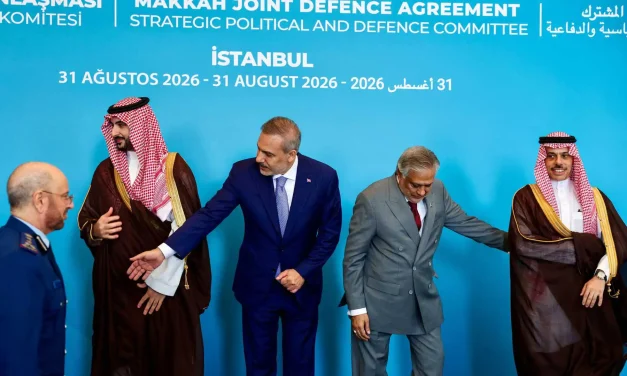
An Analysis of the Makkah Defense Pact

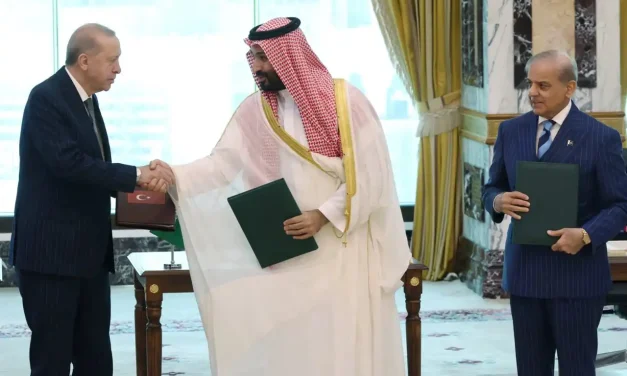
SCFR Online – Opinion: On Friday, August 7, the heads of state of three countries – Saudi Arabia, Turkey, and Pakistan – signed a text under the title “Makkah Joint Defense Agreement.”

Dimensions and challenges of the initiative to revive the Hejaz Railway

Strategic Council Online – Note: The initiative to revive the Hejaz Railway, beyond being a transportation project, constitutes an attempt to redefine geopolitics, the economy, and Turkey’s regional position; however, its realization appears to face significant financial, security, and institutional challenges.

Balancing in the chain of chokepoints; from sea-based deterrence to pluralistic diplomacy

Strategic Council Online – Note: Recent developments in the political geography of West Asia, from rising tensions in the Persian Gulf to missile and drone activities in the Red Sea and the recent warning by Kaja Kallas, the European Union’s foreign policy chief, regarding the threat to freedom of navigation, indicate a key pattern shift; the US-Iran war has moved beyond the scope of a regional and local confrontation and has linked two vital passageways for the global economy: the Strait of Hormuz and the Bab el-Mandeb Strait.

Loading

Últimas publicaciones

An Analysis of the Makkah Defense Pact

SCFR Online – Opinion: On Friday, August 7, the heads of state of three countries – Saudi Arabia, Turkey, and Pakistan – signed a text under the title “Makkah Joint Defense Agreement.”

Dimensions and challenges of the initiative to revive the Hejaz Railway

Strategic Council Online – Note: The initiative to revive the Hejaz Railway, beyond being a transportation project, constitutes an attempt to redefine geopolitics, the economy, and Turkey’s regional position; however, its realization appears to face significant financial, security, and institutional challenges.

Balancing in the chain of chokepoints; from sea-based deterrence to pluralistic diplomacy

Strategic Council Online – Note: Recent developments in the political geography of West Asia, from rising tensions in the Persian Gulf to missile and drone activities in the Red Sea and the recent warning by Kaja Kallas, the European Union’s foreign policy chief, regarding the threat to freedom of navigation, indicate a key pattern shift; the US-Iran war has moved beyond the scope of a regional and local confrontation and has linked two vital passageways for the global economy: the Strait of Hormuz and the Bab el-Mandeb Strait.

Loading

DERNIER CONTENU

An Analysis of the Makkah Defense Pact

SCFR Online – Opinion: On Friday, August 7, the heads of state of three countries – Saudi Arabia, Turkey, and Pakistan – signed a text under the title “Makkah Joint Defense Agreement.”

Dimensions and challenges of the initiative to revive the Hejaz Railway

Strategic Council Online – Note: The initiative to revive the Hejaz Railway, beyond being a transportation project, constitutes an attempt to redefine geopolitics, the economy, and Turkey’s regional position; however, its realization appears to face significant financial, security, and institutional challenges.

Balancing in the chain of chokepoints; from sea-based deterrence to pluralistic diplomacy

Strategic Council Online – Note: Recent developments in the political geography of West Asia, from rising tensions in the Persian Gulf to missile and drone activities in the Red Sea and the recent warning by Kaja Kallas, the European Union’s foreign policy chief, regarding the threat to freedom of navigation, indicate a key pattern shift; the US-Iran war has moved beyond the scope of a regional and local confrontation and has linked two vital passageways for the global economy: the Strait of Hormuz and the Bab el-Mandeb Strait.

Loading

DERNIER CONTENU

An Analysis of the Makkah Defense Pact

SCFR Online – Opinion: On Friday, August 7, the heads of state of three countries – Saudi Arabia, Turkey, and Pakistan – signed a text under the title “Makkah Joint Defense Agreement.”

Dimensions and challenges of the initiative to revive the Hejaz Railway

Strategic Council Online – Note: The initiative to revive the Hejaz Railway, beyond being a transportation project, constitutes an attempt to redefine geopolitics, the economy, and Turkey’s regional position; however, its realization appears to face significant financial, security, and institutional challenges.

Balancing in the chain of chokepoints; from sea-based deterrence to pluralistic diplomacy

Strategic Council Online – Note: Recent developments in the political geography of West Asia, from rising tensions in the Persian Gulf to missile and drone activities in the Red Sea and the recent warning by Kaja Kallas, the European Union’s foreign policy chief, regarding the threat to freedom of navigation, indicate a key pattern shift; the US-Iran war has moved beyond the scope of a regional and local confrontation and has linked two vital passageways for the global economy: the Strait of Hormuz and the Bab el-Mandeb Strait.

Loading

DERNIER CONTENU

An Analysis of the Makkah Defense Pact

SCFR Online – Opinion: On Friday, August 7, the heads of state of three countries – Saudi Arabia, Turkey, and Pakistan – signed a text under the title “Makkah Joint Defense Agreement.”

Dimensions and challenges of the initiative to revive the Hejaz Railway

Strategic Council Online – Note: The initiative to revive the Hejaz Railway, beyond being a transportation project, constitutes an attempt to redefine geopolitics, the economy, and Turkey’s regional position; however, its realization appears to face significant financial, security, and institutional challenges.

Balancing in the chain of chokepoints; from sea-based deterrence to pluralistic diplomacy

Strategic Council Online – Note: Recent developments in the political geography of West Asia, from rising tensions in the Persian Gulf to missile and drone activities in the Red Sea and the recent warning by Kaja Kallas, the European Union’s foreign policy chief, regarding the threat to freedom of navigation, indicate a key pattern shift; the US-Iran war has moved beyond the scope of a regional and local confrontation and has linked two vital passageways for the global economy: the Strait of Hormuz and the Bab el-Mandeb Strait.

Loading