Impact of US Policies on Iran-China Relations

2018/12/18 | News, Opinion, Publications

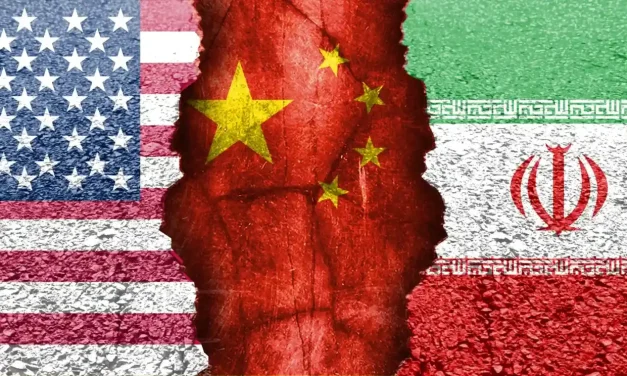
Strategic Council Online: In view of the US pressures, China is trying to quietly maintain its relationship with Iran, a prominent example of which is the resumption of Iran-China banking relations. Abdolreza Faraji Rad - University Lecturer

Any analysis of US-China relations must be based on the fact that Washington’s strategy vis-à-vis China is a long-term one. The United States today describes China the biggest rival and also the biggest threat in the long run; therefore, the outbreak of trade-political encounters between the two countries is likely. A most recent example of such encounters is the arrest of the chief financial officer of tech giant Huawei for allegedly breaking the US sanctions against Iran. The executive Meng Wanjhou is under detention in Canada and is very likely to be handed to the US.

The incident occurred after Chinese and American presidents met in Buenos Aires and agreed to stop the trade war for three months and then begin negotiations.

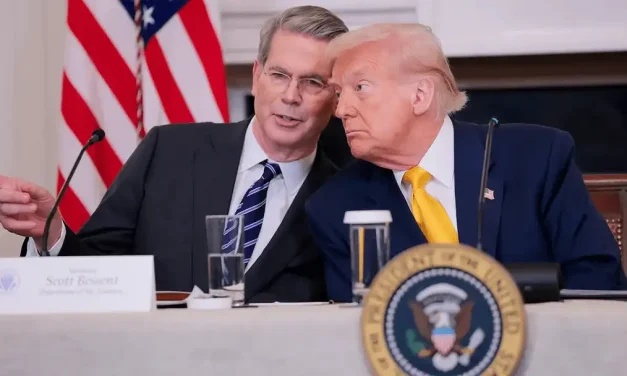
In the political arena, it is sometimes necessary to adopt tactics to prevent the expansion of war and disputes from business arena to the political and military fields; and the Buenos Aires deal was reached to this end. Today, with the arrest of this senior Chinese executive, this tactic will be affected prompting China and the United States to go back to their previous stances. It’s important to note that the Chinese have the US number and have a lot of patience. They would not let this cause a new crisis with the United States. Washington, especially under Trump is determined to counter China and not allow Beijing to take advantage of the global opportunities. Today the race is between the two countries to take the helm. Therefore the United States and Trump are trying to do anything to counteract China’s growth and create further division between China-US economic growth.

The arrest of the Huawei executive is also part of the strategic struggle of the United States and some of its allies who describe China a threat. This American position also included a sideline portion which mentioned Iran and the issue of the sanctions. The United States is determined to deal with Iran and by increasing the pressures compel Tehran to sit at the negotiation table with Washington. However, the Iranian side is still resisting and there are still countries that are trying to maintain their secret or partly clandestine relationship with Iran despite the disadvantages ignoring the United States could have for them.

Given the fact that the final year of the presidency will always be a busy year for the administration, the US president will be involved in the election, and consequently, the external pressure will decrease. So the US president before entering his last year in power will increase its pressures and by sending such signals seeks to prevent other countries from trying to break the US sanctions and continuing to work with Iran. Americans see that China has the biggest volume of economic activity with Iran, and if it deals a blow on Beijing other countries will learn a lesson.

Nonetheless, tensions between the US and China will continue in the future. This will continue more or less no matter Trump will win the next round of the presidential race.

As for relations between China and Iran, it should be noted that, given the US pressure, Beijing is trying to maintain its ties with Tehran. An example is the resumption of banking ties between the two countries.

China-Iran relations depend heavily on creating a special European financial mechanism (SPV) for Iran. If this mechanism is established, China and Russia will work more easily with Iran because by creating this mechanism, some kind of global consensus will be reached to work with Iran. China’s relations with Iran too will be easier; but if this mechanism is somehow not created, China’s work in maintaining relations with Iran would be harder and the level of relations between the two countries will be lower.
0 Comments

Submit a Comment

Your email address will not be published. Required fields are marked *

LATEST CONTENT

Indicators for Choosing Between War and Diplomacy

SCFR Online – Opinion: Foreign policy analysis is valid when it evaluates decisions based on the information and circumstances prevailing at the time they were made, not on the basis of outcomes that only become apparent after the crisis has ended.

The war of narratives; a tool for geopolitical competition

Strategic Council Online – Note: In today’s global politics, the creation of narratives has become as important as territorial control and economic management, and has turned into the main tool of great power competition.

Analysis of the Recognition of the Armenian Genocide by the Zionist Regime

SCFR Online – Opinion: At a time when the West Asia region, particularly in recent months, has been undergoing the most complex political and security developments of the past half-century, the sudden decision by the cabinet of the Zionist regime to recognize the Armenian genocide committed by Turkey, which has faced strong condemnation and opposition from Ankara and Baku, raises questions.

Loading

Últimas publicaciones

Indicators for Choosing Between War and Diplomacy

SCFR Online – Opinion: Foreign policy analysis is valid when it evaluates decisions based on the information and circumstances prevailing at the time they were made, not on the basis of outcomes that only become apparent after the crisis has ended.

The war of narratives; a tool for geopolitical competition

Strategic Council Online – Note: In today’s global politics, the creation of narratives has become as important as territorial control and economic management, and has turned into the main tool of great power competition.

Analysis of the Recognition of the Armenian Genocide by the Zionist Regime

SCFR Online – Opinion: At a time when the West Asia region, particularly in recent months, has been undergoing the most complex political and security developments of the past half-century, the sudden decision by the cabinet of the Zionist regime to recognize the Armenian genocide committed by Turkey, which has faced strong condemnation and opposition from Ankara and Baku, raises questions.

Loading

DERNIER CONTENU

Indicators for Choosing Between War and Diplomacy

SCFR Online – Opinion: Foreign policy analysis is valid when it evaluates decisions based on the information and circumstances prevailing at the time they were made, not on the basis of outcomes that only become apparent after the crisis has ended.

The war of narratives; a tool for geopolitical competition

Strategic Council Online – Note: In today’s global politics, the creation of narratives has become as important as territorial control and economic management, and has turned into the main tool of great power competition.

Analysis of the Recognition of the Armenian Genocide by the Zionist Regime

SCFR Online – Opinion: At a time when the West Asia region, particularly in recent months, has been undergoing the most complex political and security developments of the past half-century, the sudden decision by the cabinet of the Zionist regime to recognize the Armenian genocide committed by Turkey, which has faced strong condemnation and opposition from Ankara and Baku, raises questions.

Loading

DERNIER CONTENU

Indicators for Choosing Between War and Diplomacy

SCFR Online – Opinion: Foreign policy analysis is valid when it evaluates decisions based on the information and circumstances prevailing at the time they were made, not on the basis of outcomes that only become apparent after the crisis has ended.

The war of narratives; a tool for geopolitical competition

Strategic Council Online – Note: In today’s global politics, the creation of narratives has become as important as territorial control and economic management, and has turned into the main tool of great power competition.

Analysis of the Recognition of the Armenian Genocide by the Zionist Regime

SCFR Online – Opinion: At a time when the West Asia region, particularly in recent months, has been undergoing the most complex political and security developments of the past half-century, the sudden decision by the cabinet of the Zionist regime to recognize the Armenian genocide committed by Turkey, which has faced strong condemnation and opposition from Ankara and Baku, raises questions.

Loading

DERNIER CONTENU

Indicators for Choosing Between War and Diplomacy

SCFR Online – Opinion: Foreign policy analysis is valid when it evaluates decisions based on the information and circumstances prevailing at the time they were made, not on the basis of outcomes that only become apparent after the crisis has ended.

The war of narratives; a tool for geopolitical competition

Strategic Council Online – Note: In today’s global politics, the creation of narratives has become as important as territorial control and economic management, and has turned into the main tool of great power competition.

Analysis of the Recognition of the Armenian Genocide by the Zionist Regime

SCFR Online – Opinion: At a time when the West Asia region, particularly in recent months, has been undergoing the most complex political and security developments of the past half-century, the sudden decision by the cabinet of the Zionist regime to recognize the Armenian genocide committed by Turkey, which has faced strong condemnation and opposition from Ankara and Baku, raises questions.

Loading