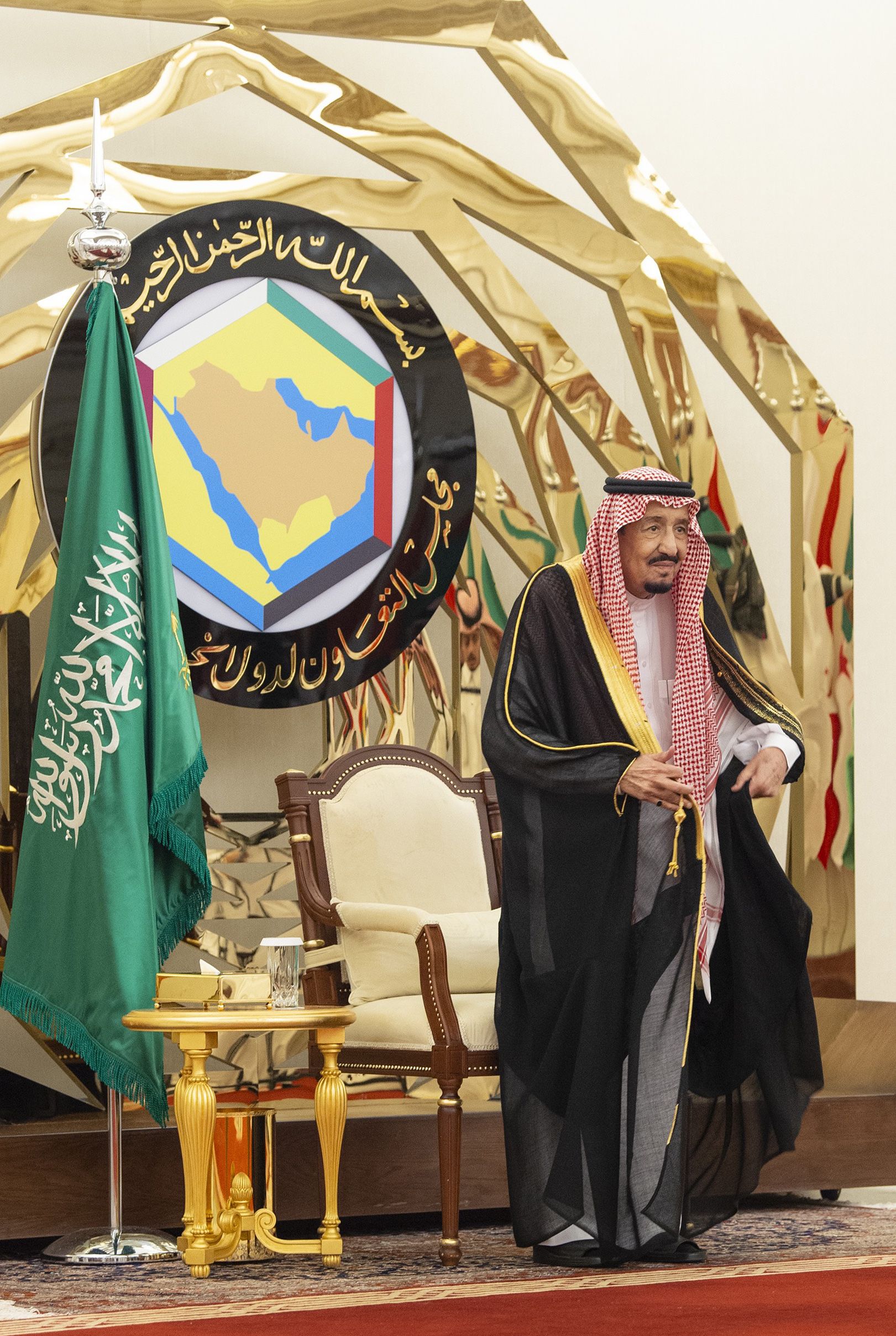
Escalation of Disputes at Persian Gulf Cooperation Council

2019/07/19 | Politics, Top News

Strategic Council Online: The Persian Gulf Cooperation Council does not enjoy sufficient capacity for regional and international influence; but in spite of the ideological and political differences, especially in relation to Iran, the six countries under pressure from the United States and Britain have been forced to maintain the appearance of the Cooperation Council and cover up their differences. Hassan Hanizadeh - Middle East Affairs Expert

The Persian Gulf Cooperation Council was established in 1981 and one year after Iraq’s Saddam Hossein invaded Iran. The move was taken to coordinate the policies of the six Persian Gulf states, namely Saudi Arabia, Bahrain, the United Arab Emirates, Qatar, Oman and Kuwait against Iran, with the support of the United States and Britain and, in general, the West.

During the eight years of the Iraqi imposed war, the six Persian Gulf states, in particular, Saudi Arabia, the United Arab Emirates, Kuwait, and Bahrain, donated $120 billion in aid to the Saddam regime. After the Iraqi invasion of Kuwait in 1990 and the end of Saddam’s imposed war on Iran (1980-88) the Persian Gulf Cooperation Council suffered a political division because Qatar, Kuwait and the Sultanate of Oman adopted a relatively moderate policy towards Iran, while Saudi Arabia, the UAE, and Bahrain continued their aggressive policies against Tehran. Over time, the disagreement between the six countries intensified because Saudi Arabia, as the largest Persian Gulf Cooperation Council member state, has sought to impose its policies on other member states.

Approximately four years ago, after Qatar’s blockade and physical confrontation between Qatar and Saudi Arabia over border disputes and the political differences between the UAE and Qatar, the Persian Gulf Cooperation Council was on the brink of collapse. Since 2017 and one year after Donald Trump took over the White House, the differences between Qatar and Saudi Arabia have intensified. The reason is that Trump intended to blackmail the six Persian Gulf Cooperation Council states, but Qatar did not give in to the extortion and as a result, Saudi Arabia was forced to pay $500 billion to the U.S. within the framework of arms and economic cooperation.

A political crisis occurred on June 5, 2017, after four Arab states led by Saudi Arabia severed diplomatic relations with Qatar. In contrast, Iran and Turkey voiced support for Qatar.

First, the four countries of Saudi Arabia, Egypt, the United Arab Emirates, and Bahrain led by Saudi Arabia cut off diplomatic relations with Qatar. After that, some Arab countries supported Saudi Arabia and cut off their ties with Qatar. The countries that joined Saudi Arabia were Libya, Yemen, Maldives, Senegal, Mauritania, Chad, Comoros, Niger, and Gabon, who joined the Saudi campaign against Qatar.

The disagreements between Doha and Riyadh greatly increased the gaps in the (Persian) Gulf Cooperation Council. The difference between the two sides also began with Saudi Arabia, the UAE and Bahrain, in cooperation with Egypt, imposed sanctions on Qatar due to Doha’s moderate policy toward Iran.

Meanwhile, the Omani kingdom, a major Persian Gulf Cooperation Council member has maintained its ties with Iran. Therefore, now the Persian Gulf Cooperation Council is scattered due to different categories and the gap between its members has intensified. But the United States and Britain have made every effort to maintain the identity of the Persian Gulf Cooperation Council vis-à-vis Iran.

On the other hand, disputes between the UAE and Saudi Arabia have also increased recently, like the UAE, without the coordination of Saudi Arabia, occupied the Socotra Island of Yemen and reduced its troop strength in the Saudi coalition. This led to an escalation of the dispute between the UAE and Saudi Arabia, where the UAE is now seeking to withdraw all its forces from the Arab coalition against Yemen.

Differences have also surfaced between the Sultanate of Oman and Saudi Arabia due to the close relations Oman maintains with Iran. Kuwait also has some political differences with Saudi Arabia, because Riyadh has always intervened in the Kuwaiti parliamentary elections, which has caused Kuwait’s dissatisfaction. In fact, Riyadh is trying to send Salafis and Wahhabis into the Kuwaiti parliament.

In the case of Syria, there are also differences between the countries of the southern coasts of the Persian Gulf; in this respect, Qatar was first aligned with Saudi Arabia but differences turned the alignment into a dispute. Now, Qatar, because of its close proximity to Turkey, has refrained from involvement in Syria and follows the Turkish government’s politics. The three countries of Saudi Arabia, the UAE and Bahrain have a similar view on the Syrian issue and want Bashar Assad to step down, but Kuwait and the Omani kingdom are not very involved in this issue.

Finally, it must be noted that the Persian Gulf Cooperation Council does not enjoy sufficient capacity for regional and international influence; but in spite of the ideological and political differences, especially in relation to Iran, the six countries under pressure from the United States and Britain have been forced to maintain the appearance of the Cooperation Council and cover-up differences.


0 Comments

Submit a Comment

Your email address will not be published. Required fields are marked *

LATEST CONTENT

The Inseparability of the Lebanese Front from the Axis of Resistance

SCFR Online–Opinion: By providing an extensive network of social, healthcare, educational, and post-war reconstruction services, Hezbollah has established a strong social base for itself among Lebanon’s Shiites and Sunnis, and even beyond that, among other segments of Lebanese society, including Christians. Hezbollah has never been an external actor imposed upon Lebanon; rather, it is a phenomenon fundamentally born out of the occupation and crimes of the Zionist regime and itself influenced by popular resistance.

The Increasing Efforts of the Zionist Regime to Redefine Borders and the Regional Order and Its Consequences

SCFR Online– Opinion: Security and military developments in the region over recent months indicate that the ongoing crises and wars in Gaza, southern Lebanon, and parts of Syrian territory encompass broader dimensions of geopolitical and geostrategic transformations. In this context, the increased military presence and control of the Zionist regime over parts of the territories of these areas, along with proposals regarding the creation of buffer zones or even the expansion of security borders, have raised serious questions about the future of the regional order and its consequences for the countries of West Asia.

The Components of Iran’s Deterrence Power

SCFR Online – Opinion: At a time when regional security equations have reached a sensitive stage under the influence of Iran’s strategic confrontation with the United States and the Zionist regime, the question of the nature of Tehran’s defensive power has gained greater significance than ever before. While Washington and Tel Aviv rely on their technological superiority, the Islamic Republic of Iran has presented a model of deterrence that extends beyond the material calculations of the world’s classical militaries. This power, rooted in the connection between “the field” and “the people,” has not only altered the balance of power in recent conflicts but has also disrupted adversaries’ calculations when confronting Iran’s strategic depth.

Loading

Últimas publicaciones

The Inseparability of the Lebanese Front from the Axis of Resistance

SCFR Online–Opinion: By providing an extensive network of social, healthcare, educational, and post-war reconstruction services, Hezbollah has established a strong social base for itself among Lebanon’s Shiites and Sunnis, and even beyond that, among other segments of Lebanese society, including Christians. Hezbollah has never been an external actor imposed upon Lebanon; rather, it is a phenomenon fundamentally born out of the occupation and crimes of the Zionist regime and itself influenced by popular resistance.

The Increasing Efforts of the Zionist Regime to Redefine Borders and the Regional Order and Its Consequences

SCFR Online– Opinion: Security and military developments in the region over recent months indicate that the ongoing crises and wars in Gaza, southern Lebanon, and parts of Syrian territory encompass broader dimensions of geopolitical and geostrategic transformations. In this context, the increased military presence and control of the Zionist regime over parts of the territories of these areas, along with proposals regarding the creation of buffer zones or even the expansion of security borders, have raised serious questions about the future of the regional order and its consequences for the countries of West Asia.

The Components of Iran’s Deterrence Power

SCFR Online – Opinion: At a time when regional security equations have reached a sensitive stage under the influence of Iran’s strategic confrontation with the United States and the Zionist regime, the question of the nature of Tehran’s defensive power has gained greater significance than ever before. While Washington and Tel Aviv rely on their technological superiority, the Islamic Republic of Iran has presented a model of deterrence that extends beyond the material calculations of the world’s classical militaries. This power, rooted in the connection between “the field” and “the people,” has not only altered the balance of power in recent conflicts but has also disrupted adversaries’ calculations when confronting Iran’s strategic depth.

Loading

DERNIER CONTENU

The Inseparability of the Lebanese Front from the Axis of Resistance

SCFR Online–Opinion: By providing an extensive network of social, healthcare, educational, and post-war reconstruction services, Hezbollah has established a strong social base for itself among Lebanon’s Shiites and Sunnis, and even beyond that, among other segments of Lebanese society, including Christians. Hezbollah has never been an external actor imposed upon Lebanon; rather, it is a phenomenon fundamentally born out of the occupation and crimes of the Zionist regime and itself influenced by popular resistance.

The Increasing Efforts of the Zionist Regime to Redefine Borders and the Regional Order and Its Consequences

SCFR Online– Opinion: Security and military developments in the region over recent months indicate that the ongoing crises and wars in Gaza, southern Lebanon, and parts of Syrian territory encompass broader dimensions of geopolitical and geostrategic transformations. In this context, the increased military presence and control of the Zionist regime over parts of the territories of these areas, along with proposals regarding the creation of buffer zones or even the expansion of security borders, have raised serious questions about the future of the regional order and its consequences for the countries of West Asia.

The Components of Iran’s Deterrence Power

SCFR Online – Opinion: At a time when regional security equations have reached a sensitive stage under the influence of Iran’s strategic confrontation with the United States and the Zionist regime, the question of the nature of Tehran’s defensive power has gained greater significance than ever before. While Washington and Tel Aviv rely on their technological superiority, the Islamic Republic of Iran has presented a model of deterrence that extends beyond the material calculations of the world’s classical militaries. This power, rooted in the connection between “the field” and “the people,” has not only altered the balance of power in recent conflicts but has also disrupted adversaries’ calculations when confronting Iran’s strategic depth.

Loading

DERNIER CONTENU

The Inseparability of the Lebanese Front from the Axis of Resistance

SCFR Online–Opinion: By providing an extensive network of social, healthcare, educational, and post-war reconstruction services, Hezbollah has established a strong social base for itself among Lebanon’s Shiites and Sunnis, and even beyond that, among other segments of Lebanese society, including Christians. Hezbollah has never been an external actor imposed upon Lebanon; rather, it is a phenomenon fundamentally born out of the occupation and crimes of the Zionist regime and itself influenced by popular resistance.

The Increasing Efforts of the Zionist Regime to Redefine Borders and the Regional Order and Its Consequences

SCFR Online– Opinion: Security and military developments in the region over recent months indicate that the ongoing crises and wars in Gaza, southern Lebanon, and parts of Syrian territory encompass broader dimensions of geopolitical and geostrategic transformations. In this context, the increased military presence and control of the Zionist regime over parts of the territories of these areas, along with proposals regarding the creation of buffer zones or even the expansion of security borders, have raised serious questions about the future of the regional order and its consequences for the countries of West Asia.

The Components of Iran’s Deterrence Power

SCFR Online – Opinion: At a time when regional security equations have reached a sensitive stage under the influence of Iran’s strategic confrontation with the United States and the Zionist regime, the question of the nature of Tehran’s defensive power has gained greater significance than ever before. While Washington and Tel Aviv rely on their technological superiority, the Islamic Republic of Iran has presented a model of deterrence that extends beyond the material calculations of the world’s classical militaries. This power, rooted in the connection between “the field” and “the people,” has not only altered the balance of power in recent conflicts but has also disrupted adversaries’ calculations when confronting Iran’s strategic depth.

Loading

DERNIER CONTENU

The Inseparability of the Lebanese Front from the Axis of Resistance

SCFR Online–Opinion: By providing an extensive network of social, healthcare, educational, and post-war reconstruction services, Hezbollah has established a strong social base for itself among Lebanon’s Shiites and Sunnis, and even beyond that, among other segments of Lebanese society, including Christians. Hezbollah has never been an external actor imposed upon Lebanon; rather, it is a phenomenon fundamentally born out of the occupation and crimes of the Zionist regime and itself influenced by popular resistance.

The Increasing Efforts of the Zionist Regime to Redefine Borders and the Regional Order and Its Consequences

SCFR Online– Opinion: Security and military developments in the region over recent months indicate that the ongoing crises and wars in Gaza, southern Lebanon, and parts of Syrian territory encompass broader dimensions of geopolitical and geostrategic transformations. In this context, the increased military presence and control of the Zionist regime over parts of the territories of these areas, along with proposals regarding the creation of buffer zones or even the expansion of security borders, have raised serious questions about the future of the regional order and its consequences for the countries of West Asia.

The Components of Iran’s Deterrence Power

SCFR Online – Opinion: At a time when regional security equations have reached a sensitive stage under the influence of Iran’s strategic confrontation with the United States and the Zionist regime, the question of the nature of Tehran’s defensive power has gained greater significance than ever before. While Washington and Tel Aviv rely on their technological superiority, the Islamic Republic of Iran has presented a model of deterrence that extends beyond the material calculations of the world’s classical militaries. This power, rooted in the connection between “the field” and “the people,” has not only altered the balance of power in recent conflicts but has also disrupted adversaries’ calculations when confronting Iran’s strategic depth.

Loading



