Kashmir the Cause of Tension in Pakistan-Saudi Relations

2020/03/01 | Note, Politics, Top News

Strategic Council Online: Given that Kashmir is considered one of the main red lines of the Pakistani government and people, Saudi Arabia has essentially adopted a thoughtful silence in this regard, which has become a challenge in relations between the two countries. Mohammad Reza Asgari Moroudi - Subcontinent Affairs Expert

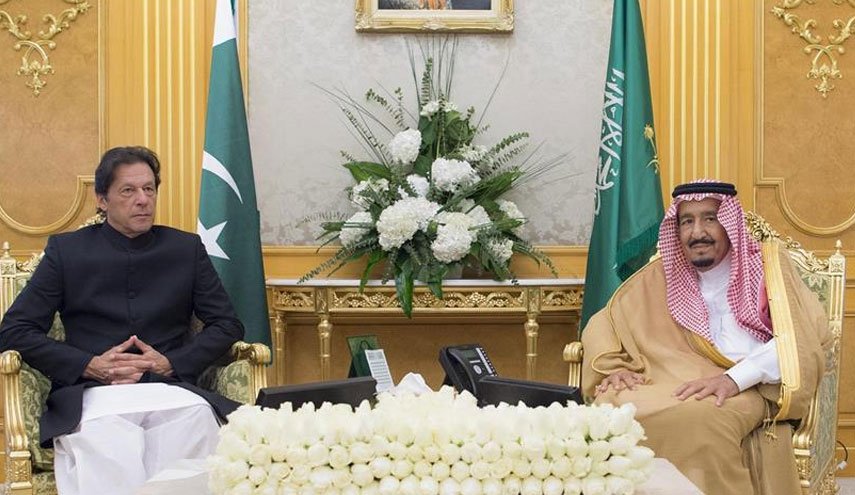
With the victory in the parliamentary elections of the ruling Pakistan Tehrik-e Insaf (Pakistan Movement for Justice) and the emergence of Imran Khan, speculation has been raised about Islamabad’s relations with certain countries that had a special place in Pakistani foreign policy at different times; The issue of cooperation between Islamabad and Riyadh has been the focus of much attention. We have seen the Pakistani Prime Minister visit Saudi Arabia on several occasions over the past year and one of the major goals of these trips has been to receive financial support from the Riyadh government. Of course, the same policy was exercised by other Pakistani governments, and Saudi Arabia has provided substantial financial assistance to Pakistan under various strategic considerations. Under Imran Khan, according to media reports, more than $12 billion has been approved in Saudi aid to Islamabad of which about $3 billion has so far been provided by the Riyadh government.

Saudi support for extremist groups and hardline movements in the region, including in Pakistan, which is being pursued in support of religious organizations and religious schools, is one of the major goals that Saudi Arabia seeks to achieve through financial aid to Pakistan.

In fact, Saudi Arabia seeks to maintain its relationship with religious schools in Pakistan, which generally promote religious extremism and violence. Of course, this did not skip the eyes of the Pakistani people and Parliament and even the issue of Islamabad’s participation in the defeated Saudi coalition against the Yemeni people was met with strong opposition from the National Assembly and the Senate despite the relative willingness of the Pakistani government to partake

Prior to Imran Khan’s term as the prime minister, Nawaz Sharif also demanded Pakistan’s participation in the coalition against Yemen, but he received a negative response.

On the other hand, one of the major challenges highlighted in Pakistani relations with Saudi Arabia since last summer is the criticism of the Islamabad government over the inaction of the Organization of Islamic Cooperation, which has its secretariat in Saudi Arabia. What Islamabad complains about is that the OIC Secretariat should play a more active role in the Kashmir issue. Given that India in a unilateral action stripped Kashmir of its Special Status last summer and fundamentally thwarted the rights of Kashmiri Muslims, the Pakistani government expected the OIC to take a more active role in the world’s most important Islamic organization (OIC). It also urged the OIC to hold at least an extraordinary conference of the OIC Foreign Ministers aimed at examining the move by New Delhi to revoke Kashmir’s autonomy. He said a statement should be issued against the Indian government by OIC over Kashmir but none of these demands was realized because of relations between Delhi and Riyadh.

Subsequently, at a conference hosted by Malaysia and attended by delegates from various Islamic countries to discuss Kashmir, not only Riyadh did not attend the meeting but under pressure from the Saudi government, Imran Khan also failed to attend.

Therefore, the most important dispute facing Saudi-Pakistani relations today is the dispute between the two countries over the issue of Kashmir. Imran Khan’s critical remarks during a recent visit by Turkish President Recep Tayyip Erdogan to Islamabad were met with outrage by Saudi officials. Following the trip, we saw the detention of hundreds of Pakistani workers in various cities in Saudi Arabia, prompting Imran Khan to attend the upcoming conference to be hosted by Malaysia. Perhaps this is the first time that the Pakistani prime minister has stood firm against Saudi interference in Pakistani internal affairs and has given a clear response to Riyadh officials.

As Kashmir is seen as one of the main red lines of the Pakistani government and people, and Saudi Arabia has essentially adopted a form of silent mediation, this has become a challenge for relations between the two countries. In this regard, any country that adopts Pakistan’s strategy of protecting the rights of the Kashmir people will be subject to the foreign policy of Islamabad. It should also be noted that the approaches of senior Turkish and Malaysian officials in recent months have explicitly defended the rights of the Kashmir people, which could lead to closer ties between Islamabad and Ankara and Kuala Lumpur. As Erdogan on his trip to Islamabad made the sharpest criticism of the current situation in Kashmir.

Finally, given that Pakistan is one of the recipients of aid from regional and trans-regional actors such as the United States and Saudi Arabia, Riyadh has sought to halt financial aid to Islamabad due to its independent policies vis-à-vis various countries including Turkey and Malaysia. Riyadh aims to put more pressure on Pakistan and compel Mr Imran Khan and the ruling PTI to be more in line with Saudi regional approaches.”


0 Comments

Submit a Comment

Your email address will not be published. Required fields are marked *

LATEST CONTENT

Consequences of Declining Trust in the Judiciary in Europe

SCFRonline – Opinion: The increase in public distrust of the French judicial system, which in recent surveys has reached approximately two-thirds of citizens, should be analyzed within a framework broader than temporary dissatisfaction or an emotional reaction to a particular criminal case.

Iran’s Potential Levers of Power

SCFRonline– Opinion: Iran’s geopolitical power is not limited solely to oil and the Strait of Hormuz; the unintended emergence of disruptions in the future global food and energy security chains can also demonstrate Iran’s strategic importance.

The Inseparability of the Lebanese Front from the Axis of Resistance

SCFR Online–Opinion: By providing an extensive network of social, healthcare, educational, and post-war reconstruction services, Hezbollah has established a strong social base for itself among Lebanon’s Shiites and Sunnis, and even beyond that, among other segments of Lebanese society, including Christians. Hezbollah has never been an external actor imposed upon Lebanon; rather, it is a phenomenon fundamentally born out of the occupation and crimes of the Zionist regime and itself influenced by popular resistance.

The Increasing Efforts of the Zionist Regime to Redefine Borders and the Regional Order and Its Consequences

SCFR Online– Opinion: Security and military developments in the region over recent months indicate that the ongoing crises and wars in Gaza, southern Lebanon, and parts of Syrian territory encompass broader dimensions of geopolitical and geostrategic transformations. In this context, the increased military presence and control of the Zionist regime over parts of the territories of these areas, along with proposals regarding the creation of buffer zones or even the expansion of security borders, have raised serious questions about the future of the regional order and its consequences for the countries of West Asia.

Loading

Últimas publicaciones

Consequences of Declining Trust in the Judiciary in Europe

SCFRonline – Opinion: The increase in public distrust of the French judicial system, which in recent surveys has reached approximately two-thirds of citizens, should be analyzed within a framework broader than temporary dissatisfaction or an emotional reaction to a particular criminal case.

Iran’s Potential Levers of Power

SCFRonline– Opinion: Iran’s geopolitical power is not limited solely to oil and the Strait of Hormuz; the unintended emergence of disruptions in the future global food and energy security chains can also demonstrate Iran’s strategic importance.

The Inseparability of the Lebanese Front from the Axis of Resistance

SCFR Online–Opinion: By providing an extensive network of social, healthcare, educational, and post-war reconstruction services, Hezbollah has established a strong social base for itself among Lebanon’s Shiites and Sunnis, and even beyond that, among other segments of Lebanese society, including Christians. Hezbollah has never been an external actor imposed upon Lebanon; rather, it is a phenomenon fundamentally born out of the occupation and crimes of the Zionist regime and itself influenced by popular resistance.

The Increasing Efforts of the Zionist Regime to Redefine Borders and the Regional Order and Its Consequences

SCFR Online– Opinion: Security and military developments in the region over recent months indicate that the ongoing crises and wars in Gaza, southern Lebanon, and parts of Syrian territory encompass broader dimensions of geopolitical and geostrategic transformations. In this context, the increased military presence and control of the Zionist regime over parts of the territories of these areas, along with proposals regarding the creation of buffer zones or even the expansion of security borders, have raised serious questions about the future of the regional order and its consequences for the countries of West Asia.

Loading

DERNIER CONTENU

Consequences of Declining Trust in the Judiciary in Europe

SCFRonline – Opinion: The increase in public distrust of the French judicial system, which in recent surveys has reached approximately two-thirds of citizens, should be analyzed within a framework broader than temporary dissatisfaction or an emotional reaction to a particular criminal case.

Iran’s Potential Levers of Power

SCFRonline– Opinion: Iran’s geopolitical power is not limited solely to oil and the Strait of Hormuz; the unintended emergence of disruptions in the future global food and energy security chains can also demonstrate Iran’s strategic importance.

The Inseparability of the Lebanese Front from the Axis of Resistance

SCFR Online–Opinion: By providing an extensive network of social, healthcare, educational, and post-war reconstruction services, Hezbollah has established a strong social base for itself among Lebanon’s Shiites and Sunnis, and even beyond that, among other segments of Lebanese society, including Christians. Hezbollah has never been an external actor imposed upon Lebanon; rather, it is a phenomenon fundamentally born out of the occupation and crimes of the Zionist regime and itself influenced by popular resistance.

The Increasing Efforts of the Zionist Regime to Redefine Borders and the Regional Order and Its Consequences

SCFR Online– Opinion: Security and military developments in the region over recent months indicate that the ongoing crises and wars in Gaza, southern Lebanon, and parts of Syrian territory encompass broader dimensions of geopolitical and geostrategic transformations. In this context, the increased military presence and control of the Zionist regime over parts of the territories of these areas, along with proposals regarding the creation of buffer zones or even the expansion of security borders, have raised serious questions about the future of the regional order and its consequences for the countries of West Asia.

Loading

DERNIER CONTENU

Consequences of Declining Trust in the Judiciary in Europe

SCFRonline – Opinion: The increase in public distrust of the French judicial system, which in recent surveys has reached approximately two-thirds of citizens, should be analyzed within a framework broader than temporary dissatisfaction or an emotional reaction to a particular criminal case.

Iran’s Potential Levers of Power

SCFRonline– Opinion: Iran’s geopolitical power is not limited solely to oil and the Strait of Hormuz; the unintended emergence of disruptions in the future global food and energy security chains can also demonstrate Iran’s strategic importance.

The Inseparability of the Lebanese Front from the Axis of Resistance

SCFR Online–Opinion: By providing an extensive network of social, healthcare, educational, and post-war reconstruction services, Hezbollah has established a strong social base for itself among Lebanon’s Shiites and Sunnis, and even beyond that, among other segments of Lebanese society, including Christians. Hezbollah has never been an external actor imposed upon Lebanon; rather, it is a phenomenon fundamentally born out of the occupation and crimes of the Zionist regime and itself influenced by popular resistance.

The Increasing Efforts of the Zionist Regime to Redefine Borders and the Regional Order and Its Consequences

SCFR Online– Opinion: Security and military developments in the region over recent months indicate that the ongoing crises and wars in Gaza, southern Lebanon, and parts of Syrian territory encompass broader dimensions of geopolitical and geostrategic transformations. In this context, the increased military presence and control of the Zionist regime over parts of the territories of these areas, along with proposals regarding the creation of buffer zones or even the expansion of security borders, have raised serious questions about the future of the regional order and its consequences for the countries of West Asia.

Loading

DERNIER CONTENU

Consequences of Declining Trust in the Judiciary in Europe

SCFRonline – Opinion: The increase in public distrust of the French judicial system, which in recent surveys has reached approximately two-thirds of citizens, should be analyzed within a framework broader than temporary dissatisfaction or an emotional reaction to a particular criminal case.

Iran’s Potential Levers of Power

SCFRonline– Opinion: Iran’s geopolitical power is not limited solely to oil and the Strait of Hormuz; the unintended emergence of disruptions in the future global food and energy security chains can also demonstrate Iran’s strategic importance.

The Inseparability of the Lebanese Front from the Axis of Resistance

SCFR Online–Opinion: By providing an extensive network of social, healthcare, educational, and post-war reconstruction services, Hezbollah has established a strong social base for itself among Lebanon’s Shiites and Sunnis, and even beyond that, among other segments of Lebanese society, including Christians. Hezbollah has never been an external actor imposed upon Lebanon; rather, it is a phenomenon fundamentally born out of the occupation and crimes of the Zionist regime and itself influenced by popular resistance.

The Increasing Efforts of the Zionist Regime to Redefine Borders and the Regional Order and Its Consequences

SCFR Online– Opinion: Security and military developments in the region over recent months indicate that the ongoing crises and wars in Gaza, southern Lebanon, and parts of Syrian territory encompass broader dimensions of geopolitical and geostrategic transformations. In this context, the increased military presence and control of the Zionist regime over parts of the territories of these areas, along with proposals regarding the creation of buffer zones or even the expansion of security borders, have raised serious questions about the future of the regional order and its consequences for the countries of West Asia.

Loading